
ChatGPT: The AI That Changed the World — Miracle or the Biggest Threat to Humanity
From OpenAI’s secret beginnings to global dominance, controversies, competition, and the dark side of artificial intelligence.

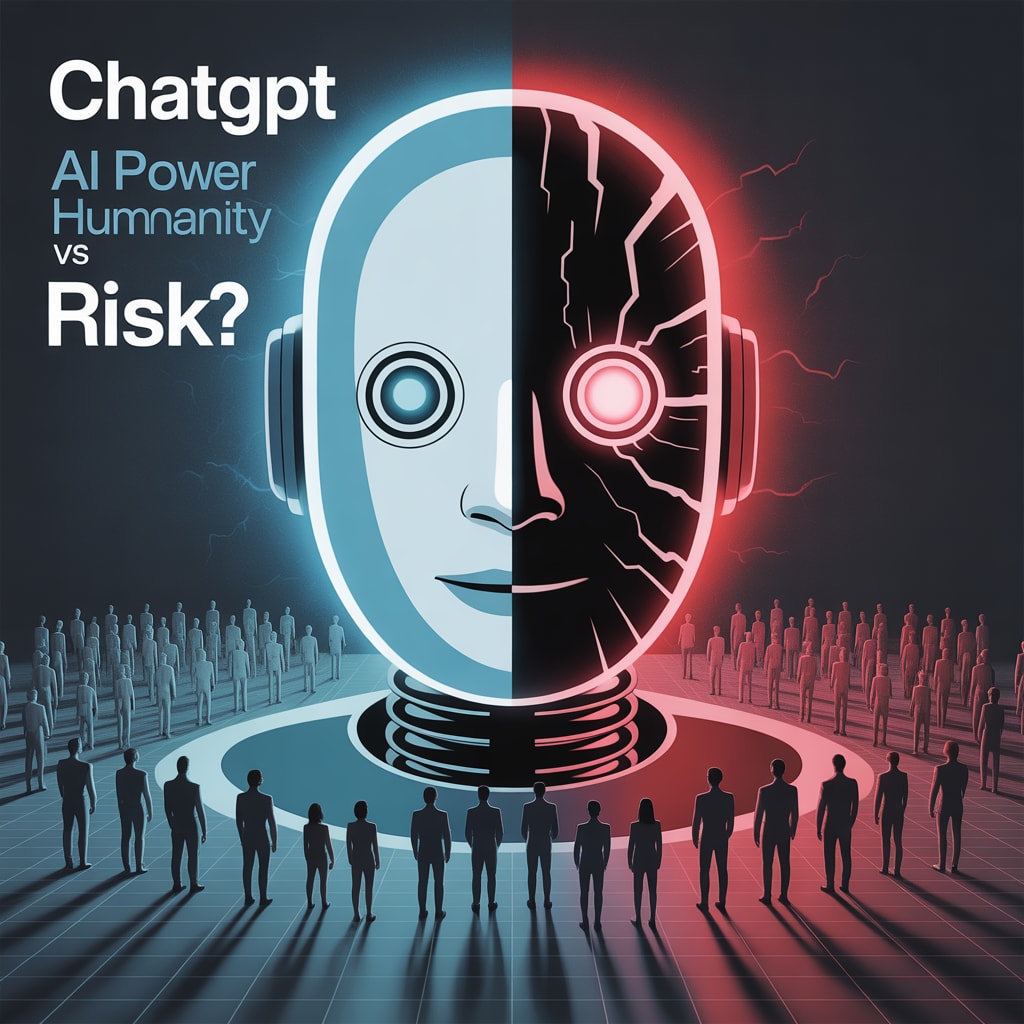
Introduction: Is ChatGPT Humanity’s Greatest Tool or Biggest Threat?
Artificial Intelligence has been called the most powerful invention of the 21st century, and ChatGPT stands at the center of this revolution. While legendary figures like Stephen Hawking warned that AI could become humanity’s greatest threat, and Elon Musk compared AI to nuclear weapons, ChatGPT continues to grow at an unprecedented pace.
Despite massive controversies, ChatGPT today boasts over 700 million weekly users, handles more than 1 billion requests daily, and controls over 80% of the global AI chatbot market.
This raises a critical question: How did ChatGPT become so successful? Why has no competitor been able to defeat it? And what are the dark consequences hidden behind its success?
Let’s explore the complete story of ChatGPT—from its origin to its rise, struggles, and the ethical debates surrounding it.
The Birth of OpenAI: A Vision Beyond Corporations (2015)The story begins in 2015, a time when AI existed mostly inside research labs and big tech companies like Google, Facebook, and Microsoft. AI was powerful—but inaccessible to the general public.
During this time, Sam Altman, then president of Y Combinator, met Elon Musk with a bold vision:
to create an AI that could help people in education, healthcare, coding, writing, and research—not just benefit corporations.
Elon Musk loved the idea and promised $1 billion in funding. Other major tech leaders joined in, including Reid Hoffman (LinkedIn co-founder), Peter Thiel (PayPal co-founder), along with support from Amazon Web Services, Infosys, and YC Research.
On December 8, 2015, OpenAI was officially founded as a non-profit organization, with a clear mission:
Ensure that artificial intelligence benefits all of humanity.
Early Breakthroughs: Laying the Foundation of AI Innovation
Before ChatGPT existed, OpenAI released several powerful tools:
2016 – OpenAI Gym & Universe
These tools trained computers to play games and learn tasks, even mastering complex games like GTA V.
2017 – OpenAI Baselines
A reinforcement learning library that saved researchers time and accelerated AI development worldwide.
These innovations positioned OpenAI as a leader in AI research—but the real breakthrough came next.
The GPT Revolution: From GPT-1 to GPT-3
GPT-1 (2018): The Beginning of a New Era
In 2018, OpenAI introduced GPT-1, a language model trained on massive text data to predict the next word in a sentence. Though small, it proved that machines could generate human-like text.
GPT-2 (2019): Power and Fear
GPT-2 was far more powerful—it could write articles, stories, and reports within seconds.
However, OpenAI initially refused to release the full model, fearing misuse such as fake news, scams, and misinformation.
Eventually, after safety evaluations, GPT-2 was fully released—marking a historic moment for AI researchers and developers.
GPT-3 (2020): Powerful but Inaccessible
GPT-3 was revolutionary but too complex for regular users. It required deep programming knowledge and powerful hardware, making it impractical for everyday use.
This limitation sparked a game-changing idea.
The Birth of ChatGPT: AI for Everyone (2022)
OpenAI decided to transform GPT-3.5 into a simple chatbot interface that anyone could use—without coding.
On November 30, 2022, ChatGPT was launched, and the world changed forever.
Explosive Growth
1 million users in just 5 days
100 million users in 2 months
Became the fastest-growing consumer software in history
For comparison:
Instagram took 2.5 years
Netflix took 3.5 years
Why ChatGPT Became So Popular
1. Extreme Simplicity
Anyone—from children to seniors—could use it easily.
2. Free Access
At launch, ChatGPT was completely free, encouraging massive adoption.
3. Human-Like Conversations
For the first time, AI felt natural, friendly, and intelligent—not robotic.
Social media exploded with screenshots, memes, and reactions.
“Google is dead, ChatGPT is here” became a viral slogan.
Real-World Impact Across Industries
ChatGPT quickly became an everyday tool:
Students – Homework and assignments
Programmers – Debugging and code generation
Writers & Creators – Content ideas and research
Businesses – Emails, reports, and presentations
This versatility became ChatGPT’s greatest strength.
Major Challenges: Technical, Ethical, and Financial
1. Hallucinations (Wrong Answers with Confidence)
ChatGPT sometimes gives incorrect information confidently because it predicts text—not facts.
2. Bias & Ethical Issues
Since it’s trained on internet data, biases can appear, leading to concerns about misinformation, discrimination, and manipulation.
3. Massive Financial Costs
Running ChatGPT is extremely expensive:
Millions of dollars spent daily on servers and GPUs
Even saying “please” and “thank you” increases costs, according to Sam Altman
To survive, OpenAI launched ChatGPT Plus ($20/month) in 2023 and introduced GPT-4 for paid users.
Competition Rises: Google, Elon Musk, and China
Google Bard (later Gemini) struggled initially after giving wrong answers in demos.
Elon Musk launched Grok (2023) using real-time X (Twitter) data.
DeepSeek (China) shocked the world in 2025 by becoming the most downloaded iOS app in the US within 17 days.
Despite all this, ChatGPT still dominates with over 80% market share.
The Dark Side: AI and Human Deaths
One of the most disturbing controversies emerged in April 2025, when a 16-year-old boy in California died by suicide after allegedly receiving inappropriate responses from ChatGPT.
Similar cases worldwide sparked lawsuits and global debates about AI responsibility, mental health, and safety limits.
Conclusion: The Future of ChatGPT and AI
ChatGPT has undeniably made life easier, transformed industries, and reshaped how humans interact with technology.
But it has also raised serious ethical and safety concerns.
The ultimate question remains:
👉 Will AI like ChatGPT become humanity’s greatest helper—or its most dangerous creation?
The answer depends not on AI alone, but on how responsibly we choose to build and use it.
About the Creator
Muhammad waqas
Turning Dreams into Reality – One Story at a Time
I'm passionate about telling real success stories that inspire and empower. From ordinary beginnings to extraordinary achievements, I share journeys of resilience, hope, and transformation.
Keep reading
More stories from Muhammad waqas and writers in Motivation and other communities.
Master Your Mind
Introduction: Why Focus Matters in Today’s Distracted World In a world full of endless notifications, noise, and digital distractions, staying focused has become one of the hardest skills to master. Whether it’s students trying to study, professionals aiming to work efficiently, or anyone trying to achieve personal goals—everyone struggles with concentration. This article shares the inspiring journey of a young boy named Kabir, whose story teaches a powerful lesson about discipline, focus, and achieving success. His transformation proves that a disciplined mind can conquer anything.
By Muhammad waqas2 months ago in Motivation
One Hard Thing
Stop me if you’ve heard this one before: You have the number, you know your schedule- you’ve even picked out the perfect day and time to make this appointment. Shoot, you’ve even picked out alternative days and times just in case their schedules can’t accommodate you!
By Taylor Rigsby21 days ago in Motivation
Tatiana Kraus on Entrepreneur vs. Travel Curator – Who Creates More Impact?
Tatiana Kraus explores the evolving world of business and travel, where the roles of an entrepreneur and a travel curator often intersect yet carry distinct influences. As a visionary in experiential travel, she examines how these two paths shape industries, communities, and personal growth. While both roles create significant impact, understanding their differences can guide aspiring professionals toward the path that resonates most with their purpose.
By Tatiana Kraus4 days ago in Motivation



Comments
There are no comments for this story
Be the first to respond and start the conversation.