wild animals
Animals the way nature intended it; explore the world of wild animals and the controversies surrounding domestication and hunting of feral beasts.
A Pale Snail Tale
The debate was on between the dolphin 🐬 and the whale 🐋. Should pale snails tails be allowed in the sales? The dolphin wanted to exchange two fish 🐠 🐠 for the delicious sort after dish of pale snails tails 🐌 , flailed and sundried on nails all the way from Exotic Wales. 🏴Unfortunately the whale 🐋had never seen a snail 🐌 but the dolphin 🐬assured him that he had one day done a triple reverse flip and seen one on a sailing ship ⛵️and so he really knew what he was talking about‼️The whale 🐋had recently been released from jail and was on his way to the English Dales 🏴.
By Andrew Stephen Luck 6 years ago in Petlife
Bear Conservation and Eco-Tourism in Japan
I started my new job at a Wildlife Research Centre in Nagano Prefecture, Japan. This organisation is unique in that it works in both conservation and eco-tourism, the tours providing funding for the conservation side (along with few local grants). Nowhere else in the world is this being done, at least not to the same extent as here.
By Eli Sooker6 years ago in Petlife
Toddler Company Targets Parents with Anti-Zoo Propaganda
Munchkin is a company that is known for making products made for everyday use for toddlers that was first established in 1991 after it’s founder Steven B. Dunn was surprised by the lack of “creative” designs in products that were made for infants and toddlers. While the company started out with making eco-friendly sippy cups, the company has since gone on to make organic snacks and formulas along with travel accessories. However, in recent years, as of 2015, the company has been under fire by both zoo and aquarium professionals alike over its ties with a radical anti-zoo group.
By Jenna Deedy7 years ago in Petlife
Review of 5 Common Types of Traps: Predator-Free New Zealand
Introduction Predator-Free 2050 is an initiative to help restore New Zealand's native biodiversity by eliminating three types of introduced predators: rats, stoats, and possums. These pests are considered the most damaging of all introduced predators. As much of New Zealand's wildlife has evolved to avoid native predators such as eagles, our species tend to be ground-dwelling, but this makes them vulnerable to introduced predators. See the video above to learn more.
By Eli Sooker7 years ago in Petlife
Flipping the Script on Sharks
Shark Week is upon us, which inevitably brings out the shark fan in even your least-expecting friends. Even those that could not care less about marine life indulge in some aspect of Shark Week, be it the numerous drinking games surrounding it, attack-umentaries (you know what I’m talking about, the documentaries solely revolving around shark attacks), made-for-Shark Week movies, or whatever tickles your fancy. On the other hand, maybe you’re one of my people—the year-round shark fan, who have been scoffed at since you were little when you answered “sharks” after people asked your favorite animal—who can’t help but get a tiny bit annoyed while watching all of these Shark Week fans crawl out of the woodwork. While we appreciate shark fans of all variety (because let’s be honest, these guys need more love) we also want to set the record straight and help you to help our marine friends, and quit perpetuating shark myths and stereotypes. Let’s work together towards flipping that script from fearing to revering these beautiful ocean dwellers, living everyday like Shark Week, and potentially saving our oceans along the way by debunking some of the five most common shark myths.
By Emily Christyson7 years ago in Petlife
Civil War in the Rainforest - Two Primate Groups in the Great Conflict
Every single piece of the ecosystem is important and precious. Every plant, insect, germ, animal and man. Do we really separate ourselves from animals as in "man and beast?" "Humans and animals?" That's a bit arrogant. Especially considering as children, we all knew the question, "Is it animal or mineral? Animate, or inanimate?" Hopefully, by the time we all got to biology, we learned that humans are "primates." And so are the great apes, and that includes our Orangutan cousins. We share 97% of our DNA.
By Lisa LaRue-Baker7 years ago in Petlife
Great White
Terror strikes fast and swift, leaving a wake of blood after these predators of the deep. I guess it was the movie Jaws that truly awakened everyone to just how terrifying, and yet so misunderstood Great White Sharks really are. Myself I was very fortunate in all my adventures in diving that my only encounter was with a small sand shark. A quick thump on the nose, and it scurried off to more lucrative morsels. It is so unfortunate that shark attacks happen. But, we all have to remember that any time we enter the ocean waters, we are intrusive into their realm of reality, and not the other way around.
By Dr. Williams7 years ago in Petlife
New Female Calf in J-Pod Brings Hope to the Southern Resident Orca Population
In May, researchers based at the Center for Whale Research sighted a newborn calf off the coast of Tofino, Washington. At the time, the calf, who was later determined to be a healthy female, was seen swimming with two females. One was named Tsuchi, who is also known as “J31”, and another was named Eclipse, who was also known as “J41”. At first, the researchers were not really sure which of these two female whales was the calf’s mother, but after a second sighting of the calf that occurred two months later, the researchers were able to determine that the calf was in fact, the daughter of Tsuchi. In fact, her May 24th birth helped bring the population’s numbers up to around 76 orcas.
By Jenna Deedy7 years ago in Petlife
Wolf Run at Wallace Ranch and Sanctuary
A typical day here at the ranch is filled with a calm country setting and our beautiful rescues. Our life has taken a path into the old ways of life. We live off the grid on 280 acres of beautiful mountains, tucked nicely in a valley between volcanic lava tubes and amazing mountains that fill us with peace and joy every time we walk outside. There’s lots of old-fashioned hard work building our house and creating a beautiful environment for ourselves and our animals; they are our family. We rescue, rehabilitate, and find forever homes. We were given a second chance at life, so in return, we give our rescues a second chance too! Everyday is filled with new tasks and adventures that leave us with memories to share with our children. We are BLESSED!
By Dion Wallace7 years ago in Petlife
Aquatic Research
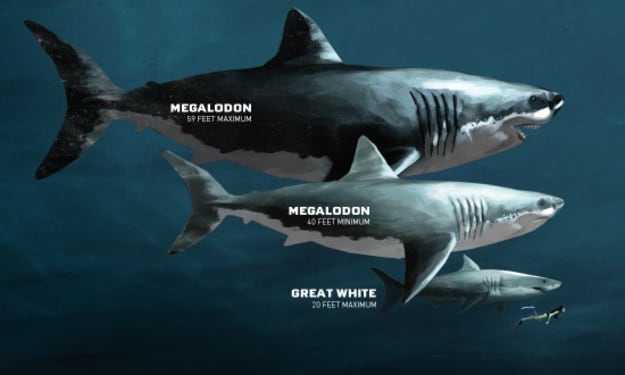
I know many people believe in their own conspiracy theories; there is one specific one I happen to find very interesting and that is the topic about proving the species of Megalodon still exists. I have come across several people who do not even know what the Megalodon species are. I usually say a very big shark and they respond with, "OH." Well they don't really need to know anyways, considering they never heard of it. What's funny is I have an irrational fear of large bodies of water which to me isn't that irrational considering all the man eating creatures and the hectic waves let alone the water itself that can kill you. Anyway I love to learn about species of the water particularly sharks themselves. Of the Earth only seventy-one percent of water has yet to be explored, so that's a lot.
By Alyssa Glasgow7 years ago in Petlife
The Return of the Grizzled Skipper
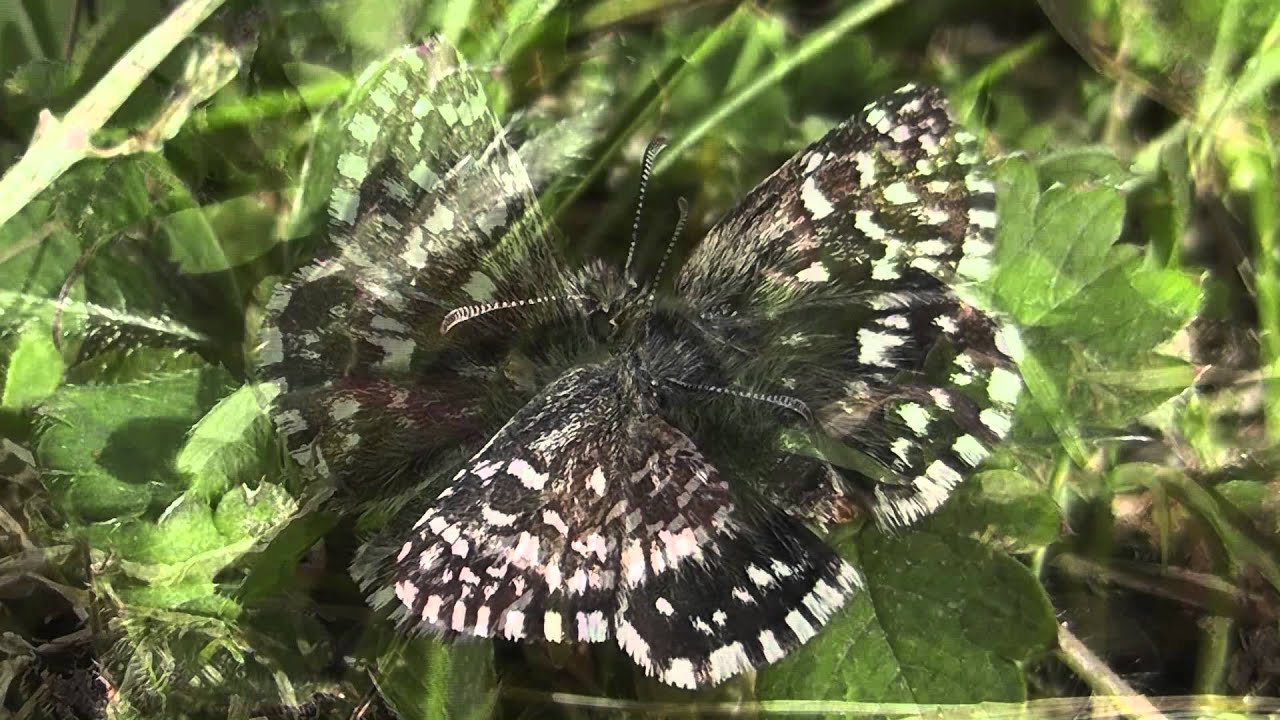
Being a butterfly in these days of climate change and air pollution is not easy. There has been a steady decline in butterfly numbers across the UK over the last twenty years or more. One or two species do well as the average temperature increases and with it their range too increases. Others, the majority, find it tough. How can we help them?
By Paul Conneally7 years ago in Petlife