
The Two-Setting Walk That Fixed My Photos (Without Buying Anything)
A simple shutter-speed + ISO routine that keeps you in the moment—and brings home sharper, more human photos.
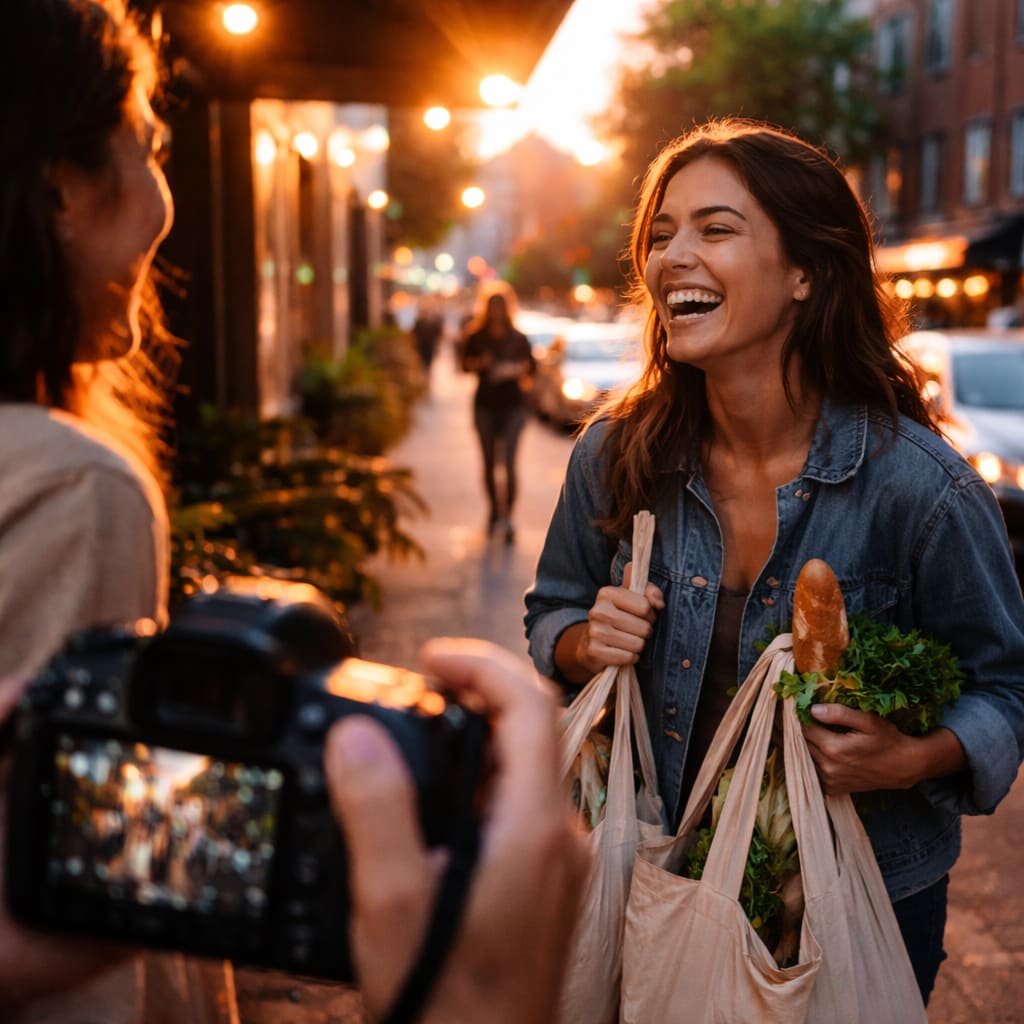
I used to come home from a photo walk with 200 frames and one “maybe.” The problem wasn’t my camera. It was my brain—spinning through menus, second-guessing every choice, and turning a simple moment into a technical debate.
So I tried an experiment that sounded almost insulting: one walk, two settings, zero gear talk. Not “minimalism” for the aesthetic. Not a challenge for social media. Just a way to stop sabotaging the moment.
It worked—because it forced me to decide what I was actually photographing.
The rule: pick your scene, then pick your problem
Every photograph is basically a negotiation with one of these problems:
Motion (freeze it or blur it?)
Light (how dark can you tolerate?)
Focus (what must be sharp?)
When you try to solve all three at once, you usually solve none. The walk that changed everything did this instead:
Setting #1: Shutter speed (motion decision)
Setting #2: ISO limit (light decision)
Everything else became supportive, not starring.
Setting #1: Choose a shutter speed that matches your subject’s “energy”
Before you even lift the camera, ask: Is this scene calm or chaotic?
Then lock a shutter speed that matches it.
Here’s a practical starting map (not a law, just a sanity anchor):
1/1000–1/2000: birds, sports, kids sprinting, splashy action
1/500: people walking with purpose, street candids, cyclists
1/250: casual movement, portraits with small gestures
1/125: still subjects if your hands are steady
1/60 and slower: intentional blur, night mood, “let it breathe” shots
On my “two-setting” walk, I picked 1/500 because I was shooting street scenes—quick turns, passing expressions, little stories that vanish fast.
And here’s the psychological trick: once shutter speed is decided, you stop renegotiating reality. You stop thinking, “Maybe I should…” every two seconds.
Setting #2: Pick an ISO ceiling you can live with (and stop apologizing for grain)
A lot of photos fail because we’re afraid of noise—so we underexpose, then “fix it later,” and end up with muddy shadows and sad colors.
Instead, set an ISO limit based on your camera’s comfort zone. If you’re not sure, pick a conservative ceiling and adjust later after reviewing results:
Older / entry-level sensors: ISO 1600–3200
Modern APS-C / Micro Four Thirds: ISO 3200–6400
Modern full frame: ISO 6400–12800 (sometimes higher)
On my walk, I set Auto ISO with a max of 6400. That was my deal with the camera: You can raise ISO to protect shutter speed. I won’t panic if you do.
Two unexpected things happened:
I got more usable shots in imperfect light.
I started seeing light as texture instead of an obstacle.
Noise can look like atmosphere. Blur from a too-slow shutter usually looks like regret.
The supporting setup (keep it boring on purpose)
To keep this Vocal-friendly (and genuinely useful), here’s the “boring” setup that pairs well with the two-setting walk:
Mode: Shutter Priority (Tv/S) or Manual with Auto ISO
Metering: Evaluative / Matrix
Focus: AF-C / Continuous for moving scenes; AF-S for still life
Drive: Single shot (yes, single—spray-and-pray makes editing miserable)
Nothing fancy. No mystical numbers. The goal is to reduce decisions so your attention can return to the subject.
The real upgrade: learn one exposure compensation habit
If you use Shutter Priority + Auto ISO, your camera will usually expose “safe.” Sometimes safe is bland.
So I added one tiny habit: exposure compensation based on the brightest important thing in the frame.
Bright sky behind a face? Dial +0.7 to +1.3 so the face doesn’t go dead.
White walls or snow? Dial +0.3 to +1.0 so whites stay white, not gray.
Night scenes with bright signs? Dial -0.3 to -1.0 to keep highlights from blowing out.
This is the closest thing photography has to steering. You’re not changing the car—you’re keeping it in the lane.
A short story from that walk (why the method works)
I remember a moment outside a small grocery: fluorescent light spilling onto wet pavement, a woman balancing two bags, laughing at something her friend said off-frame.
Old me would have hesitated:
“Maybe I should switch modes.”
“What if ISO gets too high?”
“Let me check the histogram.”
“Wait—what’s my focus area?”
New me had two decisions already made: 1/500, ISO max 6400.
So all I did was this:
Put the focus point where the story was (her face + bags).
Nudged exposure compensation slightly up because the light behind her was brighter.
Pressed the shutter once.
The photo wasn’t perfect. But it was alive. And “alive” beats “technically cautious” almost every time.
The edit rule: don’t judge a photo at 100% zoom first
If you want your work to feel human—and not get flagged as low-effort—you need an editing process that favors story over pixel-peeping.
Try this three-pass review:
Pass 1 (1 second each): Does it have a moment? Keep/Trash fast.
Pass 2 (fit-to-screen): Is the composition clean enough to support the moment?
Pass 3 (only for finalists): Check sharpness/noise—last, not first.
This keeps you from deleting your best frames just because the ISO number bruised your ego.
Why this method is surprisingly “pro”
Professionals don’t take better photos because they know more settings. They take better photos because they make fewer decisions at capture time, and they make those decisions earlier.
The two-setting walk trains that skill:
Decide motion first.
Decide acceptable noise second.
Let everything else serve those decisions.
And once you feel that control, you’ll notice something: your camera starts feeling less like a machine you operate and more like a pen you write with.
If you try it, here’s your one-sentence checklist
Pick one shutter speed, set an ISO ceiling, and spend the rest of the walk paying attention to people, light, and timing.
That’s it. Two settings. One habit. A calmer brain.
About the Creator
Keep reading
More stories from writers in Photography and other communities.
Why Real Estate Photography Matters
Real estate photography isn’t just about snapping pretty pictures. In today’s digital market, professional photography directly influences buyer engagement, listing performance, and ultimately, sales results. With more than 90% of homebuyers starting their search online, the first impression a property makes is almost always visual. Quality photography can help a property sell faster, attract more views, and command higher offers than listings with sub-par images.
By Nataliie Wilson3 days ago in Photography
How eCommerce Product Photo Editing Reduces Returns & Increase Conversions?
In eCommerce, the quality of product images plays a pivotal role in customer decision-making and return rates. A visual mismatch—where online representations don’t match the actual product—can lead to significant customer dissatisfaction and increased returns. Inaccurate colors, low image quality, and insufficient detail contribute to expectation gaps that undermine the customer experience.
By Brown Walshabout 5 hours ago in Photography
Blessed 33
So I woke up on the morning of February 5, 2026 and guess what and you know what I realized? It’s my 33rd birthday. Do you know what that means? Yes, technically I’m getting old, but what I couldn’t have guessed was this would be one of the best days of my life.
By Joe Patterson4 days ago in Confessions


Comments
There are no comments for this story
Be the first to respond and start the conversation.