
My Mother’s Hands
A poem reflecting on generational care, age, and memory.

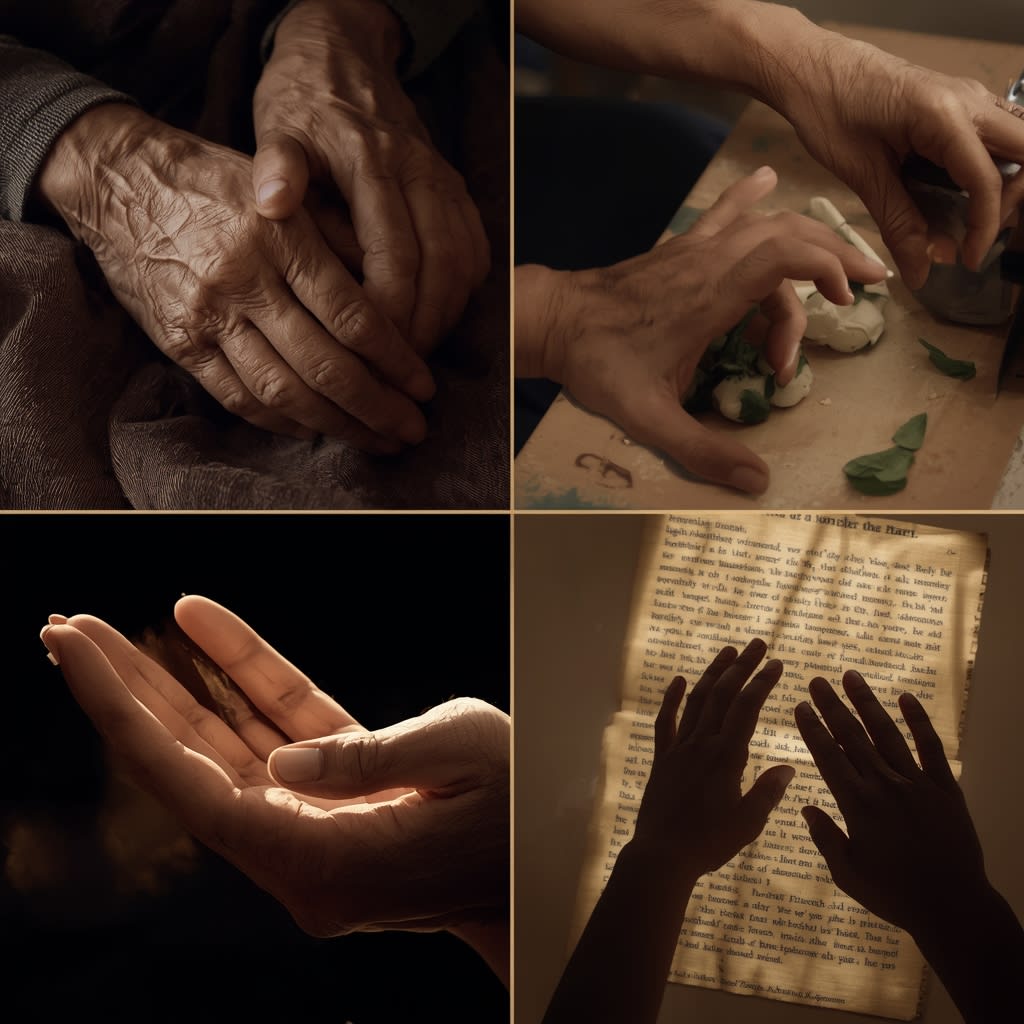
My Mother’s Hands
By Hasnain Shah
My mother’s hands were never still.
They were the first map I ever read,
lines folding into valleys of warmth,
fingers tracing circles on my cheek
when sleep would not come.
Those hands lifted pots heavier than her frame,
stirred soup that smelled of patience,
tied ribbons in my hair before school,
and waved me away with a smile
that hid the ache of letting go.
Her palms were always rough,
not because she sought hardship
but because life offered it freely.
She accepted it the way she accepted
every scraped knee of mine,
pressing a cool cloth to the wound,
whispering, “This too will heal.”
I remember how those hands
clapped when I first walked,
steadying me with a gentle push forward.
Later, they hovered near the handlebars
of my first bicycle,
letting go too soon,
teaching me that balance is born
from falling.
At the piano,
her fingers never danced gracefully.
They stumbled over keys,
halting, imperfect—
but she taught me anyway,
and the lesson was never about music,
it was about persistence,
about finding harmony
in the awkwardness of trying.
Time etched its own story
into her skin.
Knuckles swollen,
nails chipped from endless scrubbing,
veins rising like riverbeds in drought.
I used to think those veins were ugly.
Now, I see they were rivers
that carried generations forward,
a geography of sacrifice
mapped across her body.
When I grew older,
I began to see her hands differently.
Not just instruments of care,
but records of survival.
They bore the weight of bills unpaid,
the strain of factory hours,
the scars of accidents she never spoke of.
Hands that sewed dresses
from secondhand fabric,
so I would not feel less
among my peers.
Once, as a teenager,
I pulled away from her touch.
I wanted freedom,
space,
a life that didn’t smell of bleach
or factory dust.
Her hand lingered in the air,
awkward, waiting,
before dropping to her side.
I didn’t look back,
but I remember the sound—
that soft retreat,
like a bird deciding not to land.
Now I am older,
my own hands ache in winter,
my nails break easily,
my skin dries and cracks
as if it remembers hers.
I see echoes of her gestures in me:
the way I fold laundry with precision,
the way I cup a child’s face,
the way I hide my trembling
when the world feels too heavy.
Sometimes, in quiet moments,
I hold my hands out in front of me
and whisper, “They are hers, too.”
I think of the last time I touched them—
frail, birdlike, trembling in mine.
Her grip was weaker,
but the message was the same
as when I was small:
“This too will heal.”
But not everything heals.
Not absence.
Not silence.
Not the empty chair at family gatherings.
And yet,
when I chop onions the way she did,
when I rub lotion into my tired knuckles,
when I soothe a child who cannot sleep—
she is here.
Her hands move through mine,
ghostly but alive,
a choreography of memory.
My mother’s hands were never beautiful
in the way magazines defined beauty.
They were cracked, weary,
etched with years of labor.
But they were beautiful in the only way
that mattered:
they built me,
they held me,
they let me go
so that I could return
and finally understand.
I write this with my hands,
knowing one day
my child will look at them
the way I once looked at hers.
They will see the cracks,
the stains,
the tired trembling.
Maybe they will call them ugly,
as I once did.
Maybe they will pull away.
But someday,
when the air smells faintly of rust and memory,
they will reach for their own hands,
see her in me,
see me in them,
and whisper, “They are ours.”
My mother’s hands
were never still.
Even now,
they continue to move—
through mine,
through memory,
through the generations
that carry her forward.
About the Creator
Hasnain Shah
"I write about the little things that shape our big moments—stories that inspire, spark curiosity, and sometimes just make you smile. If you’re here, you probably love words as much as I do—so welcome, and let’s explore together."
Keep reading
More stories from Hasnain Shah and writers in Poets and other communities.
A Recipe for Indigo: How to Cultivate the Perfect Solitude
The Manual for Quiet Blue Step 1: Preparation of the Vessel Wait for a day when the sky is the color of a bruised plum. Open your window exactly three inches— enough for the damp cedar smell to enter, but not enough for the world to come inside. Sit on the tatami, or the cold wooden floor, and align your spine with the falling rain.
By Takashi Nagaya6 days ago in Poets




Comments
There are no comments for this story
Be the first to respond and start the conversation.