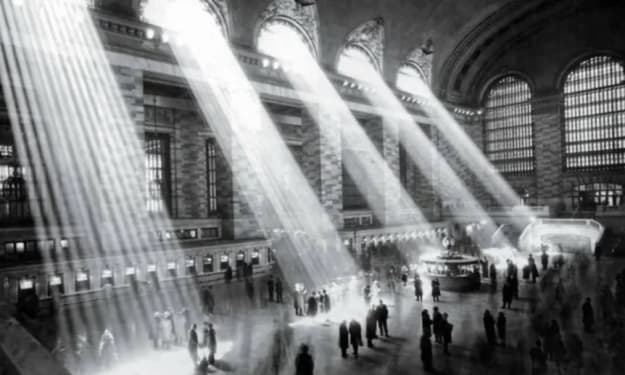
Ekphrastic
The Voices That Paint the Air
In a small town where the nights felt longer than the days, there stood an old community hall that many people had stopped visiting over the years. It had once been a center of laughter, celebrations, and shared dreams. But slowly, as life became busy and routines became heavier, fewer feet crossed its creaking wooden floor.
By Muhammad Saad 3 months ago in Poets
US military planning for divided Gaza with ‘green zone’ secured by international and Israeli troops
The US is planning for the long-term division of Gaza into a “green zone” under Israeli and international military control, where reconstruction would start, and a “red zone” to be left in ruins.
By AHMED KAZEKA3 months ago in Poets
Echoes Through Time: The Journey of Poetry
From the moment humans first learned to express their emotions beyond simple sounds and gestures, poetry was born. It wasn’t written on paper or carved in stone—it lived in the rhythm of spoken words, in chants around campfires, and in the melodies of early songs. Poetry began as the heartbeat of language itself, carrying feelings, beliefs, and dreams from one generation to the next. In ancient times, when stories were passed down by word of mouth, poets were not just artists—they were historians, teachers, and spiritual guides. In Mesopotamia, “The Epic of Gilgamesh” was etched onto clay tablets around 2100 BCE, making it one of the oldest known works of poetry. This epic spoke of friendship, heroism, and the search for immortality—universal themes that still move hearts today. Meanwhile, in Egypt, hymns were written to honor gods and pharaohs, while in India, the sacred verses of the Rigveda echoed through temples as offerings to the divine. As centuries passed, poetry took on new forms across civilizations. In ancient Greece, poets like Homer and Sappho shaped literature forever. Homer’s Iliad and Odyssey were grand tales of war and adventure, while Sappho’s lyrical poems captured delicate emotions and love’s quiet beauty. The Greeks introduced structured meter and rhythm, showing that poetry could be both art and architecture of language. The Roman poet Virgil followed, blending myth with patriotism in his Aeneid, while Ovid celebrated the power of transformation in Metamorphoses. At the same time, in China, poets like Li Bai and Du Fu painted nature and emotion with words as delicate as brushstrokes on silk. Each culture added its own melody to the universal song of poetry. During the Middle Ages, poetry found new homes in the courts and churches of Europe. Troubadours and minstrels sang of love, chivalry, and sorrow, carrying their verses from castle to castle. In Persia, Rumi and Hafez wrote poems that blended mysticism with passion, showing that poetry could speak not only of earthly love but also of divine union. Their verses remain among the most quoted lines in the world, proving that true poetry never ages. The Renaissance marked another rebirth of poetry. In England, William Shakespeare transformed poetic drama with his sonnets and plays, exploring every corner of human emotion—from joy and jealousy to despair and hope. Meanwhile, poets like Dante Alighieri in Italy and Geoffrey Chaucer in England opened doors for poetry to become more personal, philosophical, and profound. As the world entered the modern age, poetry continued to evolve. The Romantic poets of the 18th and 19th centuries—Wordsworth, Keats, Shelley, and Byron—celebrated nature, imagination, and emotion. They believed poetry was not just art but a voice of the soul. Later, in the 20th century, modernists like T.S. Eliot and Ezra Pound broke traditional rules, experimenting with structure and sound to reflect a changing world. Today, poetry lives in more forms than ever before. It thrives not just in books but also on screens and stages. Spoken word poets and rappers bring rhythm, emotion, and truth to modern audiences. Social media has given rise to a new generation of poets—sharing short, heartfelt verses that connect millions across the globe. The tools may have changed, but the purpose remains the same: to express what words alone cannot. From the echo of ancient chants to the rhythm of modern verse, poetry continues to evolve, yet its essence remains timeless. It is both ancient and new—bridging the past and the present, the personal and the universal. Poetry reminds us that beneath all our differences, humans have always shared the same need: to speak from the heart and be heard. And so, the journey of poetry continues—flowing like a river through time, carrying with it the stories, dreams, and emotions of all who dare to write, to feel, and to listen.
By Muhammad Saad 3 months ago in Poets