medicine
The medicalization of mental illness has given rise to many forms of pharmacological relief that restore chemical imbalances in one's brain.
Seen and Unseen Pain causes different reactions
Has anyone ever asked you what you're afraid of? I've been asked, and I've seen people ask that question of others in movies. I don't usually ask that question, because I figure if they wanted to deal with it, they'd start that conversation without my provocation. I don't like to pry. I think about fears more than I probably should and I think that's because a large portion of Generation X would wear t-shirts that read "No Fear" or put that bumper sticker on their POS cars. That's not me. I have plenty of fears. I'm not a hypochondriac and some have even called me "brave" for the ability to address a fear and face it sometimes. After having done that many times, I realized that though I could face a fear, maybe even conquer it to some degree (like my fear of heights doesn't stop me from going up in an airplane or up to the top floor of a skyscraper), fear remains a part of me. People do not respect fear. They respect courage. Yet I've witnessed more foolishness and dangerous behavior occur in the name of courage, not fear. So my conclusion is this: lovers and seekers of wisdom have a healthy relationship and respect for fear. Fear as a personality is the first to mention "danger" and knowing that something is "dangerous" is a key to wisdom.
By Shanon Angermeyer Normanabout a year ago in Psyche
Why Every Woman Deserves Respectful Maternity Care
Introduction: A Universal Right Childbirth is one of the most transformative moments in a woman’s life, but for many women in Ethiopia, this experience is marred by neglect, mistreatment, and the absence of dignity. Despite efforts to improve maternal health, only 32% of births in Ethiopia are attended by skilled professionals, according to the 2022 Ethiopian Demographic and Health Survey (EDHS). This stark reality underscores the urgent need for respectful maternity care (RMC)—care that honors women’s autonomy, safety, and dignity during childbirth.
By Rufael Eshetu Yigezuabout a year ago in Psyche
How to Determine if You’re Eligible for SDA Under the NDIS
Specialist Disability Accommodation (SDA) is a critical support under the NDIS (National Disability Insurance Scheme) for individuals with extreme functional impairments or very high support needs. SDA provides funding for specially designed housing that enables participants to live more independently and access necessary supports. To determine if you are eligible for SDA, it is essential to work closely with an NDIS coordinator and an NDIS support provider who can guide you through the process.
By NDMHS : NDIS Provider Sydneyabout a year ago in Psyche
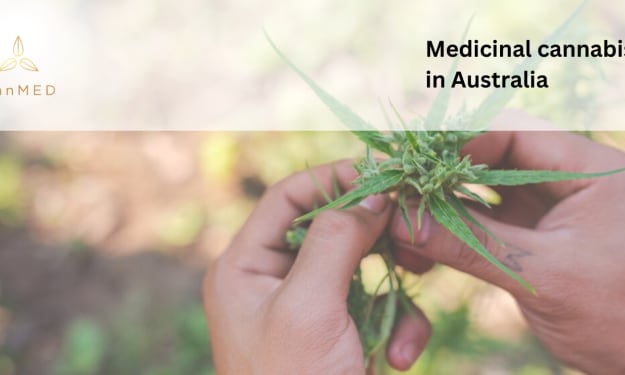
The Growing Impact of Medicinal Cannabis in Australia
Cannabis for medical use has emerged as one of the most important aspects of medicine in Australia. At first, it was considered an experimental therapy, but now it is recognized as an effective method of treating many diseases. People are now opting for medicinal cannabis as a natural way of treating chronic pain, anxiety, and other ailments instead of using chemical-based drugs. This change of perception is a major revolution in medical practices and people’s attitudes in general. For many people, medicinal cannabis in Australia is a salvation. In this article, we will discuss what medicinal cannabis in Australia is, who can use it, and how CanMed can help to alleviate suffering for those who need it.
By CanMed Australiaabout a year ago in Psyche
Why Do Infections of the Brain Only Make People Meaner?
The fact that on average the entire population of the globe has become more angry, unfriendly, and generally just bigger assholes is one aspect of the Covid-19 epidemic that is less remarked upon and studied then it should be. It is now well known that Covid-19 does enter into and replicate in the brains of infected animals, including humans, and that this causes inflammation and damage to nerve cells and can impact behavior in subtle and not so subtle ways. To take just on example from the animal kingdom when laboratory mice are infected with some strains of Covid-19 at a high enough inoculum level they develop a strange stunted gait or hiccup in the way they walk. Almost like they are trying to hop/jump instead of walk but somehow the signals for both are becoming mixed up in their brains resulting in a very bizarre, but indicative behavior. Those that display this behavior (almost) always die soon after. It is a very disturbing thing to see and our own human brain is instinctively repulsed by witnessing it. It falls so far outside the normal standard way of how we are "used" to seeing mice walk that it triggers a sort of revulsion, a primal revulsion is the best word I can use to describe it. If I were H.P. Lovecraft (not the racist dickhead one, but the master of eldritch horror one) I might call it a thing that should not be, and that would be a very good way to put it. There can also be changes in animal behavior in terms of what I would call their mental state. They can become more aggressive, they may attack each other for much smaller transgressions, those attacks may become more vicious, and they become much more self destructive and generally less concerned for their own or other animals well being overall. Of course, often times they are too sick to do any of these things, at least not very well.
By Everyday Junglistabout a year ago in Psyche