
A Sudden and Puzzling Airspace Shutdown
Unraveling the Mystery Behind an Unexpected National Disruption
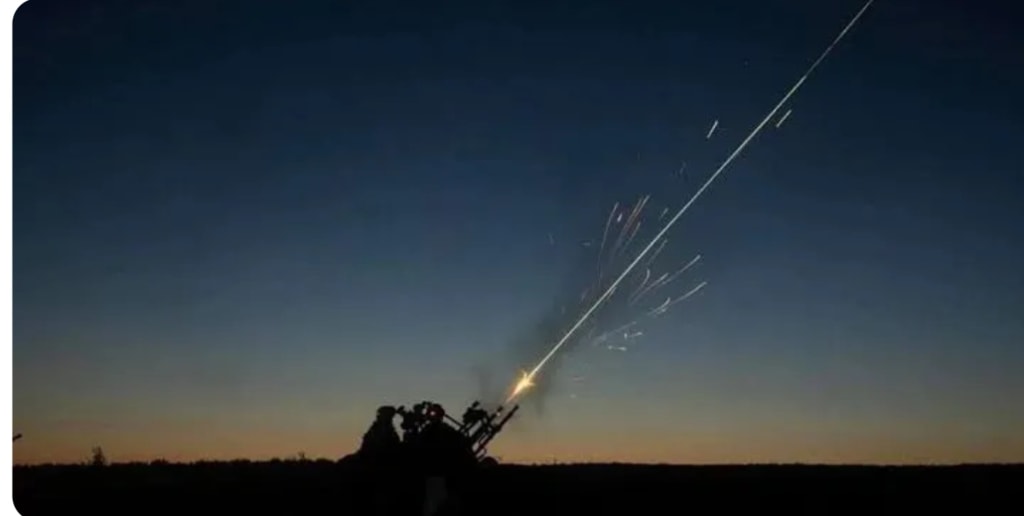
In an era where global connectivity depends on the constant flow of aircraft in the skies, few events are as shocking — or as disruptive — as an unexpected shutdown of airspace. When aviation authorities abruptly close a nation’s skies, the consequences ripple through transportation networks, economies, and national security frameworks. Yet, as bewildering as such shutdowns seem at first glance, they are rarely random. This article explores what led to the sudden airspace closure, examines its cascading impacts, and considers the broader implications for aviation safety and public trust.
The Moment the Skies Went Silent
It began without warning: within minutes, flights were grounded, airports became congestion zones, and pilots in cruise at 30,000 feet were left waiting for clearance to land. Air traffic control centers went from routine operations to crisis mode. Passengers, crews, and families looked on in confusion.
Such a scenario, once the stuff of rare emergency planning exercises, became a stark reality on the day the airspace was abruptly closed. Within a matter of minutes, domestic and international flights were halted, leaving passengers in terminals and aircraft parked on remote taxiways.
For many travelers, the shutdown felt surreal — one day filled with travel plans and connections, and the next with uncertainty and waiting. Yet, for aviation authorities and national leaders, there were critical reasons behind the unprecedented decision.
Why Authorities Take the Extreme Step
Closing airspace is not a decision made lightly. Air travel involves immense coordination among airlines, control towers, radar networks, navigation systems, and international partners. A full shutdown points to threats that are judged severe enough to outweigh the disruption that would follow.
National Security Risks
Often, the most compelling motivator for closing airspace is concern over national security. These can range from credible intelligence about airborne threats to potential missile or drone activities that put civilian aircraft at risk.
When authorities perceive that the integrity of the skies is compromised — whether by hostile actors, unidentified flying objects, or scrambled radar signatures — the immediate priority shifts to mitigating harm. Protecting human life tops any economic or logistical considerations. In such environments, making the call to ground all aircraft can seem abrupt to the outside world, but from an expert standpoint, it may be the safest choice.
Technical Failures and System Vulnerabilities
In some cases, events like software malfunctions or failures in air traffic control infrastructure can lead to sudden shutdowns. Modern aviation relies heavily on complex digital systems. If those systems are compromised — either through a genuine glitch or malicious interference — the risk to aircraft increases exponentially.
Even a temporary failure of key navigation or communication networks can force controllers to issue a blanket suspension until systems are verified as safe. Despite the technological sophistication in modern aviation, vulnerabilities still exist, and the consequences of ignoring them can be dire.
Immediate Consequences on the Ground and in the Air
When skies close unexpectedly, the impacts are swift and extensive:
Stranded Passengers and Logistical Chaos
Airports transform from efficient hubs to congested waiting areas. Thousands of passengers may be stuck without clear information on when flights will resume. Hotels, shuttles, and emergency services quickly fill up. Airlines face mounting costs in compensations, reroutes, and crew accommodations.
Travelers often describe these moments with a blend of anxiety and confusion — caught between hope for quick resumption and frustration over uncertainty. Communication becomes paramount, yet even that can be hampered when authorities work to assess evolving threats.
Economic Shockwaves
An airspace closure reverberates far beyond airports. Supply chains that depend on air freight stall. Perishable goods in transit spoil. Businesses miss crucial deadlines. Economies that are heavily reliant on tourism suffer immediate losses.
In a globally interconnected market, businesses operating thousands of miles away feel the impact. For industries like pharmaceuticals, electronics, and automotive parts — where just‑in‑time delivery is critical — even a short disruption can trigger shortages and delayed production lines.
Reopening the Skies: What Comes Next
After hours of suspense and investigation, authorities may announce a phased reopening. But even this process must be handled with precision.
Phased Restarts and Rigorous Checks
Reinstating flights is neither instant nor simple. Air traffic controllers must ensure that navigation and communication systems are fully operational and secure. Airlines coordinate with ground crews, pilots, and international partners to update flight plans. Safety briefings are reinforced.
Passengers are urged to stay patient and flexible. Rebookings, cancellations, and reroutings become the norm as systems stabilize. Though the reopening brings relief, it’s a reminder that safety protocols have precedence over schedules.
After‑Action Reviews and Policy Responses
Once the immediate crisis passes, aviation authorities conduct detailed investigations. They analyze what triggered the shutdown and how effectively the response protected passengers and infrastructure. Lessons learned are shared across international aviation communities to strengthen global defenses and prevent future occurrences.
Depending on the root cause, responses can range from cybersecurity upgrades to new diplomatic protocols or enhancements in early‑warning systems.
Lessons for the Future: Balancing Safety and Stability
What does a sudden airspace shutdown teach us? First, that the skies we take for granted are governed by intricate systems and constant vigilance. Second, that national authorities are willing to prioritize human safety over convenience and profit — even at great cost.
In a world faced with evolving security threats and technological complexities, transparency and communication are essential. The public deserves understandable explanations when disruptions occur. Airlines and governments must work together to keep travelers informed, protected, and confident in the aviation system.
Ultimately, while a sudden airspace shutdown may be jarring and disruptive, it also highlights the resilience of global aviation and the prioritization of human life above all. With continued innovation, cooperation, and preparedness, the world can navigate these rare events with clarity and courage.
About the Creator
Keep reading
More stories from Ayesha Lashari and writers in The Swamp and other communities.
Trump Administration Links El Paso Airspace Closure to Mexican Cartel Drone Incursion
Introduction On February 11, 2026, the skies above El Paso, Texas, were abruptly grounded when the Federal Aviation Administration (FAA) issued a rare airspace closure over El Paso International Airport and surrounding areas. Initially planned to last 10 days, the closure was lifted within hours, leaving travelers, airlines, and local authorities scrambling for answers. According to Trump administration officials, the unusual action was tied to a suspected incursion of Mexican cartel drones into U.S. airspace. This incident highlights the growing intersection of national security, border enforcement, and aviation safety, raising questions about preparedness and transparency.
By Ayesha Lasharia day ago in The Swamp
The Saddest Thing - The Billionaires Who Rule America Aren't Even Enjoying Themselves
This single post says more about our ruling class than a thousand policy papers. The saddest thing about today's system is that the men robbing the rest of us - sabotaging our economic prospects, our pensions, our access to affordable healthcare - are not even happy.
By Scott Christenson🌴6 days ago in The Swamp
Europe Gets Rare LNG Cargo from China Amid Gas Crunch
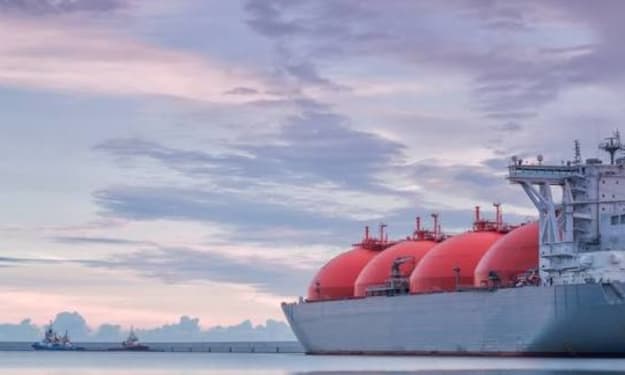
Europe has received a rare shipment of liquefied natural gas (LNG) from China as the continent continues to grapple with tight gas supplies and volatile energy markets, highlighting a quiet but significant shift in global gas trade flows driven by geopolitical pressure and economic pragmatism. According to shipping data and industry sources, the LNG cargo originated from a Chinese buyer that chose to resell or divert its contracted supply to European terminals rather than consume it domestically. Such transactions are unusual, as China is typically one of the world’s largest LNG importers, competing directly with Europe for supplies from major exporters such as Qatar, Australia, and the United States. The delivery comes at a time when European gas storage levels remain under strain following consecutive winters of heavy withdrawals and continued uncertainty over pipeline supplies from Russia. While Europe has dramatically reduced its dependence on Russian gas since 2022, the replacement strategy has made the region far more reliant on LNG imports — and therefore vulnerable to shifts in global demand. A Rare Reversal of Roles Historically, LNG flows have moved from producers to Asia first, where buyers were willing to pay premium prices. China, Japan, and South Korea dominated the LNG market for years, leaving Europe dependent on pipelines from Russia and Norway. That pattern began to change after Russia’s invasion of Ukraine, when Europe scrambled to secure LNG cargoes at almost any price. Asian buyers, including China, found themselves in a new position: able to profit from reselling gas originally meant for their own markets. Energy analysts say China’s decision to divert a cargo to Europe reflects a combination of weaker domestic gas demand and favorable market pricing in Europe. “China’s industrial consumption has slowed compared with previous years, and at the same time European buyers are paying a premium to secure supply,” said one senior LNG trader familiar with the transaction. “It makes commercial sense for Chinese firms to resell some of their contracted volumes.” Strategic Implications for Europe For Europe, the arrival of LNG from China carries symbolic as well as practical importance. It demonstrates that the global gas market is now fully interconnected, with cargoes moving wherever prices are highest and political risks are lowest. European officials have worked to diversify supply through long-term contracts with the United States, Qatar, and African producers. However, short-term spot cargoes remain essential during periods of peak demand or unexpected cold spells. “This is a reminder that Europe’s energy security now depends on global LNG dynamics, not just regional pipeline politics,” said an energy policy adviser in Brussels. “Even a country like China can become an indirect supplier when market conditions allow.” The cargo also underscores Europe’s success in outbidding Asian markets at times, reversing a decades-long imbalance in energy trade power. China’s Quiet Flexibility China’s state-owned energy companies have become major players in LNG trading over the past decade. While originally focused on securing supply for domestic use, they increasingly act as portfolio traders, buying LNG under long-term contracts and selling it on the open market when demand at home is lower. During previous energy crises, Chinese firms resold several LNG cargoes to Europe, generating substantial profits. This latest shipment follows that pattern, reflecting Beijing’s willingness to use its energy assets flexibly rather than hoard supplies. At the same time, China continues to expand pipeline gas imports from Russia and Central Asia, reducing pressure on LNG consumption at home and freeing up cargoes for resale. Market Pressures Remain Despite the symbolic boost, one cargo will do little to solve Europe’s broader gas crunch. Storage levels remain below historical averages in some countries, and weather uncertainty continues to drive price swings. Industry experts warn that Europe could face renewed competition from Asia if Chinese and Japanese demand rebounds sharply during extreme cold or economic recovery. “If China’s economy accelerates or if there is a harsh winter in Northeast Asia, those LNG flows could quickly reverse again,” said a senior analyst at a global energy consultancy. “Europe is not out of danger yet.” The situation also exposes the fragility of Europe’s energy transition. While renewable power capacity is expanding rapidly, gas remains essential for electricity generation and heating, especially when wind and solar output falls. A New Energy Reality The rare LNG shipment from China to Europe illustrates how the gas market has entered a new era defined by flexibility, competition, and geopolitics. Instead of long, predictable routes from producer to consumer, cargoes now chase price signals across oceans. For Europe, the cargo is both a relief and a warning: relief that alternative supplies are still available, and a warning that energy security now depends on complex global trade relationships rather than fixed pipelines. As one European energy official put it privately, “Today China is selling us gas. Tomorrow, we may be bidding against China for the same cargo. That is the new normal.”
By Fiaz Ahmed about 6 hours ago in The Swamp
The Missing Ingredient
The first time I saw her, she was wearing a velvety, red ribbon in her hair. She carried a small leather backpack everywhere. She searched the forest by turning stones, checking beneath shrubs, listening to the wind as if it might carry an answer.
By Imola Tótha day ago in Fiction


Comments
There are no comments for this story
Be the first to respond and start the conversation.