
Europe Gets Rare LNG Cargo from China Amid Gas Crunch
Formal / News style A rare reversal of global gas flows highlights Europe’s growing dependence on the LNG spot market as winter demand tightens supply. China diverts part of its contracted LNG supply to Europe, underscoring shifting energy trade patterns and market pressure. The unusual shipment reflects weakening Chinese demand and Europe’s urgent search for alternative gas sources. Analytical / serious The cargo signals a new phase in global energy competition driven by geopolitics and fragile supply chains. Europe turns to Asian resellers as storage levels and winter risks reshape the LNG market. Short & impactful An unexpected trade route emerges as Europe races to secure fuel for power and heating. A single LNG shipment reveals the growing interdependence of Asia and Europe’s gas markets.

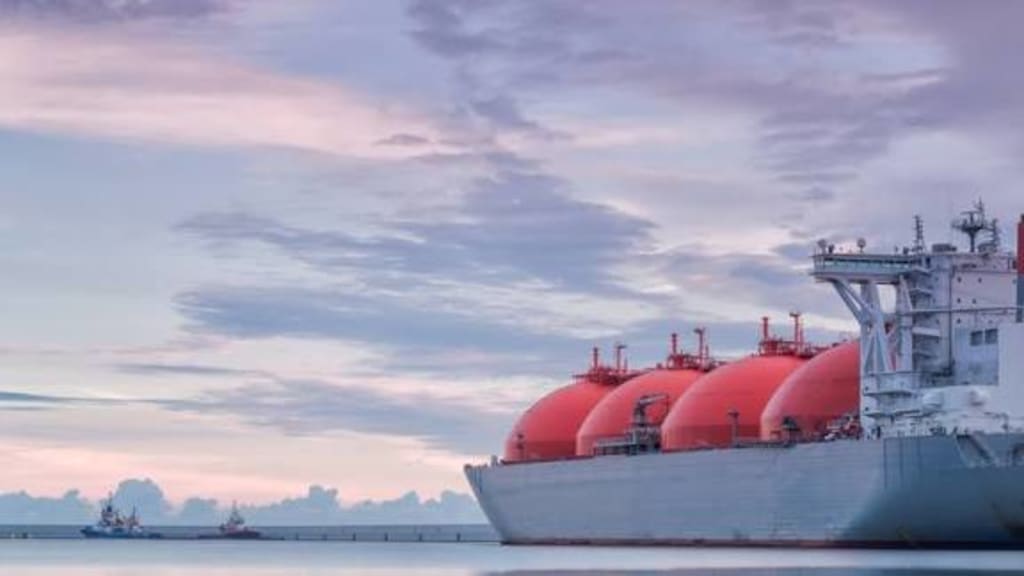
Europe has received a rare shipment of liquefied natural gas (LNG) from China as the continent continues to grapple with tight gas supplies and volatile energy markets, highlighting a quiet but significant shift in global gas trade flows driven by geopolitical pressure and economic pragmatism.
According to shipping data and industry sources, the LNG cargo originated from a Chinese buyer that chose to resell or divert its contracted supply to European terminals rather than consume it domestically. Such transactions are unusual, as China is typically one of the world’s largest LNG importers, competing directly with Europe for supplies from major exporters such as Qatar, Australia, and the United States.
The delivery comes at a time when European gas storage levels remain under strain following consecutive winters of heavy withdrawals and continued uncertainty over pipeline supplies from Russia. While Europe has dramatically reduced its dependence on Russian gas since 2022, the replacement strategy has made the region far more reliant on LNG imports — and therefore vulnerable to shifts in global demand.
A Rare Reversal of Roles
Historically, LNG flows have moved from producers to Asia first, where buyers were willing to pay premium prices. China, Japan, and South Korea dominated the LNG market for years, leaving Europe dependent on pipelines from Russia and Norway.
That pattern began to change after Russia’s invasion of Ukraine, when Europe scrambled to secure LNG cargoes at almost any price. Asian buyers, including China, found themselves in a new position: able to profit from reselling gas originally meant for their own markets.
Energy analysts say China’s decision to divert a cargo to Europe reflects a combination of weaker domestic gas demand and favorable market pricing in Europe.
“China’s industrial consumption has slowed compared with previous years, and at the same time European buyers are paying a premium to secure supply,” said one senior LNG trader familiar with the transaction. “It makes commercial sense for Chinese firms to resell some of their contracted volumes.”
Strategic Implications for Europe
For Europe, the arrival of LNG from China carries symbolic as well as practical importance. It demonstrates that the global gas market is now fully interconnected, with cargoes moving wherever prices are highest and political risks are lowest.
European officials have worked to diversify supply through long-term contracts with the United States, Qatar, and African producers. However, short-term spot cargoes remain essential during periods of peak demand or unexpected cold spells.
“This is a reminder that Europe’s energy security now depends on global LNG dynamics, not just regional pipeline politics,” said an energy policy adviser in Brussels. “Even a country like China can become an indirect supplier when market conditions allow.”
The cargo also underscores Europe’s success in outbidding Asian markets at times, reversing a decades-long imbalance in energy trade power.
China’s Quiet Flexibility
China’s state-owned energy companies have become major players in LNG trading over the past decade. While originally focused on securing supply for domestic use, they increasingly act as portfolio traders, buying LNG under long-term contracts and selling it on the open market when demand at home is lower.
During previous energy crises, Chinese firms resold several LNG cargoes to Europe, generating substantial profits. This latest shipment follows that pattern, reflecting Beijing’s willingness to use its energy assets flexibly rather than hoard supplies.
At the same time, China continues to expand pipeline gas imports from Russia and Central Asia, reducing pressure on LNG consumption at home and freeing up cargoes for resale.
Market Pressures Remain
Despite the symbolic boost, one cargo will do little to solve Europe’s broader gas crunch. Storage levels remain below historical averages in some countries, and weather uncertainty continues to drive price swings.
Industry experts warn that Europe could face renewed competition from Asia if Chinese and Japanese demand rebounds sharply during extreme cold or economic recovery.
“If China’s economy accelerates or if there is a harsh winter in Northeast Asia, those LNG flows could quickly reverse again,” said a senior analyst at a global energy consultancy. “Europe is not out of danger yet.”
The situation also exposes the fragility of Europe’s energy transition. While renewable power capacity is expanding rapidly, gas remains essential for electricity generation and heating, especially when wind and solar output falls.
A New Energy Reality
The rare LNG shipment from China to Europe illustrates how the gas market has entered a new era defined by flexibility, competition, and geopolitics. Instead of long, predictable routes from producer to consumer, cargoes now chase price signals across oceans.
For Europe, the cargo is both a relief and a warning: relief that alternative supplies are still available, and a warning that energy security now depends on complex global trade relationships rather than fixed pipelines.
As one European energy official put it privately, “Today China is selling us gas. Tomorrow, we may be bidding against China for the same cargo. That is the new normal.”
About the Creator
Fiaz Ahmed
I am Fiaz Ahmed. I am a passionate writer. I love covering trending topics and breaking news. With a sharp eye for what’s happening around the world, and crafts timely and engaging stories that keep readers informed and updated.
Keep reading
More stories from Fiaz Ahmed and writers in The Swamp and other communities.
Freeways as Runways: Indonesia Plans to Turn Its Islands Into Cheaper ‘Aircraft Carriers’
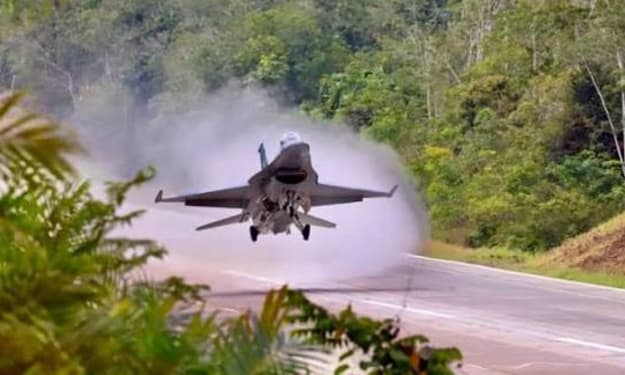
By [Your Name], Special Defense Correspondent Published February 12, 2026 — based on verified reporting by international news agencies Indonesia is undertaking a bold and unconventional expansion of its air-defense strategy, transforming its network of highways and toll roads into a dispersed and resilient system of emergency runways. The plan, which military officials describe as far more cost-effective than purchasing or building conventional aircraft carriers, could fundamentally reshape how the archipelagic nation responds to air and maritime security threats At a recent military demonstration in Lampung province on the southern tip of Sumatra, fighter aircraft landed and took off from a section of the Trans-Sumatra Toll Road, marking the first trial of its kind in Indonesia’s history. An F-16 fighter jet and an EMB-314 Super Tucano attack aircraft successfully completed runway operations from the 24-meter-wide highway, showcasing the feasibility of such maneuvers outside of conventional airfield. The Indonesian Air Force chief of staff, Marshal Tonny Harjono, said on Wednesday that the goal is to enable each of the country’s 38 or more provinces to host at least one “situationally usable” runway section along major highways. While no formal timeline has been announced, officials say the initiative will be rolled out gradually as part of broader defense planning. “The use of toll roads as situational alternative runways is expected to strengthen the operational readiness of the Indonesian Air Force in facing various potential threats, without reducing the primary function of toll roads as public transportation infrastructure,” the Air Force said in a statement. Indonesia, the world’s largest archipelago nation with more than 6,000 inhabited islands stretching over 5,000 kilometers east to west, faces unique geographical challenges. Maritime and territorial disputes, particularly in the South China Sea, have underscored the need for flexible and redundant defense capabilities. The sprawling geography makes traditional concentrated air-base infrastructure vulnerable to disruption and limits rapid deployment across the nation’s vast territory. Analysts say converting public highways into aircraft runways offers a way to mitigate these vulnerabilities. Civilian roadways can be spread across the country and upgraded incrementally at lower cost than a fleet of aircraft carriers. Acquiring and maintaining carriers — floating air bases that cost billions of dollars and require significant crew and logistics support — remains beyond Indonesia’s current defense budget priorities “An aircraft carrier doesn’t seem that attractive as a cost-effective platform,” said Collin Koh, a research fellow at the S. Rajaratnam School of International Studies in Singapore. “Having countless toll roads and highways earmarked as emergency military runways across the entire archipelago makes more strategic and operational sense.” The resilience of this distributed runway approach is also an advantage, according to Koh. “If you strike the aircraft carrier once, it’s gone,” he added. By contrast, a network of alternative road-based landing sites would ensure continuity of operations even if some locations were damaged or compromised. To function effectively as emergency runways, certain highway segments must meet specific technical requirements. Indonesia’s Defense Ministry has begun preparing road maps to upgrade selected toll roads and national highways so that their surfaces, gradients, and clearances meet aircraft operational standards. In emergencies, these sections could serve as alternative airstrips when primary airfields are unavailable due to natural disasters, security concerns, or maintenance shutdowns. en.antaranews.com Deputy Defense Minister Donny Ermawan Taufanto described the initial demonstration on the Trans-Sumatra Toll Road as a milestone in Indonesia’s “universal defense system,” which aims to integrate civilian infrastructure into national defense planning. Despite narrow widths (approximately 24 meters compared with 45–60 meters for standard airport runways), successful operations by highly trained Indonesian pilots demonstrate that the concept is practicable under controlled conditions. Harjono emphasized that pilots are receiving specialized training for these runway environments, which require precision and skill given the constrained space. Critics of the strategy have questioned whether civilian infrastructure should be repurposed for military use, arguing that the duality could complicate road maintenance and safety standards. However, proponents say the trade-offs are justified by strengthened national resilience and the deterrent value of distributed air capability. Ultimately, Indonesia’s highways-as-runways plan reflects a broader trend in defense thinking: the need to maximize strategic depth and adaptability in a world of evolving threats. By reimagining everyday infrastructure as part of its military toolkit, Indonesia seeks to ensure that its forces can operate effectively across one of the most geographically complex countries on earth.
By Fiaz Ahmed 4 days ago in The Swamp
Why Black History Matters in America?
The United States of America is celebrating their 250th anniversary in 2026. I'm proud to be an American and as someone who was born here, I wouldn't imagine myself living anywhere else. This is a country where opportunities are possible. Where anyone can be successful in anything they desire to do. Equality, community, and togetherness are the backbones of what America is and should be about. However, we have an administration who wants to erase and disregard those who have made positive, meaningful impacts in our country, specifically Black figures, such as Martin Luther King, Jr., Rosa Parks, and Maya Angelou. President Trump and his administration have been constantly complaining and fighting against what they call the "Woke agenda". They use this excuse as a distraction from other issues they refuse to address, such as the high cost of living, climate change, and inflation. That equality is dividing America, when in reality, it's bringing us together. Being woke is not tied to a specific political party. No matter where you stand on the political spectrum, you can still care about other people and their plights. Compassion and empathy for others isn't tied to a political party, either. We were taught as children to treat others the way we want to be treated and not judge others because they're different from us. Caring about others isn't a personal attack on your beliefs. It doesn't make you any less of a person. People who are easily offended over African American figures, past or present, or anything related to it, are grasping at straws. Current and future generations need to know who people like Harriet Tubman and Shirley Chisholm were, especially in the classroom. Black History is part of American History. It should be recognized, not hidden or forgotten. Besides, you can't shield children from everything, just because your feelings are easily hurt.
By Mark Wesley Pritchard 15 days ago in The Swamp
Public Announcement Challenge Winners
Public announcement challenges have become powerful platforms for discovering creative talent and amplifying messages that matter. From public health and environmental awareness to social inclusion and civic responsibility, these competitions invite individuals and organizations to craft announcements that inform, inspire, and influence behavior. This year’s Public Announcement Challenge winners stood out not only for their creativity, but also for their ability to turn complex issues into clear, compelling messages that resonate with diverse audiences.
By Sadaqat Ali7 days ago in The Swamp
I've Just Realized
The President doesn't understand music. There. It felt very good to write that; it's some thing I just realized today. Oh , yes; he plays it. He TRUMPets it in rallies and meetings, pumps it across the airwaves when he gathers up our minutes waiting for his late arrival.
By Judey Kalchik 7 days ago in Beat


Comments
There are no comments for this story
Be the first to respond and start the conversation.