
A Turning Point for Humanity: Canada’s Prime Minister Issues Stark Warning on Global Order
A Stark Warning from Ottawa as Global Stability Faces a Defining Moment

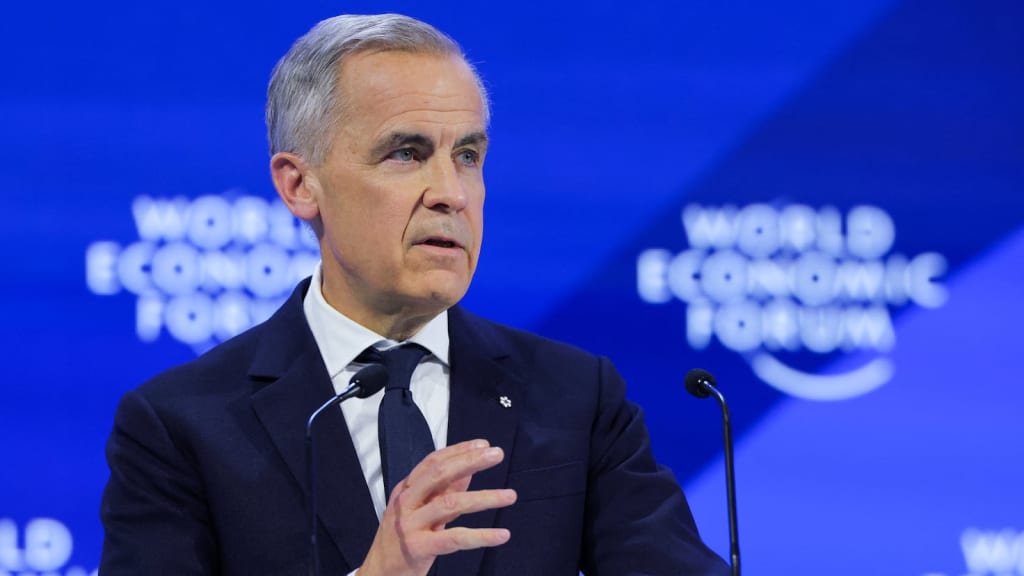
Canada’s prime minister has delivered one of the most sobering messages heard from a Western leader in recent years, declaring that the world has entered a moment so transformative that “the old rules no longer apply.” While not a literal prediction of planetary destruction, the statement has been widely interpreted as a warning that the global system as we have known it is breaking down—economically, politically, and morally.
The remarks came amid rising international tensions, prolonged wars, climate emergencies, and deepening divisions between global powers. According to the prime minister, humanity is facing a historic crossroads where familiar institutions, alliances, and assumptions about security and cooperation may no longer be enough to prevent widespread instability.
What Did the Prime Minister Really Mean?
Despite dramatic headlines, the prime minister was not forecasting an apocalyptic end to life on Earth. Instead, he was describing the collapse of the post–World War II global order—a system built on international law, collective security, and economic cooperation.
For decades, that framework helped prevent large-scale global conflict and encouraged shared prosperity. But today, the prime minister warned, that framework is under intense strain. Military conflicts are expanding, international agreements are being ignored, and trust between nations is eroding at an alarming pace.
In essence, the message was clear: the world is changing faster than our institutions are prepared for.
A World Defined by Crisis After Crisis
The prime minister’s warning reflects a growing sense of unease shared by leaders across the globe. Armed conflicts continue to devastate civilian populations, climate-related disasters are becoming more frequent and severe, and economic inequality is widening both within and between nations.
Supply chains that once seemed unbreakable have proven fragile. Democratic institutions face internal pressure from misinformation and polarization. Meanwhile, technological advances—particularly in artificial intelligence and cyber warfare—are evolving faster than global regulations can keep up.
According to the prime minister, these overlapping crises are not isolated problems. They are interconnected symptoms of a world order under strain, one that may no longer function as it once did.
Canada’s Role in a Fractured World
As a middle power with strong diplomatic ties, Canada has traditionally positioned itself as a bridge-builder on the global stage. In his remarks, the prime minister emphasized that Canada cannot afford complacency in the face of global upheaval.
He stressed the need for renewed international cooperation, stronger alliances, and a recommitment to democratic values. At the same time, he acknowledged that cooperation alone may not be enough if powerful nations continue to act unilaterally or disregard international norms.
Canada, he said, must prepare its citizens for a future that will look very different from the past—economically, politically, and socially.
Public Reaction: Alarm, Debate, and Reflection
The prime minister’s words sparked immediate reaction at home and abroad. Some praised the honesty of the message, arguing that leaders have a responsibility to speak plainly about the risks facing humanity. Others criticized the language as overly dramatic, warning that such statements could fuel fear rather than solutions.
On social media, Canadians debated whether the remarks were a wake-up call or a sign of growing pessimism among world leaders. Many expressed concern about what this means for future generations, particularly in terms of climate security, economic opportunity, and global peace.
What is undeniable is that the speech struck a nerve—forcing people to confront uncomfortable questions about the direction the world is heading.
“The End of the World as We Know It”
When the prime minister spoke of the end of the world “as we know it,” he was pointing to the end of predictability. The era when economic growth, geopolitical stability, and technological progress could be taken for granted may be over.
Instead, the future may be defined by adaptation: adapting to climate realities, to shifting power dynamics, and to rapid technological change. Countries that fail to adapt risk falling behind—or worse, becoming destabilized.
This framing reflects a broader shift in global leadership rhetoric, where optimism is increasingly tempered by realism.
What Comes Next?
The prime minister emphasized that while the moment is dangerous, it is not hopeless. He called for bold leadership, international reform, and public engagement. Global institutions may need to be redesigned. Economic systems may need to become more resilient and inclusive. Climate action, he warned, can no longer be delayed without severe consequences.
Most importantly, he urged citizens not to disengage. According to the prime minister, public trust and civic participation will play a critical role in shaping what comes after this period of disruption.
Why This Message Matters to Communities
For everyday people, global instability often feels distant—until it affects food prices, energy costs, jobs, or personal safety. The prime minister’s message was a reminder that global decisions have local consequences.
Communities across Canada, like those elsewhere in the world, will feel the effects of global shifts. Preparing for that reality means strengthening local resilience, supporting informed dialogue, and demanding responsible leadership.
Conclusion
Canada’s prime minister did not declare the literal end of the world—but he did issue a powerful warning that the era we have long relied on is coming to a close. The systems that once provided stability are under strain, and the future will require adaptation, cooperation, and courage.
Whether this moment becomes the beginning of global renewal or deeper division depends on the choices leaders and citizens make now. What is clear is that the world is changing—and ignoring that reality is no longer an option.
About the Creator
Asad Ali
I'm Asad Ali, a passionate blogger with 3 years of experience creating engaging and informative content across various niches. I specialize in crafting SEO-friendly articles that drive traffic and deliver value to readers.
The Saddest Thing - The Billionaires Who Rule America Aren't Even Enjoying Themselves
This single post says more about our ruling class than a thousand policy papers. The saddest thing about today's system is that the men robbing the rest of us - sabotaging our economic prospects, our pensions, our access to affordable healthcare - are not even happy.
By Scott Christenson🌴8 days ago in The Swamp


Comments
There are no comments for this story
Be the first to respond and start the conversation.