politics
Politics does not dictate our collective cultural mindset as much as it simply reflects it; We've got to look in the mirror sometimes, and we've got one.
Norway's PM Agrees Crown Princess Had ‘Poor Judgement’ Over Epstein Links. AI-Generated.
Norway’s Prime Minister Jonas Gahr Støre has publicly stated that he agrees with Crown Princess Mette-Marit’s own assessment that she showed “poor judgement” regarding past contacts with the late financier and convicted sex offender Jeffrey Epstein. The remarks have sparked significant public discussion across Norway and Europe, focusing on transparency, public accountability, and the expectations placed on members of royal families.
By Aarif Lashari42 minutes ago in The Swamp
Israel Agrees to Limited Reopening of Rafah Border Crossing in Gaza. AI-Generated.
Israel has reportedly agreed to a limited reopening of the Rafah border crossing in Gaza, a development that could have significant humanitarian and political implications. The Rafah crossing, located between Gaza and Egypt, has long been considered a crucial lifeline for civilians in the region, enabling the movement of people, medical evacuations, and the delivery of humanitarian aid.
By Aarif Lashariabout an hour ago in The Swamp
Canadian Company Cancels Sale of Virginia Warehouse to ICE. AI-Generated.
In late January 2026, a major real estate deal drew national attention and then collapsed under public scrutiny. Jim Pattison Developments, a Vancouver-based company, announced it would no longer sell a massive warehouse in Virginia to the U.S. Department of Homeland Security (DHS) for use as an Immigration and Customs Enforcement (ICE) facility. The decision underscores the growing power of community activism, media scrutiny, and corporate accountability in shaping controversial projects.
By Sajida Sikandarabout an hour ago in The Swamp
What to Know About the Rafah Border Crossing in Gaza. AI-Generated.
The Rafah border crossing is one of the most critical and sensitive gateways in the Middle East. Located at the southern edge of the Gaza Strip along the border with Egypt, Rafah serves as a crucial link between Gaza and the outside world. During periods of ongoing conflict and political tension, the crossing often becomes a focal point for humanitarian operations, diplomatic negotiations, and regional security concerns.
By Aarif Lashariabout 2 hours ago in The Swamp
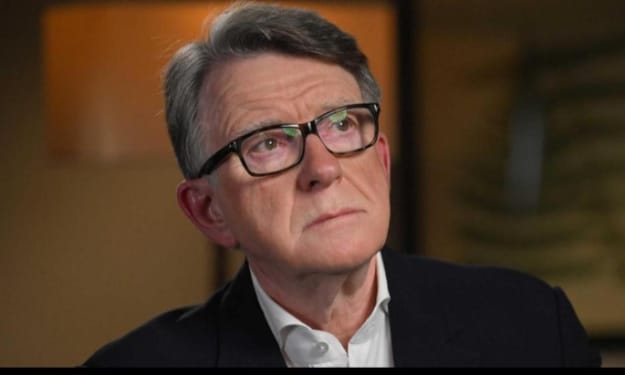
Mandelson’s Exclusion from the Lords: A Divisive Issue within the Labour Party. AI-Generated.
Peter Mandelson, one of the most controversial figures in modern British political history, has long been a central figure in the evolution of the Labour Party. His exclusion from the House of Lords continues to be a hotly debated issue within the party, reflecting broader divisions over the nature of political leadership, accountability, and the role of the aristocracy in modern governance. This article delves into the reasons behind Mandelson’s exclusion from the Lords, explores the internal conflicts within Labour, and assesses how this controversy fits into the broader narrative of modern British politics.
By Ayesha Lashariabout 3 hours ago in The Swamp
"Another Labour Manifesto Promise Broken: A Green Leader's Perspective. AI-Generated.
Introduction: In the ever-evolving landscape of British politics, the political parties frequently face criticism for failing to deliver on their manifesto promises. Recently, the Green Party leader has expressed sharp criticism over what they have termed as yet another broken promise by the Labour Party, this time related to environmental commitments. This article explores the implications of this situation, the specific environmental pledge in question, and why this situation matters in the broader context of political trust and public accountability.
By Ayesha Lashariabout 3 hours ago in The Swamp
Kingspan Wins Historic State Support for €280m Kyiv Factory. AI-Generated.
Irish building materials giant Kingspan Group has secured a landmark investment agreement with Ukrainian authorities to build a €280 million manufacturing campus near Lviv, marking the first time a foreign company has won dedicated state support under Ukraine’s new investment incentive framework. The project underscores both Ukraine’s efforts to attract foreign capital amid ongoing conflict and the determination of international firms to help rebuild the country’s economy and infrastructure. independent.ie +1 The new facility, which will manufacture energy-efficient insulation and advanced construction materials, is expected to create more than 700 jobs and play a key role in Ukraine’s reconstruction efforts, particularly in the building and energy sectors. k-online.com A Vote of Confidence in Ukraine’s Future The decision by Kingspan, a global leader in high-performance building solutions, to move forward with the €280 million investment is seen as a historic milestone. It comes under Ukraine’s blueprint for state support of “significant investment projects,” designed to encourage international business involvement despite Russia’s ongoing war, economic disruption, and the risks of operating in a conflict-affected region. independent.ie “Ukraine’s ability to attract a foreign investment of this scale — and to do so with the active support of state agencies — shows the country remains open for business,” said a senior UkraineInvest official, referring to the government body that worked with Kingspan to facilitate permits, regulatory engagement and strategic planning. UkraineInvest Officials from the Ministry of Economy of Ukraine and Lviv regional authorities have praised the company’s commitment, saying the factory will not only bolster local employment but also strengthen domestic industrial capacity at a time when relying on imported construction materials is both costly and strategically vulnerable. Jobs, Technology and Reconstruction Construction of the campus has already begun, with preparatory groundwork and site development underway. Once fully operational — the majority of the complex is expected to be built within the next five years — Kingspan’s facility will produce insulation products and district heating solutions that are vital to energy-efficient buildings. k-online.com These fields are particularly important given Ukraine’s focus on rebuilding cities, homes, public buildings and infrastructure damaged or destroyed during the war. Energy efficiency remains a top priority for reconstruction, as Ukraine seeks to modernize its building stock and reduce dependence on imported energy sources. Industry data suggests that widespread production of local construction materials could also help Ukraine produce up to 90% of what it needs for reconstruction, if foreign and domestic investment continues to flow. odessa-journal.com The Lviv site is being developed with low-carbon and renewable energy technologies in mind. Kingspan has positioned the campus as an example of sustainable industrial design, aligning with the company’s global strategy to reduce carbon emissions and promote environmentally friendly building solutions. k-online.com Historical Commitment Amid Conflict Kingspan first announced plans for a major Ukrainian investment in mid-2022, shortly after Russia’s full-scale invasion, making it one of the early major commitments by a Western firm since the war began. At that time, the €280 million project — initially described as a state-of-the-art building technology campus — was seen as a bold signal of confidence in Ukraine’s long-term prospects. cdnc.heyzine.com The company’s efforts have unfolded despite continuing military threats and challenging logistics. Lviv, in western Ukraine, is comparatively distant from active frontlines but has nonetheless experienced missile attacks and disruptions. Still, Kingspan leaders and Ukrainian partners say the investment reflects projected demand for materials tied to internal rebuilding and broader European interest in sustainable construction. globalinsulation.com Public and Business Reaction In Kyiv and Lviv, the state support deal has been welcomed by business groups as evidence that Ukraine can still attract foreign direct investment during wartime. Analysts note that having a multinational company like Kingspan establish a manufacturing base could encourage other businesses to consider similar commitments. “The psychological and economic impact of this project is significant,” noted an investment expert. “It shows Ukraine can provide both policy incentives and operational support to make large-scale investments viable.” The expert added that those benefits will be closely watched by other foreign investors assessing long-term opportunities in the region.
By Fiaz Ahmed about 3 hours ago in The Swamp
How To Cultivate a New Crush: A Guide to Sparking Connection and Confidence. AI-Generated.
Developing a new crush can be both thrilling and nerve-wracking. That flutter in your stomach, the eagerness to know more, and the desire to spend time with someone special can feel overwhelming — but it also presents an opportunity for growth, self-awareness, and authentic connection. Learning how to cultivate a crush isn’t just about romantic pursuit; it’s about understanding yourself, building confidence, and creating meaningful interactions.
By Aarif Lashariabout 4 hours ago in The Swamp
Lord Mandelson Resigns from Labour to Prevent Further 'Embarrassment' Over Epstein Ties. AI-Generated.
In a move that has sent shockwaves through the British political landscape, Lord Peter Mandelson, one of the Labour Party’s most influential and controversial figures, has announced his resignation from the party. His decision to step down, which he claims is to protect the party from "further embarrassment," comes in the wake of growing media scrutiny surrounding his alleged links to the notorious financier and convicted sex offender, Jeffrey Epstein.
By Ayesha Lashariabout 4 hours ago in The Swamp
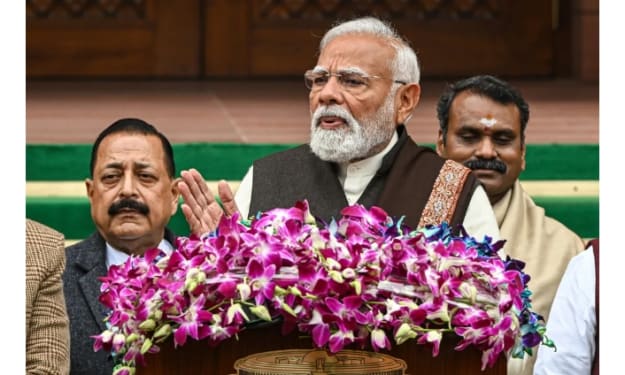
Modi Takes Aim at Trump Threats With Budget to Shield India. AI-Generated.
In a dramatic response to tariff threats and trade pressure from U.S. President Donald Trump, Indian Prime Minister Narendra Modi and Finance Minister Nirmala Sitharaman unveiled the 2026–27 Union Budget on Feb. 1, 2026, prioritising strategic protection for India’s economy in a shifting global order. � finance.yahoo.com +1 The budget—often described as a shield-building exercise for India’s economy—comes as ongoing U.S.–India trade tensions escalate, including steep U.S. tariffs imposed on Indian goods and the risk of more punitive measures that could hit everything from textiles to manufactured exports. � finance.yahoo.com Tariff Challenges From the U.S. Since 2025, the Trump administration has leveraged tariffs as a tool of trade policy, imposing duties on Indian imports—particularly in labour-intensive sectors—and reportedly even asked the European Union to join in punitive tariffs on India and China. � www.ndtv.com Although neither leader names the other when discussing trade policy in official speeches, India’s budget strategy was clearly shaped by these external pressures. That includes U.S. tariffs—some targeted at India’s purchases of Russian oil and other strategic imports—which have dented competitiveness for Indian farmers and exporters alike. � arcamax.com Budget Focus: Economic Resilience and Strategic Investment 1. Boost for Exporters and Strategic Sectors The budget includes measures aimed directly at countering tariff impacts and supporting exporters: Targeted relief for sectors hit hardest by U.S. tariffs, especially labour-intensive industries like textiles and furniture. Duty exemptions and incentives designed to make Indian exports more competitive abroad. Expansion of support for rare earths, semiconductors, biopharmaceuticals, and critical minerals—sectors central to future global supply chains. � arcamax.com +1 2. Strong Infrastructure and Modernisation Push India’s 2026–27 budget also allocates record funding toward long-term growth drivers: A nearly 9% jump in capital expenditure to expand infrastructure, manufacturing capacity, and core industries. Incentives for cloud computing, data centres, and semiconductor fabrication that aim to attract global investment and reduce dependence on foreign supply. Significant increases in defence spending—up by double digits—strengthening India’s strategic posture amid geopolitical uncertainty. � ft.com 3. Keeping Fiscal Discipline While Responding to External Pressure Despite these strategic outlays, the government largely avoided broad tax cuts or unfunded spending booms, sticking instead to a balanced approach that maintains fiscal discipline and debt targets—a key credit-rating and investment consideration. � uk.finance.yahoo.com That cautious stance reflects concerns about global economic volatility, the impact of external headwinds, and the need to counter risks without destabilising India’s economic fundamentals. Self-Reliance and “Atmanirbhar Bharat” as Core Themes Modi has long championed the idea of self-reliant India (Atmanirbhar Bharat)—an economic vision that traces back to domestic-manufacturing goals and resilience against global shocks. This budget deepens that focus by reinforcing: Domestic value chains for high-technology and strategic industries. Policies aimed at reducing reliance on imports that could be hit by foreign tariffs or supply disruptions. Support for micro, small and medium enterprises (MSMEs), often most vulnerable to tariff shocks, through dedicated growth funds and cluster revitalisation programs. � The Times of India Economists say the strategy is designed not only to cushion India from external trade shocks but also to position the country as an alternative manufacturing hub to China—an increasingly attractive narrative for global investors. � ft.com Market and Political Reactions The budget’s reception has been mixed: Investors reacted nervously to tax hikes in areas like equity market transactions, triggering short-term stock market volatility. Some analysts argue that while the budget strengthens resilience, it lacks bold reforms needed to significantly accelerate growth and fully counter external pressures. � Reuters Politically, the budget also sends a message: that India will not be easily diverted from its chosen path of economic reform and global engagement, even in the face of protectionist pressures. Trade Diplomacy and Global Partnerships In parallel with domestic policy, India is also pursuing strategic trade partnerships to offset U.S. tariff pressure. A major free-trade agreement with the European Union—called by some observers the “mother of all deals”—was completed after nearly two decades of negotiation late in 2025, offering new export opportunities for Indian firms. � The Times of India Earlier, similar agreements with the UK and New Zealand boosted India’s market diversification strategy. These diplomatic trade moves are complementary to the budget’s push for economic resilience. Looking Ahead: Balancing Growth and Geopolitical Pressures Modi’s 2026–27 budget marks a critical moment in India’s economic strategy: It signals strategic readiness to withstand external shocks—including tariffs from the U.S.—without sacrificing long-term growth goals. It reinforces a self-reliance narrative that dovetails with global supply-chain realignment and the push for manufacturing-led growth. It highlights India’s determination to remain integrated with global markets while building internal buffers against geopolitical and trade risks. � uk.finance.yahoo.com As global trade tensions continue, observers will be watching how India balances domestic growth imperatives with the need to manage relations with major partners like the United States. For now, the Modi government’s budget represents a clear attempt to shield the economy from looming risks while charting a path toward a stronger, more diversified future.
By Zahid Hussainabout 6 hours ago in The Swamp
Laura Fernández Declares Victory in Costa Rica’s Presidential Election. AI-Generated.
Costa Rica’s 2026 presidential election has delivered a clear winner: Laura Fernández Delgado, the 39-year-old conservative candidate from the ruling Sovereign People’s Party (PPSO), has claimed victory with more than 40 % of the vote in Sunday’s election, avoiding a runoff and becoming Costa Rica’s next president.� english.news.cn +1 Preliminary and partial results released by Costa Rica’s Supreme Electoral Tribunal (TSE) showed Fernández securing almost 48–49 %, well above the 40 % threshold needed to win the presidency in the first round of voting, with her main rival, centrist economist Álvaro Ramos of the National Liberation Party (PLN), trailing with roughly 33 % of the vote.� Reuters +1 A First-Round Victory in Historic Context Costa Rican electoral law stipulates that a presidential candidate must receive at least 40 % of valid votes to be elected without a runoff election scheduled for April 5. Fernández surpassed that mark as votes continued to be counted, giving her an outright win without a second round.� Reuters With high turnout among the country’s 3.7 million registered voters, Fernández’s victory reflects both her personal appeal and broader public support for her platform, especially on issues where many voters feel the government has fallen short.� english.news.cn Her win also comes as the PPSO is expected to expand its representation in the 57-seat Legislative Assembly, climbing toward a majority, though short of a supermajority that would allow it to pursue constitutional changes without broad opposition support.� NST Online Who Is Laura Fernández? Laura Virginia Fernández Delgado is a political scientist and longtime public servant. She previously served as minister of national planning and economic policy (2022–2025) and minister of the Presidency (2024–2025) in the administration of outgoing President Rodrigo Chaves Robles.� Wikipedia Born on July 4, 1986, in Puntarenas, Fernández holds a degree in public politics and democratic governability and positioned herself as the continuity candidate for Chaves’s policies. Her campaign emphasized security, institutional reform, and economic growth, tapping into widespread voter concern over rising crime and public safety.� english.news.cn She is poised to become the second woman elected president in Costa Rica’s history, following Laura Chinchilla (2010–2014).� amcostarica.com Campaign Themes: Crime, Security & “Third Republic” Crime and security dominated the 2026 election campaign. Costa Rica, historically one of Latin America’s most peaceful democracies, has seen a significant rise in violence and drug-related crime in recent years — a trend that Fernández and other conservative candidates made central to their platforms.� Malay Mail In her victory speech, Fernández framed her win as the start of a “Third Republic,” calling for deep changes and continuity of policies aimed at combating crime, strengthening institutions, and boosting economic activity. She thanked President Chaves for his support and indicated she would involve him in her new administration, even though constitutional rules bar him from seeking immediate reelection.� english.news.cn Reaction from Rivals and International Leaders Álvaro Ramos, Fernández’s closest competitor, conceded defeat and vowed to remain a force in Costa Rican politics, focusing on democratic oversight and constructive opposition in the Legislative Assembly.� Reuters International leaders have also responded. For instance, Israeli Foreign Minister Gideon Sa’ar congratulated Fernández on her victory and underscored the longstanding relationship between Costa Rica and Israel, highlighting expectations for enhanced cooperation.� JNS.org Similarly, El Salvador’s President Nayib Bukele — whose hardline security policies have influenced Fernández’s rhetoric — reportedly congratulated her on social media, reinforcing regional connections among right-wing leaders.� Reddit What Her Presidency Could Mean Fernández’s victory signals a shift to the right in Costa Rican politics — part of a broader regional trend where conservative and populist figures have gained ground amid public frustration over crime, corruption, and governance challenges.� Malay Mail Her policy agenda includes: Tougher measures against crime and organized gangs Support for strong security infrastructure, including completion of a new high-security prison Public–private partnerships to stimulate infrastructure investment Institutional reforms and bureaucratic streamlining While Fernández has pledged to uphold Costa Rica’s democratic norms, critics and political analysts caution against potential overreach or erosion of civil liberties, especially if security policies become increasingly authoritarian.� Malay Mail Looking Ahead: From Election Night to Inauguration Costa Ricans elected Fernández in a crucial moment for the country’s future, choosing leadership that reflects growing public concern about safety and governance. Her presidency will officially begin on May 8, 2026, when she is sworn in for a four-year term that runs through May 8, 2030.� amcostarica.com The expanded majority for her party in the legislature could facilitate her policy initiatives, though meaningful opposition within the Assembly remains to ensure democratic checks and balances.
By Zahid Hussainabout 6 hours ago in The Swamp