
Americans React After South Korea Sentences Former President Yoon Suk Yeol to Prison for Insurrection
Online debate grows as U.S. observers compare accountability in Seoul and Washington

A Verdict That Sparked Global Attention
The sentencing of former South Korean president Yoon Suk Yeol to prison on charges related to insurrection has triggered strong reactions both inside South Korea and abroad. In the United States, many Americans took to social media platforms to express surprise, frustration, or approval after news of the decision began circulating widely.
The case centers on actions that prosecutors argued amounted to an attempt to undermine constitutional order. A court in Seoul concluded that the former president bore responsibility for conduct that threatened democratic stability. The ruling has drawn comparisons to political accountability debates in other coun
The Charges and Court Decision
According to court documents, prosecutors accused Yoon of supporting or enabling actions aimed at disrupting the lawful transfer or exercise of political authority. After months of investigation and hearings, the court determined that the evidence supported a conviction.
The sentencing marks a significant moment in South Korea’s political history. South Korea has previously prosecuted former leaders for corruption and abuse of power, but each case carries its own legal and political weight.
Legal experts in Seoul noted that the ruling demonstrates the independence of the judiciary and its authority to hold high-ranking officials accountable.
South Korea’s Record on Presidential Accountability
South Korea has a history of investigating and prosecuting former presidents. In past decades, former leaders have faced charges ranging from corruption to abuse of authority. Those cases have shaped public expectations about accountability.
Political analysts say that the country’s democratic institutions have evolved through periods of crisis. Public protests, court decisions and constitutional reforms have played a role in shaping the system.
The conviction of Yoon adds another chapter to that history, reinforcing the message that former officeholders can face legal consequences.
Reaction Inside South Korea
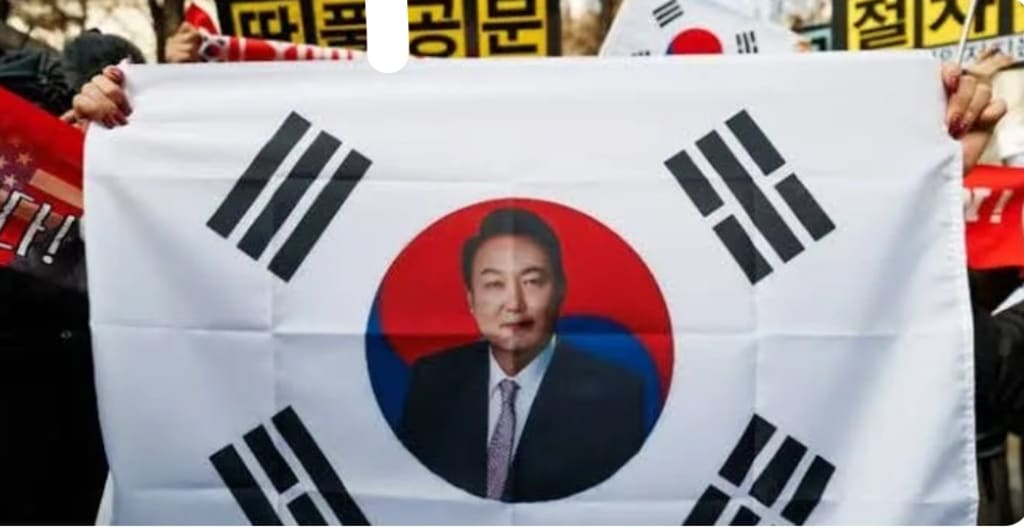
Public response in South Korea has been mixed. Supporters of the ruling argue that no leader should be above the law. Critics contend that the decision could deepen political divisions.
Demonstrations took place in parts of Seoul following the sentencing. Some protestors carried signs supporting the court’s decision, while others accused prosecutors of overreach.
Government officials have urged calm and respect for legal processes, emphasizing the importance of stability.
American Social Media Response
In the United States, the news gained traction on social media platforms and digital news outlets, including coverage from outlets such as BuzzFeed. Many Americans compared the South Korean ruling to ongoing debates about accountability for political leaders in the U.S.
Some users expressed admiration for what they saw as decisive legal action. Others questioned whether the cases were comparable, noting differences in legal systems and political structures.
Hashtags referencing democracy, insurrection and rule of law began trending shortly after the news broke.
Comparisons to U.S. Political Events
The sentencing prompted renewed discussion about how democracies handle allegations of insurrection or attempts to overturn elections. Commentators drew parallels to events surrounding the January 6, 2021 attack on the U.S. Capitol.
Legal scholars caution that direct comparisons can oversimplify complex legal frameworks. Each country has its own constitution, statutes and judicial procedures.
Nevertheless, the case has become a reference point in broader debates about accountability and democratic norms.
---
The Legal Definition of Insurrection
In many legal systems, insurrection refers to an organized effort to overthrow or uine lawful authority. Prosecutors in South Korea argued that Yoon’s actions met that threshold under national law.
Legal analysts note that such charges require evidence of intent and coordination. Courts must assess not only the actions taken but also the broader context.
The conviction suggests that the court found sufficient evidence to meet the legal standard.
Political Implications in Seoul
The sentencing could influence South Korea’s upcoming elections and party dynamics. Political parties are likely to use the ruling to rally supporters and frame campaign narratives.
Some analysts believe the case may strengthen calls for institutional reform. Others warn that it could deepen polarization if supporters view the prosecution as politically motivated.
Economic markets in South Korea showed limited immediate reaction, though political developments often carry longer-term implications.
International Observers Weigh In
International observers are watching closely. Diplomatic partners, including the United States, have emphasized respect for South Korea’s judicial process.
South Korea remains a key ally of the U.S. in East Asia. Political stability in Seoul is considered important for regional security and economic cooperation.
Officials in Washington have not commented extensively on the ruling beyond acknowledging it as an internal legal matter for South Korea.
The Role of Media Coverage
Digital platforms played a major role in shaping American awareness of the case. Short video clips, commentary threads and news summaries spread rapidly.
Media experts note that international stories can take on new meaning when filtered through domestic political debates. In this case, the South Korean ruling became part of a broader U.S. conversation about leadership and consequences.
Accurate reporting and context are critical when discussing foreign legal systems.
Broader Questions About Democracy
The case has prompted broader reflection on how democracies respond to crises. Scholars often emphasize the importance of independent courts, transparent investigations and peaceful political transitions.
Supporters of the ruling argue that accountability strengthens democratic institutions. Critics argue that prosecutions of former leaders can be destabilizing if perceived as partisan.
The balance between justice and stability is a recurring theme in democratic governance.
Public Sentiment and Polarization
In both South Korea and the United States, public reaction reflects deep political divisions. Supporters and critics often interpret the same events differently.
Social media can amplify strong reactions, sometimes without full context. Experts recommend reviewing primary sources and official statements to understand complex legal cases.
The speed of online debate can make nuanced discussion challenging.
Looking Ahead
Yoon’s legal team is expected to explore appeals. Appeals could delay final resolution and extend public debate.
In the meantime, South Korea’s political system continues to function under its constitutional framework. Acting officials and institutions maintain regular governance.
For Americans following the story, the case highlights differences and similarities between democratic systems. It also underscores how global events can quickly influence domestic conversations.
Conclusion
The sentencing of former South Korean president Yoon Suk Yeol on insurrection-related charges has resonated far beyond Seoul. In the United States, reactions range from approval to skepticism, reflecting broader debates about accountability and democracy.
While legal systems differ, the case illustrates how courts can play a central role in addressing political crises. As appeals proceed and political discussions continue, observers in both countries will watch closely to see how institutions respond.
In an interconnected world, major legal decisions in one democracy can shape conversations in another. The discussion surrounding this case is likely to continue as both nations navigate complex political landscapes.
About the Creator
Saad
I’m Saad. I’m a passionate writer who loves exploring trending news topics, sharing insights, and keeping readers updated on what’s happening around the world.
A Gathering of Evil Bosses
“I’m the queen of chin jutting while I smooth my hair, attacking, insulting, and deflecting to protect my appointer.” “Oh, please, Blondi, my hair is curled, highlighted, and longer than yours. I feature television commercials telling immigrants that we will give them a free plane ride home, and if they voluntarily turn themselves in, they will be allowed to legally apply for re-entry. It runs everywhere, and I look good in it! You can’t compete because of your blond hair. Mine is nicer, and my lips are prettier than yours.”
By Andrea Corwin 4 days ago in The Swamp
Germany News: Crowds Throng Streets for Carnival Parades
Germany’s annual Carnival season reached a vibrant peak this week as throngs of revelers took to the streets in cities and towns across the country, celebrating one of Europe’s most exuberant festive traditions. Known locally as “Karneval”, “Fasching” or “Fastnacht” depending on the region, the season culminates in flamboyant parades, elaborate costumes, and raucous street parties that draw both local participants and international visitors alike. A Tradition Rooted in History Carnival’s origins in Germany date back centuries, blending medieval customs with Christian traditions that mark the period before Lent, the 40‑day period of fasting and penance leading up to Easter. While the religious calendar shapes the timing of Carnival, the contemporary experience is predominantly secular and cultural — a time for communities to let loose, satirize politics, and revel in shared identity. In cities like Cologne, Düsseldorf, and Mainz, the festivities are particularly large‑scale, featuring official processions, marching bands, and community groups. In these Rhineland strongholds, Carnival is not simply a party but a major cultural institution that brings together generations in a shared expression of humour, colour, and joy. Streets Alive with Costumes and Celebration This year’s parades attracted tens of thousands of participants and spectators despite lingering concerns about weather and public safety. Streets were transformed into vibrant corridors of colour as masqueraders donned everything from traditional jesters and historical figures to pop culture characters and satirical takes on current events. Families, students, and tourists mingled along parade routes, waving flags, tossing sweets and small gifts known as “Kamelle”, and shouting traditional Carnival greetings such as “Alaaf!” in Cologne or “Helau!” in Düsseldorf and Mainz. Floats adorned with witty political commentary rolled by, lampooning public figures and topical issues in the manner typical of German Carnival satire. Carnival royalty — including elected figures such as the “Prince” and “Peasant,” key symbolic roles in many parades — presided over festivities, and music echoed through central squares well into the evening. Local clubs and associations, known as Karnevalsvereine, play a central role in organizing events and preserving traditional performances, songs, and customs. Tourism and Economic Impact Festive celebrations also bring significant economic activity to regions where Carnival is most popular. Hotels, restaurants, and bars typically see a boost in business, and vendors selling costumes, masks, and themed merchandise report strong sales. In Cologne, for example, officials estimated that Carnival season contributes millions of euros to the local economy each year, driven by both domestic and international visitors. Tourists from neighbouring countries such as the Netherlands and Belgium, as well as from farther afield, flocked to Carnival hubs this week, many booking months in advance to secure lodging and event tickets. Travel authorities noted that the celebrations help sustain off‑peak tourism in winter months, offering cultural attractions that complement Germany’s Christmas markets and winter festivals. Public Safety and Crowd Management Large crowds and high energy also present challenges for local authorities tasked with ensuring public safety. Police departments in major Carnival cities implemented heightened security measures, including increased patrols, first‑aid stations, and restrictions on alcohol sales in certain areas. Organizers worked with municipal officials to coordinate road closures, crowd flows, and emergency response plans. Officials encouraged revelers to be mindful of personal belongings and to seek assistance if needed. In recent years, some Carnival events have tightened security in response to broader concerns about mass gatherings in urban settings, and this year was no exception. Nevertheless, authorities described the overall atmosphere as peaceful and festive, with most attendees demonstrating cooperation and respect for safety protocols. Cultural Significance Today Despite modern challenges, Carnival remains a deeply cherished tradition in German culture. Participants often describe it as a time when everyday norms are temporarily upended, allowing people to express creativity and community spirit with humour and abandon. For many, especially those in the Rhineland, Carnival is as much a part of local identity as beer gardens, football clubs, and regional dialects. The celebrations also serve as a reminder of how traditional customs have adapted to contemporary life — merging historical roots with modern tastes in music, performance, and public participation. Street festivals, dance competitions, and late‑night gatherings complement the more formal parade events, creating a mosaic of experiences that appeal to a broad cross‑section of society. Looking Ahead As the Carnival season winds down with Tuesday’s festivities often referred to as Fat Tuesday or Shrove Tuesday, communities across Germany will gradually return to routine, and traditional Lent observances will begin on Ash Wednesday. But the memories of costumes, laughter, and shared celebration will linger, captured in photos, stories, and local lore. For now, Germany’s Carnival remains a vivid testament to the country’s cultural diversity, community resilience, and enduring love of festivity — a moment when streets are filled not only with crowds but with colour, sound, and joy.
By Fiaz Ahmed 6 days ago in The Swamp
'Till Death We Do Art
There would be nothing divine in this world without art. Nature may surpass the divine to all intents and purposes, but like everything it absorbs and is absorbed by, it remains here, stuck on the surface of this world, ever-present, physically bound to the universe.
By Avocado Nunzella BSc (Psych) -- M.A.P 5 days ago in Art



Comments
There are no comments for this story
Be the first to respond and start the conversation.