
Authoritarians, Strongmen and Dictators: Who Is on Trump’s “Board of Peace”?
🔹 Formal / News Style Critics question reliance on authoritarian leaders to resolve global conflicts Trump’s peace vision centers on personal ties with powerful world rulers 🔹 Neutral & Informative A look at the leaders shaping Trump’s unconventional approach to diplomacy Personal diplomacy replaces traditional alliances in Trump’s proposed peace strategy 🔹 Impactful From Moscow to Pyongyang, Trump bets peace on strongmen

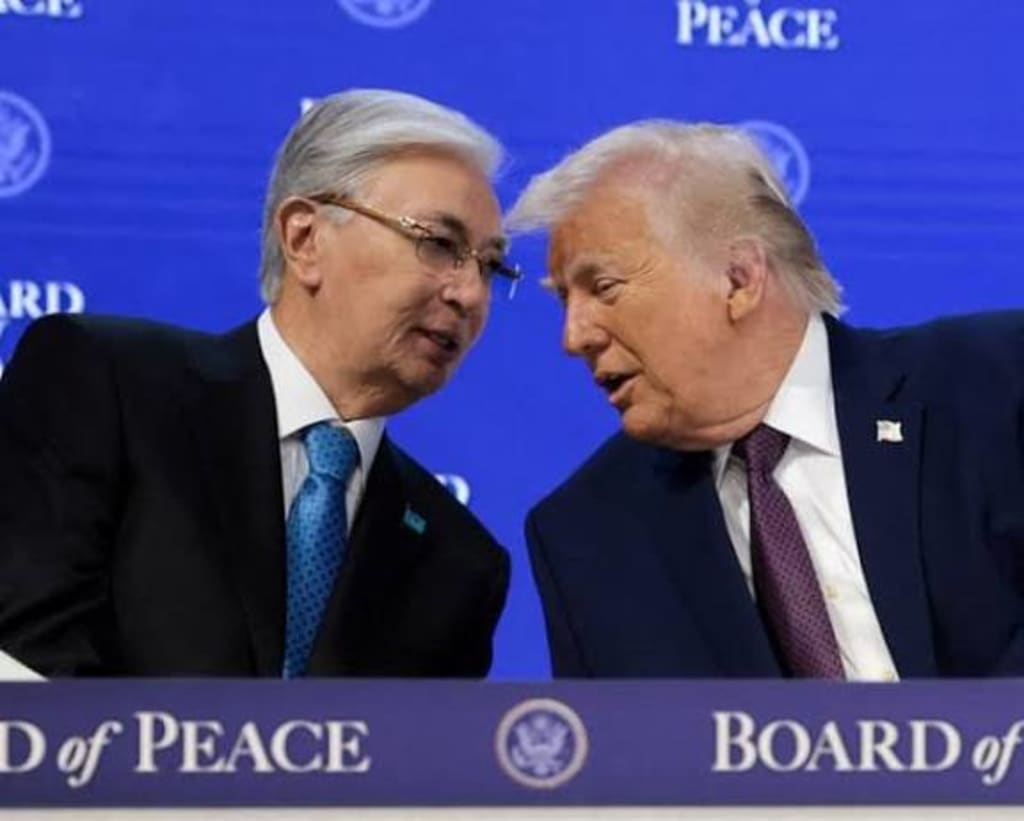
As former U.S. president Donald Trump promotes what he calls a personal “Board of Peace,” critics and analysts are scrutinizing the unusual list of leaders he claims could help end major global conflicts. The group, according to Trump’s own statements and campaign rhetoric, consists largely of strongmen and authoritarian rulers — figures he says he can personally influence through direct relationships and deal-making instincts.
Rather than relying on traditional multilateral institutions or long-standing diplomatic frameworks, Trump has repeatedly argued that peace can be achieved through one-on-one negotiations with leaders he considers “tough but practical.” This approach challenges decades of U.S. foreign policy doctrine that emphasizes alliances, human rights standards, and institutional diplomacy.
A Circle of Strong Leaders
Among the most prominent figures Trump has referenced is Vladimir Putin, whom he has described in the past as “smart” and “strong.” Trump claims that a direct line of communication with Moscow could bring rapid de-escalation in the Russia-Ukraine war. However, critics argue that relying on personal rapport with a leader accused of war crimes risks legitimizing aggression rather than curbing it.
Another central figure in Trump’s vision is Kim Jong-un. Trump famously met Kim three times during his presidency, the first sitting U.S. leader to do so. He continues to point to these meetings as proof that dialogue with isolated regimes is possible. Supporters say the encounters reduced immediate tensions on the Korean Peninsula, while skeptics note that North Korea has since expanded its nuclear and missile programs.
China’s president Xi Jinping is also often mentioned as someone Trump believes he can “work with” to stabilize global affairs. Trump argues that his prior relationship with Xi could help prevent further confrontation over Taiwan and trade. Analysts, however, caution that Beijing’s strategic ambitions and authoritarian governance style make personal diplomacy an unreliable tool for conflict prevention.
Regional Power Brokers
In Europe, Trump has shown admiration for Hungary’s prime minister Viktor Orbán, a nationalist leader criticized for weakening democratic institutions. Orbán has positioned himself as a mediator between Russia and the West, and Trump has praised his leadership style as decisive and patriotic. This has fueled concern among European officials that Trump’s peace vision aligns more with illiberal governments than democratic partners.
In the Middle East, Saudi Arabia’s crown prince Mohammed bin Salman has also been cited by Trump as a key figure capable of stabilizing regional conflicts. Trump has defended the Saudi leadership despite international criticism over human rights and the war in Yemen, emphasizing economic ties and security cooperation instead.
A Different Philosophy of Peace
Trump’s “Board of Peace” reflects a worldview that prioritizes power politics over values-based diplomacy. His approach suggests that conflicts are best resolved through direct bargaining between dominant leaders rather than through institutions like the United Nations or NATO. In this model, personal trust and perceived strength replace formal agreements and legal frameworks.
Supporters argue that this method can cut through bureaucracy and produce quick results. They cite Trump’s role in the Abraham Accords between Israel and several Arab states as evidence that unconventional diplomacy can succeed. They also claim that engaging authoritarian leaders does not mean endorsing them, but recognizing political realities.
Opponents see serious risks. By centering peace efforts on authoritarian figures, they warn that Trump’s strategy could marginalize democratic allies and weaken international norms. Human rights groups fear that authoritarian leaders would gain legitimacy without being pressured to reform. Diplomats also question whether personal relationships can survive leadership changes or shifting geopolitical interests.
Global Reaction
International responses to the idea of a “Board of Peace” have been mixed. Some governments welcome any initiative that promises to reduce conflict, especially amid wars in Ukraine and Gaza. Others see it as a symbolic concept with little practical structure or accountability.
European officials privately express concern that such a board would bypass NATO and EU mechanisms. Asian allies worry that informal diplomacy could lead to unpredictable shifts in policy toward China and North Korea. Meanwhile, authoritarian states appear open to the idea, viewing it as recognition of their central role in shaping global outcomes.
Conclusion
Trump’s proposed “Board of Peace” is less an institution than a reflection of his personal diplomatic style — one that favors strong leaders, direct negotiation, and transactional deals. Whether this approach could truly end major wars or instead empower authoritarianism remains one of the most contentious questions in contemporary global politics. What is clear is that it represents a sharp departure from traditional U.S. foreign policy and a redefinition of how peace might be pursued in an era of rising strongmen.
About the Creator
Fiaz Ahmed
I am Fiaz Ahmed. I am a passionate writer. I love covering trending topics and breaking news. With a sharp eye for what’s happening around the world, and crafts timely and engaging stories that keep readers informed and updated.
Keep reading
More stories from Fiaz Ahmed and writers in The Swamp and other communities.
Trump Officials Plan to Build 5,000-Person Military Base in Gaza, Files Show
Internal planning documents reveal that officials linked to former U.S. president Donald Trump have explored the construction of a permanent American military base in Gaza Strip capable of housing up to 5,000 personnel, according to files reviewed by investigators and confirmed by multiple sources familiar with the matter. The proposal, drafted as part of a broader post-conflict stabilization framework, outlines a heavily fortified installation designed to support security operations, humanitarian coordination, and regional deterrence. While the plan has not been formally announced, the existence of the documents underscores the extent to which U.S. officials have considered a long-term military footprint in Gaza following months of war and instability. Strategic Objectives According to the files, the base would serve several purposes: securing key transport corridors, monitoring militant activity, and acting as a hub for intelligence and logistics. Planners argue that a permanent presence would help prevent the re-emergence of armed groups and provide reassurance to regional allies concerned about renewed conflict. The documents describe a facility with airfield access, missile-defense systems, medical units, and housing for rotating combat and support troops. Analysts say such a base would represent one of the most significant U.S. deployments in the Palestinian territories in modern history. Officials involved in the planning process said the idea emerged from internal debates about how to guarantee security if Israel withdraws major combat formations while Gaza undergoes political and humanitarian reconstruction. Political Sensitivities The concept is deeply controversial. Palestinian leaders and human rights organizations warn that a foreign military base in Gaza could entrench occupation-style control and inflame tensions rather than stabilize the territory. Critics argue that any long-term solution must involve Palestinian governance and international oversight rather than unilateral military structures. Regional governments have also reacted cautiously. Several Arab states have signaled privately that a U.S. base in Gaza could complicate fragile diplomatic efforts and risk drawing Washington deeper into a volatile conflict zone. Supporters of the idea within Trump’s political circle contend that American leadership is necessary to prevent Gaza from becoming a security vacuum. They argue that U.S. forces could operate as a neutral stabilizing power while reconstruction efforts move forward. Link to Trump’s “Peace Vision” The proposal aligns with Trump’s broader rhetoric about enforcing peace through strength. During recent political speeches, Trump has suggested that American authority could rapidly impose order in conflict zones through decisive action rather than prolonged diplomacy. Documents indicate that the base would be part of a larger security architecture involving coordination with Israel and selected regional partners. Israeli defense officials have not publicly commented on the plan, but sources say discussions included possible intelligence-sharing and joint operational zones. Logistical and Legal Challenges Building a base of this scale would require massive logistical investment. The files estimate billions of dollars in construction and security costs over the first five years, including hardened shelters, radar systems, and supply depots. Planners also note the challenge of maintaining supply lines into Gaza, an area with damaged infrastructure and restricted access routes. Legal experts warn that the deployment would raise serious international law questions. Gaza’s status as a Palestinian territory under complex occupation arrangements means that stationing foreign troops could require international agreements or UN authorization. “There is no clear legal pathway for a permanent U.S. military base in Gaza without broad international consent,” said one former U.S. defense official familiar with the region. Reaction in Washington In Washington, lawmakers are divided. Some Republican allies of Trump see the plan as bold and necessary to reshape Middle East security. Others, including members of both parties, warn that it could entangle the U.S. in another long-term ground commitment similar to Iraq or Afghanistan. Democratic leaders have questioned whether such a move would undermine diplomatic efforts aimed at a two-state solution. They argue that American troops on the ground could become targets for militant attacks and further escalate regional violence. A Signal of Future Policy Although the plan remains unofficial, its existence signals how dramatically U.S. Middle East policy could shift if Trump returns to power. Rather than relying on multinational peacekeeping or negotiated frameworks, the documents show a preference for direct military control as a tool of stabilization. For now, the proposal remains a confidential contingency plan. But its disclosure highlights the intensity of behind-the-scenes planning and the scale of ambition among Trump-aligned officials seeking to redefine America’s role in Gaza. Whether such a base would ever be built is uncertain. What is clear is that the idea has already sparked alarm among diplomats, regional leaders, and humanitarian groups who fear that turning Gaza into a permanent military zone would deepen conflict rather than resolve it.
By Fiaz Ahmed about 17 hours ago in The Swamp
The Saddest Thing - The Billionaires Who Rule America Aren't Even Enjoying Themselves
This single post says more about our ruling class than a thousand policy papers. The saddest thing about today's system is that the men robbing the rest of us - sabotaging our economic prospects, our pensions, our access to affordable healthcare - are not even happy.
By Scott Christenson🌴13 days ago in The Swamp
Lunar New Year Horoscopes for 2026, the Year of the Fire Horse
The Lunar New Year of 2026 ushers in the Year of the Fire Horse, a powerful combination of speed, passion, and transformation. In Chinese astrology, the Horse symbolizes freedom, courage, and relentless movement forward. When paired with the Fire element, its natural intensity is amplified, bringing a year charged with ambition, emotional clarity, and dramatic shifts.
By Sajida Sikandar2 days ago in The Swamp



Comments
There are no comments for this story
Be the first to respond and start the conversation.