
China Showcases Humanoid Martial Arts Robots: Should Europe Be Worried?
A dazzling display of robotic combat highlights China’s rapid advances in artificial intelligence and robotics—raising questions about global competition, security, and Europe’s technological future.

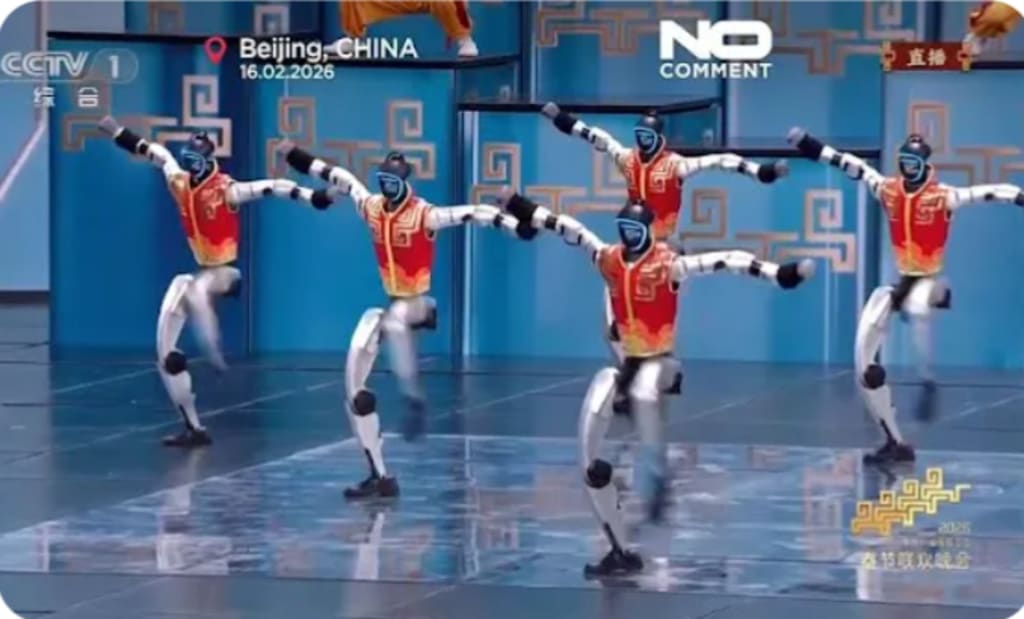
The world recently watched in awe as China unveiled humanoid robots capable of performing martial arts routines with striking precision and agility. These machines delivered choreographed kicks, punches, and complex stances that looked straight out of a science-fiction film. What once seemed futuristic fantasy is now an engineering reality—and it has sparked a wave of debate across the globe.
Beyond the spectacle, the demonstration carries deeper implications. It represents a bold statement about China’s ambitions in artificial intelligence and robotics. For policymakers and innovators in European Union, the showcase raises an urgent question: should Europe be worried about falling behind in the next great technological race?
A Show of Strength Through Robotics
The martial arts robots were designed to mimic human movement with remarkable fluidity. Using AI-powered vision systems, motion sensors, and advanced actuators, they demonstrated balance, reaction timing, and coordinated sequences that would challenge even trained athletes.
While the performance was partly theatrical, its symbolism was unmistakable. China was not merely entertaining an audience—it was signaling its growing dominance in robotics research and development. The country has invested heavily in automation, smart manufacturing, and artificial intelligence as part of its long-term national strategy.
These robots are not just prototypes for entertainment. The underlying technology has practical applications in logistics, healthcare, disaster response, and even defense. Martial arts movements, which require precise balance and rapid motor control, serve as a benchmark for how far humanoid robotics has advanced.
Why This Matters for Europe
Europe has long been a leader in engineering, manufacturing, and scientific research. However, the rapid pace of China’s progress is causing unease among European analysts and industry leaders.
The concern is not that martial arts robots themselves pose a direct threat, but that they demonstrate how quickly China is closing the gap—or even surpassing—Western competitors in AI-driven robotics. If these systems can master complex human movements, they can likely be adapted for factory work, caregiving roles, and high-risk environments.
For Europe, this creates a strategic dilemma. The continent prides itself on ethical AI frameworks and strict regulations, but innovation thrives on speed and investment. There is growing fear that excessive caution could leave Europe dependent on foreign technologies for critical infrastructure and security.
The Military and Security Angle
One of the most controversial aspects of the demonstration is its potential military significance. Robots trained in martial arts symbolize more than athletic prowess—they hint at future autonomous systems capable of physical engagement in conflict zones.
Although Chinese officials emphasize civilian uses, experts acknowledge that dual-use technology is inevitable. Robotics developed for balance and movement can be repurposed for surveillance, border patrol, and even combat assistance.
This is where Europe’s worry becomes more pronounced. While European nations focus heavily on diplomacy and regulation, China’s approach blends technological innovation with national strategy. The line between civilian and military robotics is becoming increasingly blurred.
Economic Competition and the Future of Work
Robotics is not only about power and security—it is also about economic dominance. Countries that lead in automation will control manufacturing supply chains and high-value technology exports.
China’s robots showcase its readiness to dominate the global robotics market, which is expected to be worth hundreds of billions of dollars in the coming decades. If Chinese companies set the standards for humanoid robotics, Europe could find itself buying instead of building.
This raises concerns for European labor markets. Advanced humanoid robots could eventually replace or augment workers in factories, warehouses, and service industries. Europe must decide whether to compete aggressively or risk losing industrial relevance.
Europe’s Strengths: Not All Is Lost
Despite these challenges, Europe is far from helpless. The continent remains home to world-class universities, research institutions, and robotics companies. Its advantage lies in precision engineering, ethical frameworks, and collaboration between nations.
Europe also has strong public trust in technology governance. While China pushes forward with rapid experimentation, Europe can position itself as the leader in safe, human-centered robotics. This approach could appeal to global markets that value transparency and reliability over speed alone.
The real question is whether Europe can turn its cautious philosophy into competitive innovation without being paralyzed by bureaucracy.
A Wake-Up Call, Not a Panic Button
China’s martial arts robots should not be seen as a direct threat but as a wake-up call. They show what is possible when investment, ambition, and long-term strategy align.
For Europe, the response does not need to be fear—it needs to be focus. Governments and industries must increase funding for AI and robotics research, encourage startups, and create policies that support innovation while maintaining ethical standards.
Collaboration between European nations could be key. A united robotics strategy would allow Europe to compete with technological superpowers rather than fragmenting resources across individual states.
The Bigger Picture
This event reflects a broader global shift. Technology is becoming the new measure of influence, replacing traditional markers such as military size or natural resources. The country that masters intelligent machines may shape future economies, healthcare systems, and even political power structures.
China’s martial arts robots symbolize confidence and momentum. Europe must decide whether it wants to observe from the sidelines or step forward as a serious competitor in humanoid robotics.
Conclusion: Should Europe Be Worried?
Yes—but not in the sense of fear. Europe should be concerned enough to act.
China’s humanoid martial arts robots are more than a viral spectacle. They represent a strategic message about technological leadership. For Europe, this is a moment of reflection and decision-making.
The race for robotics supremacy is not about who can build the flashiest robot—it is about who can shape the future responsibly and competitively. Europe still has time to rise to the challenge, but the clock is ticking.
What China has demonstrated is clear: the age of intelligent machines is no longer coming. It is already here.
About the Creator
Sajida Sikandar
Hi, I’m Sajida Sikandar, a passionate blogger with 3 years of experience in crafting engaging and insightful content. Join me as I share my thoughts, stories, and ideas on a variety of topics that matter to you.
Keep reading
More stories from Sajida Sikandar and writers in The Swamp and other communities.
Grail Stock Craters as Key NHS-Galleri Cancer Blood Test Trial Fails to Hit Primary Endpoint
The promise of a simple blood test that can detect dozens of cancers early has captured the imagination of scientists, investors, and healthcare systems worldwide. But this week, that vision took a serious hit when Grail revealed disappointing results from its highly anticipated NHS-Galleri clinical trial.
By Sajida Sikandarabout 22 hours ago in The Swamp
A Gathering of Evil Bosses
“I’m the queen of chin jutting while I smooth my hair, attacking, insulting, and deflecting to protect my appointer.” “Oh, please, Blondi, my hair is curled, highlighted, and longer than yours. I feature television commercials telling immigrants that we will give them a free plane ride home, and if they voluntarily turn themselves in, they will be allowed to legally apply for re-entry. It runs everywhere, and I look good in it! You can’t compete because of your blond hair. Mine is nicer, and my lips are prettier than yours.”
By Andrea Corwin 4 days ago in The Swamp
PTI Leader Latif Khosa Writes to CJP, Raises Concerns Over Imran’s Medical Check-Up at Adiala Jail in ‘Secrecy’
Senior Pakistan Tehreek-e-Insaf (PTI) leader Latif Khosa has written a formal letter to the Supreme Court of Pakistan, urging immediate judicial intervention over what he described as a “secretive and non-transparent” medical examination of former prime minister Imran Khan at Adiala Jail. In his letter addressed to the Chief Justice of Pakistan, Khosa alleged that Khan’s recent medical check-up was conducted without informing his legal team or family members and without following standard legal and medical protocols. The PTI leader claimed that this secrecy has raised serious concerns about Khan’s health, safety, and constitutional rights while in custody. Concerns Over Transparency Khosa stated that the medical examination was carried out under “unusual circumstances,” with restricted access to independent doctors and no official medical report shared with Khan’s lawyers. According to the letter, this violated basic principles of transparency and due process guaranteed under Pakistan’s Constitution and international human rights conventions. “Such secrecy creates doubt and anxiety regarding the true state of Mr. Khan’s health,” Khosa wrote, emphasizing that a former prime minister and political leader must not be deprived of proper and transparent medical care. He urged the court to ensure that future medical assessments be conducted in the presence of independent physicians and legal representatives. Health Issues and Previous Warnings Imran Khan, who has been in custody in multiple cases, has previously complained of deteriorating health conditions, including vision problems and chronic pain. PTI officials have repeatedly warned that his confinement conditions could worsen his medical state if not monitored properly. Party leaders have also accused jail authorities of denying him access to personal physicians and adequate medical facilities. While prison officials have denied these claims, asserting that Khan is receiving routine care under jail regulations, PTI leaders argue that the lack of documentation and public reporting undermines those assurances. Legal and Political Dimensions The issue has quickly taken on political significance, with PTI framing the situation as part of a broader pattern of pressure on its leadership. Khosa’s letter highlights what he called a “systematic effort to isolate Imran Khan” by restricting communication, visitation rights, and now medical transparency. Legal experts say the matter could prompt the Supreme Court to seek a detailed report from jail authorities and health officials. In past cases involving high-profile detainees, the court has intervened to ensure independent medical boards were formed and periodic health reports submitted. Khosa requested that the Chief Justice order the constitution of a neutral medical board comprising senior doctors from government hospitals, with authority to conduct a comprehensive health assessment of Khan and submit findings directly to the court. Reaction from PTI Leadership PTI leaders rallied behind Khosa’s move, calling it a necessary step to safeguard Khan’s well-being. Several party figures said the secrecy surrounding the medical check-up had alarmed supporters and family members alike. A senior PTI spokesperson said the party was not seeking preferential treatment but only equal rights under the law. “Every prisoner has the right to transparent medical care. Imran Khan is no exception,” the spokesperson said, adding that the party would continue to pursue legal remedies if concerns were not addressed. Government and Jail Authorities’ Position Officials from Adiala Jail have maintained that Khan is receiving medical attention according to prison rules and that no extraordinary measures were taken. They argue that medical procedures inside high-security prisons often involve limited disclosure due to security considerations. Government representatives have also rejected claims of mistreatment, stating that opposition leaders are politicizing a routine health check-up. However, they have not publicly released detailed medical findings, citing privacy and security concerns. Broader Implications The controversy highlights ongoing tensions between the PTI and state institutions, especially the judiciary and prison authorities. Analysts believe the case could further polarize the political environment, as supporters interpret the issue as symbolic of larger questions about rule of law and human rights. Human rights advocates have called for full transparency in the treatment of political detainees, warning that secrecy in medical matters can erode public trust in institutions. What Comes Next The Supreme Court is expected to review Khosa’s letter and decide whether to seek an official response from jail authorities or order an independent medical evaluation. If taken up, the case could set a precedent for how health concerns of high-profile prisoners are handled in Pakistan. For now, the issue remains a focal point for PTI’s legal and political campaign, with party leaders insisting that only judicial oversight can guarantee Imran Khan’s safety and constitutional rights while he remains in custody.
By Fiaz Ahmed 6 days ago in The Swamp
At My Wits’ End
Life is about taking out the trash and calling it trash because you have every reason to. It wasn't meant to be linear, they say. But the times you tried to make it straight led to problems, and you didn’t have the tools to put any of it to use. You don't put your right shoes on the right feet; you put the left shoes on the left feet. The grey hardened slab will trip you up anyway.
By Caitlin Charlton3 days ago in Humans




Comments
There are no comments for this story
Be the first to respond and start the conversation.