
David Littleproud Remains National Party Leader After Spill Motion by Colin Boyce Fails
Failed leadership bid exposes tensions within the Nationals Party room backs Littleproud despite calls for change Unity restored after brief but revealing revolt Policy disputes drive unsuccessful spill attempt Nationals opt for stability amid internal debate Leadership challenge underscores struggle over identity Regional priorities clash with coalition politics

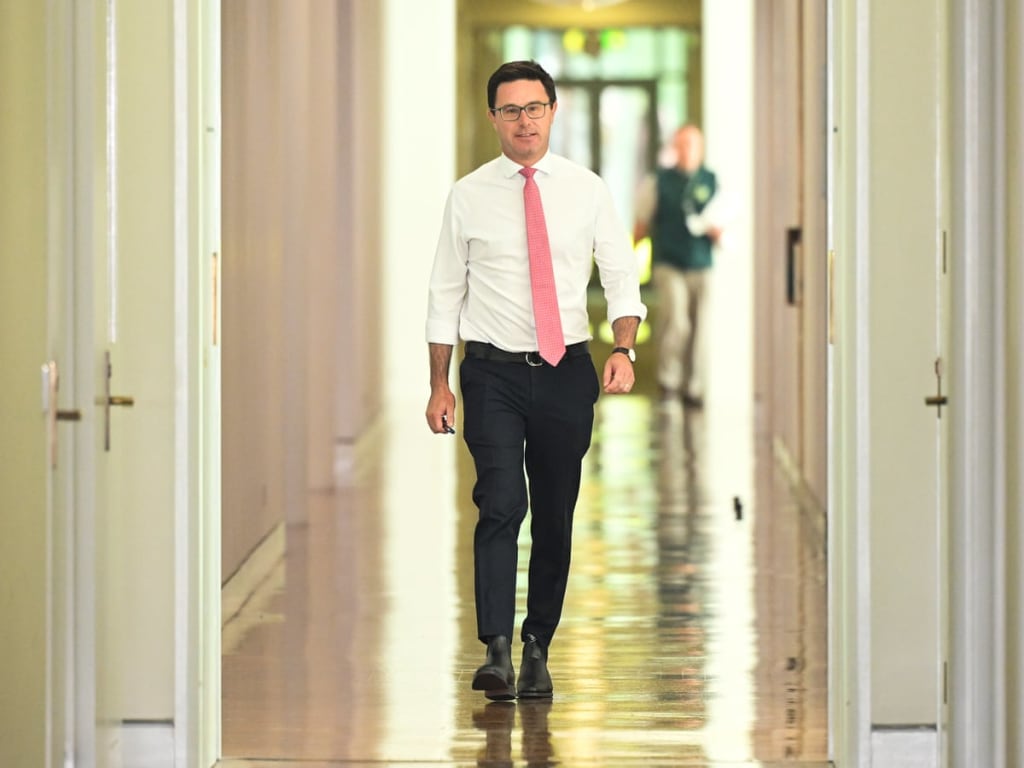
David Littleproud has retained his position as leader of Australia’s National Party after a leadership spill motion brought by backbencher Colin Boyce failed to gain sufficient support within the party room. The challenge, which unfolded during a closed-door meeting of Nationals MPs, exposed simmering divisions over the party’s direction but ultimately reaffirmed Littleproud’s authority for the time being.
The attempted spill followed weeks of internal tension over policy priorities, electoral strategy, and the party’s relationship with its Liberal coalition partner. While Boyce’s motion was defeated decisively, the episode underscored broader debates about how the Nationals should position themselves in a changing political landscape.
A Challenge From Within
Colin Boyce, the federal MP for Flynn, formally moved the spill motion citing concerns over leadership style and policy clarity. Sources within the party said Boyce argued the Nationals needed a stronger voice on regional issues, particularly in relation to cost-of-living pressures, energy policy, and agricultural reform.
Boyce reportedly questioned whether the current leadership had done enough to differentiate the Nationals from the Liberal Party and present a distinct agenda to rural and regional voters.
However, when the motion was put to a vote, it failed to attract majority backing. Most MPs opted for stability rather than further internal disruption, particularly with key legislative negotiations and election planning underway.
Following the meeting, Littleproud thanked colleagues for their support and emphasized the need to move forward together.
“This party is strongest when we are united and focused on delivering for regional Australia,” he said in a brief statement. “We’ve had a robust discussion, but now it’s time to get on with the job.”
Divisions Over Direction
The leadership challenge highlighted differences within the Nationals over how aggressively the party should push its agenda within the coalition framework. Some MPs believe the party has become too closely aligned with Liberal Party priorities, diluting its traditional focus on farmers, regional communities, and infrastructure investment.
Others argue that unity with the Liberals is essential to maintaining political influence and avoiding voter confusion.
Political analysts say the spill motion reflects anxiety about the party’s long-term relevance as rural electorates face demographic and economic change.
“The Nationals are grappling with how to remain distinct while still being part of a coalition government,” said one senior political commentator. “That tension often surfaces through leadership disputes.”
Littleproud, who became leader in 2022, has attempted to balance these pressures by supporting coalition policies while also championing regional development programs and agricultural interests. His supporters argue that destabilizing leadership would only weaken the party’s negotiating position.
Response From Party Figures
Several senior Nationals figures quickly closed ranks behind Littleproud after the failed motion. Deputy leader Perin Davey described the challenge as “an internal matter that has now been resolved.”
“We’ve had our discussion, and the outcome is clear,” she said. “The focus must be on serving the people who elected us.”
Treasurer and coalition partner representatives also downplayed the significance of the spill, framing it as part of healthy internal democracy rather than a sign of crisis.
Opposition figures, however, seized on the episode as evidence of division within the coalition.
“This shows a party struggling to agree on what it stands for,” said one Labor spokesperson. “Australians deserve stability and clarity, not infighting.”
Policy Disputes at the Core
At the heart of the leadership challenge were disagreements over energy policy and climate commitments. Some Nationals MPs have expressed concern that climate targets and renewable energy investments could harm farming communities and regional industries.
Boyce is understood to have argued that the party must take a firmer stance against policies perceived to threaten jobs in mining and agriculture-heavy electorates.
Littleproud has sought a more measured approach, supporting climate action while pushing for compensation and transition support for regional communities.
“We can protect the environment and protect regional jobs,” he has said previously. “These goals are not mutually exclusive.”
This balancing act has proven difficult, particularly as regional voters express frustration over rising fuel prices, housing shortages, and access to services.
Implications for the Coalition
While the spill motion failed, it may have lasting consequences for the Nationals’ internal cohesion. Leadership challenges, even unsuccessful ones, often weaken authority and encourage further dissent if underlying issues remain unresolved.
Coalition politics experts note that any perception of instability in the Nationals can affect the broader Liberal-National partnership, especially during negotiations over key legislation and election strategies.
“The Nationals hold critical leverage in marginal regional seats,” said a university politics lecturer. “A divided party risks losing that influence.”
Littleproud is expected to hold further meetings with colleagues to address concerns raised during the spill attempt. Party insiders say efforts will focus on improving communication and sharpening policy messaging ahead of future campaigns.
Looking Ahead
For now, Littleproud remains firmly in control, but the challenge has served as a warning sign. The Nationals face growing competition from independents and minor parties in regional electorates, making unity and clear policy positioning more important than ever.
In his closing remarks to colleagues, Littleproud stressed that the party must refocus on its core mission.
“We are here to fight for regional Australia,” he said. “That’s what our voters expect, and that’s what we must deliver.”
Conclusion
The failed spill motion brought by Colin Boyce has left David Littleproud in the leadership of the National Party, but it has also revealed internal tensions over strategy and identity. While unity has been publicly restored, debates over policy direction and coalition relationships remain unresolved.
As the party moves forward, its ability to reconcile these differences will determine not only Littleproud’s political future but also the Nationals’ relevance in an evolving Australian political landscape. Stability may have won this round, but the questions raised by the challenge are far from settled.
About the Creator
Fiaz Ahmed
I am Fiaz Ahmed. I am a passionate writer. I love covering trending topics and breaking news. With a sharp eye for what’s happening around the world, and crafts timely and engaging stories that keep readers informed and updated.
Keep reading
More stories from Fiaz Ahmed and writers in The Swamp and other communities.
Former CNN Journalist Don Lemon Attends 2026 Grammys Following Arrest Over Minnesota Protest
Former CNN anchor and journalist Don Lemon made a high-profile public appearance at the 2026 Grammy Awards, just weeks after his arrest during a protest in Minnesota drew national attention and sparked debate about celebrity activism and freedom of expression. Lemon, who left CNN in 2023 and has since pursued independent media projects, was photographed walking the red carpet alongside prominent figures from the entertainment industry. His appearance marked his first major public event since authorities confirmed he had been briefly detained at a demonstration opposing new federal immigration enforcement measures in Minneapolis earlier this year. The incident and his presence at the Grammys have placed Lemon once again at the center of a polarized conversation about the role of journalists and public figures in political protests. The Minnesota Protest and Arrest According to police statements, Lemon was arrested during a large protest that formed near a federal building in downtown Minneapolis. Law enforcement officials said demonstrators had blocked traffic and refused repeated orders to disperse. Lemon was cited for failure to comply with lawful orders and released later the same day without serious charges. Witnesses said Lemon had joined a group of activists advocating for immigrant rights and police accountability. Video circulating on social media shows him standing near the front of the crowd and speaking with officers before being escorted away. Lemon later addressed the arrest on his social media platforms, describing it as peaceful and emphasizing that he had not engaged in violence or property damage. “I was exercising my right to protest alongside people who believe in justice and reform,” Lemon wrote. “This moment is not about me—it’s about the voices being heard.” His legal team confirmed that the matter remains under review by local authorities and that Lemon intends to contest any citation issued during the incident. Grammys Appearance Sends a Message Lemon’s attendance at the Grammys immediately became a talking point across political and entertainment media. Some supporters praised his willingness to continue public life despite controversy, viewing his appearance as a statement of resilience and commitment to free expression. Others questioned whether the Grammys stage was an appropriate venue for someone recently involved in a protest-related arrest. “He’s blurring the line between activism and celebrity spectacle,” said one media analyst. “It raises questions about whether social movements are being amplified or diluted by star power.” Lemon did not speak publicly on the red carpet about the protest but told one interviewer that art and social responsibility are deeply connected. “Music has always reflected struggle, hope, and truth,” he said. “Tonight is about honoring voices that move culture forward.” A Complicated Relationship With the Public Since his departure from CNN, Lemon has sought to redefine himself as an independent commentator and podcast host, often engaging with controversial political and social topics. His outspoken style has continued to draw both praise and criticism. For some, his arrest in Minnesota reinforced his image as a journalist willing to put himself on the front lines of social conflict. For others, it raised concerns about whether former mainstream journalists risk undermining professional neutrality when they take part in street demonstrations. Media ethicists note that Lemon no longer represents a major news organization and therefore operates under different expectations. “As a private citizen, he has the right to protest,” said a professor of journalism ethics. “But public trust is fragile. High-profile figures must be aware of how their actions shape perception.” Protest, Policing, and National Debate The Minnesota demonstration occurred amid a wave of nationwide protests related to immigration policy and law enforcement practices. Activist groups have organized rallies in several states, calling for changes to detention procedures and increased transparency in federal operations. Authorities in Minneapolis defended their handling of the protest, stating that arrests were made only after demonstrators blocked emergency vehicle routes and ignored repeated warnings. “Our priority was public safety,” a police spokesperson said. “We respect the right to protest, but that right does not extend to disrupting critical services.” Civil liberties organizations have criticized what they describe as aggressive enforcement tactics, arguing that arrests of nonviolent demonstrators risk chilling lawful expression. Lemon’s involvement has amplified attention to these debates, transforming a local protest into a national media story. Reaction From the Entertainment Industry Within the music and entertainment world, reactions to Lemon’s Grammys appearance were mixed. Some artists expressed solidarity with his activism, while others avoided commenting altogether. One Grammy attendee, speaking anonymously, said, “The night is supposed to celebrate music, not politics. But politics is everywhere now. You can’t separate the two.” The Recording Academy declined to comment directly on Lemon’s attendance, stating only that the Grammys welcome a wide range of guests from media, culture, and advocacy communities. Looking Ahead Lemon’s legal situation remains unresolved, and further proceedings could shape how the public interprets both his protest and his Grammy appearance. His supporters argue that the arrest demonstrates courage and moral conviction. Critics say it reflects a pattern of controversy that distracts from serious policy discussion. For Lemon himself, the moment appears to represent a turning point in his post-network career. “We’re living in a time when silence feels like consent,” he said in a recent online broadcast. “I choose to speak and stand, even when it’s uncomfortable.” Conclusion Don Lemon’s appearance at the 2026 Grammy Awards following his arrest at a Minnesota protest underscores the increasingly blurred line between journalism, activism, and celebrity. The episode highlights broader tensions in American society over protest rights, media influence, and political expression in cultural spaces. Whether viewed as a principled stand or a provocative gesture, Lemon’s actions have reignited debate about how public figures navigate moments of controversy. As both his legal case and his independent media career continue to unfold, the intersection of protest and performance will remain a defining chapter in his evolving public story.
By Fiaz Ahmed about 14 hours ago in The Swamp
“Brothers Forever”: UAE Announces Week-Long Nationwide Festival Celebrating Decades of Ties with Kuwait
From shared history and Gulf solidarity to culture, trade and people-to-people bonds, the UAE’s nationwide celebration underscores a relationship built on trust, kinship and a shared future.
By Salaar Jamali7 days ago in The Swamp




Comments
There are no comments for this story
Be the first to respond and start the conversation.