

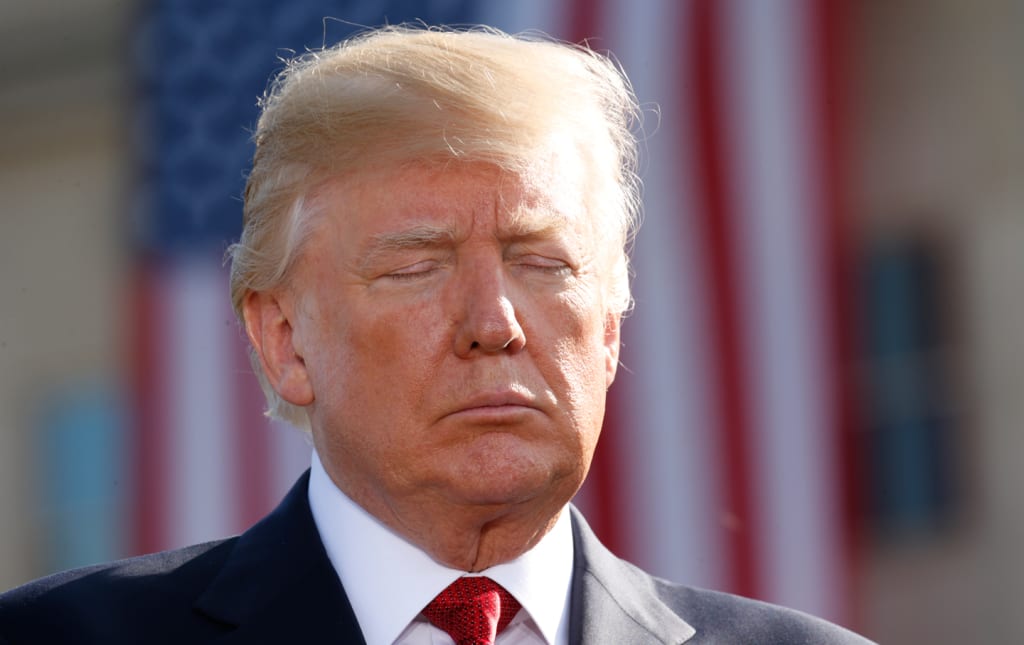
With these first few carefully selected words, you will instantly become aware that this letter is unlike any other you may have seen. Most people are very upset with you right now and, dare I say, may even hate you. Their letters will be crass, judgmental, and riddled with contempt. At this point, given what has transpired only in the most recent of days, it's safe to say you could be one of the most despised beings in the country!
But, don't worry. I understand.
In this letter I will not curse your existence nor itemize your failures. Instead, I will assure you that there is at least one person who truly "gets you".
You see, I know who you are, Donald. I know that your mindset, beliefs, actions, thoughts, and energy are all the culmination of how you grew up, your experiences in life, lessons you've learned, emotions you feel, environmental factors, stress, and so much more. The experiences of your life have shaped who you are and have contributed largely to the person we've seen in office for the past four years. We can judge you all we want but the bottom line is none of us know exactly how we will react to any situation until we are actually in the situation.
It's not my place to say whether the way you've run this country while serving your term is right or wrong. After all, I have zero political experience and even less interest in it. I couldn't dream of what a fraction of wielding that sort of power is like. I am a citizen, however, and I have some sense of what I believe to be right or wrong based on my life and where I come from, but we're not here to discuss me. In fact, you may not share my beliefs at all, so to raise them here is a moot point.
At the end of the day, from my perspective, the taxpayers of this country rallied together as best they could to get you in office over your rival only four short years ago, and they were victorious. They believe they made the right choice, regardless of the reasoning behind it. And according to them, they're right. Their counterpoint's also believe themselves to be right about your cockups while in office. When both sides have opposing view but they both believe their side to be right, what do you do?
I'll leave that question for you to ponder. In the interim, know that I understand one thing and one thing only: you. are. human. You are who you are and you are where you are in life. Whether we agree or not and whether we like it or not, no one can expect you to suddenly be different than you are. It is impossible. You did what you thought was the best thing to do in every situation you were faced with and, again, whether your decision (or lack thereof) is right or wrong is not for me to decide. It is understandable, however, if one is able to be objective, to see that you are simply being who you are.
It's quite possible that your presence in office, and the decisions you've made (or didn't make), were somehow—if even in the most miniscule of ways—important to the growth and evolution of us as a country. We may not be entirely sure how yet—because many of us are still blinded by rage—but I can assure you that this moment in history can be monumental to how this country recovers, if we allow it.
I'm not sure what your emotions are as you prepare to exist the spotlight but I hope that no matter what happens as you progress in life after presidency, that you do what people like me have learned to do, especially over the last year: Stay Positive!
-Meg
About the Creator
Meg Thee Tiger
Self-published erotica short story author, blogger, and professional writer proficient in technical, creative, transcription, content, copywriting, and more.
Keep reading
More stories from Meg Thee Tiger and writers in The Swamp and other communities.
I Did Everything He Wanted for Nearly 3 Years
On April 4, 2018 I came face-to-face with a Greek god of a man whom I was certain would be a permanent fixture in my life. Upon making eye-contact, it was as if his gaze permeated my being and grasped my inner slut by her very delicate throat; a dark thing that secret parts of me enjoy immensely. I wasn't sure how to feel or what to say. My hands grew clammy and the grin on my face was undeniable. Being in his presence alone rendered me a babbling fool. The emotion was buy and large too complex to describe but in my mind, it was love at first sight.
By Meg Thee Tiger5 years ago in Humans
Why Black History Matters in America?
The United States of America is celebrating their 250th anniversary in 2026. I'm proud to be an American and as someone who was born here, I wouldn't imagine myself living anywhere else. This is a country where opportunities are possible. Where anyone can be successful in anything they desire to do. Equality, community, and togetherness are the backbones of what America is and should be about. However, we have an administration who wants to erase and disregard those who have made positive, meaningful impacts in our country, specifically Black figures, such as Martin Luther King, Jr., Rosa Parks, and Maya Angelou. President Trump and his administration have been constantly complaining and fighting against what they call the "Woke agenda". They use this excuse as a distraction from other issues they refuse to address, such as the high cost of living, climate change, and inflation. That equality is dividing America, when in reality, it's bringing us together. Being woke is not tied to a specific political party. No matter where you stand on the political spectrum, you can still care about other people and their plights. Compassion and empathy for others isn't tied to a political party, either. We were taught as children to treat others the way we want to be treated and not judge others because they're different from us. Caring about others isn't a personal attack on your beliefs. It doesn't make you any less of a person. People who are easily offended over African American figures, past or present, or anything related to it, are grasping at straws. Current and future generations need to know who people like Harriet Tubman and Shirley Chisholm were, especially in the classroom. Black History is part of American History. It should be recognized, not hidden or forgotten. Besides, you can't shield children from everything, just because your feelings are easily hurt.
By Mark Wesley Pritchard 5 days ago in The Swamp
📢 Raise Your Voice Thread: 02/05/2026
Our “Raise Your Voice Threads” are hosted most alternating Thursdays at 12PM ET to offer creators more avenues to uncover exceptional stories on Vocal. As we are continuously searching for fresh creators and inspiring stories, this thread provides an opportunity to exchange and discuss the stories that have moved and motivated us on Vocal.
By Raise Your Voice by Vocala day ago in Resources



Comments
There are no comments for this story
Be the first to respond and start the conversation.