
EDF Pushes Back Hinkley Point C Start‑Up by Another Year
🔹 Formal / News Style UK’s flagship nuclear plant delayed again as EDF cites construction and regulatory challenges Hinkley Point C timeline revised amid rising costs and technical setbacks 🔹 Neutral & Informative Project delays push operational start of Britain’s largest new nuclear power station to 2030 EDF adjusts Hinkley Point C schedule, highlighting ongoing construction and installation hurdles 🔹 Impactful Hinkley Point C postponement raises concerns over cost and UK energy planning

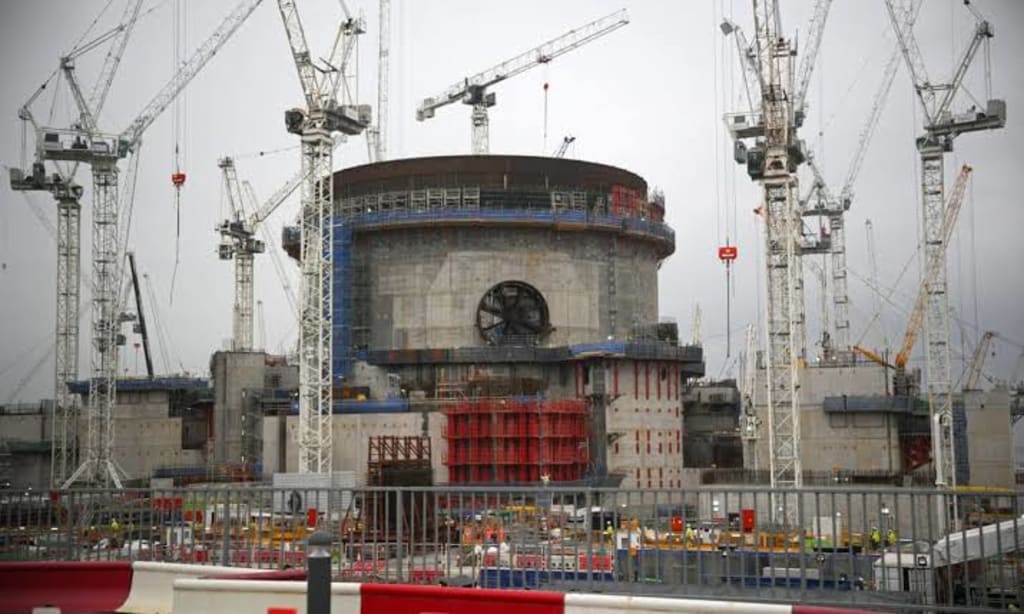
Construction of the Hinkley Point C nuclear power station, the United Kingdom’s largest and most high‑profile new nuclear power plant, has been delayed yet again. French energy giant EDF announced on 20 February 2026 that the first reactor of Hinkley Point C — originally expected to come online in 2025 — will now begin operations in 2030, reflecting a further one‑year postponement from the previously revised 2029 target.
The updated timeline comes as EDF revealed that the complex electromechanical installation work — critical for delivering safe, reliable commissioning — has fallen behind schedule. The company described the new timeline as “more realistic” given the technical challenges and regulatory requirements, and offered a broader window from 2029 to 2031 for startup.
Cost Escalation and Financial Impact
The latest delay has significant financial implications. EDF has raised the estimated cost of the Hinkley Point C project to £35 billion (about $47 billion), well above earlier projections. That figure is expressed in 2015 prices, meaning the true inflation‑adjusted cost is even higher.
BSS
The repeated postponements and cost overruns have already taken a tangible toll on EDF’s finances. The company recorded a €2.5 billion impairment related to the Hinkley Point C project in its 2025 results, contributing to a 26 % drop in net profit compared with the previous year. Lower wholesale electricity prices and a reduced guaranteed power price from the UK government further strained results.
EDF’s chief executive, Bernard Fontana, said that the new timeline and cost estimates reflect the company’s assessment of risks, regulatory scrutiny and ongoing construction complexities. The plant is designed to provide around 7 % of UK electricity demand once fully operational, making its timely completion vital to British energy strategy.
Underlying Causes of Delay
EDF attributed the latest delay largely to slower‑than‑expected electromechanical work — the stage when critical internal systems and components are installed and integrated. Project updates indicate that mechanical, electrical, heating and ventilation (MEH) installations have not kept pace with plans. In its annual report, EDF confirmed that delays in MEH work have been a key factor in pushing back the scheduled start date.
constructionnews.co.uk
Construction issues are not new for Hinkley Point C. Since work began in 2017, the UK’s first new nuclear plant in a generation has been plagued by delays related to complex engineering requirements, supply chain disruptions, and extended regulatory oversight. Previous projections had already moved the plant’s launch from 2025 to 2027, then to 2029–2031 before the latest revision to 2030.
Industry and Government Reactions
The repeated setbacks have reignited debate over the cost‑effectiveness and feasibility of new nuclear projects in the UK and Europe. Critics argue that large‑scale nuclear plants like Hinkley Point C carry inherent risks of delay and cost overrun, and question whether the long lead times justify the investment compared with renewable energy alternatives. Advocates counter that nuclear remains essential for meeting net‑zero emissions targets and ensuring baseload power reliability as fossil fuel plants retire.
The Guardian
The UK government has emphasised its continued support for Hinkley Point C as part of the country’s strategy to secure low‑carbon energy sources. Officials argue that delays — while frustrating — are not uncommon in megaprojects of this scale and underscore the rigorous safety and regulatory standards applied in nuclear construction.
The Guardian
Implications for Future Nuclear Projects
EDF is also overseeing other major nuclear developments, including the Sizewell C nuclear power station project in Suffolk, which is expected to face its own timeline and budget pressures. Lessons learned from Hinkley Point C are intended to inform future builds, but stakeholders acknowledge that replicating such complex engineering work remains challenging.
Analysts say the repeated delays at Hinkley Point C could complicate efforts to expand nuclear capacity in the UK and abroad, particularly if cost escalation and financing challenges persist. With construction extending over more than a decade, some industry observers question whether alternative energy investments might offer faster, more cost‑effective pathways to decarbonisation.
Looking Ahead
With civil construction largely complete on site, gravity remains on the installation and integration of key internal systems. If the 2030 operational date holds, Hinkley Point C will begin to supply carbon‑free power at least five years later than originally envisioned, underscoring the long road to bringing new nuclear capacity online in a timely and cost‑competitive manner.
Financial Times
About the Creator
Fiaz Ahmed
I am Fiaz Ahmed. I am a passionate writer. I love covering trending topics and breaking news. With a sharp eye for what’s happening around the world, and crafts timely and engaging stories that keep readers informed and updated.
Keep reading
More stories from Fiaz Ahmed and writers in The Swamp and other communities.
Punjab Airlines Operations Start Date Revealed
The government of Punjab has officially announced that its new provincial airline — Punjab Airlines — will begin flight operations in April 2026, marking a major milestone in the region’s aviation landscape. The announcement, part of an ongoing effort by the provincial administration to strengthen air connectivity and boost economic activity, was confirmed through official sources and local media reports. A New Era for Provincial Aviation Punjab Airlines, owned and operated by the provincial government under the leadership of Chief Minister Maryam Nawaz Sharif, is poised to become a unique addition to Pakistan’s aviation sector. Unlike traditional carriers that are commercially owned or national in scope, this airline is a provincially controlled carrier, designed to expand domestic flight options and promote regional economic integration. According to government sources, the inaugural flights are scheduled to begin in April 2026, with an initial fleet of seven passenger aircraft. These aircraft will service domestic routes during the first phase of operations, connecting major cities within Punjab and facilitating travel for both business and leisure passengers. Operational Plans and Strategy Punjab Airlines will initially operate domestically for the first two years, focusing on key routes that link provincial capitals and major urban centers. After this period, officials expect the airline to expand gradually into international markets, subject to regulatory approvals and market demand. One distinctive feature of Punjab Airlines’ operational model is its dual‑use fleet strategy. In addition to serving commercial travellers, government officials — including the Chief Minister — will also use the airline’s aircraft for official business. Government sources emphasise that this will be done on a commercial fare basis, meaning no separate or specially purchased jets will be assigned solely for VIP use. Officials said that including the Chief Minister’s existing helicopter in the company’s fleet will help minimise upfront investment and optimise asset utilisation. The strategy aims to reduce reliance on provincial treasury funds by using both existing and newly acquired aircraft for revenue‑generating passenger services. Economic and Political Context Punjab Airlines represents a bold move by the provincial government to diversify economic activity and improve infrastructure. By establishing a dedicated airline, Punjab aims to boost connectivity within the province and beyond, supporting tourism, commerce, and business travel. Local business leaders have generally welcomed the move, seeing it as a boost for sectors such as hospitality, trade, and logistics. However, the project has not been without controversy. Critics on social media and in political commentary have raised concerns over spending on aircraft — especially luxury jets — that many see as unnecessary given other pressing public needs. Some observers argue that public funds should be focused on sectors such as healthcare and education rather than aviation. Proponents counter these concerns by emphasising that the airline’s commercial model is designed to be financially sustainable. By operating passenger services and government travel on a fare‑paying basis, the model is framed as an innovative example of asset optimisation rather than expenditure without return. Preparing for Launch To prepare for the April launch date, the airline has been acquiring aircraft and securing regulatory approvals. The government has pursued both purchased planes and leased aircraft to meet its initial fleet requirements. Authorities are also recruiting pilots, crew, and ground support personnel to ensure that operations are ready to commence on schedule. Officials have indicated that daily operations will initially focus on major domestic routes, enhancing connectivity between Punjab’s cities and potentially relieving pressure on existing carriers. Once operational, the airline may add additional flights and destinations in response to customer demand and market trends. Future Prospects Looking further ahead, Punjab Airlines has ambitions to offer international flights after successfully establishing a domestic footprint. Expansion into regional air service markets could position the airline as a significant player in South Asian aviation, providing passengers with more travel options and enhancing competition in the sector. As preparations continue, the April 2026 start date marks a key milestone for the airline and for provincial ambitions in Pakistan’s aviation sector. Its success could serve as a model for other regions considering similar transportation and economic initiatives.
By Fiaz Ahmed a day ago in The Swamp
A Gathering of Evil Bosses
“I’m the queen of chin jutting while I smooth my hair, attacking, insulting, and deflecting to protect my appointer.” “Oh, please, Blondi, my hair is curled, highlighted, and longer than yours. I feature television commercials telling immigrants that we will give them a free plane ride home, and if they voluntarily turn themselves in, they will be allowed to legally apply for re-entry. It runs everywhere, and I look good in it! You can’t compete because of your blond hair. Mine is nicer, and my lips are prettier than yours.”
By Andrea Corwin 3 days ago in The Swamp
There's A Hole in My Bucket
It’s a well-known fact that Liza Dufresne was always the brains in the family. She was the one who always came up with the brilliant schemes the Dufresne kids carried out when they were younger. Like when they tricked Mrs. Claybourn into paying for a trip to Disney World. Liza convinced her that their parents had been kidnapped and were being held for ransom for the total price of three tickets. In reality, they were away on a weekend getaway for their anniversary. When they returned, Liza told the Claybourns that they did not like to talk about the ordeal. Their parents never found out how they got the money. Mrs. Claybourn never found out that the Dufresne parents were never really in any danger.
By David E. Perry3 days ago in Fiction




Comments
There are no comments for this story
Be the first to respond and start the conversation.