
‘Enemy’ Insults and Questioning Putin: Steve Rosenberg on the Tightrope of Reporting From Russia
Foreign reporters face mounting danger under Russia’s media crackdown How one journalist balances truth-telling with personal safety State pressure and propaganda shape life for Western correspondents Inside the challenges of questioning power in Putin’s Russia Press freedom tested as war tightens control over information

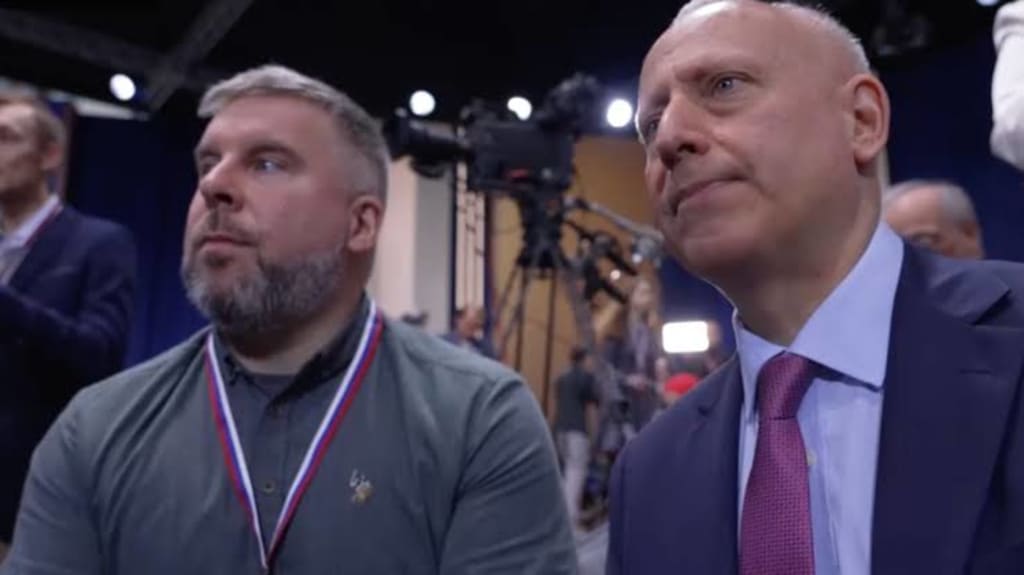
For BBC journalist Steve Rosenberg, reporting from Russia has never been simple. But in recent years, the job has become an exercise in constant caution, personal risk, and professional resolve. Labeled an “enemy” by state-aligned commentators and closely watched by authorities, Rosenberg’s work highlights the extraordinary pressures facing foreign correspondents operating inside a country where dissent is increasingly criminalized.
Rosenberg, the BBC’s longtime Russia editor, has spent decades covering the Kremlin and its leadership. His role places him at the heart of one of the world’s most tightly controlled media environments, where critical questioning of President Vladimir Putin can carry consequences not only for journalists but also for their local contacts.
Walking a Narrow Line
Foreign reporters in Russia must navigate a system of laws that restrict speech about the military, the war in Ukraine, and the government. New legislation introduced since 2022 makes it illegal to publish information that contradicts official narratives, with penalties including heavy fines and prison sentences.
Rosenberg has described his work as “walking a tightrope” between asking legitimate journalistic questions and ensuring his reporting does not endanger colleagues or sources.
“You have to think not just about what you ask, but how it will be interpreted,” he has said in interviews. “Every word matters.”
At press conferences, Rosenberg is one of the few Western journalists still able to question Putin directly. His queries often focus on economic pressures, sanctions, and the war’s impact on ordinary Russians—topics that rarely receive open discussion on state television.
Becoming a Target
These questions have made Rosenberg a familiar face not only to international audiences but also to Russian state media critics. Pro-government commentators have accused him of spreading “hostile propaganda” and portraying Russia negatively for Western audiences.
In one widely circulated television segment, he was mocked as an “enemy journalist,” a label that reflects a broader narrative portraying foreign media as agents of outside influence. The rhetoric has intensified as relations between Russia and Western nations have deteriorated.
Such attacks are not merely symbolic. Media experts say they increase risks for journalists by framing them as political actors rather than neutral observers.
“When journalists are branded as enemies, it creates an atmosphere where harassment and intimidation feel justified,” said a researcher with a global press freedom organization.
Questioning Power in Public
One of Rosenberg’s most notable moments came during a press conference when he asked Putin about the long-term economic consequences of war and isolation. The exchange, broadcast internationally, underscored the rare opportunity to challenge the Russian president publicly.
Putin responded sharply, dismissing the premise of the question and insisting that Russia’s economy was stronger than Western governments claimed. The interaction became emblematic of the tension between controlled messaging and journalistic inquiry.
For Rosenberg, such moments represent the core of his profession.
“If journalists stop asking difficult questions, then power goes unchallenged,” he has said. “That’s not journalism.”
Risks Beyond the Reporter
The dangers of reporting from Russia extend far beyond the correspondent alone. Local producers, translators, and drivers face even greater risks because they are Russian citizens subject to domestic laws.
Many foreign news organizations have reduced their presence in Russia precisely because of concerns for staff safety. Several Western outlets closed their Moscow bureaus after reporters were threatened with prosecution.
Rosenberg has acknowledged that every report must consider the safety of those who assist him.
“You’re not just responsible for yourself,” he has noted. “You’re responsible for the people who help you tell the story.”
A Shrinking Space for Independent Media
Since the start of the war in Ukraine, Russia has effectively dismantled independent journalism. Major outlets such as Novaya Gazeta have been forced to suspend operations or relocate abroad. Social media platforms are restricted, and many journalists have fled the country.
Within this environment, foreign correspondents like Rosenberg serve as one of the few remaining windows into Russian political life for international audiences. Their presence, however limited, provides rare firsthand reporting rather than reliance solely on official statements.
Media analysts argue that this role has become more important as state propaganda tightens its grip.
“When information is tightly controlled, even small moments of accountability matter,” said one academic specializing in authoritarian media systems.
Psychological Toll
Reporting under constant scrutiny takes an emotional toll. Rosenberg has spoken of the stress of knowing that any misstep could lead to expulsion or worse. The pressure is compounded by online harassment and personal attacks.
Yet he continues to work in Moscow, driven by a belief that direct reporting is essential.
“Russia is too important to be covered only from the outside,” he has said. “You need eyes and ears on the ground.”
The Future of Foreign Reporting in Russia
As geopolitical tensions persist, the future of foreign journalism in Russia remains uncertain. New restrictions could further limit access, and the risk of detention or deportation looms over every assignment.
Nevertheless, Rosenberg’s experience illustrates both the fragility and resilience of journalism in hostile environments. His reporting reflects the delicate balance between courage and caution—between asking hard questions and staying safe enough to keep asking them tomorrow.
Conclusion
Steve Rosenberg’s work embodies the challenges of modern war-time journalism: being branded an “enemy,” operating under strict laws, and questioning one of the world’s most powerful leaders in a climate of suspicion and control. His story is not just about one reporter, but about the broader struggle for truthful reporting in an age of disinformation and repression.
As long as foreign journalists remain in Russia, they will continue to walk that narrow path—seeking facts in a system designed to obscure them, and reminding the world that even under pressure, journalism still matters.
About the Creator
Fiaz Ahmed
I am Fiaz Ahmed. I am a passionate writer. I love covering trending topics and breaking news. With a sharp eye for what’s happening around the world, and crafts timely and engaging stories that keep readers informed and updated.
Keep reading
More stories from Fiaz Ahmed and writers in The Swamp and other communities.
Mexico Moves to Combat Pollution Following Guardian Investigations
Mexico’s government has announced a series of new environmental measures after investigative reporting by The Guardian exposed the scale of industrial pollution affecting communities across the country. The revelations have intensified public pressure on federal and state authorities to strengthen enforcement of environmental laws and address long-standing concerns over air and water contamination linked to factories, mining operations, and waste disposal sites. The investigations documented how toxic emissions and untreated wastewater from industrial facilities have polluted rivers, soil, and neighborhoods, often in areas where residents lack access to clean drinking water and adequate healthcare. Environmental groups say the findings confirmed what many communities have been reporting for years: that pollution controls were weakly enforced and that economic development was often prioritized over public health. Government Response In response, Mexico’s Ministry of Environment and Natural Resources (SEMARNAT) announced a coordinated plan involving stricter inspections, higher fines for violations, and the closure of facilities that repeatedly fail to comply with environmental standards. Officials also pledged to publish more transparent data on emissions and contamination levels, allowing the public to track industrial polluters more easily. Environment Minister María Luisa Albores said the government could no longer ignore the health risks revealed by the investigations. “These reports show the human cost of environmental negligence,” she said in a statement. “Our responsibility is to protect citizens and ensure that industries respect the law.” The federal government also confirmed that it would review permits granted to high-risk industries, including cement plants, steel manufacturers, and chemical processing facilities, particularly those operating near residential areas. Communities Demand Accountability Residents in affected regions welcomed the announcement but expressed skepticism that meaningful change would occur. In towns along heavily polluted rivers, families have reported increased cases of respiratory illness, skin conditions, and gastrointestinal problems. “For years we have complained, but no one listened,” said a community organizer from central Mexico whose town lies downstream from multiple factories. “Now that the world is paying attention, the government is acting. But we need permanent solutions, not temporary promises.” Grassroots organizations have called for independent monitoring and public participation in environmental decision-making. They argue that without community oversight, enforcement efforts risk becoming symbolic rather than transformative. Industrial Sector Pushback Industry groups cautioned that aggressive regulation could damage economic growth and employment. Mexico relies heavily on manufacturing and exports, particularly under trade agreements with the United States and Canada. Business leaders warned that sudden closures or penalties could disrupt supply chains and threaten jobs. “We support environmental responsibility, but regulations must be balanced with economic reality,” said a spokesperson for a national manufacturing association. “Companies need time and technical support to meet higher standards.” However, environmental economists counter that pollution imposes long-term costs that far exceed short-term compliance expenses. “Health care costs, lost productivity, and environmental degradation are hidden subsidies for polluters,” said one policy analyst. “Strong regulation ultimately benefits society and the economy.” Guardian’s Findings The Guardian’s investigations highlighted several cases in which factories allegedly discharged hazardous waste into waterways without proper treatment. In some regions, regulatory agencies were shown to have conducted few inspections over many years, despite repeated complaints from residents. One report detailed how pollution in an industrial corridor had contaminated groundwater relied upon by thousands of families. Another focused on air pollution in urban areas where particulate matter regularly exceeded national safety limits. The newspaper’s reporting relied on satellite imagery, government records, and interviews with affected communities, drawing international attention to Mexico’s environmental enforcement gaps. Legal and Political Implications Mexico’s congress has begun discussing reforms to strengthen environmental oversight and increase penalties for violators. Proposed measures include expanding the authority of the Federal Attorney for Environmental Protection (PROFEPA) and creating special courts for environmental crimes. Opposition lawmakers have accused the government of reacting only after international embarrassment, while ruling party officials say the response demonstrates commitment to reform. “This is not about blame; it is about action,” said one senior legislator. “The evidence is clear that our current system needs improvement.” Legal experts note that successful prosecutions will depend on political will and the independence of regulators. “Environmental law exists, but enforcement has historically been uneven,” said a professor of environmental policy. “What happens next will show whether this is a turning point or a short-lived response to media pressure.” International Context Mexico’s actions come amid growing global concern over industrial pollution and climate change. International trade partners and investors increasingly require proof of environmental responsibility, and failure to comply can lead to sanctions or reputational damage. Environmental advocates say the Guardian investigations have placed Mexico under an international spotlight, making reform unavoidable. “This is not just a national issue anymore,” said one activist. “The world is watching how Mexico handles corporate pollution.” Looking Ahead The government has pledged to publish progress reports every six months and involve civil society organizations in oversight efforts. Pilot programs are being launched to clean up polluted rivers and restore contaminated land in heavily affected zones. Still, challenges remain. Corruption, limited resources, and political pressure from powerful industries could undermine reforms. Communities say they will continue to document violations and push for accountability. Conclusion Mexico’s decision to confront industrial pollution following the Guardian investigations marks a significant moment in the country’s environmental policy. The revelations have forced authorities to acknowledge systemic failures and promise stronger enforcement. Whether these promises translate into lasting change will depend on sustained political commitment and transparent oversight. For residents living with contaminated water and air, the stakes are personal and urgent. As one community leader put it, “This is not about politics. It is about our right to live without poison.”
By Fiaz Ahmed about 12 hours ago in The Swamp
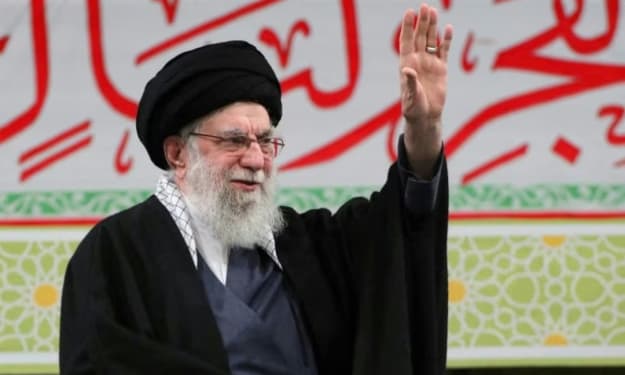
Khamenei’s Stark Warning: “Any U.S. Attack Means Regional War”
Iran’s Supreme Leader Ayatollah Ali Khamenei has issued one of his strongest statements yet against U.S. military action, warning on 1 February 2026 that any attack on Iran by the United States would ignite a “regional war” across the Middle East. His remarks came amid sharply escalating tensions between Tehran and Washington, marked by military deployments, diplomatic standoffs, and deepening regional unease.
By Salaar Jamalia day ago in The Swamp



Comments
There are no comments for this story
Be the first to respond and start the conversation.