
France Will Become the First Nation to Use Airbus’s New Ship-Launched Drone and Jump From Laggard to Pioneer
Early adoption of Airbus’s ship-launched drone propels France into the forefront of European naval innovation and unmanned warfare.

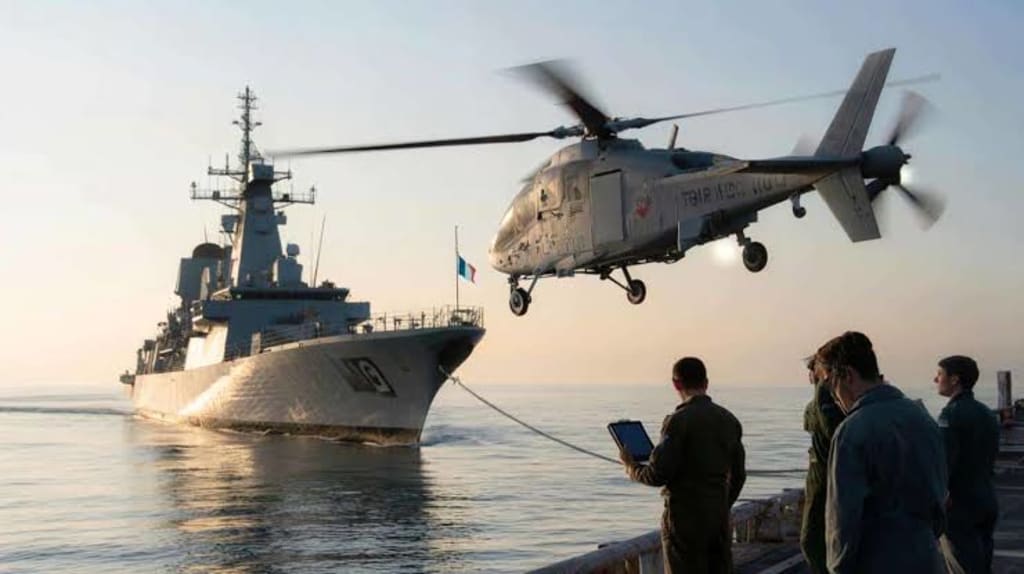
France is set to become the first country to operationally deploy Airbus’s new ship-launched drone system, marking a major shift in its naval and aerial surveillance capabilities. The move places France at the forefront of European maritime drone innovation and signals a dramatic transformation from a nation once criticized for lagging behind in unmanned systems to one now positioning itself as a pioneer.
The drone, developed by Airbus, is designed to be launched directly from naval vessels without the need for runways or large flight decks. It can conduct long-endurance reconnaissance missions, gather intelligence, and provide real-time data to commanders at sea.
French defense officials confirmed that the system will be integrated into the fleet over the coming months following a series of successful trials in the Mediterranean and Atlantic waters.
A Breakthrough in Naval Drone Operations
Unlike traditional shipborne helicopters or larger unmanned aircraft, the new drone is compact and designed for rapid deployment from frigates and patrol vessels. It uses a catapult-style launch system and can be recovered vertically or via net capture, allowing it to operate from smaller warships with limited space.
This capability significantly expands the surveillance reach of the French Navy. A single vessel can now monitor vast areas of ocean, track suspicious vessels, and support search-and-rescue missions without relying on manned aircraft.
“This technology gives us eyes far beyond the horizon,” said a senior French naval officer involved in the testing program. “It changes how we think about maritime security and operational awareness.”
From Delay to Leadership
For years, France was considered behind countries such as the United States and Israel in the field of military drones. Political hesitation, regulatory hurdles, and budget constraints slowed the adoption of unmanned systems within the French armed forces.
That narrative is now shifting. By becoming the first nation to deploy Airbus’s ship-launched drone, France has leapfrogged several competitors and established itself as a testing ground for next-generation naval aviation technology.
Defense analysts say the move reflects lessons learned from modern conflicts, where drones have proven essential for intelligence gathering, targeting, and battlefield coordination.
“Navies are realizing that unmanned systems are no longer optional,” said one European security expert. “France’s decision puts it at the front of a new operational model.”
Strategic and Geopolitical Impact
The deployment is expected to strengthen France’s role in NATO maritime operations and European Union security missions. The drone will support patrols in the Mediterranean, the Atlantic approaches, and overseas territories where France maintains a permanent naval presence.
It will also be used to monitor illegal trafficking, piracy, and unauthorized fishing, as well as to provide situational awareness during humanitarian and disaster-response missions.
Beyond its practical uses, the decision carries symbolic weight. It demonstrates Europe’s growing independence in defense technology at a time when many nations are seeking alternatives to U.S.-made systems.
Industrial and Economic Significance
For Airbus, the project represents a major commercial and technological achievement. The company has invested heavily in unmanned aerial systems as part of its strategy to diversify beyond traditional aircraft production.
Executives believe France’s adoption will encourage other European navies to follow suit. Several countries are already observing the French trials closely, raising the possibility of future export contracts.
“This is not just a military step,” said an Airbus spokesperson. “It is a signal that European innovation can lead in cutting-edge defense technology.”
Challenges Ahead
Despite its promise, the system still faces challenges. Integration with existing naval command networks must be perfected, and crews require specialized training to operate and maintain the drones safely at sea. There are also ongoing debates about cybersecurity and the vulnerability of unmanned systems to electronic warfare.
Environmental conditions pose another test. Saltwater corrosion, high winds, and rough seas demand extremely robust engineering to ensure reliability.
A New Chapter for French Naval Power
France’s decision to field Airbus’s ship-launched drone marks a turning point in its military modernization. Once cautious about embracing unmanned warfare, the country is now helping shape the future of naval operations in Europe.
By combining advanced drone technology with its global naval presence, France is redefining how maritime missions are conducted—faster, safer, and with greater reach than ever before.
As one defense official concluded, “This is not just a new aircraft. It is a new way of seeing and protecting the sea.”
About the Creator
Fiaz Ahmed
I am Fiaz Ahmed. I am a passionate writer. I love covering trending topics and breaking news. With a sharp eye for what’s happening around the world, and crafts timely and engaging stories that keep readers informed and updated.
Keep reading
More stories from Fiaz Ahmed and writers in The Swamp and other communities.
The Bizarre Story of the World’s First Floating Hotel
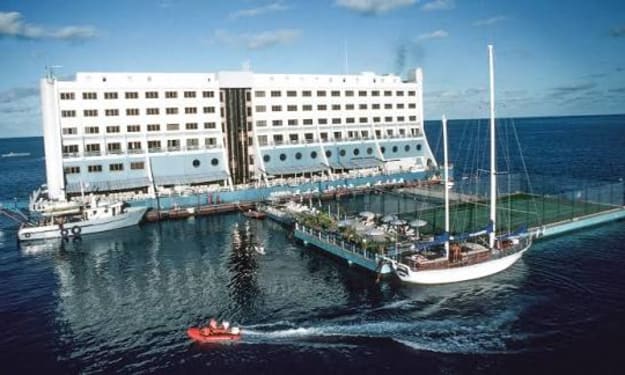
In the late 1980s, an ambitious idea promised to redefine luxury travel: a fully operational hotel floating directly on the ocean. Marketed as a revolutionary way to experience marine beauty without long boat trips, the project became the world’s first floating hotel—an engineering marvel whose fate would turn into one of the strangest journeys in modern tourism history. The structure was originally launched as the Four Seasons Barrier Reef, positioned near the Great Barrier Reef. Built in Singapore and towed thousands of kilometers to Australian waters in 1988, the hotel resembled a stationary cruise ship anchored above one of the planet’s most fragile ecosystems. It boasted nearly 200 luxury rooms, fine-dining restaurants, bars, a tennis court, and even an underwater viewing chamber that allowed guests to observe coral and fish without diving. The vision belonged to entrepreneur Doug Tarca, who believed travelers would pay a premium to sleep directly over the reef and wake to panoramic ocean views. A Bold Dream Meets Harsh Reality Before the hotel could even welcome its first guests, nature intervened. Cyclones damaged its mooring system and delayed its opening, pushing costs far beyond initial projections. By the time operations began, expenses had skyrocketed while reservations lagged behind expectations. Running a hotel at sea proved far more complicated than anticipated. Every meal, towel, and fuel delivery had to be transported by boat or helicopter. Waste management and freshwater supply became constant technical challenges. Saltwater corrosion rapidly increased maintenance costs, and rough weather frequently disrupted guest experiences. Although early visitors praised the novelty and scenery, the business model quickly collapsed. Within a year, the project declared bankruptcy. What was meant to be the future of tourism had become a financial disaster. A Second Life in Vietnam Rather than scrapping the structure, investors sold it to new owners who relocated it to Vietnam. Renamed the Saigon Floating Hotel, it was anchored along the Saigon River in Ho Chi Minh City. There, it found a surprising new purpose—not as a luxury resort, but as a nightlife destination. Its floating bars and clubs became popular with locals and foreign visitors alike. Neon lights replaced reef excursions, and the hotel became a symbol of novelty and excess during Vietnam’s economic opening in the 1990s. For several years, the floating hotel thrived as a social hotspot. But aging infrastructure, rising maintenance costs, and shifting political priorities eventually led to its decline once again. Final Journey to North Korea In the late 1990s, the structure was sold for a third time and towed across Asia to North Korea’s Mount Kumgang tourist zone. There, it was intended to host South Korean tourists as part of a rare cooperative venture between the two Koreas. For a brief period, the hotel served as a symbol of fragile diplomatic progress. But political tensions soon ended the tourism program, and the floating hotel was abandoned along the coastline. Left without maintenance, it rusted visibly year after year. In 2019, North Korean authorities reportedly condemned the building as outdated and unfit for modern tourism. Orders were given for it to be dismantled, bringing its strange global journey to an end. Why It Failed Experts say the project failed because it was decades ahead of its time. Environmental exposure, massive logistical demands, and the absence of modern offshore technology made the hotel economically unsustainable. Today’s floating structures benefit from advanced materials and automation that did not exist in the 1980s. “The concept was visionary,” said one maritime architect. “But the technology and business planning weren’t ready for the realities of operating a luxury facility in open water.” A Legacy of Ambition Though it never achieved long-term success, the world’s first floating hotel left an important legacy. It demonstrated humanity’s willingness to push architectural boundaries and inspired later experiments in floating resorts, offshore platforms, and even proposals for floating cities. Its story—spanning Australia, Vietnam, and North Korea—remains one of the most unusual chapters in modern travel history: a five-star dream that drifted across oceans and political systems before disappearing into legend. What began as a bold symbol of innovation ultimately became a cautionary tale of ambition colliding with nature, economics, and geopolitics.
By Fiaz Ahmed about 16 hours ago in The Swamp
A Gathering of Evil Bosses
“I’m the queen of chin jutting while I smooth my hair, attacking, insulting, and deflecting to protect my appointer.” “Oh, please, Blondi, my hair is curled, highlighted, and longer than yours. I feature television commercials telling immigrants that we will give them a free plane ride home, and if they voluntarily turn themselves in, they will be allowed to legally apply for re-entry. It runs everywhere, and I look good in it! You can’t compete because of your blond hair. Mine is nicer, and my lips are prettier than yours.”
By Andrea Corwin 5 days ago in The Swamp



Comments
There are no comments for this story
Be the first to respond and start the conversation.