
Helicopter Blade Misses Petrol Station After Crash
Quick Emergency Response Prevents Major Disaster in Densely Populated Area
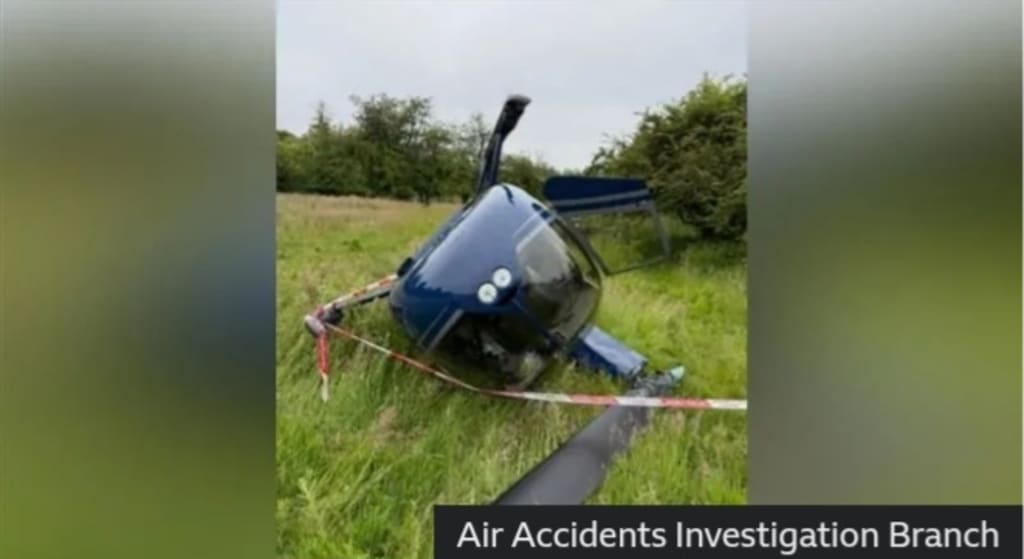
A potentially catastrophic disaster was narrowly avoided when a helicopter crashed near a busy petrol station, sending one of its rotor blades hurtling dangerously close to fuel pumps and nearby structures. Authorities confirmed that while the aircraft sustained severe damage, the petrol station was miraculously spared from impact, preventing what could have been a large-scale explosion in a densely populated area.
The incident occurred earlier this week in a commercial district where traffic flow and pedestrian movement are typically high. Eyewitnesses described hearing a loud mechanical noise before the helicopter began descending rapidly. Within seconds, the aircraft struck the ground, scattering debris across the vicinity. One of the main rotor blades detached during the crash and landed only meters away from the petrol station’s fuel dispensers.
Emergency services responded swiftly. Fire engines, ambulances, and police units arrived at the scene within minutes, cordoning off the area to ensure public safety. Fire crews immediately sprayed foam around the petrol station as a precautionary measure to reduce any risk of ignition. Authorities later confirmed that there was no fuel leak and no fire broke out.
According to preliminary reports, the helicopter appeared to experience technical difficulties shortly before the crash. Investigators are currently examining flight data, maintenance records, and possible mechanical failure. Officials have not yet ruled out other factors such as pilot error or environmental conditions. The aviation authority has launched a full investigation to determine the exact cause.
Miraculously, casualties were limited. The pilot sustained injuries and was transported to a nearby hospital in stable condition. There were no reported fatalities. Several bystanders suffered minor injuries due to flying debris and were treated at the scene. Witnesses expressed relief that the incident did not result in a larger tragedy.
Local residents described scenes of panic immediately after the crash. “We thought it was an explosion,” said one shopkeeper who was working nearby. “When we saw the helicopter blade so close to the petrol pumps, we feared the worst.” Another witness said that if the blade had struck the fuel tanks, “the entire block could have gone up in flames.”
Safety experts emphasize that petrol stations are high-risk environments due to the presence of flammable fuels. Even a small spark in such areas can lead to devastating explosions. The fact that the detached rotor blade narrowly missed the pumps is being described as an extraordinary stroke of luck.
Authorities quickly evacuated nearby businesses and residents as a precaution. Traffic was diverted for several hours while investigators and emergency personnel secured the crash site. Engineers later inspected the petrol station infrastructure to confirm there was no structural damage or compromise to underground fuel storage systems.
Aviation analysts note that helicopter crashes in urban areas pose unique risks compared to fixed-wing aircraft incidents. Because helicopters often operate at lower altitudes and in tighter spaces, mechanical failures can have immediate and severe consequences. However, they also point out that modern helicopters are designed with multiple safety systems intended to minimize such risks.
Community leaders praised emergency responders for their quick and professional handling of the situation. “Their rapid action prevented panic and ensured that the area was secured immediately,” said a local official. “We are grateful that what could have been a catastrophic explosion turned into a survivable accident.”
The petrol station remained closed for inspection throughout the day but reopened after authorities deemed it safe. Business owners in the surrounding area are assessing minor property damage caused by debris. Cleanup operations continued for several hours as investigators collected fragments of the aircraft for forensic examination.
This incident has once again highlighted the importance of strict aviation maintenance standards and urban safety planning. Experts stress that routine inspections and adherence to regulatory guidelines are critical to preventing such accidents. At the same time, urban planners are being reminded of the need for clear emergency response strategies in mixed commercial and residential zones.
Authorities have urged the public to avoid speculation until the investigation is complete. A detailed report is expected in the coming weeks, which will outline the cause of the crash and any recommended safety measures.
For now, the focus remains on recovery and relief that a far more tragic outcome was avoided. The image of a massive rotor blade resting just short of fuel pumps serves as a stark reminder of how quickly disaster can strike — and how crucial swift response and sheer luck can be in preventing loss of life.
As the investigation continues, residents are returning to their normal routines, though the shock of the event lingers. The community’s collective sentiment is one of gratitude: gratitude for the safety of those involved, gratitude for the rapid response of emergency services, and gratitude that a potential inferno never ignited.
What could have been a headline about devastation and loss has instead become a story of narrow escape — a powerful testament to emergency preparedness and the unpredictable nature of aviation incidents.
About the Creator
Keep reading
More stories from Ayesha Lashari and writers in The Swamp and other communities.
Arctic Blast on the Way for the UK: Snow and Ice Warnings Issued
Winter is tightening its grip once again as an Arctic blast heads toward the United Kingdom, bringing snow, icy roads, and a sharp drop in temperatures. Forecasters at the Met Office have issued yellow weather warnings for snow and ice across parts of Scotland and northern England, urging residents to prepare for hazardous conditions over the coming days.
By Ayesha Lashariabout 14 hours ago in The Swamp
The Saddest Thing - The Billionaires Who Rule America Aren't Even Enjoying Themselves
This single post says more about our ruling class than a thousand policy papers. The saddest thing about today's system is that the men robbing the rest of us - sabotaging our economic prospects, our pensions, our access to affordable healthcare - are not even happy.
By Scott Christenson🌴7 days ago in The Swamp
The Light Turns
It's Tuesday 7:13 a.m. A cold and clear November morning awaits Ray on his morning commute. Ray rubs his hands together in the front seat of his Subaru. He turns the air temperature up, but keeps the air on low until the air warms up. He looks at the backup camera screen and reverses the Subaru out of his driveway onto Trimble Road.
By John R. Godwin8 days ago in Fiction


Comments
There are no comments for this story
Be the first to respond and start the conversation.