
Kashmir, Spying, Demolitions: How Modi’s India Embraced the ‘Israel Model’
India’s growing use of mass surveillance, home demolitions, and militarized control in Kashmir reflects tactics long associated with Israel’s security doctrine, raising serious concerns over human rights and the future of democratic governance.

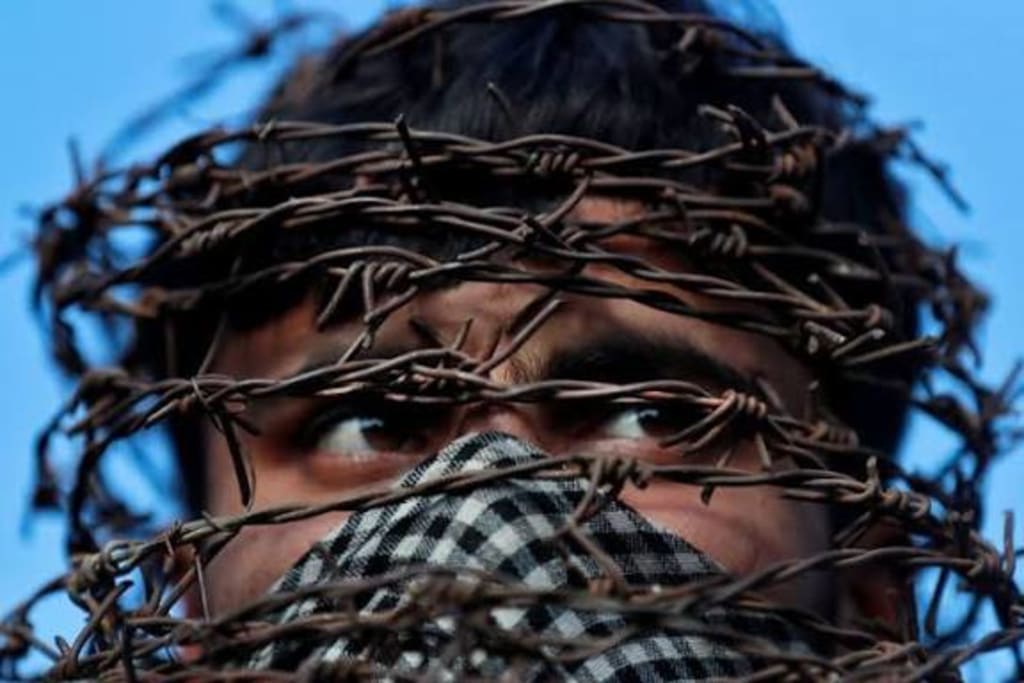
India’s security policies in India, particularly in the disputed region of Kashmir, have increasingly drawn comparisons with the approach used by Israel in the Palestinian territories. Analysts describe this shift as the adoption of an “Israel model” — a strategy that combines heavy surveillance, military dominance, and strict administrative controls to suppress dissent and reshape contested regions.
Since Narendra Modi took office in 2014, India has significantly deepened defense and intelligence cooperation with Israel. Once distant partners, the two countries now share advanced surveillance technology, counterterrorism expertise, and military hardware. This relationship has influenced how New Delhi manages Kashmir, especially after the revocation of the region’s semi-autonomous status in 2019.
Surveillance and Intelligence Expansion
One of the most visible elements of the “Israel model” is the rapid expansion of digital surveillance. Kashmir has become one of the most heavily monitored regions in the world. Authorities have installed extensive networks of CCTV cameras, facial recognition systems, and drone patrols. Mobile phone data and internet activity are closely tracked, and communication blackouts have been imposed during periods of unrest.
Israeli-made technologies, particularly advanced spyware and reconnaissance tools, have reportedly been incorporated into India’s security apparatus. Supporters argue these measures are necessary to combat militancy and prevent attacks. Critics, however, warn that such tools are increasingly used against journalists, political activists, and ordinary citizens, shrinking space for dissent and privacy.
Human rights groups say this mirrors Israel’s methods in the West Bank and Gaza, where surveillance is used not only for security but also to exert constant pressure on the population.
Demolitions and Collective Punishment
Another controversial practice linked to this model is the demolition of homes belonging to suspected militants or protesters. In Kashmir, authorities have razed dozens of houses in recent years, claiming they were used to shelter insurgents. Officials describe demolitions as a deterrent strategy designed to discourage families from supporting militancy.
This policy resembles Israel’s long-standing use of house demolitions as punishment for families of accused attackers. International legal experts argue that such actions amount to collective punishment, which is prohibited under international humanitarian law. Despite these criticisms, the tactic has gained political support within India as a visible demonstration of state power.
Local residents in Kashmir describe demolitions as devastating, leaving entire families homeless without due legal process. Many see it as a tool to intimidate communities and reshape demographics through fear and displacement.
Militarization of Daily Life
The “Israel model” also involves the normalization of military presence in civilian spaces. Kashmir is already one of the most militarized regions on earth, with hundreds of thousands of troops stationed across towns and villages. Checkpoints, armored vehicles, and fortified bunkers have become part of everyday life.
Schools, hospitals, and markets often operate under the watch of armed personnel. Curfews and movement restrictions are frequently imposed after attacks or protests. Supporters argue this level of control has reduced militant activity. Critics say it has deepened resentment and alienation among Kashmir’s Muslim majority population.
The shift reflects a broader ideological change within India’s ruling establishment, which increasingly frames Kashmir not as a political dispute but as a security problem requiring permanent force.
Political Messaging and Public Support
Domestically, the comparison with Israel carries political weight. Israel is often portrayed by Indian nationalist media as a model of toughness and technological superiority in fighting terrorism. The Modi government’s close ties with Israel have been celebrated as proof of India’s rise as a strong global power willing to abandon past restraint.
This narrative resonates with voters who support hardline policies and see Kashmir primarily through the lens of national security. The government’s actions are presented as restoring order and integrating the region fully into India.
However, opposition parties and civil society groups warn that the approach risks eroding India’s democratic foundations. They argue that policies tested in an occupation context cannot be safely applied within a constitutional democracy without severe consequences for civil liberties.
International Concerns
International observers have increasingly voiced alarm at India’s direction. The United Nations and several human rights organizations have criticized internet shutdowns, detentions without trial, and restrictions on press freedom in Kashmir. Comparisons to Israeli practices have intensified these concerns, especially given the long-standing criticism of Israel’s policies in Palestinian territories.
While India rejects the “Israel model” label, insisting its actions are internal security measures, the parallels are difficult to ignore. Both rely on surveillance, force, and administrative control rather than political reconciliation.
A Risky Path Forward
The embrace of this strategy marks a turning point in India’s governance of Kashmir. It may bring short-term stability, but experts warn it could fuel long-term instability by deepening grievances and mistrust.
By adopting techniques associated with occupation and control, India risks redefining its democracy through the lens of permanent security. The Kashmir experiment, modeled increasingly on Israel’s methods, raises a profound question: can lasting peace be achieved through surveillance and demolitions, or does it require political dialogue and respect for rights?
For now, the “Israel model” has become a defining feature of Modi’s India in Kashmir — one that continues to shape the region’s future and India’s global image.
About the Creator
Fiaz Ahmed
I am Fiaz Ahmed. I am a passionate writer. I love covering trending topics and breaking news. With a sharp eye for what’s happening around the world, and crafts timely and engaging stories that keep readers informed and updated.
Keep reading
More stories from Fiaz Ahmed and writers in The Swamp and other communities.
Devastation and frozen frontlines: Ukraine marks four years of Russia’s war
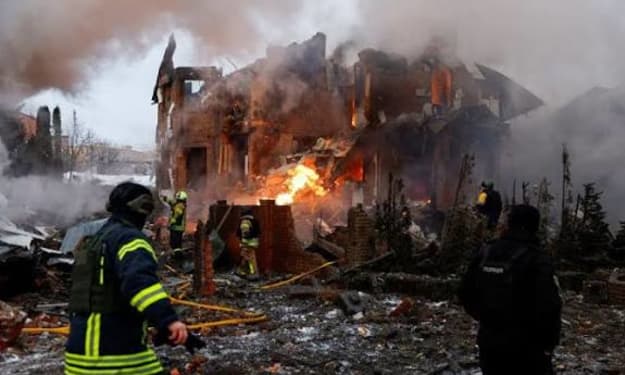
Ukraine marked four years since the start of Russia’s full-scale invasion with ceremonies of mourning, defiance, and renewed appeals for international support, as fighting continues along largely frozen frontlines stretching hundreds of kilometers across the east and south of the country. What began in February 2022 as a rapid assault intended to subdue Kyiv has evolved into a grinding war of attrition that has reshaped Europe’s security order and left deep scars on Ukrainian society. In the capital and major cities, moments of silence were held for soldiers and civilians killed in the conflict. Churches rang bells, and families gathered at makeshift memorials adorned with flags and photographs. Ukrainian President Volodymyr Zelenskyy said the anniversary was not only a day of grief but also of resolve. “We remember everyone who gave their life for our freedom,” he said in a televised address. “And we continue to fight so that this sacrifice was not in vain.” The war’s physical devastation is visible across much of the country. Entire towns in the Donetsk and Luhansk regions have been reduced to rubble after months of artillery duels. Critical infrastructure, including power plants and water systems, has been repeatedly targeted, forcing millions to endure blackouts during harsh winters. According to Ukrainian officials, tens of thousands of residential buildings have been destroyed or severely damaged, and millions of people remain displaced inside the country or abroad. Despite heavy losses on both sides, the frontlines have moved little over the past year. Ukrainian forces have focused on defending key positions while launching limited counteroffensives aimed at disrupting Russian supply lines. Russia, under President Vladimir Putin, has poured additional troops and resources into the war, framing it domestically as a struggle against Western influence and NATO expansion. Military analysts describe the conflict as increasingly defined by trench warfare, drone strikes, and long-range missile attacks rather than sweeping territorial advances. The stalemate has heightened concerns about the sustainability of Ukraine’s defense effort, especially as Western aid has faced political delays and debate. European and U.S. officials reiterated their support this week, but privately acknowledged that Ukraine’s battlefield success depends heavily on continued supplies of ammunition, air defenses, and financial assistance. For ordinary Ukrainians, the anniversary underscored the emotional toll of prolonged war. In Kharkiv, close to the Russian border, residents spoke of exhaustion mixed with stubborn determination. “We have learned how to live with sirens and explosions,” said Olena, a schoolteacher whose apartment was damaged in a recent strike. “But what hurts most is not knowing when this will end.” International reactions reflected both solidarity and anxiety. Leaders from several European nations issued statements praising Ukraine’s resilience and condemning Russia’s aggression. At the United Nations, diplomats warned that the conflict’s ripple effects—from energy prices to food insecurity—continue to impact countries far beyond Eastern Europe. Human rights groups renewed calls for accountability, pointing to evidence of war crimes and the forced displacement of civilians. Four years on, the war has become a defining feature of a new geopolitical era marked by renewed great-power rivalry and the rearmament of Europe. Finland and Sweden have joined NATO, defense budgets have surged, and alliances have hardened along ideological lines. Yet on the ground in Ukraine, the struggle remains intensely personal: a daily fight for survival, sovereignty, and the hope of peace. As Ukraine marked the somber milestone, Zelenskyy emphasized that the nation’s future still rests on unity and endurance. “We did not choose this war,” he said, “but we choose to stand. And as long as we stand together, Ukraine will live.” The frozen frontlines may signal a pause in major territorial shifts, but the human cost continues to rise. For Ukrainians, the fourth anniversary was not an end point but another chapter in a war whose outcome will shape their country—and Europe—for generations to come.
By Fiaz Ahmed about 16 hours ago in The Swamp
A Gathering of Evil Bosses
“I’m the queen of chin jutting while I smooth my hair, attacking, insulting, and deflecting to protect my appointer.” “Oh, please, Blondi, my hair is curled, highlighted, and longer than yours. I feature television commercials telling immigrants that we will give them a free plane ride home, and if they voluntarily turn themselves in, they will be allowed to legally apply for re-entry. It runs everywhere, and I look good in it! You can’t compete because of your blond hair. Mine is nicer, and my lips are prettier than yours.”
By Andrea Corwin 6 days ago in The Swamp
The broken system of empty promises after gun violence
Each time there is a school shooting, gang or juvenile-related murder in America, the responses are always the same, but nothing changes. Local leaders, clergy, state, and federal officials all say, "This has to stop." They hold meetings, candlelight prayer vigils and have marches, but the shootings continue.
By Cheryl E Preston6 days ago in The Swamp
At My Wits’ End
Life is about taking out the trash and calling it trash because you have every reason to. It wasn't meant to be linear, they say. But the times you tried to make it straight led to problems, and you didn’t have the tools to put any of it to use. You don't put your right shoes on the right feet; you put the left shoes on the left feet. The grey hardened slab will trip you up anyway.
By Caitlin Charlton6 days ago in Humans



Comments
There are no comments for this story
Be the first to respond and start the conversation.