Latest Stories
Most recently published stories in The Swamp.
Julius Caesar: Friend or Foe?
Julius Caesar and Pompey shared a special love/hate relationship within their personal and political life. To Caesar, Pompey represented a father figure to him; yet Caesar saw within himself to one day surpass and conquer Pompey for the throne of Rome. Caesar tolerated Pompey solely for the purpose of gaining his knowledge and wisdom---to later overthrow Pompey’s power in a civil war. Caesar and Pompey struggled for power which ultimately ended in luck on Caesar’s behalf. In 48 B.C., again erupts another civil war (which lasts until the year 45 B.C.) where Caesar utterly defeats everyone and assumes position as emperor of the Roman Empire. As emperor, Caesar adopts Octavian, to further advance his political and popularity status, which surprisingly backfired on Caesar’s original plans he had for Octavian. “Having outcompeted his rivals one by one, Octavian was now by far the most powerful man in the Roman empire … he was basically a military dictator with almost unlimited power (Sommer, 34).” Octavian, as he got older, proved to be far more advanced in his comprehension and skills than Caesar had anticipated, which played to Caesar’s advantage as Octavian willingly shared his insight with Caesar in planning war strategies for Caesar’s army. After Caesar’s death, he left everything he owned to his successor Octavian in his will. With his newfound power and wealth, Octavian decided to donate it all to the poor (in honor of Caesar’s wish). In doing so, Octavian gains prestige with the people of Rome---getting help and support from them to refinance and rebuild his power again. After the Senate went into hiding from killing Julius Caesar, Octavian then takes it upon himself to avenge Caesar’s death by hunting down and killing off each of the members of the Roman Senate. While Caesar was still alive though, he accentuated his supremacy by pleading to the Senate for a force unanimous decision of making him dictator of Rome.
By Robyn Welborne8 years ago in The Swamp
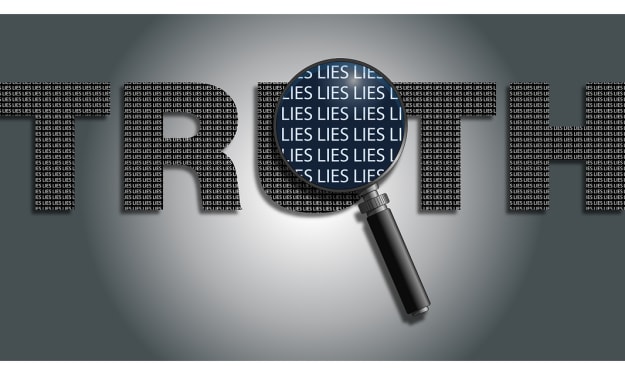
Why Are You Ranking: Worst Fake History to be Taught in Government Schools Listed from False Truth to Pants-on-Fire Lie
In this age of schools that ought to be privatized, staff and faculty mean well, but fall short of delivering facts when it comes to history. Throughout the decades, American government schools have offered an adequate amount of education. This satisfactory performance has lead some students to believe in “facts” that never happened, “heroes” that were butchers, and actual heroes who are maligned for their immense fortunes (and how they earned them). Though the school system is fouled up, it is not beyond repair. With the introduction of private schooling, the children and adults of America and the world may still have a chance to salvage what little learning they have and put it to good use in a career that they love. The teachers who have taught “fake history” are to blame but only because their teachers and instructors put in their heads to deliver drivel to the students. What hope is there? If schools are not looked at like the Department of Motor Vehicle (DMV) or United States Postal Service (USPS) and instead viewed as corporations or companies, then the young minds of tomorrow may still have a chance. But until then, let’s grab our tablets and founding documents for, “Why Are You Ranking: Worst fake history to be taught in government schools listed from false truth to pants-on-fire lie.”
By Skyler Saunders8 years ago in The Swamp
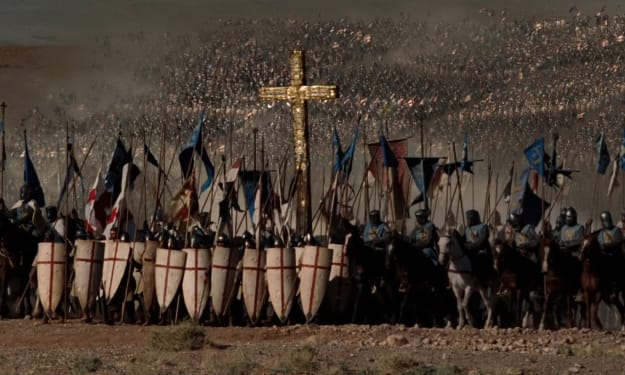
The Church, the Tribes, and the Roman Empire
“Pride goeth before destruction, and an haughty spirit before a fall. (Proverbs 16:18) Usually we just abbreviate it to “pride goeth before a fall”.” (Glen, ‘The King’s English’). A universally famous quote from the King James Bible sums up how too much of a good thing will eventually lead to ruin. History has a way of repeating itself. Just like the Grecian Empire before them, the mighty Roman Empire also experienced a great ‘fall’. But, was the Romans defeated by pride …or fear? Rome fell in August 410 at the hands of Alaric the Visigoth, erecting Alaric as the next successor to the Romans’ fragile legacy lineage. After Alaric’s death, Ostrogothic King Theodoric emerges through the challenges and responds by preserving what was left of the Roman Empire and merging its cultures with the Germanic tribes. Out from all of this chaos, the ‘true successors’ of Rome came to be the Roman Catholic Church; their peaceful influence over the invading barbarians showed how the Germanic leaders were just ‘inheritors’ to what the Catholic Church had already established. Although the Visigothic leader Alaric conquered Rome, and the Ostrogoth King Theodoric, after him, saved its traditions and history; the Roman Catholic Church still remains the only real successors of the fallen Roman Empire by providing stability for the Medieval Period.
By Robyn Welborne8 years ago in The Swamp
Cost Effective or Carbon Free?. Top Story - July 2018.
Our way of life has consequences we choose to ignore. We enjoy driving our car down the highway. We expect electricity in our homes to power the things we feel we need. What people do not appreciate is seeing the effects of pollution that comes from the production of items that make our way of life sustainable. One of the most significant contributors to climate change comes from utilizing coal to generate electricity and, as a result, some people argue for the immediate shutdown of coal-power facilities to reduce that pollution in our environment. While quick closures of all coal-power plants will quickly, and significantly, minimize air pollution, instead, it is much more important to utilize technology to refit such facilities to reduce pollution at a pace that will not devastate the economy.
By Felix Martinez8 years ago in The Swamp
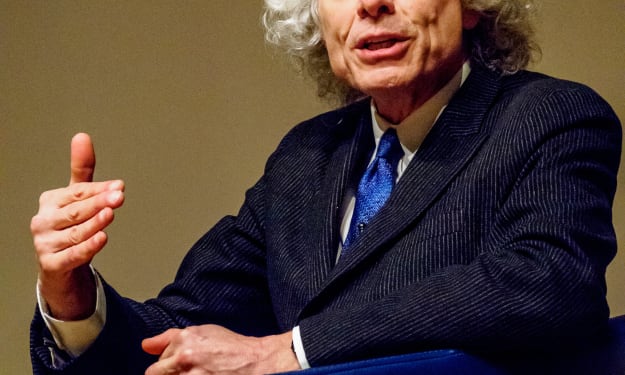
Why Are You Ranking: Ideas in Steven Pinker's 'Enlightenment Now' Listed from Inhumane to Rational
Within the context of our current climate of negativity and strife, professor Steven Pinker dared to buck the trend and talk about positivity. And not just touchy-feely goodness, but hard, cold facts including diagrams and charts that illustrate that we ought to recognize just how good we have it. Though not perfect, Enlightenment Now (2018) sheds light on how we’re better fed, experience longer lives, are able to live better lives, and plan for the future. It is a tome dedicated to the human soul; it represents a spirit that we can achieve our dreams if we are reality-oriented and focused on the goodness of our own minds. Pinker brings together the ideas of how there are fewer birth deaths for child and mother, wars globally are at their lowest point in history, violent crimes have receded, and billions of people over the past thirty or so years have risen out of abject poverty. Enlightenment is a testament to the power of the human mind to solve problems, create new ways to anticipate future problems, and permit human flourishing. Now, get your happiness indices and statistics on economic inequality measures for “Why Are You Ranking: Best Ideas in ‘Enlightenment Now’ Listed from Inhumane to Rational."
By Skyler Saunders8 years ago in The Swamp
Food Fight
Ready to be hungry? It’s fried chicken vs. pizza, as two family dynasties fight over one man’s use of a racial slur threatens a major pizza chain. Sounds like something Shonda Rhymes would write doesn’t it? Yet John Schnatter, former chairman and CEO of Papa John's, is the man in the center of this controversy. He’s the one who dragged KFC, in particular, the deceased real-life Colonel Sanders into the mess by claiming the fried chicken king was a known racist.
By Edward Anderson8 years ago in The Swamp
Arrested for Stepping on Dry Sand
On July 1, 2018, the Governor of Florida, Rick Scott, signed into law H.B. 631, a bill sponsored by a Ft. Lauderdale born democrat named Edwards-Walpole. This bill gave beach property owners the right to claim the lands of the beach to the mean high tide line, or in other words, beach-goers had to stay on wet sand only. Moreover, this bill forbid any local governments and counties from creating any ordinance that would create a customary use for beach-goers against the homeowners' rights. This means that, even if a county wanted to give local residents and tourists a right to enjoy the sands that they have been enjoying for decades, the county cannot do so. The bill strictly prohibits that. So, where does this leave you if you visit Florida? How does this impact Florida? Take a look...
By Shannon Humphrey8 years ago in The Swamp
Utilitarian Standpoint: Issues Where I Stand Neutral
Hey Guys, Today I want to talk about neutrality, and the top ten social issues that I stand neutral on. I wrote something similar where I listed top ten things which people are irrationally sensitive about. It was not accepted because it was too broad and not specific enough. So bear with me while I make the list, short and simple. Welcome to another post in the us series where I talk about subjective matters aiming towards an objective solution. It is a story that affects all of us.
By Heeta Joshi8 years ago in The Swamp
Grass-Fed vs. Grain-Fed
Humanity’s food chain is a significant contributor to our planet’s cycle of life. Consumption of animals, as well as plants, ensures that humanity can continue to grow. However, many practices come into question on the methods used to utilize animals for the benefit of humanity. Is it necessary to treat animals in specific ways if—let’s say—we used animals for food? Many of us believe it is necessary to treat them well to gain the maximum nourishment possible from animals we consume. Our society’s agricultural industry must rear and finish animals in as close to a natural environment as possible to assure society of healthier foods.
By Felix Martinez8 years ago in The Swamp
Protecting the Next Generation: School Shootings
The Problem As of May, there were 23 school shootings in 2018 alone. That amounts to about one school shooting per week. There have been nearly 200 since the year 2000. How is it that something so preventable cannot be solved?
By Dillon Staples8 years ago in The Swamp