Latest Stories
Most recently published stories in The Swamp.
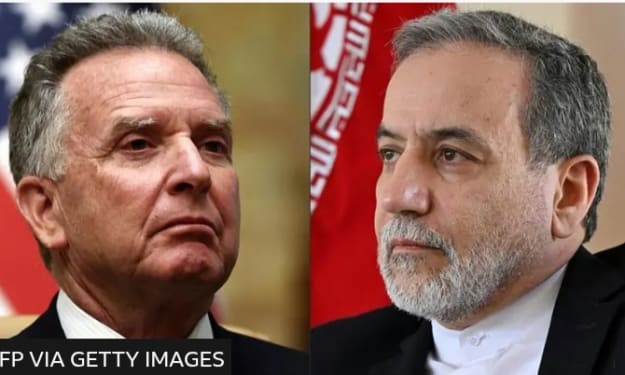
US and Iran Talks: A Critical Step to Prevent Direct Conflict. AI-Generated.
The world’s attention has once again shifted towards the ongoing tension between the United States and Iran, with the two nations set to engage in crucial diplomatic talks aimed at averting the looming threat of direct conflict. This new development comes at a time when the geopolitical landscape in the Middle East is fraught with escalating tensions, military posturing, and deep-rooted animosity between the two countries. As fears of an all-out war intensify, there is a growing realization that dialogue may be the only feasible solution to prevent a catastrophic confrontation.
By Ayesha Lasharia day ago in The Swamp
Brody King Just Turned AEW Dynamite Into A Political and Cultural Flashpoint by NWO Sparrow
How One AEW Star Triggered Raw Emotion Inside And Outside The Ring In my time covering pro wrestling , I have seen performers rise through story lines, title runs, and viral moments. Very few capture the kind of raw audience investment that feels larger than a match. Last night on AEW Dynamite, Brody King reached a level that transcended scripted competition. It felt bigger than wrestling, bigger than rivalry, and honestly bigger than AEW itself.
By NWO SPARROWa day ago in The Swamp
No, Billie Eilish, Americans Are Not Thieves on Stolen Land. AI-Generated.
Billie Eilish, the Grammy-winning American pop star, has recently stirred up controversy with a statement during one of her concerts where she remarked, "Americans are thieves on stolen land." While the singer’s intention may have been to highlight historical injustices, particularly in relation to the treatment of Indigenous peoples in the U.S., the statement is problematic for several reasons. It oversimplifies complex historical realities and misrepresents the modern-day American identity. The comment, though seemingly reflective of growing awareness about issues such as colonialism, exploitation, and displacement, does not fully acknowledge the nuances of U.S. history or the role contemporary Americans play in addressing past wrongs. While historical injustices are undeniable, it’s critical to examine what it means to be an American today and how we approach reconciliation with the land’s original inhabitants. The Historical Context: Colonization and Its Legacy It’s important to acknowledge the historic truths behind Eilish's statement. The United States was, indeed, built on the land that was originally inhabited by Indigenous peoples. European settlers, beginning with the arrival of Columbus in the 15th century, engaged in a systematic campaign to take control of Native American territories. These actions resulted in widespread violence, forced displacement, broken treaties, and genocide. The U.S. government’s policies of the 19th century, such as the forced removal of Native Americans to reservations and the expansionist doctrine of Manifest Destiny, contributed further to the devastation of Indigenous cultures and societies. The land was taken, and many Native communities lost everything — their homes, their land, and in many cases, their lives. This is a painful reality that cannot and should not be overlooked. However, the critical aspect here is that history cannot be reduced to a simple narrative of "thieves on stolen land." While the U.S. government’s actions in the 18th and 19th centuries have left a deep scar, modern Americans live in a vastly different context, one in which the acknowledgement of these wrongs and efforts toward justice and reconciliation are actively being pursued. Evolving America: A Nation in Flux To frame modern Americans as "thieves on stolen land" ignores the complexity of today’s U.S. and the efforts being made by individuals and groups to correct historical wrongs. Since the civil rights movements, the U.S. has undergone significant social and political changes. Laws protecting the rights of marginalized groups, including Native Americans, have been passed, and federal recognition of Indigenous tribes and nations has been a central part of the evolving American political landscape. In recent decades, Indigenous rights activists, politicians, and organizations have worked tirelessly to reclaim land, preserve culture, and revitalize Native languages. In addition to this, many non-Indigenous Americans support these movements and engage in ongoing conversations about the reparative steps that need to be taken. For instance, land acknowledgments — formal statements recognizing the traditional owners of land — have become a significant part of educational, cultural, and governmental institutions, including those that host concerts like Eilish’s. The recognition of past mistakes does not make contemporary Americans complicit in them. Many modern-day Americans are involved in reparative work, fighting for the rights of Indigenous peoples and acknowledging the painful legacy of colonialism. The U.S. is a country that has been shaped by numerous waves of immigrants, each of whom has their own unique history and connection to the land. This multi-ethnic and multi-racial identity cannot be erased by blanket generalizations, nor should it be. The Importance of Nuanced Dialogue While Billie Eilish’s comment may have been well-intentioned, it oversimplifies the narrative of American history and identity. Art, music, and performance can be a powerful means of raising awareness about social and political issues. Eilish has used her platform to speak out on climate change, mental health, and various social justice causes, which are undoubtedly important. However, statements like "Americans are thieves on stolen land" undermine the importance of nuanced discourse about the complexities of historical injustices and modern-day efforts for justice and reparations. Rather than adopting a defeatist view that casts contemporary Americans as inherently guilty of crimes they did not commit, it would be more constructive to focus on the path forward — on the steps that individuals, communities, and governments can take to redress past wrongs. For example, supporting Indigenous-led environmental initiatives, promoting the return of Native lands, and increasing public awareness of Indigenous cultures are all constructive ways to engage with this issue. Furthermore, such broad statements can alienate those who are already working toward a better future. The reality is that in a diverse country like the U.S., many people are committed to addressing the wrongs of the past and righting the injustices faced by Indigenous peoples. This commitment should not be dismissed. The Role of Native Voices in the Conversation It is essential to listen to and amplify the voices of Indigenous communities themselves in discussions about the land and historical injustices. The very communities that have been displaced for centuries are the ones that should lead the conversation on how the U.S. can move forward. It is their experiences, perspectives, and wishes that must guide the way the nation reconciles with its past. Acknowledging the pain of colonization and displacement is vital, but it must be done through meaningful engagement with Indigenous people rather than making blanket statements about all Americans. Native leaders such as Deb Haaland, the first Native American cabinet secretary in U.S. history, and Russell Means, the late activist and actor, have done remarkable work to bring awareness to the historical and ongoing challenges faced by Indigenous communities. Their leadership demonstrates that the focus should be on creating tangible change and supporting the right of Indigenous people to determine their own future. Conclusion: Beyond the Blanket Statements Billie Eilish’s comment may have been intended to spark conversation about the treatment of Indigenous peoples, but its oversimplification of a complex issue is problematic. While it is essential to recognize and confront the historical injustices committed by colonial powers, contemporary America is not a monolith. Rather than casting all Americans as guilty of past wrongs, we should focus on recognizing the efforts being made to correct these injustices and building a future where Indigenous voices are heard and respected. In the end, the conversation should not be about guilt, but about collaboration, empathy, and a commitment to justice. By focusing on the positive steps being taken to address historical wrongs, we can move towards a more inclusive future where all people, regardless of their background, can share in the prosperity and peace of the land.
By Fiaz Ahmed a day ago in The Swamp
CNA Explains: Why China Mattered in the Expiry of the Last US–Russia Nuclear Treaty. AI-Generated.
The collapse of the last major nuclear arms control agreement between the United States and Russia, the New START treaty, has triggered significant concern in international diplomatic and security circles. While the treaty's expiry in 2026 was largely driven by the geopolitical dynamics between the U.S. and Russia, the role of China looms large in the background. Beijing’s growing nuclear arsenal and refusal to be part of the treaty negotiations became a key factor that complicated discussions between Washington and Moscow, driving both nations toward a new phase in the arms race. Background: The End of New START The New Strategic Arms Reduction Treaty (New START), signed in 2010 by Presidents Barack Obama and Dmitry Medvedev, was the last remaining arms control agreement between the U.S. and Russia after a series of Cold War-era treaties were abandoned or expired. The treaty imposed limits on the number of deployed nuclear warheads, delivery systems, and missile defense systems, with an aim to curb the further spread of nuclear weapons and ensure transparency between the two countries. However, the expiration of the treaty at the beginning of 2026 marks a crucial shift in the nuclear arms control landscape. Over the past decade, both the U.S. and Russia have pointed to one primary reason for the growing irrelevance of arms control treaties: the rise of China as a nuclear power. With Beijing accelerating its nuclear capabilities and refusing to engage in arms control talks, the U.S. and Russia have found it increasingly difficult to address their nuclear arsenals without considering China’s growing nuclear stockpile. China's Nuclear Growth: A Strategic Concern China’s nuclear policy has historically been characterized by its minimalist approach — maintaining a relatively small arsenal under the principle of "no first use" (NFU), which signified its commitment to not being the first to deploy nuclear weapons in a conflict. However, in recent years, China has significantly expanded its nuclear weapons capabilities, which has stirred growing unease in Washington and Moscow. The Stockholm International Peace Research Institute (SIPRI) estimates that China has increased its nuclear warhead stockpile by over 30% in the past decade, with plans to build a nuclear triad capable of delivering missiles from land, air, and sea. This expansion is part of China’s broader military modernization efforts, which include the development of new intercontinental ballistic missiles (ICBMs), nuclear-capable submarines, and advanced missile defense systems. Unlike Russia and the U.S., China has not agreed to engage in multilateral arms control talks, leading both superpowers to question the fairness and effectiveness of a nuclear treaty that leaves out the third-largest nuclear power. The U.S. and Russia's Dilemma The U.S. and Russia have both acknowledged that arms control efforts are no longer effective in the absence of China’s involvement. In 2019, the U.S. withdrew from the Intermediate-Range Nuclear Forces (INF) Treaty, accusing Russia of violating its terms, but also expressing frustration at China’s growing missile capabilities, which were not subject to the treaty’s limitations. Similarly, the Open Skies Treaty and other arms control agreements also began to unravel, with the issue of China's nuclear expansion surfacing as a key motivator for these exits. President Joe Biden and Russian President Vladimir Putin have expressed a desire to continue nuclear arms control talks, yet without China’s involvement, both sides are finding it difficult to agree on the next steps. The New START treaty’s expiration is thus viewed as a symbol of how difficult it has become to manage nuclear competition in the 21st century without including China in the framework. As both the U.S. and Russia focus on their strategic relations, China’s refusal to engage in arms control negotiations casts a shadow over any potential future agreements. China's Stance: Non-Engagement with Arms Control Talks China’s decision not to engage in nuclear arms control discussions is not a recent development. For years, Beijing has maintained that its nuclear stockpile is proportionate to its national defense needs and that it remains committed to its NFU policy. While this stance was reasonable during the Cold War, as China’s nuclear arsenal was far smaller than those of the U.S. and Russia, the dynamic has changed with Beijing’s ongoing military expansion. China has consistently rejected U.S. and Russian calls for including its nuclear capabilities in any future arms control agreements, arguing that its stockpile remains small in comparison to those of the U.S. and Russia, and that the U.S. should reduce its own nuclear forces first. The Chinese government views nuclear arms control agreements as a relic of the Cold War era and believes that they should evolve to reflect the changing global security environment. Beijing has also cited the fact that it faces no nuclear threat from its immediate neighbors, particularly from Russia, and as such, sees no immediate need to alter its nuclear posture. However, this position has led to frustration in Washington and Moscow. U.S. policymakers have argued that strategic stability cannot be achieved with a treaty framework that ignores China’s growing influence in the nuclear arena. Russia has expressed similar concerns, with some officials even suggesting that without China’s participation, arms control agreements between the U.S. and Russia are essentially futile. The Impact on Global Nuclear Stability The absence of China from arms control negotiations could have far-reaching consequences for global nuclear stability. As the U.S., Russia, and China account for more than 90% of the world’s nuclear warheads, a trilateral arms control agreement would be necessary for effective global non-proliferation efforts. Without such a framework, the risk of nuclear arms races and the potential for miscalculations in the use of nuclear weapons will continue to rise. In recent years, China has also pursued closer military cooperation with Russia, including joint military exercises and shared interests in countering U.S. global influence. This cooperation complicates the arms control situation even further, as a strategic alignment between the two nuclear powers raises concerns in Washington about the long-term balance of power. Possible Pathways Forward Despite the challenges, there are possible pathways for addressing these growing tensions. One approach could be for the U.S., Russia, and China to engage in trilateral talks with a focus on nuclear transparency and risk reduction. However, convincing China to participate in such discussions would require significant diplomatic engagement and a shift in Beijing’s long-standing stance on nuclear arms control. Another option could involve developing new arms control frameworks that consider the technological advancements of modern warfare, such as cyber capabilities, missile defense, and space-based weapons systems. As these technologies increasingly intertwine with nuclear deterrence, the next generation of arms control agreements may need to adapt to the realities of contemporary global security challenges. Conclusion The expiry of the New START treaty marks a pivotal moment in nuclear arms control, but it is not solely the result of U.S. and Russian dynamics. China’s growing nuclear capabilities and its refusal to join in arms control talks have played a crucial role in the breakdown of the arms control framework that once governed U.S.-Russia relations. As global security continues to evolve, the need for a new, inclusive approach to nuclear arms control is becoming more urgent. Whether this involves trilateral talks or new multilateral frameworks remains uncertain, but without China’s involvement, meaningful progress will be difficult to achieve.
By Fiaz Ahmed a day ago in The Swamp
Israeli air attacks on Lebanon reach highest level since ceasefire: Report. AI-Generated.
Israel’s airstrikes on Lebanon have escalated sharply in recent days, reaching their highest intensity since the ceasefire that brought an end to the 2006 Lebanon War. The Israeli Defense Forces (IDF) have launched a series of air attacks targeting Hezbollah positions in southern Lebanon, raising tensions along the volatile Israeli-Lebanese border. The renewed violence is triggering concerns over the potential for broader regional conflict, with both sides bracing for further escalation. Context of the Escalation The recent surge in airstrikes comes after months of simmering tension along the Lebanese-Israeli border. While the 2006 ceasefire agreement, brokered by the United Nations, was meant to end hostilities between Israel and Hezbollah, violations have been frequent on both sides. However, the intensity and frequency of the attacks seen in recent days represent a significant escalation and signal a possible shift in the fragile status quo. For Israel, the decision to increase airstrikes is part of a broader strategy to weaken Hezbollah’s military infrastructure and prevent what it perceives as an existential threat from the Lebanese group. Hezbollah, which has long been backed by Iran, has grown in strength and influence in the region, maintaining a strong presence in southern Lebanon. The group has engaged in a number of skirmishes and rocket attacks against Israeli forces, raising alarm in Jerusalem over its increasing capabilities. The Recent Surge in Israeli Airstrikes In the past two weeks alone, Israeli warplanes have bombarded several key Hezbollah strongholds, including arms depots, missile storage facilities, and command centers. According to the IDF, these operations are part of an effort to degrade Hezbollah’s offensive capabilities and prevent it from launching attacks against Israeli civilian and military targets. Israel’s airstrikes have primarily targeted areas near the towns of Tyre and Nabatieh, both of which are known Hezbollah strongholds. The increased intensity of airstrikes follows a series of Hezbollah rocket launches that targeted northern Israel, which Israeli officials have labeled as "provocations" designed to escalate the conflict. The Israeli government has also stated that it holds the Lebanese government responsible for Hezbollah’s actions, despite the group’s position as a powerful non-state actor within Lebanon. This framing has long been a point of contention, with critics arguing that it undermines Lebanon's sovereignty. Lebanese Civilian Casualties The humanitarian impact of these renewed Israeli strikes has been severe. Reports from Lebanese health officials confirm that at least 20 civilians have been killed in the past 10 days alone, with dozens more injured in airstrikes. While Hezbollah positions remain the primary target, civilian infrastructure, including roads, bridges, and power lines, has also been damaged. This has compounded the already dire economic and humanitarian situation in Lebanon, which is facing a severe economic collapse and a refugee crisis exacerbated by the Syrian conflict. The United Nations Interim Force in Lebanon (UNIFIL) has expressed grave concern about the worsening situation and the potential for further civilian casualties. UNIFIL's mandate is to monitor the ceasefire and prevent the flow of arms to Hezbollah, but its ability to influence the situation on the ground remains limited. The UN has called for both sides to de-escalate, but these calls have gone largely ignored. Hezbollah’s Response Hezbollah has responded with defiant rhetoric and military actions of its own. Hassan Nasrallah, the leader of Hezbollah, delivered a speech earlier this week vowing that the group would retaliate for Israeli airstrikes on Lebanese soil. "We will not allow Israel to continue violating Lebanon’s sovereignty," Nasrallah said in a televised address. "Hezbollah is prepared to defend Lebanon against any Israeli aggression." Hezbollah has also made it clear that it has the capacity to strike deep within Israeli territory. While rocket attacks from Hezbollah have been largely limited to areas near the border in the past, the group has hinted that it may expand its targets to include major Israeli cities, something that has not been seen since the 2006 war. The Israeli government has been careful not to publicly comment on the specifics of Hezbollah’s retaliatory capabilities, but officials have made it clear that Israel is fully prepared for a broader conflict if necessary. "We will not hesitate to take any action to defend our citizens," said an IDF spokesperson. The Risk of a Broader Conflict The recent violence comes at a particularly sensitive moment for both Israel and Lebanon. On one hand, Israel is facing domestic political instability, with ongoing protests over the government's judicial reforms, which have sparked widespread unrest. Prime Minister Benjamin Netanyahu is under pressure both domestically and internationally, making the current escalation potentially useful in rallying nationalistic support. On the other hand, Lebanon is in the midst of one of the worst economic crises in its history, with a collapsed currency, rampant inflation, and widespread poverty. The Lebanese government, which has limited control over Hezbollah’s actions, finds itself in a difficult position, as it cannot afford to antagonize Hezbollah, which has considerable political and military influence within Lebanon. The risk of a broader conflict, involving not only Hezbollah but also the Syrian regime and Iran, remains high. Iran, Hezbollah’s primary backer, has frequently expressed its support for Hezbollah’s actions, and it is feared that Israel’s escalating airstrikes could provoke further Iranian involvement. This scenario could quickly turn the current skirmishes into a full-blown regional conflict, with catastrophic consequences for Lebanon, Israel, and the wider Middle East. International Reactions The international community has reacted with concern, urging both Israel and Hezbollah to exercise restraint and avoid further escalation. The United States, a key ally of Israel, has expressed support for Israel’s right to defend itself but has also called on Israel to minimize civilian casualties in its airstrikes. U.S. Secretary of State Antony Blinken stated, "We urge all parties to de-escalate and return to the path of diplomacy." At the same time, the European Union has condemned the violence and called for an immediate halt to all military operations. The EU expressed concern that the airstrikes could further destabilize Lebanon and complicate efforts to resolve the ongoing Syrian conflict, which has already resulted in a massive refugee crisis in Lebanon. Conclusion As Israeli airstrikes on Lebanon continue to escalate, the region finds itself once again on the brink of broader conflict. The balance of power between Israel and Hezbollah remains delicate, with both sides engaged in a high-stakes game of brinkmanship. While the immediate outcome of these airstrikes remains uncertain, the risk of further violence and civilian casualties is growing by the day. The international community must continue to press for an immediate cessation of hostilities and urge both sides to return to the negotiation table. Until then, Muscat’s role in facilitating dialogue will remain as critical as ever, with hopes that diplomatic efforts can help defuse the powder keg that is the Israeli-Lebanese border.
By Fiaz Ahmed a day ago in The Swamp
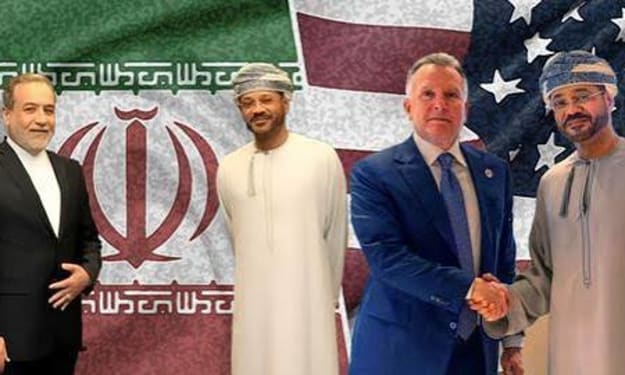
Muscat and the Limits of Iran-US Diplomacy. AI-Generated.
Diplomacy between the United States and Iran has once again converged on Muscat, the capital of Oman — a neutral site long suited for delicate talks — but the scope and expectations of the negotiations reveal how constrained the process remains. As indirect talks are scheduled to resume in Muscat this week, analysts and diplomats alike question whether the venue can overcome the deep mistrust and strategic differences that have long defined Iran-US relations. Muscat: A Neutral Meeting Ground Oman’s capital has emerged repeatedly over the past decade as a mediation hub for Iran and the United States. Unlike venues seen as more explicitly aligned with Western or regional powers, Muscat offers both sides a neutral environment that avoids overt symbolism. That neutrality has helped keep lines of communication open even in otherwise bleak moments. fm.gov.om In the current round, Iranian Foreign Minister Abbas Araghchi confirmed that nuclear negotiations with the U.S. will be held in Muscat, underscoring Oman’s continued diplomatic relevance. Iranian authorities publicly thanked their Omani counterparts for facilitating the talks and providing the space for dialogue, again highlighting the city’s role as a discreet intermediary. But while the choice of Muscat might lower the temperature compared to other capitals, it does little to resolve the fundamental differences between Tehran and Washington. Agenda Disagreements Reflect Deep Distrust The talks themselves are narrow in scope and cautious in ambition. Tehran has insisted that the discussions focus strictly on its nuclear programme and nothing else — excluding issues such as missile development, regional proxy activity, and internal governance. That stance underscores Iran’s view that broader demands risk compromising its core strategic interests. roic.ai Washington, however, has sought to expand the agenda. U.S. officials have publicly suggested that ballistic missiles and Iran’s regional posture should be included alongside nuclear issues. That broader agenda, according to critics, reflects mounting pressure from allied capitals — notably Israel — that view a narrow nuclear focus as insufficient. Dawn The U.S. insistence on tackling multiple security concerns simultaneously has been one of the main sticking points that nearly derailed talks before they arrived in Muscat. Iranian negotiators balked at such demands, regarding them as indirect pressure tactics rather than genuine diplomacy. Dawn Domestic and Regional Pressures Part of the difficulty stems from internal political divides on both sides. In the United States, figures such as Secretary of State Marco Rubio have articulated a hawkish approach, arguing that any meaningful agreement must address Iran’s missile capabilities and regional alliances as well as its nuclear programme. This stance reflects internal political pressure in Washington to adopt a comprehensive view of Iran’s influence. Dawn Tehran, meanwhile, remains wary of conceding on anything that it perceives as core to its deterrence strategy. Iranian officials privately argue that agreeing to broader topics would invite further demands once one issue is settled. Observers note Tehran’s longstanding concern that concessions in one area — such as nuclear enrichment — would simply shift the focus of pressure to missiles or other strategic capabilities. Dawn The result is a diplomatic standoff where both sides claim to desire peace and stability but remain deeply cautious about making compromises perceived as weakening their negotiating positions. Muscat’s Role: Bridge or Band-Aid? Oman’s efforts to host talks and facilitate communication are widely recognised diplomatically, but the choice of Muscat also reflects the limited options available. When direct dialogue is politically or symbolically difficult — as it has been almost continuously since the 1979 Iranian Revolution — a neutral venue becomes essential to even keep talks alive. fm.gov.om However, the fact that indirect talks are used — with delegations in separate rooms communicating via intermediaries — suggests that trust remains minimal. This format has been a staple of past rounds, where neither side is willing to engage in direct, face-to-face negotiation. Anadolu Ajansı The indirect nature of the discussions underlines a broader limitation: even when diplomacy is possible, it is tightly controlled, with both sides wary of entering a process that could be seen domestically as capitulation. That tension is part of why expectations for Muscat are modest, even cautious. Dawn External Influences and Broader Tensions Another factor limiting Muscat diplomacy is the broader geopolitical context. Regional anxieties, particularly regarding Israeli military actions and the Israel-Iran rivalry, have influenced both U.S. and Iranian calculations. Gulf states — for whom any conflict between Iran and America would have immediate repercussions — have a vested interest in de-escalation. Yet those same regional tensions complicate negotiations. Dawn Analysts such as Trita Parsi of the Quincy Institute argue that U.S. policy is influenced not solely by direct national interest but also by the strategic priorities of allies like Israel, which continues to advocate for confrontation rather than compromise. Pursuing such policy directions further limits the diplomatic room for manoeuvre. Dawn Modest Goals, Significant Risks Despite the difficulties, both sides appear committed to keeping the talks alive for now, even if only as a mechanism to manage tensions rather than resolve them comprehensively. Tehran has taken small confidence-building steps, such as postponing military exercises in the Persian Gulf and lowering the intensity of rhetoric around missile programmes. Dawn Washington, too, is maintaining a diplomatic track while visibly reinforcing its military posture in the region, as seen by the continued presence of American forces and carrier groups in nearby waters. These simultaneous push-and-pull strategies underscore the fundamental duality of current policy: seek engagement while preparing for confrontation if diplomacy fails. Conclusion: A Diplomatic Path with No Clear End Muscat remains, for now, the centre stage of U.S.-Iran diplomacy — but the limitations of these talks are stark. Venue and format can create space for conversation, but they cannot by themselves bridge the deep mistrust, conflicting national interests, and regional pressures that underpin the standoff. Dawn What is clear is that both Tehran and Washington are using diplomacy not as an endpoint but as a way to manage risk and project strategic posture. Muscat’s role will continue to be significant as long as neither side is prepared to confront the core issues directly in a more robust negotiating framework — a situation that leaves the future of U.S.-Iran relations as uncertain as ever.
By Fiaz Ahmed 2 days ago in The Swamp
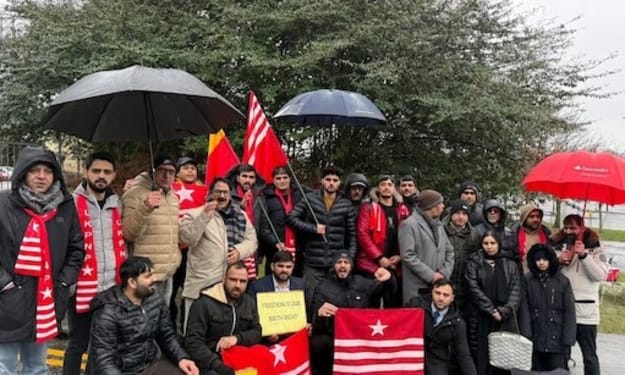
Kashmir Resolution: The Long Search for Peace in South Asia
The Kashmir issue remains one of the longest-running and most complex territorial disputes in modern history. Since the partition of British India in 1947, Kashmir has been a central point of tension between India and Pakistan, influencing regional stability, diplomacy, and global security. Any serious discussion about Kashmir resolution must consider historical roots, international legal frameworks, current geopolitical realities, and potential pathways to peace. Historical Background of the Kashmir Dispute The Kashmir conflict began during the partition of British India into India and Pakistan in 1947. The princely state of Jammu and Kashmir, ruled by a Hindu monarch but with a Muslim-majority population, faced pressure from both newly formed nations. The ruler chose to accede to India, which triggered the first Indo-Pak war. Since then, the region has been divided roughly along the Line of Control (LoC), with parts administered by India and others by Pakistan. Many analysts describe Kashmir as an unfinished chapter of partition, reflecting unresolved political, religious, and national identity issues dating back to 1947. � Le Monde.fr The United Nations became involved early in the dispute. One of the most significant international efforts was UN Security Council Resolution 47 (1948). It proposed a three-step peace process: Withdrawal of external fighters. Reduction of military presence. A plebiscite allowing Kashmiris to decide their political future. � Wikipedia Later UN resolutions, such as Resolution 122 (1957), reaffirmed that unilateral political actions could not be considered a final solution to the dispute. � Wikipe Key Issues Preventing Resolution 1. Conflicting National Positions India maintains that Kashmir is an integral part of its territory. Pakistan argues that Kashmir’s final status should be decided through a referendum based on UN resolutions. This fundamental disagreement has prevented lasting negotiations. 2. Security and Militancy Concerns Both countries accuse each other of supporting instability. Violence and militant attacks often trigger military or diplomatic escalations, making peace talks difficult. Kashmir has repeatedly been described as a “flashpoint” in India-Pakistan relations. Foreign Pol 3. Strategic and Political Importance Kashmir has military, political, and emotional significance for both nations. Domestic politics often influence the narrative around Kashmir, making compromise politically sensitive. Le Monde.fr 4. Water and Resource Disputes The Indus Waters Treaty, signed in 1960, is crucial for regional water security. Recent tensions show how water resources can intensify the conflict. In 2025, actions related to the treaty increased fears of escalation and highlighted the strategic importance of shared rivers. WikipediaRecent Developments and Continuing Tensions The conflict remains active even in modern times. For example, in 2025, a major militant attack triggered military and diplomatic escalation between India and Pakistan. This included airspace closures, treaty tensions, and increased military preparedness. WikipediaLocal political and economic unrest has also affected stability. Protests in Pakistan-administered Kashmir in 2025 highlighted governance challenges and public dissatisfaction, showing that internal political factors also influence the broader dispu. Wikipedia Despite tensions, both sides occasionally express willingness for dialogue, though with different conditions and priorities, reflecting how complex the negotiation landscape remains. Foreign Policy Possible Paths Toward Kashmir Resolution 1. Bilateral Negotiations The Simla Agreement framework emphasizes direct talks between India and Pakistan. Many experts believe sustained bilateral dialogue is the most realistic option. 2. Confidence-Building Measures These may include: Trade cooperation Cultural exchanges Military de-escalation along the LoC Cross-border travel for families Such measures can gradually build trust before larger political agreements. 3. Greater Local Participation Many scholars argue that Kashmiri voices should play a larger role in shaping the future of the region. Including local leadership and civil society groups may help create a more sustainable solution. 4. International Facilitation (If Accepted) Some countries and organizations have offered mediation, but acceptance depends on both India and Pakistan, and currently there is disagreement about third-party involvement. Challenges to Achieving Peace Several major obstacles remain: Strong nationalist sentiment in both countries Security fears and cross-border tensions Nuclear deterrence dynamics increasing global concern Domestic political pressure limiting flexibility These factors mean that any resolution will likely require gradual steps rather than a single major agreement. The Future Outlook The Kashmir issue continues to shape South Asian geopolitics. Experts often emphasize that sustainable peace will require: Political courage Public support in both countries Respect for human rights Economic development in the region Long-term diplomatic engagement While complete resolution remains difficult, history shows that dialogue periods do occur, and even small agreements can reduce tensions and improve daily life for people in the region. Conclusion Kashmir is not just a territorial dispute; it is a complex mixture of history, identity, security, and international law. UN resolutions, bilateral agreements, and diplomatic efforts have all attempted to address the issue, yet lasting peace remains elusive. However, history also shows that conflict and cooperation often exist together. With sustained diplomacy, regional cooperation, and focus on the welfare of the people of Kashmir, a peaceful resolution—though challenging—remains possible in the
By Hasbanullah2 days ago in The Swamp
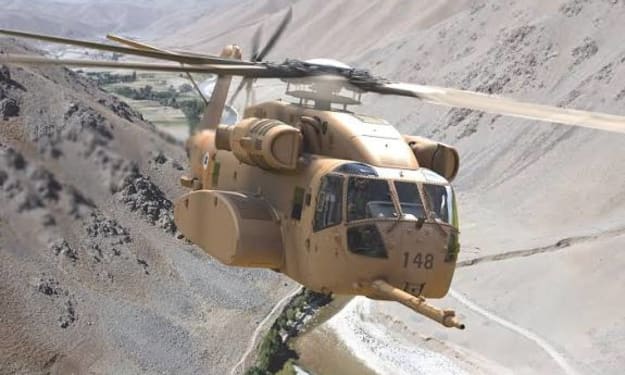
Defense Ministry inks $130m deal with Elbit for ‘advanced technologies’ for Air Force’s heavy choppers. AI-Generated.
The Defense Ministry has signed a $130 million contract with Israeli defense firm Elbit Systems to supply advanced technologies for the Air Force’s fleet of heavy-lift helicopters, officials announced on Tuesday. The agreement is aimed at significantly upgrading the operational capabilities, survivability, and mission effectiveness of the military’s rotary-wing aircraft over the coming decade. Under the multi-year deal, Elbit will provide a package of avionics, electronic warfare systems, and mission-management technologies designed specifically for heavy transport helicopters used in combat and logistical operations. The ministry said the upgrades will ensure that the Air Force’s heavy choppers remain technologically relevant in an increasingly complex battlefield environment. “This agreement strengthens our strategic partnership with Elbit and ensures that our helicopter fleet is equipped with the most advanced technologies available,” a senior Defense Ministry official said. “These systems will enhance flight safety, operational flexibility, and survivability in hostile environments.” Modernizing an Aging Fleet The Air Force relies heavily on its fleet of heavy transport helicopters for troop deployment, medical evacuation, search-and-rescue missions, and logistical support in both peacetime and combat situations. Many of these aircraft have been in service for decades and require modernization to meet current operational requirements. Defense officials said the new systems will include state-of-the-art navigation and flight management computers, improved night-vision compatibility, and upgraded cockpit displays that provide pilots with real-time situational awareness. The helicopters will also receive enhanced self-protection suites, including radar warning receivers and countermeasure systems designed to detect and neutralize incoming threats. According to Elbit Systems, the technologies supplied under the contract will be based on modular architecture, allowing for future upgrades without major structural changes to the aircraft. This approach is intended to extend the operational lifespan of the helicopter fleet while reducing long-term maintenance costs. Focus on Advanced Battlefield Capabilities One of the key elements of the deal is the integration of advanced mission management systems that enable pilots and crew to process large amounts of data in real time. These systems will link the helicopters with other Air Force platforms and ground units, allowing for coordinated operations and improved decision-making during missions. “The modern battlefield is defined by information,” said an Elbit spokesperson. “Our technologies allow crews to see, understand, and act faster than ever before, even in highly contested environments.” Electronic warfare capabilities are also a central feature of the contract. The helicopters will be equipped with systems that can identify hostile radar signals and deploy countermeasures automatically, increasing their chances of surviving in areas threatened by surface-to-air missiles and small arms fire. Defense analysts say such upgrades are essential as non-state armed groups and regional adversaries acquire more sophisticated air defense systems. “Heavy transport helicopters are particularly vulnerable because of their size and flight profile,” said a retired Air Force officer. “Improving their defensive systems is a top priority.” Economic and Industrial Impact The $130 million contract is expected to generate significant economic benefits, including hundreds of skilled jobs in engineering, manufacturing, and system integration. Much of the work will be carried out at Elbit’s domestic facilities, supporting the local defense industry and strengthening national technological independence. Defense Ministry officials emphasized that investing in domestic defense firms ensures secure supply chains and reduces reliance on foreign contractors for critical military systems. “Elbit’s role in this project reinforces the importance of maintaining a strong and innovative local defense sector,” the ministry said in a statement. Elbit Systems, one of the country’s largest defense exporters, has seen rising global demand for its avionics and electronic warfare products. The company has supplied similar helicopter upgrade packages to air forces in Europe, Asia, and Latin America. Strategic Significance The contract comes amid heightened regional tensions and increased focus on military readiness. Defense planners have stressed the importance of ensuring that air assets can operate in contested airspace and support ground forces under fire. Heavy helicopters play a crucial role in rapid response operations, including inserting special forces, evacuating wounded soldiers, and transporting equipment to remote or hostile areas. Any failure or vulnerability in these platforms could have serious operational consequences. “Helicopters are often the first and last link between troops and safety,” said a military analyst. “Modernizing them is not a luxury; it’s a necessity.” The upgrades are also expected to improve flight safety during training and humanitarian missions, including disaster response and wildfire suppression. Officials noted that enhanced navigation systems and situational awareness tools could reduce the risk of accidents in difficult terrain and poor weather conditions. Oversight and Implementation The Defense Ministry said the program will be implemented in stages, with initial systems delivered within the next year. Installation and testing will be carried out in coordination with the Air Force and under strict quality and security standards. Parliamentary defense committees are expected to review the contract as part of routine oversight of major military expenditures. While the deal has drawn broad political support, some lawmakers have called for transparency regarding costs and timelines. Opposition figures have urged the ministry to ensure that the program does not exceed its budget and that the upgraded helicopters meet operational requirements. Looking Ahead The agreement with Elbit is part of a broader modernization effort across the armed forces, which includes upgrades to fighter jets, drones, and air defense systems. Defense officials said further investments in rotary-wing aircraft are likely in the coming years as technology evolves and new threats emerge. “Elbit’s advanced technologies will help ensure our Air Force remains prepared for the challenges of tomorrow,” the Defense Ministry statement said. “This contract is a significant step in safeguarding our operational superiority and protecting our personnel.” As work begins on the helicopter upgrades, military planners and industry leaders alike will be watching closely to see how the new systems perform in real-world conditions. The success of the project could shape future procurement decisions and reinforce the country’s position as a leader in defense technology development. For now, the $130 million deal signals a clear commitment to strengthening the Air Force’s heavy-lift helicopter fleet and maintaining technological edge in an increasingly unpredictable security landscape.
By Fiaz Ahmed Brohi2 days ago in The Swamp
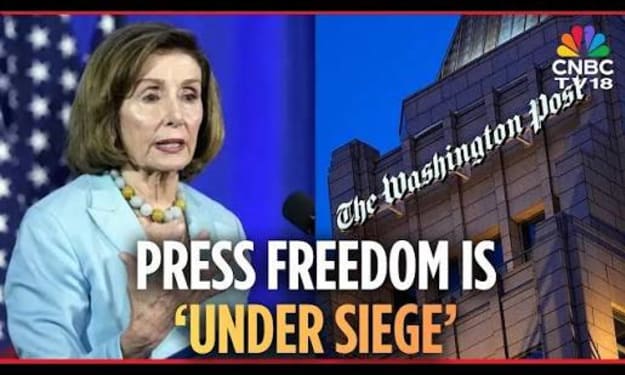
Nancy Pelosi Warns Press Freedom Is ‘Under Siege’ After Arrest of Journalist. AI-Generated.
Former U.S. House Speaker Nancy Pelosi has warned that press freedom is “under siege” following the arrest of a journalist in what she described as a troubling escalation of pressure on independent media and democratic institutions. Her comments come amid growing concern from civil liberties groups and lawmakers that journalists are increasingly being targeted for their reporting. Pelosi issued her warning after authorities detained a reporter covering a politically sensitive investigation, an incident that has drawn sharp criticism from press freedom advocates and sparked renewed debate over the treatment of journalists in the United States and abroad. “The free press is the guardian of our democracy,” Pelosi said in a statement. “When journalists are arrested for doing their jobs, it sends a dangerous message and undermines the constitutional principles that protect all of us. Press freedom is under siege, and we must not be silent.” Arrest Sparks Political Backlash The journalist was taken into custody while reporting on alleged misconduct involving senior public officials, according to media organizations familiar with the case. Law enforcement officials said the arrest was related to obstruction and failure to comply with police instructions, but critics argue the action was disproportionate and politically motivated. Video footage circulating online appeared to show the reporter being escorted away from the scene while identifying themselves as a member of the press. The outlet employing the journalist said they were clearly marked as media and had been performing their duties lawfully. Civil liberties groups quickly condemned the arrest, calling it an attack on press freedom and demanding the journalist’s immediate release. The Committee to Protect Journalists said the detention “raises serious concerns about the growing hostility faced by reporters covering controversial or politically sensitive issues.” Pelosi’s Warning on Democratic Norms Pelosi, who has long positioned herself as a defender of democratic institutions, linked the arrest to a broader pattern of pressure on journalists and public accountability. “This is not an isolated incident,” she said. “Across our country and around the world, reporters are being harassed, intimidated, and jailed for telling the truth. This moment calls for moral clarity and firm action from leaders of both parties.” She urged Congress to strengthen legal protections for journalists and reaffirm the importance of the First Amendment, which guarantees freedom of speech and of the press. Pelosi’s remarks echo earlier warnings from international organizations, including the United Nations and Reporters Without Borders, which have noted a decline in global press freedom over the past decade. Response From Authorities Law enforcement officials defended their actions, saying the arrest was not intended to target journalism but to maintain order at the scene of an ongoing investigation. “Our officers acted in accordance with established procedures,” a police spokesperson said. “The individual was detained after refusing repeated lawful orders to leave a restricted area.” However, media lawyers countered that journalists frequently work in challenging environments and that police must make special efforts to respect their role in documenting events of public interest. “Detaining a reporter who is clearly identified as press sets a dangerous precedent,” said a constitutional law expert. “It risks chilling investigative reporting and discouraging journalists from covering sensitive stories.” Growing Anxiety Among Journalists The incident has intensified concerns within the journalism community about safety and legal risks. Reporters’ unions and newsroom editors said they were alarmed by what they view as a shrinking space for independent reporting. “Journalists are not the enemy of the state,” said a spokesperson for a national press association. “They are essential to transparency and accountability. Arrests like this make our work more dangerous and less secure.” Several media organizations announced they were reviewing their safety protocols and legal support for reporters covering protests, court cases, and political investigations. Some journalists have pointed to an increase in threats, harassment, and legal pressure, both online and in physical settings. They argue that political rhetoric portraying the press as untrustworthy has contributed to a climate in which attacks on reporters are more easily justified. International Implications Pelosi also highlighted the international consequences of the arrest, warning that actions against journalists in democratic societies can embolden authoritarian governments elsewhere. “When a democracy fails to protect its press, it weakens its moral authority to speak out against repression abroad,” she said. Human rights groups echoed that concern, noting that governments in several countries have cited Western examples to defend their own crackdowns on media. “This is how norms erode,” said a senior researcher at a global rights organization. “Each incident makes it easier for others to justify even harsher measures.” Calls for Accountability Lawmakers from both parties have called for an independent review of the arrest. A bipartisan group of representatives said they would seek clarification from the Justice Department and local authorities about the circumstances surrounding the detention. Some have proposed legislation aimed at strengthening protections for journalists, including clearer guidelines for law enforcement interactions with the media and penalties for wrongful arrests. The journalist was later released pending further legal proceedings, according to their employer. The outlet said it would contest the charges and pursue legal action if necessary. A Test for Press Freedom The episode has become a symbol of broader anxieties about the state of press freedom in a polarized political environment. Analysts say that while isolated arrests may not indicate systemic repression, they can have powerful symbolic effects. “Democracy depends on scrutiny,” said a political scientist specializing in civil liberties. “If journalists fear arrest or retaliation, fewer stories get told, and the public becomes less informed.” Pelosi concluded her remarks with a call for vigilance and unity in defending democratic values. “We must stand with journalists who risk their safety to bring us the truth,” she said. “Our democracy is strongest when the press is free, fearless, and protected.” As investigations into the arrest continue, the case is likely to fuel ongoing debate about the balance between law enforcement authority and the constitutional rights of the press—an issue that remains central to the health of democratic societies worldwide.
By Fiaz Ahmed Brohi2 days ago in The Swamp