
Missed Funerals and Blocked Toilets: Iran Deployment Takes a Toll on U.S. Sailors
Extended deployments near rising Middle East tensions are straining morale, separating families, and revealing the quiet personal costs behind America’s naval deterrence strategy.
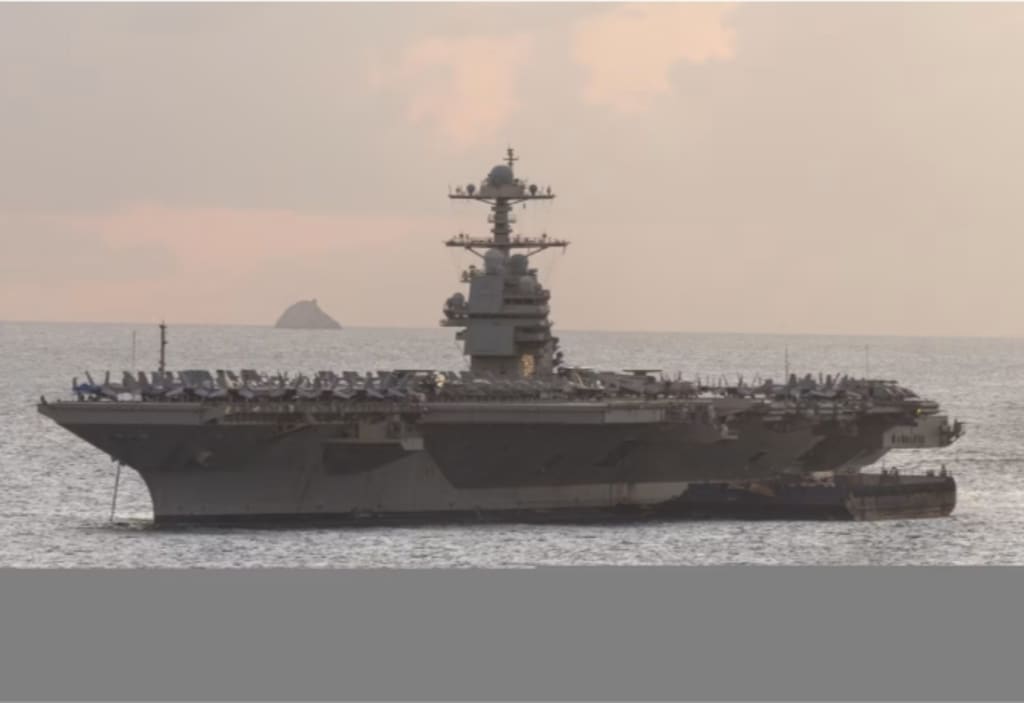
When most people picture a U.S. aircraft carrier deployed near a geopolitical hotspot, they imagine fighter jets roaring off the deck, radar screens glowing in dark command centers, and the silent projection of American power across contested waters.
What they don’t picture?
A sailor quietly learning he can’t attend his grandmother’s funeral.
A young parent missing another birthday back home.
Or a row of blocked toilets on a ship carrying thousands of people, turning daily routines into daily frustrations.
Yet these are the realities facing sailors deployed amid rising tensions with Iran.
The Strategic Headlines vs. The Human Story
In recent months, the United States has surged naval assets into the Middle East as part of its deterrence posture toward Iran. Carrier strike groups, destroyers, and support vessels have been positioned to signal readiness and resolve.
From a geopolitical standpoint, it makes sense. A carrier group represents flexibility, mobility, and immediate military capability. It’s one of the strongest messages Washington can send without firing a shot.
But behind every strategic movement are thousands of sailors living inside that floating city.
And for them, the story isn’t about deterrence theory.
It’s about endurance.
When Deployment Extensions Become Personal
Military deployments are nothing new. Sailors train for them. They expect them. Many even embrace the adventure and sense of mission.
What wears people down isn’t the original plan — it’s the extensions.
A six-month deployment that turns into eight.
An eight-month stretch that quietly becomes ten.
A return date that keeps shifting.
That uncertainty changes everything.
One missed milestone becomes two. A funeral you can’t attend becomes the one you’ll always remember not being there for. Weddings, anniversaries, first steps, graduations — life doesn’t pause just because a ship is at sea.
And while the mission may be justified at the strategic level, at the individual level it feels deeply personal.
Life Aboard a Floating City
Aircraft carriers are engineering marvels. They house thousands of sailors, dozens of aircraft, and enough infrastructure to sustain operations for months.
But they are still ships.
Space is tight. Privacy is rare. Sleep comes in short cycles. Work hours are long and relentless.
Now add in mechanical issues — like malfunctioning plumbing systems. Blocked toilets may sound trivial to outsiders, but in close quarters, sanitation problems escalate quickly. When hundreds of people rely on shared facilities, a small issue becomes a major source of stress.
It’s not just about inconvenience.
It’s about morale.
When basic comforts break down, frustration builds. And when frustration builds in an environment where you cannot leave, it lingers.
The Mental Load
Extended deployments near potential conflict zones carry a mental burden that’s harder to quantify.
Sailors aren’t just away from home — they’re stationed in a region where tensions can spike without warning. News alerts about missile launches or regional flare-ups aren’t abstract; they’re reminders of proximity.
At the same time, loved ones back home are watching the same headlines.
That creates a strange dual anxiety:
Sailors worry about their families managing without them.
Families worry about sailors being near a possible flashpoint.
Both sides try to stay strong for each other. Both sides hide certain fears to avoid adding stress.
It’s an emotional balancing act that lasts for months.
The Weight of Routine Sacrifice
Service members understand sacrifice. It’s embedded in the oath they take.
But sacrifice accumulates.
One deployment? Manageable.
Repeated extensions? Harder.
Unpredictable timelines? Exhausting.
Burnout doesn’t arrive dramatically. It creeps in. Fatigue sets deeper. Patience thins. Minor frustrations feel heavier.
And yet, the mission continues.
The flight deck still launches aircraft.
Maintenance crews still work long shifts.
Watchstanders still scan radar screens through the night.
Professionalism remains. But the strain is real.
Families Carrying the Other Half
For every sailor at sea, there’s a family adjusting on land.
Spouses become solo parents overnight.
Children grow used to FaceTime goodnights instead of in-person hugs.
Important conversations happen across time zones.
Support networks — military communities, base resources, neighbors — help. But they can’t replace presence.
When deployments extend, families must recalibrate their emotional expectations again and again.
And unlike sailors, they don’t have the shared camaraderie of ship life to lean on daily.
Strategy Has a Human Cost
There is no question that deterrence matters. Positioning naval forces near volatile regions can prevent escalation. The presence of a carrier strike group can stabilize a tense situation before it spirals.
But strategy always has a human price tag.
That price is measured not just in defense budgets or operational hours — but in birthdays missed, funerals unattended, and quiet frustrations endured in tight quarters at sea.
It’s measured in emotional strain carried silently by service members who rarely complain publicly.
What Leadership Must Remember
Sustaining readiness isn’t just about hardware.
It’s about people.
That means:
Predictable deployment cycles whenever possible
Transparent communication about mission timelines
Investment in ship maintenance and living conditions
Mental health resources for both sailors and families
A powerful Navy depends on morale as much as it depends on missiles.
If sailors begin to feel like extensions are automatic and quality-of-life concerns are secondary, retention and readiness suffer over time.
The Image vs. The Reality
From a distance, an aircraft carrier cutting through open water is a symbol of strength. It represents stability, deterrence, and global reach.
But inside that vessel are thousands of individuals navigating their own quiet challenges.
Some are grieving privately.
Some are exhausted.
Some are counting the days until they can step back onto a pier and hug their families.
The world sees steel and firepower.
The reality is far more human.
Final Thoughts
Missed funerals and blocked toilets may seem like small details in the grand theater of international tension.
They are not.
They are reminders that every strategic decision reverberates through real lives.
As tensions persist and deployments stretch on, acknowledging that human toll is not a sign of weakness. It’s a sign of respect — for the sailors who serve and the families who wait.
Because the true strength of any military isn’t measured only by its hardware.
It’s measured by how well it cares for the people who operate it.
About the Creator
A Gathering of Evil Bosses
“I’m the queen of chin jutting while I smooth my hair, attacking, insulting, and deflecting to protect my appointer.” “Oh, please, Blondi, my hair is curled, highlighted, and longer than yours. I feature television commercials telling immigrants that we will give them a free plane ride home, and if they voluntarily turn themselves in, they will be allowed to legally apply for re-entry. It runs everywhere, and I look good in it! You can’t compete because of your blond hair. Mine is nicer, and my lips are prettier than yours.”
By Andrea Corwin 5 days ago in The Swamp
Punjab Airlines Operations Start Date Revealed
The government of Punjab has officially announced that its new provincial airline — Punjab Airlines — will begin flight operations in April 2026, marking a major milestone in the region’s aviation landscape. The announcement, part of an ongoing effort by the provincial administration to strengthen air connectivity and boost economic activity, was confirmed through official sources and local media reports. A New Era for Provincial Aviation Punjab Airlines, owned and operated by the provincial government under the leadership of Chief Minister Maryam Nawaz Sharif, is poised to become a unique addition to Pakistan’s aviation sector. Unlike traditional carriers that are commercially owned or national in scope, this airline is a provincially controlled carrier, designed to expand domestic flight options and promote regional economic integration. According to government sources, the inaugural flights are scheduled to begin in April 2026, with an initial fleet of seven passenger aircraft. These aircraft will service domestic routes during the first phase of operations, connecting major cities within Punjab and facilitating travel for both business and leisure passengers. Operational Plans and Strategy Punjab Airlines will initially operate domestically for the first two years, focusing on key routes that link provincial capitals and major urban centers. After this period, officials expect the airline to expand gradually into international markets, subject to regulatory approvals and market demand. One distinctive feature of Punjab Airlines’ operational model is its dual‑use fleet strategy. In addition to serving commercial travellers, government officials — including the Chief Minister — will also use the airline’s aircraft for official business. Government sources emphasise that this will be done on a commercial fare basis, meaning no separate or specially purchased jets will be assigned solely for VIP use. Officials said that including the Chief Minister’s existing helicopter in the company’s fleet will help minimise upfront investment and optimise asset utilisation. The strategy aims to reduce reliance on provincial treasury funds by using both existing and newly acquired aircraft for revenue‑generating passenger services. Economic and Political Context Punjab Airlines represents a bold move by the provincial government to diversify economic activity and improve infrastructure. By establishing a dedicated airline, Punjab aims to boost connectivity within the province and beyond, supporting tourism, commerce, and business travel. Local business leaders have generally welcomed the move, seeing it as a boost for sectors such as hospitality, trade, and logistics. However, the project has not been without controversy. Critics on social media and in political commentary have raised concerns over spending on aircraft — especially luxury jets — that many see as unnecessary given other pressing public needs. Some observers argue that public funds should be focused on sectors such as healthcare and education rather than aviation. Proponents counter these concerns by emphasising that the airline’s commercial model is designed to be financially sustainable. By operating passenger services and government travel on a fare‑paying basis, the model is framed as an innovative example of asset optimisation rather than expenditure without return. Preparing for Launch To prepare for the April launch date, the airline has been acquiring aircraft and securing regulatory approvals. The government has pursued both purchased planes and leased aircraft to meet its initial fleet requirements. Authorities are also recruiting pilots, crew, and ground support personnel to ensure that operations are ready to commence on schedule. Officials have indicated that daily operations will initially focus on major domestic routes, enhancing connectivity between Punjab’s cities and potentially relieving pressure on existing carriers. Once operational, the airline may add additional flights and destinations in response to customer demand and market trends. Future Prospects Looking further ahead, Punjab Airlines has ambitions to offer international flights after successfully establishing a domestic footprint. Expansion into regional air service markets could position the airline as a significant player in South Asian aviation, providing passengers with more travel options and enhancing competition in the sector. As preparations continue, the April 2026 start date marks a key milestone for the airline and for provincial ambitions in Pakistan’s aviation sector. Its success could serve as a model for other regions considering similar transportation and economic initiatives.
By Fiaz Ahmed 3 days ago in The Swamp




Comments
There are no comments for this story
Be the first to respond and start the conversation.