
Nadhim Zahawi: 100% Not Resigning.
Statement from Sunak's Office.


Iraqi-born Chairman of the Conservative party Nadhim Zahawi is facing calls to resign. Mr. Zahawi is currently under investigation by HMRC, the Serious Fraud Squad, Customs and Revenue, etc. However, it seems Mr. Zahawi has settled with HMRC by paying 4.8 million Pounds.
Mr. Zahawi arrived from Iraq when he was a boy fleeing Saddam. The multi-millionaire is the co-founder of the polling company 'YouGov'. Zahawi fits the pattern of many Tory MPs of having large nest eggs.
Mr. Sunak's so-called ethics adviser is investigating alleged tax avoidance from Mr. Zahawi. Mr. Sunak has come under pressure to sack Zahawi. However, Sunak said he is waiting for the investigation process to take its course before acting. However, a contradictory statement has come forth from Downing Street. The statement says that Mr. Zahawi is '100 %' not resigning. Does that mean not resigning while the investigation is happening? Or not resigning whatever the outcome of the investigation?
In PMQs yesterday Sir Keir Starmer accused the Prime Minister of being "hopelessly weak". Weak in the fact of not sacking the Tory Party Chairman Zahawi. Sir Keir said Sunak would not act over Zahawi's alleged tax avoidance because his own finances were questionable.
Sir Keir quipped that Sunak could not say for sure when ambulances would arrive. Sunak could not say when the prison system would be sorted so our streets would be safe. The Prime Minister could even deal with tax avoidance in his own cabinet (referencing Zahawi).
Sir Keir said did the Prime Minister ever have moments when he thought the Prime Minister job was too much for him. Sunak hit back by calling Starmer a "hypocrite". Referencing the time when Starmer sat alongside Jeremy Corbyn and alleged anti-Semitism. Sunak said he resigned when Boris was found to be a liar. That may be true, however, Sunak was part of Boris' illegal activities so he has really no room to talk.
Also, Sunak spoke about openness, clarity and integrity on the steps of Downing Street when he took over from Liz Truss. However, the events unfolding have like Boris brought the above words from Sunak under question.
For example, when Wishy-Washy Rishi appointed Zahawi in October he said he did not know about his alleged tax avoidance. Sunak lied over his attending gatherings in 10 Downing Street and Whitehall. So how do we know he is telling truth about Zahawi?
Sir Keir went on that everyone could see what a weak Prime Minister Sunak has turned out to be. Sunak's blunderings like Boris are quite comical if it wasn't so serious. The sight of Sunak bouncing around in the back of a car not wearing a seatbelt whilst speaking to the camera was a blunder. Whether Sunak realized it or not some are comparing Sunak to the hapless Mr. Bean. Mr. Bean always ends up in some sort of trouble or escapade. Sunak being compared to the comic character created by Rowan Atkinson is not a good look.
Sunak often looks weird or robotic when making public appearances. When making public statements or interviews. One issue comes to mind. When he was fueling up his hatchback car at a petrol station. It turned out that Sunak had borrowed a car from a supermarket employee. This shows the gap in understanding between those we elect and the people who put them there. To think the public would believe that Sunak drives an ordinary car. Sunak is driven around in bullet-proof cars like Bentleys, Mercedes, etc. If Sunak was ever to drive himself around it certainly wouldn't be in a little hatchback car. Sunak in the film did not even know even how to work the fuel pump.
About the Creator
Nicholas Bishop
I am a freelance writer currently writing for Blasting News and HubPages. I mainly write about politics. But have and will cover all subjects when the need arises.
Keep reading
More stories from Nicholas Bishop and writers in The Swamp and other communities.
Why Black History Matters in America?
The United States of America is celebrating their 250th anniversary in 2026. I'm proud to be an American and as someone who was born here, I wouldn't imagine myself living anywhere else. This is a country where opportunities are possible. Where anyone can be successful in anything they desire to do. Equality, community, and togetherness are the backbones of what America is and should be about. However, we have an administration who wants to erase and disregard those who have made positive, meaningful impacts in our country, specifically Black figures, such as Martin Luther King, Jr., Rosa Parks, and Maya Angelou. President Trump and his administration have been constantly complaining and fighting against what they call the "Woke agenda". They use this excuse as a distraction from other issues they refuse to address, such as the high cost of living, climate change, and inflation. That equality is dividing America, when in reality, it's bringing us together. Being woke is not tied to a specific political party. No matter where you stand on the political spectrum, you can still care about other people and their plights. Compassion and empathy for others isn't tied to a political party, either. We were taught as children to treat others the way we want to be treated and not judge others because they're different from us. Caring about others isn't a personal attack on your beliefs. It doesn't make you any less of a person. People who are easily offended over African American figures, past or present, or anything related to it, are grasping at straws. Current and future generations need to know who people like Harriet Tubman and Shirley Chisholm were, especially in the classroom. Black History is part of American History. It should be recognized, not hidden or forgotten. Besides, you can't shield children from everything, just because your feelings are easily hurt.
By Mark Wesley Pritchard 5 days ago in The Swamp
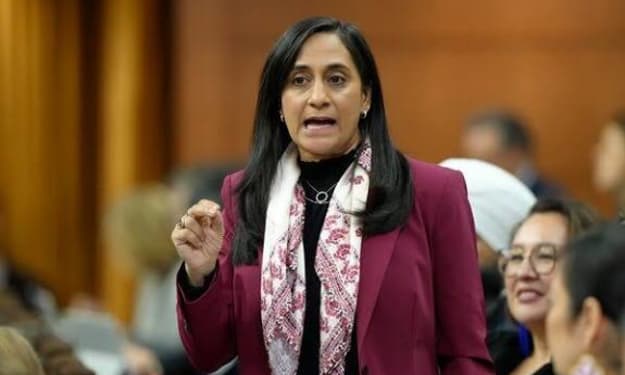
Any Decision to Join U U.S. Critical Minerals Bloc Will Be Part of USMCA Talks, Anand Says
As global demand for critical minerals, such as lithium, cobalt, and nickel, continues to surge, the pressure on nations to secure reliable sources of these resources has reached new heights. In the context of this growing geopolitical competition, Canada's decision on whether to join the United States’ critical minerals bloc will be intertwined with ongoing talks surrounding the United States-Mexico-Canada Agreement (USMCA), according to Canadian Minister of Innovation, Science, and Industry, François-Philippe Champagne. The U.S. has been actively courting its neighbors in North America to bolster supply chains for critical minerals in a bid to secure the resources necessary to meet the needs of an increasingly green and digital economy. These minerals are essential in the manufacturing of electric vehicles (EVs), batteries, and various other green technologies, making them highly sought after in the global market. The Biden administration, in particular, is aiming to reduce the reliance on foreign sources, particularly those from China, for these vital resources. The U.S. Critical Minerals Bloc: A New Geopolitical Push The United States’ push to form a bloc with Canada and Mexico for critical minerals is part of a broader strategy to ensure the resilience and security of its supply chains, particularly for industries essential to the clean energy transition. The critical minerals bloc would essentially ensure that North America works together to secure mining, processing, and recycling of these minerals within its borders, creating a domestic supply chain that is less reliant on countries with less stable geopolitical relationships. In recent months, the U.S. has signaled that it would be more than willing to incentivize its North American neighbors to align with its push for critical minerals autonomy. This has included discussions on how trade arrangements, such as the USMCA, can be leveraged to encourage such collaboration. Given Canada’s vast mineral resources—especially in regions such as Quebec, Ontario, and British Columbia—the question has now arisen as to whether Canada will formally commit to such a bloc, or whether it will continue to maintain independent trade relationships with other global suppliers. Minister Champagne recently stated that any decision on Canada’s participation in the U.S. critical minerals bloc would be discussed as part of the ongoing USMCA talks, suggesting that economic and trade considerations will be at the forefront of this decision. This position underscores how intertwined national security, energy policy, and international trade are becoming in the current geopolitical climate. Canada’s Strategic Position Canada is uniquely positioned in the global mineral supply chain due to its abundant reserves of critical minerals, including lithium, nickel, copper, and cobalt. These minerals are not only essential to the green transition but also have significant strategic value. However, Canada is also mindful of its trade relationships beyond the U.S., particularly with the European Union and China, both of which are heavily invested in securing access to these same minerals. Canada’s decision to align itself with the U.S. on critical minerals would represent a significant step in deepening the economic and geopolitical ties between the two nations. However, it is a decision fraught with complexity. On one hand, cooperation with the U.S. could strengthen Canada’s position as a global supplier of critical minerals, fostering more robust trade ties with its southern neighbor. On the other hand, it could risk disrupting Canada’s existing relationships with other global players, including China, which is a major importer of Canada’s resources. Canada’s own energy transition goals may also complicate this decision. While Canada has positioned itself as a leader in environmental sustainability, it is also deeply integrated into global energy markets, many of which are still reliant on fossil fuels. Balancing the demands of a green transition while ensuring energy security and economic growth will be a delicate challenge for Canadian policymakers. The Role of USMCA in the Equation The USMCA, which replaced the North American Free Trade Agreement (NAFTA), has already significantly shaped trade relations between the U.S., Canada, and Mexico. The agreement includes provisions aimed at strengthening labor standards, environmental protection, and intellectual property rights, as well as improving trade in agricultural and industrial goods. However, the rapidly changing landscape of global energy and mineral supply chains is now pushing critical minerals to the forefront of USMCA discussions. Anand's comments indicate that Canada will weigh its options carefully as it assesses the U.S. push for cooperation on critical minerals. The USMCA talks offer Canada an opportunity to negotiate favorable terms that align with its national priorities, particularly when it comes to sustainable development and market access. Canada's mineral-rich provinces are eager to tap into the growing demand for these resources, but they also want to ensure that any deal benefits their local economies and environmental standards. While the U.S. has been pushing for more direct control over critical minerals within North America, Canada’s approach has traditionally been more cautious. This cautious stance is not just about economic considerations; it also reflects broader geopolitical dynamics. Canada’s political culture favors multilateralism and engagement with global partners, and there is concern that too close an alignment with the U.S. could alienate other trading partners, especially as China continues to play an important role in global mineral supply chains. Opportunities and Challenges Joining the U.S. critical minerals bloc could present several benefits for Canada. In addition to strengthening trade relations with its largest trading partner, Canada would gain preferential access to U.S. markets for its minerals and could potentially benefit from U.S. incentives aimed at boosting domestic mining and processing capacity. As the clean energy sector grows, this could translate into long-term economic opportunities for Canada’s mining sector. However, the potential for exclusionary policies that favor U.S. companies in the extraction, processing, and refining of critical minerals remains a point of contention. Canada's participation in the bloc may require it to align its own mining policies with U.S. standards, which could have far-reaching implications for environmental protection and indigenous rights, issues that are particularly sensitive in Canada. Furthermore, Canada will need to ensure that it is not overly reliant on the U.S. for trade in critical minerals. Maintaining a diverse set of trade partners, including European and Asian markets, will be crucial for balancing geopolitical risks and ensuring the stability of Canada’s mining sector. Conclusion: A Decision That Will Shape the Future of North American Trade As discussions continue within the USMCA framework, Canada’s decision on whether to join the U.S. critical minerals bloc will have profound implications for both its economic future and its geopolitical standing. While there are significant benefits to closer cooperation with the U.S., especially in the rapidly expanding green energy sector, Canada must also consider its broader strategic interests, including maintaining strong, balanced trade relationships with other global powers. In the coming months, as the global demand for critical minerals intensifies and the geopolitical landscape evolves, this decision will be one of the most important that Canadian policymakers face. How Canada chooses to navigate this issue within the broader context of the USMCA talks will shape the country’s role in the future of global mineral supply chains and its long-term economic trajectory.
By Fiaz Ahmed a day ago in The Swamp



Comments
There are no comments for this story
Be the first to respond and start the conversation.