
Pratt & Whitney Unveils Possible Design for Sixth-Generation F-47 Fighter Jet
Next-generation fighter concept promises adaptive engines, stealth innovations, and integrated battlefield connectivity

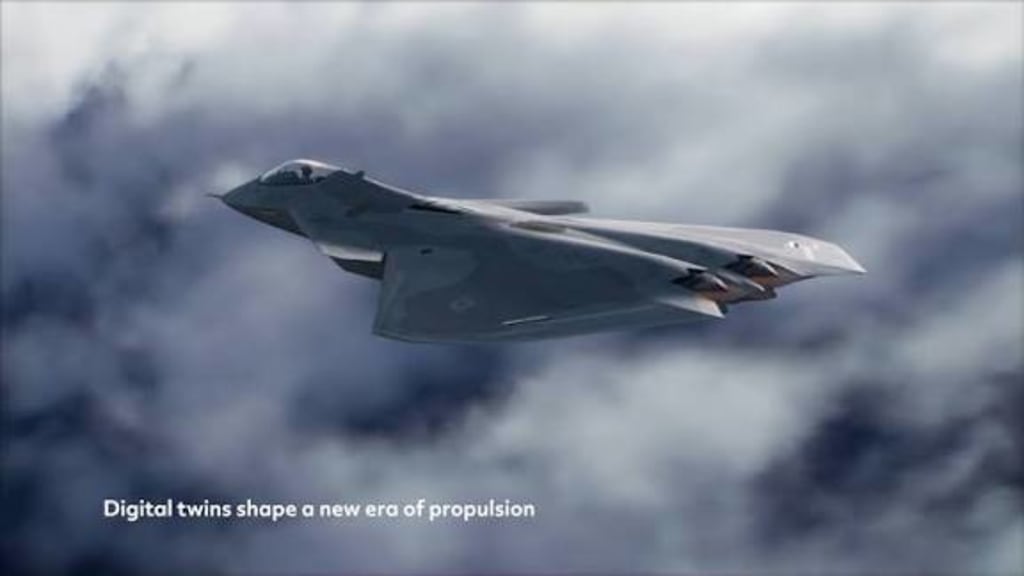
Pratt & Whitney has revealed preliminary design concepts for its sixth-generation F-47 fighter jet, signaling a major step forward in next-generation aerial combat technology. The announcement, made at a confidential industry briefing last week, highlights potential advances in propulsion, stealth, and networked warfare capabilities that could redefine air superiority for allied forces in the coming decades.
Vision for the F-47
According to Pratt & Whitney engineers, the F-47 is envisioned as a highly adaptable, multi-role fighter capable of dominating both air-to-air and air-to-ground operations. Key design priorities include:
Advanced propulsion systems that promise higher thrust-to-weight ratios, improved fuel efficiency, and supersonic cruise capabilities without afterburners.
Enhanced stealth features, including radar-absorbing materials and adaptive surface geometry to minimize detection across multiple spectrums.
Integrated sensor networks that allow seamless communication with other aircraft, unmanned systems, and ground-based command centers.
The aircraft is also expected to incorporate modular systems, allowing for rapid upgrades in avionics, weapons payloads, and electronic warfare suites. This flexibility is seen as essential in a rapidly evolving threat environment where adversaries are deploying increasingly sophisticated anti-air systems.
Propulsion Breakthroughs
Pratt & Whitney emphasized that the F-47’s propulsion design could leverage next-generation adaptive cycle engines. These engines are designed to switch between high-thrust and high-efficiency modes depending on mission demands, a capability that could significantly extend operational range and loiter time.
“Adaptive propulsion is a game-changer,” said a senior engineer at the briefing. “It allows the fighter to maintain performance while optimizing fuel use, reducing the need for frequent refueling and increasing mission flexibility.”
Stealth and Survivability
Stealth remains a central focus. While exact specifications are classified, Pratt & Whitney indicated the F-47 design integrates both passive and active measures to avoid detection. This includes adaptive coatings, low-observable exhaust management, and smart airframe shaping to minimize radar and infrared signatures.
Electronic countermeasures and advanced avionics are also planned to improve survivability against emerging integrated air defense systems. Analysts note that survivability, more than raw speed or armament, is increasingly the determining factor in future fighter effectiveness.
Strategic and Operational Implications
The F-47 program is seen as critical to maintaining a technological edge over potential peer adversaries in the Asia-Pacific and European theaters. The aircraft is expected to operate in conjunction with unmanned aerial vehicles, satellites, and networked sensor systems to create a highly integrated battlefield picture.
Defense analysts suggest that the F-47 could serve both national and allied needs, potentially integrating into NATO or other coalition frameworks. Its modular design could allow customization for specific mission profiles, from high-intensity combat to reconnaissance and electronic warfare.
Challenges Ahead
Despite the promise of the F-47, experts caution that development faces significant hurdles. Advanced materials, engine technology, and AI-driven sensor networks require extensive testing and validation. Additionally, integrating such capabilities while controlling costs will be a critical challenge.
“The technology is feasible, but turning concept into production is a complex, multi-year endeavor,” said an aerospace industry consultant. “There are risks in propulsion, stealth, and avionics integration that must be carefully managed.”
Looking Ahead
Pratt & Whitney has not announced a formal production timeline, but the briefing indicated that prototypes could be tested within the next decade. The F-47 program reflects the company’s commitment to shaping the future of air combat, offering a glimpse of the next generation of fighter capabilities.
“As threats evolve, so must our solutions,” a Pratt & Whitney spokesperson said. “The F-47 represents a bold step forward in ensuring air dominance and operational flexibility for the decades to come.”
About the Creator
Fiaz Ahmed
I am Fiaz Ahmed. I am a passionate writer. I love covering trending topics and breaking news. With a sharp eye for what’s happening around the world, and crafts timely and engaging stories that keep readers informed and updated.
Keep reading
More stories from Fiaz Ahmed and writers in The Swamp and other communities.
At Least 10 Killed in Israeli Strikes on Lebanon, State Media Says
At least 10 people have been killed in a series of airstrikes carried out by Israel on southern Lebanon, according to reports from Lebanese state media. The attacks, which occurred overnight, also left several others injured and caused significant damage to civilian infrastructure, escalating tensions along the volatile border region. Details of the Strikes Lebanese authorities reported that the strikes targeted multiple sites in southern districts near the border with Israel. While the Israeli military has not confirmed the exact number of casualties or specific targets, officials cited “security operations” aimed at militant groups operating in the area. Eyewitnesses described explosions shaking residential neighborhoods, with smoke rising from several buildings. Hospitals in the region reported receiving numerous injured civilians, many of whom were women and children. Rescue teams continue to work to evacuate those trapped under debris. “The devastation is immense,” said a local resident. “Entire streets were damaged, and many families have lost their homes. People are in shock.” Political and Military Context The strikes come amid rising tensions between Israel and armed groups operating in southern Lebanon, particularly Hezbollah. In recent weeks, cross-border incidents, including rocket fire and military maneuvers, have heightened fears of a broader escalation. Analysts note that Israel has repeatedly emphasized its right to preemptively strike targets it perceives as threatening. Lebanese officials have condemned these operations as violations of sovereignty and warned of the potential for retaliation, raising the risk of renewed armed conflict along the border. “The pattern of airstrikes indicates a deliberate attempt to weaken infrastructure linked to hostile elements,” said a Middle East security analyst. “But the presence of civilians near these sites inevitably results in casualties and humanitarian crises.” Humanitarian Impact The Lebanese Red Cross and local aid organizations reported that dozens of families have been displaced by the strikes. Emergency shelters have been set up, but resources remain limited. Power outages and damage to water systems have further complicated relief efforts. International observers expressed concern about the impact on civilians, urging restraint from all parties. The United Nations Interim Force in Lebanon (UNIFIL) has called for “immediate measures to protect non-combatants and prevent further escalation.” International Response Global reactions have been mixed. Some governments reiterated Israel’s right to defend itself against militant threats, while others condemned the strikes and called for diplomatic solutions to prevent additional loss of life. Human rights organizations highlighted the disproportionate impact on civilian populations and stressed the need for accountability in military operations. “The killing of civilians, regardless of the target, is unacceptable under international law,” said a spokesperson for an international NGO monitoring conflicts in the region. “All parties must prioritize the protection of innocent lives.” Looking Ahead The situation along the Israel-Lebanon border remains tense, with both sides reportedly on heightened alert. Lebanese authorities have warned of possible retaliatory actions, and international mediators are reportedly engaging in urgent talks to de-escalate the situation. Observers caution that any further escalation could quickly spiral into a wider conflict, affecting not only border communities but also regional stability. Diplomatic channels are expected to play a critical role in the coming days, as the international community seeks to prevent additional civilian casualties. The latest strikes underscore the ongoing volatility in southern Lebanon and the fragile nature of the ceasefire arrangements in the region. As investigations continue and casualty reports are confirmed, the humanitarian and political ramifications of the attacks are likely to shape the trajectory of the conflict in the near term.
By Fiaz Ahmed about 21 hours ago in The Swamp
A Gathering of Evil Bosses
“I’m the queen of chin jutting while I smooth my hair, attacking, insulting, and deflecting to protect my appointer.” “Oh, please, Blondi, my hair is curled, highlighted, and longer than yours. I feature television commercials telling immigrants that we will give them a free plane ride home, and if they voluntarily turn themselves in, they will be allowed to legally apply for re-entry. It runs everywhere, and I look good in it! You can’t compete because of your blond hair. Mine is nicer, and my lips are prettier than yours.”
By Andrea Corwin 4 days ago in The Swamp
The Government's About To Drop Another Round Of Secret Files
Another Dump of Files Courtesy of Donald Trump He’s almost transparent enough you can see right through him. The most transparent president in modern US history is about to be even more transparent. After months and months of scrutiny and obsession by the American people, and the rest of the world, Trump’s about to dump all over the place. That’s more files, we hope.
By Jason Ray Morton about 12 hours ago in The Swamp
When Amazon Says You’re a Disappointment
Yesterday, for the first Wednesday in months, I didn’t publish a piece on Vocal. Believe me, I wanted to. I had it all written up and ready to go. I was going to share the news that I had officially become a published author.
By Sandy Gillman3 days ago in Writers




Comments
There are no comments for this story
Be the first to respond and start the conversation.