
Right-Wing vs Left-Wing Violence
An Analysis of Trends, Impact, and Patters.


Political violence—defined as the use of force to achieve political objectives—has been a persistent concern in democracies worldwide. In the United States and other Western nations, both right-wing and left-wing groups have engaged in violent acts. However, the frequency, severity, and nature of such violence differ significantly between these ideological camps, as demonstrated by various studies and official statistics. This analysis does not go into detail about attacks fueled by religion, Jihadist, Islamist, or any other types of violence, but the statistics are included in some of the graphs for a better understanding.
Defining Political Violence
Right-wing political violence typically involves groups or individuals motivated by nationalism, racism, anti-government sentiment, or opposition to perceived threats against traditional values. Left-wing political violence, in contrast, is often driven by anti-capitalist, environmental, or anti-fascist ideologies and may target symbols of authority, corporations, or right-wing entities.
Statistical Overview: United States
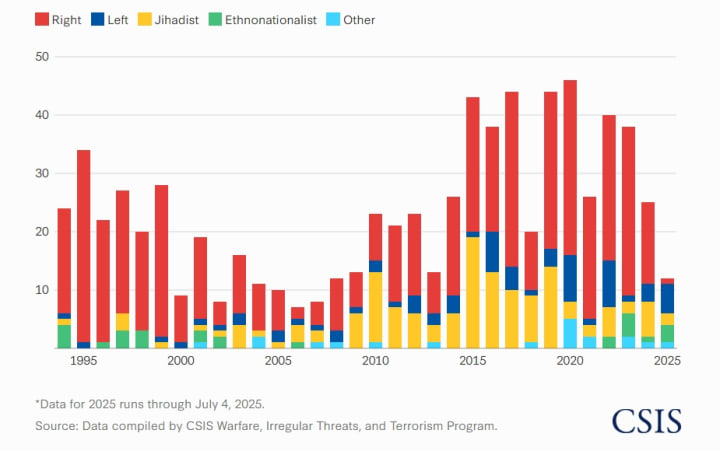
According to data compiled by the Center for Strategic and International Studies (CSIS), between 2015 and 2021, right-wing extremists were responsible for the majority of ideologically motivated violent incidents in the U.S. The CSIS database shows that:
• Right-wing extremists accounted for approximately 67% of terrorist plots and attacks in 2020.
• Left-wing extremists were responsible for about 20% of incidents, while religious extremists comprised the remainder.
The Anti-Defamation League (ADL) reports similar findings. In 2021, 26 out of 29 extremist-related murders in the U.S. were linked to right-wing extremists, especially white supremacists and anti-government groups.
Patterns of Right-Wing Violence
Research from the Global Terrorism Database and the Southern Poverty Law Center (SPLC) highlights several trends:
• Right-wing violence often targets minorities, immigrants, government institutions, and perceived liberal entities.
• Notable incidents include the 2018 Tree of Life synagogue shooting, the 2017 Charlottesville vehicle attack, and the 2021 Capitol riot.
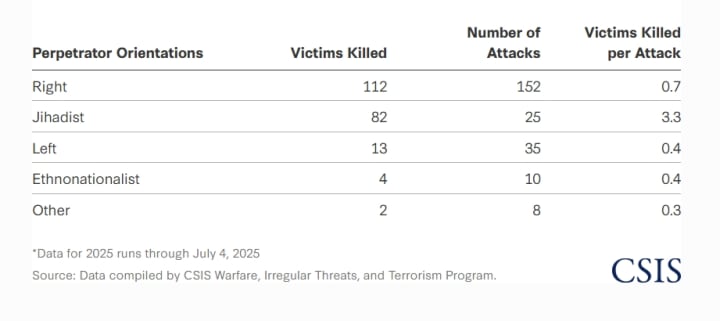
• Right-wing attacks tend to result in higher fatalities compared to left-wing violence.
Patterns of Left-Wing Violence
Left-wing violence in recent years has primarily been associated with anarchist and anti-fascist (Antifa) groups. Examples include property destruction during protests and clashes with police or right-wing demonstrators. The National Consortium for the Study of Terrorism and Responses to Terrorism (START) notes:
• Left-wing violence rarely results in fatalities, with most incidents involving vandalism or confrontations rather than mass casualty events.
• Significant spikes occurred during the protests surrounding racial justice in 2020, but most incidents were not deadly.
International Comparisons
Similar trends are observed in Western Europe, where right-wing violence has surged in recent years, particularly targeting immigrants and ethnic minorities. Europol's annual Terrorism Situation and Trend Report (TE-SAT) indicates that:
• Right-wing attacks are increasing, though left-wing violence remains active in some countries, such as Greece and Italy.
• Left-wing groups in Europe often focus on anti-capitalist or anti-globalization actions, with violence largely directed at property rather than individuals.
In 2025, we have seen several acts of what seem to be politically motivated violence. After the death of public figure Charlie Kirk, President Trump has increased his attacks on the left, specifically criminalizing opinions that are “anti-capitalist,” “anti-Christianity,” “extremism with regard to migration, race, and gender,” or that express “hostility towards those who hold traditional American views on family, religion, and morality.” Trump has named this presidential memorandum “Countering Domestic Terrorism and Organized Political Violence,” which is the strictest crackdown on dissent since J. Edgar Hoover’s egregious COINTELPRO. The fallout from this could be disastrous, as the Trump administration is essentially policing “thought crimes” for anyone who disagrees with their political goals. That, in itself, is a clear violation of the First Amendment.
While 2025 is the first year in decades that left-wing attacks have outnumbered right-wing violence, the number is still considered very low compared to past right-wing attacks.
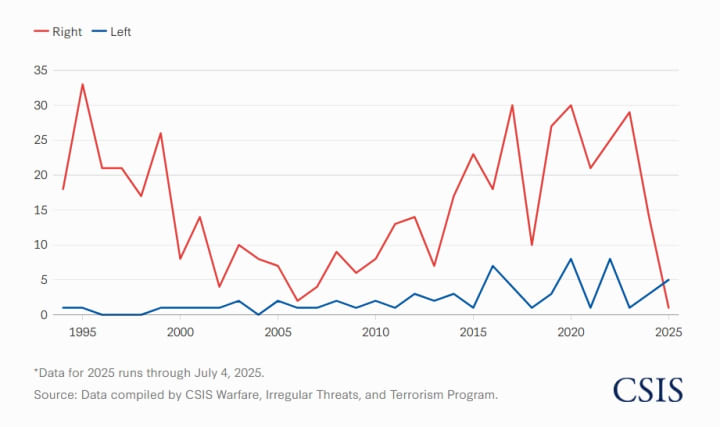
Current research and official statistics consistently show that right-wing extremist groups are responsible for a larger share of political violence in the United States, particularly in terms of fatal attacks. Left-wing violence, while present, tends to be less deadly and more focused on property damage or clashes with law enforcement. Understanding these distinctions is essential for policymakers, law enforcement, and the public as they seek to address the root causes and prevent future acts of political violence.
References
• Center for Strategic and International Studies (CSIS), "The Escalating Terrorism Problem in the United States," 2020
• Anti-Defamation League (ADL), "Murder and Extremism in the United States," 2021
• Southern Poverty Law Center (SPLC), "The Year in Hate and Extremism," 2021
• National Consortium for the Study of Terrorism and Responses to Terrorism (START), "Trends in Terrorism," 2020
• Europol, "Terrorism Situation and Trend Report (TE-SAT)," 2021
About the Creator
Shaley Speaks
Wife. Mom. Creator.
Politics. Life. Motherhood. Fiction. Music.
I love it all. I hope you do, too.
Keep reading
More stories from Shaley Speaks and writers in The Swamp and other communities.
States are banning abortion. Birth control might be next…
The landscape of reproductive health laws in the United States has undergone significant changes in recent years, particularly following the Supreme Court's decision in Dobbs v. Jackson Women’s Health Organization (2022), which overturned Roe v. Wade. This decision gave individual states the authority to regulate abortion, leading to a wide range of restrictions and bans across the country. In addition to abortion, some states have also proposed or enacted limits on birth control access, though these are less common and often subject to ongoing legal challenges. In the 2024 elections, only 7 states voted to protect women’s reproductive rights. Here’s a look at the attack on reproductive rights in each state.
By Shaley Speaks4 months ago in The Swamp
Bad Bunny Says ‘ICE Out’ in Forceful Grammy Speech
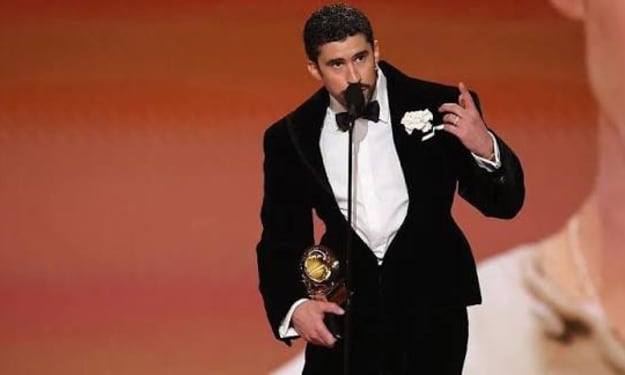
At the 68th Annual Grammy Awards in Los Angeles, Puerto Rican superstar Bad Bunny used his acceptance speech to deliver what many observers called one of the most political and powerful moments of the night — calling for “ICE out” as he condemned U.S. immigration enforcement and urged compassion and unity in a fraught political climate. Bad Bunny, whose real name is Benito Antonio Martínez Ocasio, received the Best Música Urbana Album award for Debí Tirar Más Fotos. Rather than begin with the typical list of thanks, he chose to open with a pointed rebuke of U.S. Immigration and Customs Enforcement (ICE), the federal agency at the center of heated national debate over immigration policy and enforcement tactics. Reuters +1 “Ice out,” he declared to loud applause from the audience. “We’re not savage. We’re not animals. We’re not aliens. We are humans, and we are Americans.” Reuters +1 A Political Statement on a Global Stage The line drew a standing ovation and became one of the most discussed moments of the night. Bad Bunny’s remarks resonated amid growing public scrutiny of ICE’s actions, including controversial enforcement operations and recent incidents that have sparked nationwide protests and criticism. People.com Bad Bunny framed his message around humanity and empathy, seeking to push back against rhetoric that dehumanizes migrants and marginalized communities. “The hate gets more powerful with more hate,” he said, adding that the only thing more powerful than hate is love. “If we fight, we have to do it with love.” NBC Los Angeles His speech went beyond simply rejecting federal enforcement tactics; it called on viewers to reject dehumanizing language and see all people as human before labels or legal status. In doing so, he tapped into broader debates over immigration, civil rights and national identity — issues that many artists at the ceremony also addressed. Vogue A Moment of Solidarity Bad Bunny was not alone in using the Grammy platform to raise political and social issues. Other performers and winners also wore “ICE OUT” pins on the red carpet and referenced immigrants’ contributions in their remarks — including artists such as Billie Eilish and Olivia Dean, who wove immigrant narratives into their victory speeches and acceptance moments. uk.news.yahoo.com Billie Eilish, for example, was reported to have voiced strong opposition to ICE by the end of her own speech, saying emphatically that “no one is illegal on stolen land” — remarks that were powerfully symbolic, even if briefly censored in parts of the broadcast. www.ndtv.com Olivia Dean also spoke about her immigrant heritage, calling herself a “product of bravery” and honoring the people who came before her. Teen Vogue The collective messages from multiple artists painted a picture of the Grammy Awards as not just a music celebration, but a moment of cultural activism — one where artists deliberately used their visibility to speak on political matters that extend far beyond entertainment. Tension and Backlash Bad Bunny’s remarks have sparked a polarized response. Supporters have praised him for bravery and using his platform to address what many see as injustices in immigration enforcement. Social media reactions — including posts from fans and observers — describe the moment as meaningful and historically significant. Reddit Critics, particularly from conservative corners of U.S. politics, argue that award shows are not appropriate venues for political protest or critiques of federal agencies. Some have attacked the Grammy producers for allowing such statements, while others have questioned whether entertainment stages should blend performance with political advocacy. Coverage in entertainment news outlets reflects both sides of the debate. Reuters +1 Broader Context of Immigration Debate Bad Bunny’s speech comes amid ongoing national conversations about immigration policy in the United States. Federal immigration enforcement has intensified in recent months, particularly under the current administration’s priorities. ICE’s operations have drawn criticism from civil rights groups over tactics and reported abuses. Meanwhile, lawmakers and immigration advocates continue to push for comprehensive reforms. www.ndtv.com Protests and rallies have taken place nationwide, with activists calling for an end to aggressive immigration raids and for humane treatment of migrants. Bad Bunny’s public rebuke of ICE at one of music’s highest-profile events underscores how deeply these issues resonate in American culture — even on stages not typically associated with politics. Art, Activism and Audience Bad Bunny has long been known not just for his music but for his willingness to engage with political and cultural issues affecting Latino and immigrant communities. Previously, he has highlighted concerns about immigration and border policies, and he opted not to tour the continental U.S. at one point in part because of fears over enforcement actions at concert venues. Reddit His Grammy speech — arriving just a week before he is scheduled to perform at the Super Bowl halftime show — adds another layer of national conversation about where art and politics intersect. NBC Los Angeles For many viewers, the moment was more than a protest slogan — it was a call for empathy, unity and recognition of shared humanity. For others, it was a reminder that cultural platforms are increasingly spaces where political debate and artistic expression converge. Conclusion Bad Bunny’s “ICE out” message at the 2026 Grammy Awards became one of the night’s most talked-about statements, reflecting broader tensions in U.S. society over immigration enforcement, human dignity and how far artists will go to use their platforms for advocacy. In a ceremony that celebrated musical excellence, the speech underscored how deeply cultural figures can influence national conversations — and how the world’s biggest stages have become stages for social and political expression.
By Fiaz Ahmed a day ago in The Swamp
What Does the US Want From Iran? Tracking One Month of Trump’s Changing Demands
Policy shifts and evolving statements create uncertainty in Tehran and Washington Over the past month, the United States’ approach to Iran has drawn intense attention as policymakers, media, and analysts try to track the administration’s evolving demands. From nuclear agreements to regional behavior, statements from Washington have ranged from strict ultimatums to more flexible proposals, leaving observers questioning the exact objectives of U.S. policy. The rapid changes highlight the complexity of U.S.–Iran relations, where strategic, political, and domestic considerations intersect. Understanding these shifts requires examining key statements, policy signals, and the broader context of American foreign strategy. Nuclear Compliance Remains Central One consistent theme is the U.S. focus on Iran’s nuclear program. Over the past month, officials repeatedly emphasized that Tehran must limit enrichment activities, allow inspections, and comply with previous agreements. However, the language has varied: Early in the month, officials demanded complete cessation of enrichment and dismantling of certain facilities. Later statements suggested that negotiated limits could be acceptable if they included rigorous verification measures. This shifting language has created uncertainty about whether Washington is pursuing maximalist goals or practical, enforceable compromises. Regional Behavior Under Scrutiny Beyond nuclear issues, the U.S. has also highlighted concerns about Iran’s influence in the Middle East. Officials have cited: Military support for proxy groups Activities in Iraq, Syria, and Yemen Missile development programs Initially, demands were framed as requiring Iran to halt all regional interventions, a broad expectation that critics described as politically challenging. Later statements focused on reducing destabilizing activities and adhering to United Nations resolutions, suggesting a more targeted approach. Sanctions and Economic Pressure Economic leverage continues to play a key role in U.S. strategy. Over the month: Some statements suggested tightened sanctions on key industries, including energy and banking. Others indicated potential relief if Iran agreed to specific concessions, signaling that the U.S. is prepared to negotiate based on compliance. Analysts note that this dual approach—pressure combined with conditional incentives—is designed to shape Tehran’s calculations without immediate military intervention. Political Messaging and Domestic Factors U.S. statements about Iran are also influenced by domestic politics. The administration must balance: Appealing to voters concerned about national security Showing strength in foreign policy Avoiding escalation that could lead to direct conflict This balancing act helps explain why public statements sometimes appear inconsistent or contradictory. Policy decisions are often shaped as much by political signaling as by strategic calculation. Responses From Tehran Iran has reacted cautiously to the U.S. messaging. Officials have reiterated that: Nuclear programs are for peaceful purposes Regional activities are defensive or supportive of allies External demands must respect sovereignty and past agreements The mixed U.S. messaging has complicated negotiations, as Iranian leaders struggle to determine which demands are flexible and which are non-negotiable. Challenges for Diplomacy The rapid shifts in U.S. demands highlight several challenges for diplomatic efforts: Clarity – Iran needs precise guidelines to respond meaningfully. Consistency – Frequent changes undermine trust and planning. Verification – Both sides must agree on inspection and monitoring protocols. Without clear parameters, the risk of miscalculation or stalemate increases, potentially escalating regional tensions. Impact on Global Observers Allies and regional partners are watching closely. Nations like the EU, Israel, and Gulf states are affected by the evolving U.S. stance. Their responses range from support for pressure measures to calls for cautious dialogue, reflecting concern about: Stability in oil markets Military escalation risks Diplomatic credibility These global dynamics underscore that U.S.–Iran relations are not confined to bilateral issues but have broader international implications. Looking Ahead Observers suggest that the next few weeks will be critical. Key indicators include: The tone of official statements from the White House and State Department Actions regarding sanctions enforcement or relief Diplomatic engagement with European and regional partners How the U.S. balances strict demands with potential negotiation could determine whether tensions escalate or lead to a structured diplomatic process. Conclusion Over one month, the U.S. approach to Iran has shown a mix of strict demands and potential flexibility, reflecting strategic objectives, domestic politics, and regional concerns. Nuclear compliance, regional behavior, and economic pressure remain central, but the shifting language has created uncertainty for Tehran and global observers alike. Understanding U.S. intentions requires recognizing that policy is shaped by multiple pressures and that public statements may not fully capture the negotiation dynamics behind the scenes. As both nations navigate this period, clarity, consistency, and careful diplomacy will be essential to avoid escalation and maintain a pathway for negotiation.
By Fiaz Ahmed 6 days ago in The Swamp


Comments
There are no comments for this story
Be the first to respond and start the conversation.