
Rising Tensions: U.S. Military Prepares for Possible Weeks-Long Operations Against Iran
Growing military planning signals serious concerns, while diplomacy efforts continue in the background

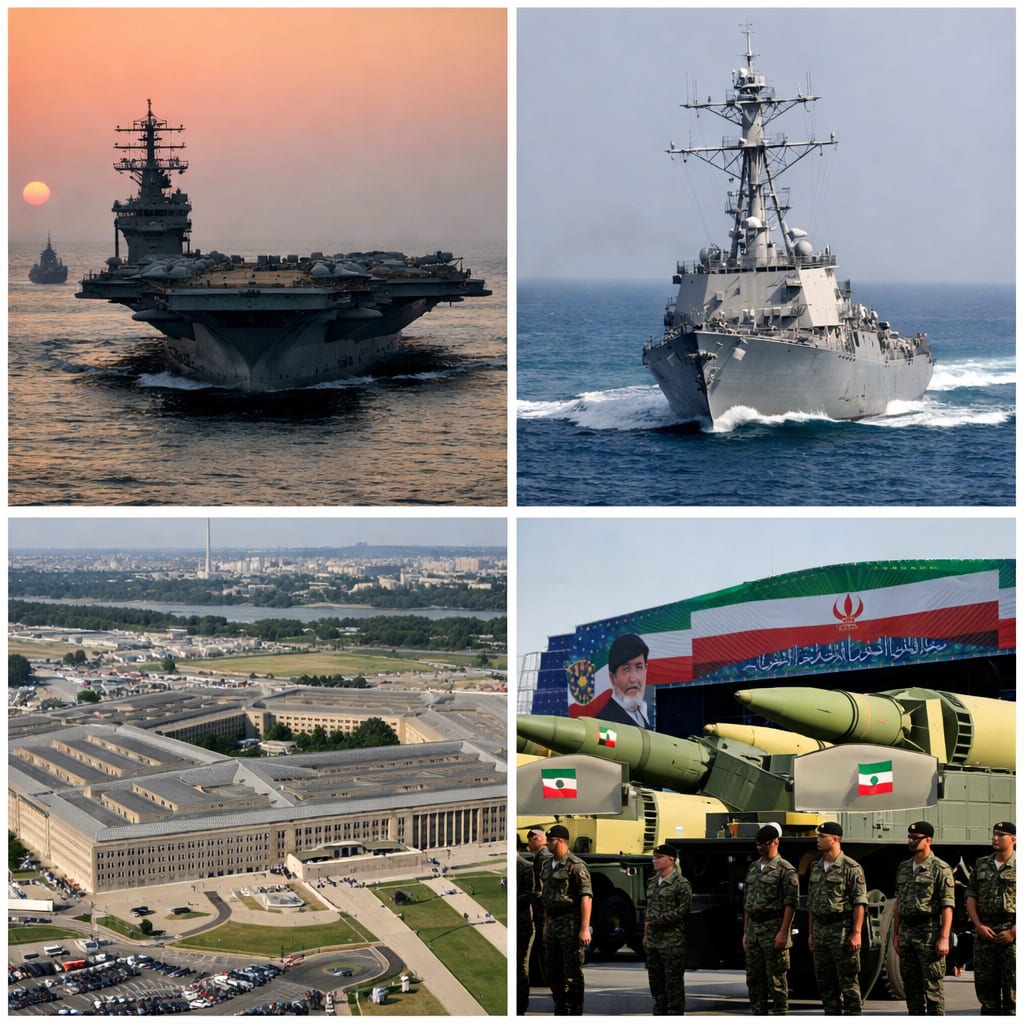
The United States military is preparing for the possibility of a weeks-long operation against Iran, according to recent reports. This development has raised concerns around the world. While no final decision has been announced, officials say that the Pentagon is reviewing plans in case the President orders military action. The situation shows rising tension between the two countries and has led many leaders to call for calm and diplomacy.
Why Is the U.S. Preparing?
Military officials say that preparation does not mean war is certain. However, they must be ready for different scenarios. In this case, planning includes the possibility of sustained operations lasting several weeks, not just a single airstrike. This suggests that if action is taken, it could be larger and more complex than previous military responses.
The tension between the United States and Iran is not new. The two countries have had difficult relations for many years. Disagreements often focus on Iran’s nuclear program, regional influence in the Middle East, and support for armed groups in the region. The United States and its allies worry that Iran may move closer to developing nuclear weapons, though Iran has repeatedly said its nuclear program is for peaceful purposes.
What Could the Military Plan Include?
Reports suggest that the Pentagon has already increased its military presence in the Middle East. This includes sending additional troops, aircraft, and naval forces to the region. A second aircraft carrier strike group may also be deployed. Fighter jets and guided-missile destroyers could support any possible mission.
Military experts say that such preparation allows the United States to respond quickly if needed. However, they also warn that extended operations could increase the risk of a wider regional conflict. Iran has a strong missile program and has allies in different parts of the Middle East. Any direct confrontation could lead to retaliation.
Diplomacy Is Still Ongoing
Even as military planning continues, diplomatic efforts are still taking place. U.S. and Iranian officials have held indirect talks in recent months. These discussions aim to reduce tension and possibly return to agreements that limit Iran’s nuclear activities.
Diplomacy is often slow and complex, especially after years of mistrust. Still, many world leaders believe dialogue is the best path forward. European countries, as well as regional powers, have encouraged both sides to avoid escalation. They stress that war would bring serious consequences for global stability, oil markets, and civilian populations.
The U.S. government has said that all options remain open. At the same time, officials have stated that they prefer a peaceful solution if possible. Iran has also warned against military action, saying it would respond strongly if attacked.
Possible Regional Impact
The Middle East is already facing several challenges, including ongoing conflicts, economic struggles, and humanitarian crises. A new military confrontation between the United States and Iran could make the situation worse.
Countries such as Saudi Arabia, Israel, Iraq, and the United Arab Emirates are closely watching developments. Many of these nations have complex relationships with both Washington and Tehran. A prolonged conflict could affect trade routes, oil production, and regional security.
Global markets are also sensitive to tension in the Middle East. Oil prices often rise when there is fear of conflict in the region. Higher energy prices can affect economies worldwide, leading to inflation and increased costs for consumers.
Concerns About Escalation
Security analysts warn that even limited strikes can quickly grow into larger confrontations. In modern conflicts, retaliation can happen through different methods, including missile attacks, cyber operations, or actions by allied groups.
Iran has significant military capabilities. It also has influence in countries such as Iraq, Syria, and Lebanon. This network could complicate any military campaign. On the other hand, the United States has one of the most powerful militaries in the world and strong regional partnerships.
Because of these factors, experts say that careful planning is essential. Both sides must consider not only immediate goals but also long-term consequences.
Public Reaction and International Response
Around the world, leaders are urging restraint. The United Nations has called for dialogue and peaceful solutions. Some countries fear that military action could lead to a humanitarian crisis, especially if civilian infrastructure is damaged.
In the United States, opinions are divided. Some policymakers argue that strong action is necessary to prevent Iran from advancing its nuclear program. Others believe that diplomacy and economic pressure are more effective tools.
In Iran, government officials have condemned the reports of military planning. They say such actions increase mistrust and make negotiations more difficult.
What Happens Next?
At this time, no official military action has been announced. Preparation does not mean a final decision has been made. Military planners often create strategies for many possible situations, even if those plans are never used.
The coming weeks may be critical. Diplomatic talks could either reduce tension or fail to reach agreement. Political decisions in Washington and Tehran will play a key role in shaping events.
Many observers hope that dialogue will succeed. War in the Middle East has historically brought heavy costs, both human and economic. A peaceful solution would benefit not only the United States and Iran but also the wider international community.
Conclusion
The report that the U.S. military is preparing for possible weeks-long operations against Iran highlights serious and growing tensions. While planning is underway, diplomacy continues behind the scenes. The situation remains uncertain.
Leaders on both sides face important choices. Military action could change the balance of power in the region, but it could also bring unpredictable consequences. As the world watches closely, many hope that careful negotiation will prevent further escalation and protect global stability.
For now, preparation and diplomacy move forward at the same time, leaving the final outcome still unknown.
About the Creator
Keep reading
More stories from 😎Baلoch✨.zada😎 and writers in The Swamp and other communities.
Twelve Killed in Israeli Strikes on Gaza, Including Senior Islamic Jihad Commander
Renewed violence threatens fragile ceasefire as regional tensions rise At least 12 people were reported killed following a series of Israeli Defense Forces (IDF) strikes across the Gaza Strip, according to Palestinian health officials and multiple regional reports. Among the dead was said to be a senior commander affiliated with Palestinian Islamic Jihad (PIJ), a militant group active in Gaza. The escalation marks one of the deadliest flare-ups in recent weeks and raises concerns about the stability of an already fragile ceasefire. The Israeli military stated that the strikes targeted militants involved in activities that posed an imminent threat to Israeli forces. Palestinian sources, meanwhile, reported that casualties included both combatants and civilians. As is often the case in fast-moving conflict situations, independent verification of all claims remains difficult. Targeted Strikes and Military Objectives According to Israeli officials, the operations were carried out in response to what the IDF described as violations of understandings aimed at reducing hostilities. The military said it had identified armed operatives operating near Israeli positions and took action to neutralize the threat. Among those reportedly killed was a senior Islamic Jihad commander. Israeli sources characterized him as a key figure responsible for coordinating operations and overseeing militant activities. Palestinian Islamic Jihad has not immediately released a detailed statement confirming the extent of its losses, though affiliated channels acknowledged casualties among its members. The IDF maintains that its strikes are focused on militant infrastructure and leadership, arguing that such operations are necessary to prevent attacks on Israeli civilians and soldiers. In past confrontations, Israel has emphasized intelligence-driven targeting aimed at weakening armed groups without escalating into full-scale war. Palestinian Response and Civilian Impact Palestinian officials in Gaza condemned the strikes, describing them as violations of ongoing ceasefire efforts. Health authorities reported that some of the victims were civilians, though full details about identities and affiliations have not been publicly confirmed. The humanitarian situation in Gaza remains precarious. Years of conflict, economic restrictions, and infrastructure damage have left the territory vulnerable to disruptions caused by renewed fighting. Each escalation brings additional strain to medical facilities, power systems, and essential services. Local residents described scenes of chaos following the strikes, with emergency responders rushing to affected areas. As with previous rounds of violence, civilians often bear the brunt of sudden military exchanges, particularly in densely populated neighborhoods where militant groups operate alongside residential communities. A Fragile Ceasefire Under Pressure The latest violence comes amid ongoing efforts by regional mediators to maintain calm between Israel and armed factions in Gaza. Though no formal long-term peace agreement is in place, periodic ceasefires have helped limit large-scale confrontations in recent months. However, such arrangements are frequently tested by incidents on the ground. Accusations of ceasefire violations are common, with both sides often presenting sharply different narratives about who initiated hostilities. Even limited exchanges can quickly spiral into broader conflict if not contained. Analysts note that targeted killings of senior militant figures have historically triggered retaliatory responses. Palestinian Islamic Jihad, in particular, has previously launched rocket attacks following the deaths of key leaders. Whether this latest incident leads to renewed rocket fire or broader escalation remains to be seen. The Role of Palestinian Islamic Jihad Palestinian Islamic Jihad is a smaller but highly active militant organization operating in Gaza. Distinct from Hamas, which governs the territory, PIJ maintains its own military wing and command structure. The group has been responsible for rocket launches and other attacks against Israeli targets over the years. Israel considers Islamic Jihad a terrorist organization and has repeatedly targeted its leadership and infrastructure. While Hamas often plays a dominant political and military role in Gaza, PIJ operates independently and sometimes pursues its own agenda, complicating ceasefire arrangements. The reported killing of a senior PIJ commander could significantly affect the group’s operational capacity in the short term. Leadership losses can disrupt coordination and planning. At the same time, such strikes may harden positions and fuel calls for retaliation among militants and supporters. Regional and International Reactions International observers are closely monitoring developments. Past escalations between Israel and Gaza-based groups have drawn concern from neighboring countries and global powers, particularly when civilian casualties are reported. Regional mediators, including Egypt and Qatar, have historically played key roles in de-escalation efforts. Diplomatic channels often intensify following significant incidents in an attempt to prevent wider conflict. Public statements urging restraint are likely to follow if tensions continue to rise. The broader geopolitical environment also shapes the situation. Developments in the West Bank, shifts in Israeli domestic politics, and regional security dynamics can all influence decision-making on both sides. The Broader Pattern of Escalation This latest episode fits into a long-standing pattern of cyclical violence. Targeted strikes, rocket fire, and retaliatory actions have characterized the Israel–Gaza conflict for years. Periods of relative calm are frequently interrupted by sudden flare-ups sparked by specific incidents. Military analysts suggest that both sides often seek limited engagements rather than prolonged war. However, the risk of miscalculation remains high. A strike intended to send a deterrent message can inadvertently trigger a broader confrontation. For civilians living in southern Israel and throughout Gaza, these cycles bring recurring uncertainty. Air raid sirens, emergency alerts, and sudden evacuations have become part of daily life during times of escalation What Comes Next? Whether this incident marks a brief flare-up or the beginning of a larger escalation depends on several factors. The response of Palestinian Islamic Jihad will be critical. If the group launches retaliatory attacks, Israel is likely to respond forcefully, potentially widening the scope of operations. At the same time, diplomatic efforts may intensify to contain the situation. In past crises, swift mediation has prevented further deterioration. For now, the reported deaths of 12 individuals — including a senior militant commander — underscore the volatility of the Gaza front. As both sides assess their next moves, the region stands at another uncertain crossroads. The coming days will reveal whether restraint or retaliation defines the next chapter in a conflict that shows little sign of lasting resolution.
By 😎Baلoch✨.zada😎about 5 hours ago in Humans
The Saddest Thing - The Billionaires Who Rule America Aren't Even Enjoying Themselves
This single post says more about our ruling class than a thousand policy papers. The saddest thing about today's system is that the men robbing the rest of us - sabotaging our economic prospects, our pensions, our access to affordable healthcare - are not even happy.
By Scott Christenson🌴10 days ago in The Swamp
China Is the Real Threat, Taiwan Says in Rebuke to Munich Speech
The world’s attention turned sharply toward East Asia following a dramatic exchange of words between China and Taiwan after the recent Munich Security Conference. What began as a speech meant to promote China’s vision of global order quickly turned into a flashpoint of geopolitical tension when Taiwan responded with a bold accusation: China is the real threat to regional and international security.
By Sajida Sikandara day ago in The Swamp
from death into life
Young Aldin of Wiloh had never contemplated death. It was almost strange — so many around him had the tendency to obsess over it, to clamor and claw almost desperately at their own perceptions of the end to know death as much as they could: when it would come, why it would come, where it would take them when it did.
By angela hepworth8 days ago in Fiction




Comments
There are no comments for this story
Be the first to respond and start the conversation.