
China Is the Real Threat, Taiwan Says in Rebuke to Munich Speech
A diplomatic clash exposes growing tensions over security, sovereignty, and global stability.

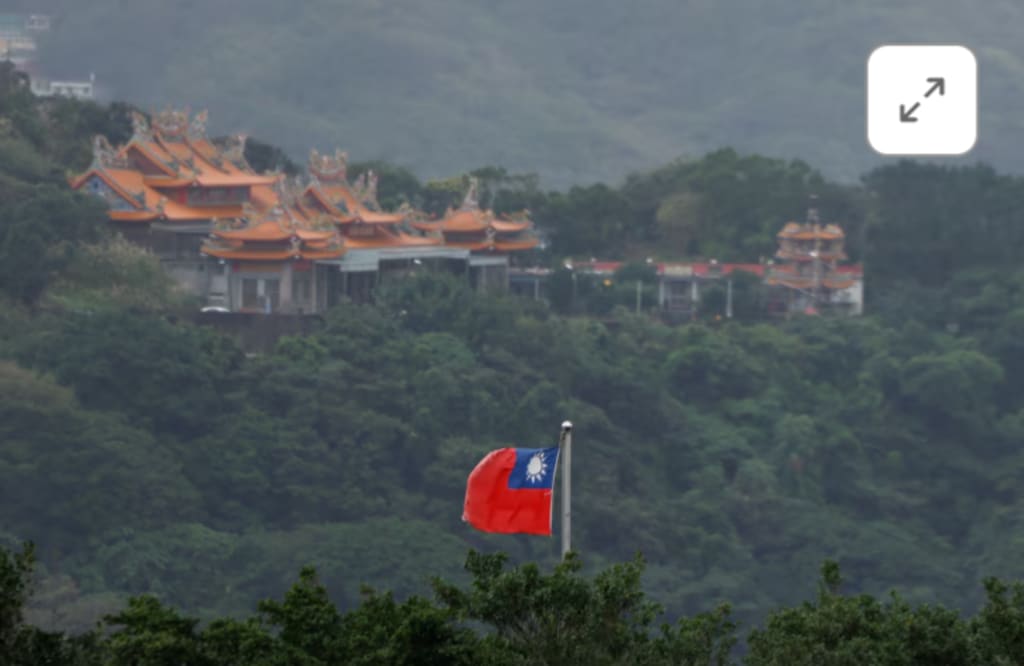
The world’s attention turned sharply toward East Asia following a dramatic exchange of words between China and Taiwan after the recent Munich Security Conference. What began as a speech meant to promote China’s vision of global order quickly turned into a flashpoint of geopolitical tension when Taiwan responded with a bold accusation: China is the real threat to regional and international security.
This statement, delivered by Taiwan’s foreign minister in response to remarks made by China’s top diplomat, highlights the widening divide between Beijing’s rhetoric and Taipei’s lived reality. It also reveals how the Taiwan Strait has become one of the most sensitive fault lines in modern geopolitics.
What Sparked the Dispute?
At the Munich conference, Chinese Foreign Minister Wang Yi spoke about the importance of respecting the United Nations Charter and maintaining international peace. He reaffirmed China’s long-standing claim that Taiwan is an inseparable part of China and warned other countries against interfering in what Beijing considers its internal affairs.
Wang framed China as a stabilizing force and suggested that rising tensions were driven by outside actors rather than Beijing itself. His message was aimed at portraying China as a responsible global power committed to peaceful development.
However, Taiwan saw this narrative very differently.
Taiwan’s Sharp Rebuttal
Taiwan’s Foreign Minister Lin Chia-lung issued a swift and pointed response. He rejected China’s claims and accused Beijing of violating the very principles it claims to uphold.
According to Lin, China’s actions—particularly its increasing military exercises and patrols near Taiwan—demonstrate aggression rather than peace. He argued that threatening force against Taiwan directly contradicts the U.N. Charter’s commitment to resolving disputes without violence.
“China’s recent military provocations expose its hegemonic mindset,” Lin said, stressing that Taiwan’s future must be decided by its own people, not imposed by an external power.
This public rebuke was unusually direct and signals Taiwan’s determination to counter China’s narrative on the global stage.
The Core Issue: Sovereignty and Identity
At the heart of the conflict lies the question of sovereignty. China maintains that Taiwan is part of its territory under the “One China” principle. Taiwan, officially known as the Republic of China, governs itself independently and has its own democratic system, military, and constitution.
Taipei argues that the People’s Republic of China has never ruled Taiwan and therefore has no legal right to claim it. For many Taiwanese citizens, this is not merely a political debate—it is about protecting their identity, freedom, and way of life.
China, meanwhile, views any move toward formal independence as a red line and has refused to rule out the use of force to achieve reunification.
Rising Military Pressure
In recent years, China has dramatically increased its military presence around Taiwan. Fighter jets regularly enter Taiwan’s air defense identification zone, and naval exercises are conducted close to its waters. These maneuvers are widely interpreted as attempts to intimidate Taiwan and test international responses.
For Taiwan, such actions reinforce the perception that China’s talk of peace is inconsistent with its behavior.
This growing pressure has forced Taiwan to invest more heavily in defense and deepen cooperation with partners such as the United States and Japan. While Taiwan lacks formal diplomatic recognition from most countries, it has strengthened unofficial ties with democratic allies concerned about China’s ambitions.
Why the World Should Care
The dispute is not only about Taiwan and China—it carries global implications.
Taiwan sits at the center of major shipping routes and is a critical player in global semiconductor manufacturing. Any conflict in the Taiwan Strait would disrupt international trade and technology supply chains, affecting economies far beyond Asia.
Moreover, many analysts see Taiwan as a symbol of democratic resistance in the face of authoritarian expansion. How the international community responds to China’s actions could set a precedent for handling similar disputes elsewhere in the world.
Europe’s involvement, through forums like the Munich Security Conference, reflects growing concern about Indo-Pacific security and its impact on global stability.
A Battle of Narratives
This exchange between Beijing and Taipei represents more than a policy disagreement—it is a struggle over perception.
China seeks to present itself as a peace-loving power defending its sovereignty. Taiwan aims to show the world that it is under threat from a much larger neighbor that refuses to respect its autonomy.
By declaring “China is the real threat,” Taiwan is attempting to reshape international understanding of the conflict, framing it not as a domestic issue but as a matter of international security and democratic values.
Looking Ahead
As tensions rise, the risk of miscalculation increases. While neither side appears eager for open war, military posturing and sharp rhetoric make the situation increasingly fragile.
Taiwan’s outspoken response to China’s Munich speech signals a shift toward greater assertiveness in diplomacy. It also underscores Taipei’s desire to be heard in international forums where it is often excluded.
The clash of words in Munich may fade from headlines, but the underlying conflict remains unresolved. Whether through dialogue or confrontation, the future of the Taiwan Strait will shape not only East Asia’s security but the global order itself.
Final Thought
In a world already strained by wars and rivalries, Taiwan’s declaration that China is the real threat adds urgency to a growing crisis. It reminds the international community that peace is not preserved by speeches alone—but by actions that respect sovereignty, democracy, and the rule of law.
As competing narratives intensify, one truth is clear: the struggle between China and Taiwan is no longer just regional—it is a defining issue of our time.
About the Creator
Sajida Sikandar
Hi, I’m Sajida Sikandar, a passionate blogger with 3 years of experience in crafting engaging and insightful content. Join me as I share my thoughts, stories, and ideas on a variety of topics that matter to you.
Keep reading
More stories from Sajida Sikandar and writers in The Swamp and other communities.
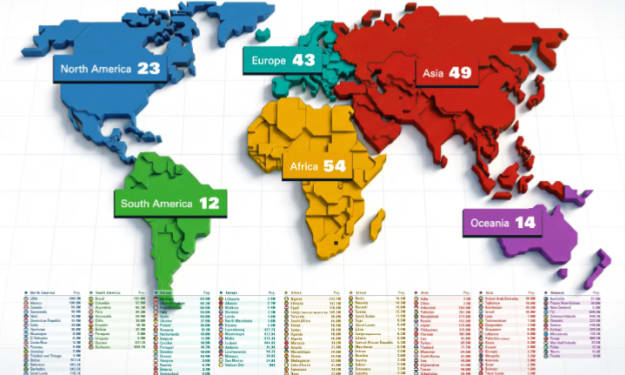
Mapped: Every Continent Ranked by Number of Countries
When we look at a world map, it often feels orderly and balanced. Continents appear neatly divided into nations, each with defined borders and identities. But beneath that visual simplicity lies a fascinating imbalance: some continents contain dozens of independent countries, while others have only a handful—or none at all.
By Sajida Sikandara day ago in The Swamp
Why Black History Matters in America?
The United States of America is celebrating their 250th anniversary in 2026. I'm proud to be an American and as someone who was born here, I wouldn't imagine myself living anywhere else. This is a country where opportunities are possible. Where anyone can be successful in anything they desire to do. Equality, community, and togetherness are the backbones of what America is and should be about. However, we have an administration who wants to erase and disregard those who have made positive, meaningful impacts in our country, specifically Black figures, such as Martin Luther King, Jr., Rosa Parks, and Maya Angelou. President Trump and his administration have been constantly complaining and fighting against what they call the "Woke agenda". They use this excuse as a distraction from other issues they refuse to address, such as the high cost of living, climate change, and inflation. That equality is dividing America, when in reality, it's bringing us together. Being woke is not tied to a specific political party. No matter where you stand on the political spectrum, you can still care about other people and their plights. Compassion and empathy for others isn't tied to a political party, either. We were taught as children to treat others the way we want to be treated and not judge others because they're different from us. Caring about others isn't a personal attack on your beliefs. It doesn't make you any less of a person. People who are easily offended over African American figures, past or present, or anything related to it, are grasping at straws. Current and future generations need to know who people like Harriet Tubman and Shirley Chisholm were, especially in the classroom. Black History is part of American History. It should be recognized, not hidden or forgotten. Besides, you can't shield children from everything, just because your feelings are easily hurt.
By Mark Wesley Pritchard 15 days ago in The Swamp
Rising Tensions: U.S. Military Prepares for Possible Weeks-Long Operations Against Iran
The United States military is preparing for the possibility of a weeks-long operation against Iran, according to recent reports. This development has raised concerns around the world. While no final decision has been announced, officials say that the Pentagon is reviewing plans in case the President orders military action. The situation shows rising tension between the two countries and has led many leaders to call for calm and diplomacy.
By 😎Baلoch✨.zada😎a day ago in The Swamp


Comments
There are no comments for this story
Be the first to respond and start the conversation.