
Silver Price Analysis – Silver Falls Apart Early on Friday
From record highs to a dramatic sell-off: What’s behind one of the sharpest slides in silver history?

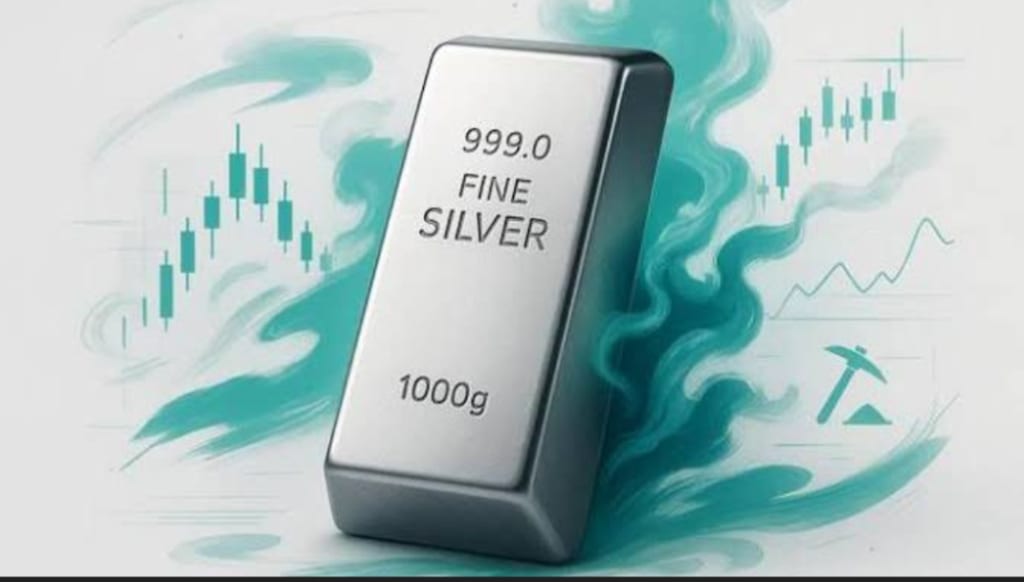
Global silver prices experienced a dramatic collapse early on Friday, marking one of the most violent sell-offs in the precious metals sector in recent memory. After weeks of sustained gains and record-breaking highs, silver — often dubbed the “white metal” — abruptly fell apart on Friday, triggering broad market reactions, steep losses for investors, and renewed debate about the metal’s short-term prospects.
This article breaks down the drivers behind Friday’s plunge, explores the key technical and fundamental factors, and explains what this means for traders, industrial consumers, and long-term investors.
---
From Rally to Rout: The Friday Breakdown
Friday’s sell-off was historic in both speed and magnitude. Silver prices, which had recently climbed into record territory, collapsed by more than 30% in a single session, with sharp drops echoed across global commodities markets.
According to market reports, silver’s downturn was not an isolated event but occurred alongside heavy losses in gold and broader commodities. Metals markets were hit by sharp profit-taking, rising bond yields, and renewed strength in the U.S. dollar — all of which undermined precious metals prices.
This sudden reversal surprised many traders, especially after silver’s recent rally had lifted prices to levels not seen in decades, buoyed by strong investor demand, industrial needs, and speculative flows.
---
Why Did Silver Collapse? Key Market Drivers
1. Profit-Taking After a Historic Rally
Before the drop, silver had seen an extraordinary rally, gaining more than 40% in a short period. Such sharp gains can create overbought market conditions where prices become unsustainably high relative to underlying demand. When this happens, even modest negative news or technical triggers can spark a cascade of profit-taking.
Pension funds, hedge funds, and retail traders who bought heavily during the rally began to unwind positions once prices stalled at the highs. Margin calls on leveraged trades further amplified the sell-off, pushing prices even lower as forced liquidations kicked in.
---
2. Stronger U.S. Dollar and Rising Yields
Silver, like gold, is priced globally in U.S. dollars. When the dollar strengthens, possessing metal becomes more expensive for holders of other currencies, which depresses demand. On Friday, movements in the currency markets — particularly a rebound in the dollar — were closely linked to the metals rout.
At the same time, rising U.S. Treasury yields made fixed-income assets more attractive relative to non-yielding metals like silver. Higher real yields can divert capital away from commodities into interest-bearing instruments such as treasuries and bonds, reducing upward pressure on prices.
---
3. Technical Indicators Trigger Sell Signals
From a chart perspective, extreme price acceleration ahead of Friday’s drop pushed many technical indicators into “overbought” territory. This creates conditions where algorithmic trading systems and technical investors start selling when key levels are breached, accelerating declines once momentum shifts.
This type of technical reversal is common in markets that have surged too fast — especially in thinly traded segments where panic selling can develop quickly if confidence erodes.
---
4. Speculative Positioning and ETF Outflows
Investor sentiment had been strongly bullish heading into recent weeks. Such optimism often draws retail and institutional money into speculative positions, including futures contracts and silver-backed exchange-traded funds (ETFs). However, when sentiment shifts, these positions can quickly unwind.
In late January, data showed that speculative traders were heavily positioned on the long side — bets that silver would continue to rise. When prices turned, these players were among the first to reduce exposure, boosting downward pressure and causing additional selling.
---
Industrial Demand and Structural Factors
Unlike gold, silver has a large industrial demand component — used widely in electronics, solar panels, medical equipment, and automotive systems. While industrial demand has supported prices over the long term, markets are currently contending with slowing global manufacturing and reduced consumption forecasts.
With economic indicators showing slower factory activity in key regions, demand from industrial end-users has softened. This shift reduces one of silver’s fundamental price supports, making it more vulnerable to financial market conditions.
---
What Friday’s Drop Means for Investors
Short Term: Bearish Sentiment Prevails
In the immediate aftermath of the crash, market sentiment is decisively bearish. Many traders have shifted to defensive positions, reducing exposure to physical silver, futures, and leveraged products.
The steep losses have also shaken confidence among retail participants — many of whom entered the market during the rally hoping for steady gains. Forced liquidations and margin calls have particularly hurt highly leveraged investors.
Long Term: Still a Strategic Asset
Despite the short-term pain, many analysts believe silver still has long-term value based on structural demand. Industrial usage — especially in renewable energy sectors like solar power — continues to grow, even if current cycles see temporary pauses. Investors with a multi-year horizon may view Friday’s drop as a correction rather than a shift in fundamentals.
However, longer-term trends will depend heavily on macroeconomic conditions — especially interest rate policies from major central banks, dollar strength, and global manufacturing activity.
---
Outlook: What’s Next for Silver Prices?
Volatility is likely to continue in the near term. Silver’s recent trading patterns show wide swings driven by news events, central bank decisions, and macroeconomic indicators. In this environment, technical levels will remain crucial:
Support levels could hold near recent lows if buyers step in.
Resistance zones may form at lower peaks as bearish sentiment persists.
Market watchers will also closely monitor:
U.S. Federal Reserve monetary policy
Dollar index movements
Industrial demand data from key economies
ETF flows and futures positioning
These factors will collectively influence whether silver stabilizes, rebounds, or faces further retracement.
---
Conclusion: A Correction in a Volatile Market
The sharp decline in silver early on Friday highlights how quickly markets can shift — especially in highly traded commodities with strong speculative interest. While the decline was dramatic, it was driven by a confluence of profit-taking, technical market forces, currency movements, and changes in investor positioning.
For investors and market participants, the key takeaway is that silver markets remain highly volatile and sensitive to macroeconomic shifts. Whether this plunge marks a deeper bear market or simply a severe correction within a broader rally will become clearer as economic data and policy decisions unfold in the coming weeks.
About the Creator
Keep reading
More stories from Salaar Jamali and writers in The Swamp and other communities.
These Countries Have Declined Trump’s Invitation to Join Gaza ‘Board of Peace’
In late January 2026, U.S. President Donald Trump’s launch of the “Board of Peace” — a new multinational body intended to oversee Gaza’s post-war reconstruction and broader global conflict mediation — was met with a striking global diplomatic response. While several nations, especially from the Middle East and Asia, accepted Trump’s invitation, a notable group of countries explicitly declined or refused to join the initiative. Their decisions reflect deep concerns about the board’s structure, its relationship to the United Nations (UN), and broader geopolitical dynamics shaping the post-Gaza peace landscape.
By Salaar Jamalia day ago in The Swamp




Comments
There are no comments for this story
Be the first to respond and start the conversation.