
Silver Rate in Pakistan Today – January 30, 2026
Overview: Silver Pricing Trend in Pakistan

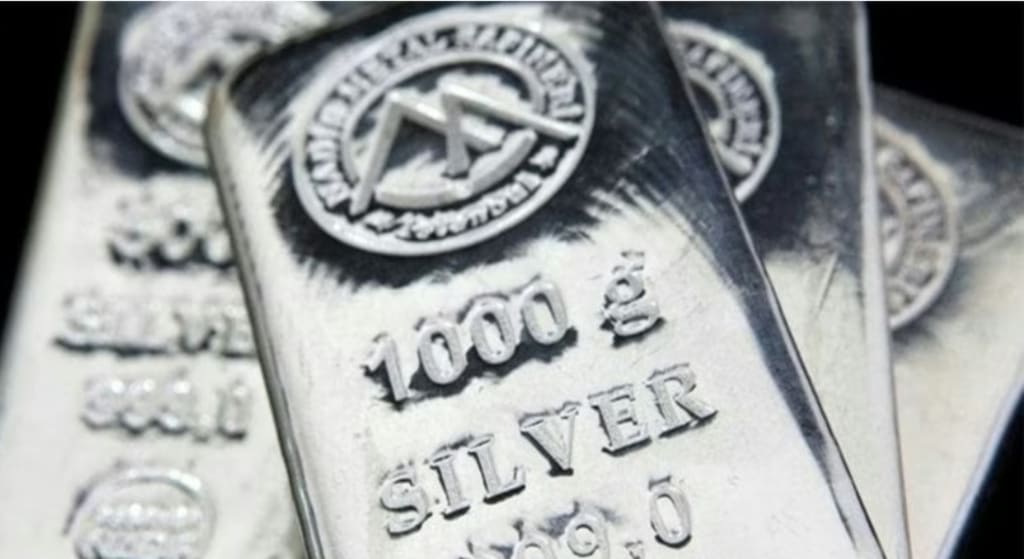
On January 30, 2026, the silver rate in Pakistan witnessed notable volatility amid swings in global bullion markets and local currency fluctuations. Precious metal prices — including silver — have been closely watched by investors, traders, jewelry buyers, and households seeking stable value in uncertain economic times.
Silver’s pricing in Pakistan is influenced by multiple factors including international market rates (spot prices), exchange rate dynamics, local demand, and trader premiums set by bullion dealers, which can differ significantly from the online or international spot rate.
---
Today’s Silver Rate — Key Figures
As of January 30, 2026, the latest recorded silver prices in Pakistan show the following approximate values:
📌 Silver per Tola: ~Rs. 11,069
📌 Silver per 10 Grams: ~Rs. 9,489
These figures are drawn from live bullion market data collected across major cities such as Karachi, Lahore, Islamabad, Rawalpindi, Quetta, and Multan, though local rates can vary by a few hundred rupees depending on dealer premiums and city-specific demand.
For context, the global spot price of silver fell modestly in line with wider precious metal corrections, influencing local retail rates in Pakistan’s bullion markets.
---
Comparative Snapshot — Recent Silver Price Movements
Silver rates in Pakistan have experienced sharp swings throughout January 2026. According to market data:
Date Silver per Tola (PKR) Trend
Jan 25 Rs. ~10,999 Slight rise
Jan 28 Rs. ~11,910 Increase
Jan 29 Rs. ~17,499 Peak volatility
Jan 30 Rs. ~15,399 Correction underway
Jan 31 Rs. ~14,499 Continued decline
This data shows that silver prices have fluctuated notably within the week, rising strongly and then easing back as markets adjust to global conditions and local currency shifts.
---
Underlying Drivers: What’s Fueling Silver Price Changes?
1. International Bullion Market Influence
Silver pricing in Pakistan largely tracks global bullion market behavior, where prices are determined by supply and demand dynamics on major exchanges such as the London Bullion Market and the COMEX in New York. When international spot prices trend lower — due to technical selling, stronger dollar sentiment, or shifts in industrial demand — local prices typically reflect this movement.
2. Currency Fluctuations (PKR‑USD)
The Pakistani Rupee’s exchange rate against the U.S. Dollar plays a critical role in setting metal prices. Since silver is globally priced in USD, a weaker Pak Rupee means that imported bullion costs more in local currency, often translating to higher retail silver prices in Pakistan. Conversely, when the Rupee strengthens, it can take pressure off domestic rates.
3. Local Demand & Jewelry Consumption
Steel‑backed demand from retail buyers, jewelry designers, and seasonal purchase trends can temporarily lift silver prices. In Pakistan, silver continues to be widely used for jewelry, coins, and traditional items, particularly in festive and wedding seasons, enhancing its market relevance beyond mere investment.
4. Dealer Premiums and Market Practices
In Pakistan’s bullion market, dealers and jewelers often charge premiums above the base international spot price, influenced by inventory costs, liquidity, and supply limitations. As seen in retail markets, physical silver can sometimes trade at 30–50% higher than online or quoted spot rates, revealing the impact of localized deal spreads.
---
Silver vs. Gold: How Do the Trends Compare?
Interestingly, on the same day, gold prices also recorded downward pressure after recent record highs. For example:
Gold per tola (24K): ~Rs. 537,362
Gold per 10 grams: ~Rs. 460,701
Despite the fall, gold remains significantly more expensive and culturally preferred as a store of value compared to silver.
While both metals are influenced by similar macroeconomic forces, silver has displayed greater short‑term volatility, partly due to its smaller market size and stronger susceptibility to industrial demand shifts.
---
Market Outlook: What Experts Say
Analysts caution that silver’s path in early 2026 remains uncertain and highly reactive:
Volatility may persist, driven by global supply‑demand imbalances and speculative trading patterns.
Investors are urged to consider silver’s industrial role (in electronics, solar panels, EVs) alongside traditional bullion investment perspectives.
Short‑term corrections could offer buying opportunities for long‑term holders, but sudden price swings are likely until market sentiment stabilizes.
Many market watchers emphasize that silver — while attractive due to its lower price point relative to gold — carries higher unpredictability and requires caution for speculative positioning.
---
Conclusion
The Silver Rate in Pakistan on January 30, 2026 reflects both local market dynamics and broader international bullion trends. With the silver rate around Rs. 11,000+ per tola, the commodity remains an important financial and cultural asset in Pakistan.
Sharp price movements underscore the need for informed decision‑making among investors and buyers, recognizing that silver — despite its utility and appeal — is influenced by complex global and domestic economic factors. Keeping a close eye on future price direction, macroeconomic policy, and bullion market activity will be essential for anyone tracking silver in Pakistan in 2026.
---
If you’d like, I can update this article to include gold comparison charts or investment tips for silver buyers too — just let me know!
About the Creator
Keep reading
More stories from Salaar Jamali and writers in The Swamp and other communities.
Rupee Strongly Bounces Back Against Australian Dollar, British Pound, Euro
The Pakistani rupee has staged a remarkable recovery against major foreign currencies, including the Australian dollar, British pound, and euro, reflecting a broader shift in investor sentiment and improving economic fundamentals. Analysts say the rebound is the result of a combination of strong remittances, a narrowing trade deficit, and proactive monetary measures by the central bank, signaling renewed confidence in the country’s financial stability.
By Salaar Jamaliabout 4 hours ago in The Swamp
Fire‑Hit Standedge Tunnel to Remain Closed Through Monday
A significant fire in the Standedge rail tunnel over the weekend has forced authorities to keep one of the key trans‑Pennine rail links closed through Monday, prompting widespread disruption to services between West Yorkshire and Greater Manchester and impacting passengers across northern England. �
By Ayesha Lashari7 days ago in The Swamp
After the Storm
After the storm of winter snow there sat a small bear by the name Ted, of course. He loves the snow and likes to roll around in it making all sorts of trails and whatever he has a mind to do. He wondered where all the people are, but in a way, he is hoping that they are all snug in the homes maybe drinking hot chocolate-one of his favorite drinks with mini-marshmallows and eating something homemade for he likes this winter wonderland all to himself to romp and play and maybe even catch some fish down by the river.
By Mark Graham4 days ago in Fiction



Comments
There are no comments for this story
Be the first to respond and start the conversation.