
Subjective Equality
Observations on Definitions of Equality

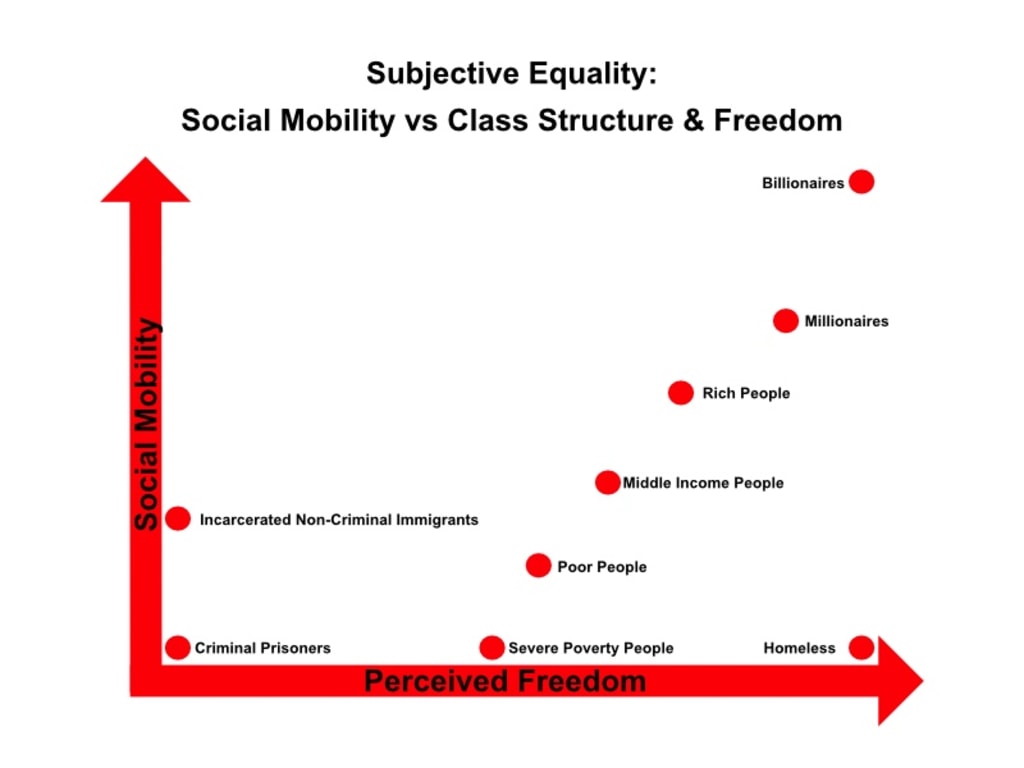
Subjective Equality: Observations on Definitions of Equality
Written by Laura Flores - December 14, 2020
Why is it that, over a hundred years after the first wave of Feminism began, the definition of “equality” remains undefined? According to Wiktionary.com, equality has one of three meanings, “The fact of being equal,” “The fact of being equal, of having the same value,” and “The equal treatment of people irrespective of social or cultural differences.” At the same time, checking the main Wikipedia.com search results on “equality” returns over a dozen results, ranging in subject from “Society” to “Arts and Entertainment.” Therefore, equality must mean different things to different people. It seems “The equal treatment of people irrespective of social or cultural differences” is easy to say and difficult to practice.
Feminism isn’t our first attempt at equality, though it’s arguably had the most success. Even so, in the intervening years since feminism waved across the world, women have still not yet managed to achieve 100% equality with men. Seen from another perspective, men have also sought equality with women and are also not yet 100% equal. What causes this double-sided gender-equality disparity? Why would men have to be equal to women if the original goal was for women to be equal to men? I like to think of it as branches off the waves of feminism: races for gender, racial, and sexual equality. The subsequent waves of feminism launched other races for equality, from women of color to men who want to be free from society’s obligations of them. If women felt stifled from being reliant on men for a bank account, or money at all, men had the same stranglehold from the other side: society told them they had to take care of women. In freeing women from men’s hold, men also achieved freedom, bringing men and women closer to equality than they may realize.
Women didn’t all want to be free from what some feminists might call “the tyranny of men” since nobody raised them to take part in a society of equals. In their upbringing, they learned that security and freedom came from making a happy home, bearing and raising children, and being the support staff of their husbands’ careers. Who is to say that women in those positions don’t find their lives fulfilling? Perhaps some might not see it as an equal partnership, but her abilities and efforts make her and her husband’s life better, from the wife-mother-employee’s perspective. They are, quite literally, living their best life. A feminist might then argue, “What would she do if her husband died? What if he dumps her for a younger, bouncier model?” It’s true that before feminism, abandoned women had to rely on the mercy of their husband or the next living adult male in their family. Whether her son, her husband’s brother, or her brother or cousin, she would struggle to survive without a male relative’s help. While she may not have the skills needed to enter the workforce, she now has the option to get those skills, to earn her way, and to do so without a man setting it up for her. At the same time, she can still try and start a new life with a new man, doing for him what she did for her former/late husband.
So does that mean equality = freedom of choice? From the perspective of a white person, absolutely. The mere virtue of a lighter skin tone leaves doors and windows open, inviting freedom on nearly every level. Nearly, you might ask? Well, that brings up another facet of equality: sexual and gender identity. There are many detailed articles on the differences between gender and sexual identity. To summarize: sexual identity is your preference in a sexual partner’s gender; gender identity is how you perceive your gender, based on the expected behavior of specific genders in your society.
While I don’t think it’s anyone’s business how I perceive myself or what I’m looking for in a partner, many cultures and societies believe it is their business. This belief stems from surprisingly animal-brained goals: procreation and guaranteeing the parentage of offspring. Virginity, for example, was highly prized in women since it meant their husband would most assuredly be the father of any offspring born nine months later. People built societies around those goals, and the explosion of sexual freedom in the past hundred years has barely made a dent in that way of thinking. As population growth has exponentially increased, people are still more concerned about two women falling in love and adopting children than they are about the influx of orphaned and abandoned children.
Where does the ambiguity of equality come into play here, you might ask? Equality is simple to define for an individual or a group of like-minded individuals. When you add other desires to the mix, equality is re-defined as “We should all be equal, so you should be like me.” Instead of finding their equality, people feel others need to be equal to them, using everything from freedom to religion as reasons for what I call “forced equality.” Just like the housewife whose definition of equality was balancing her husband’s life versus a radical feminist believing the housewife was setting women back a thousand years, it turns out people measure equality against their stick, not the other person’s.
Freedom, likewise, means different things to different groups. Taking the housewife as an example, her sense of freedom comes from feeling secure because her husband takes care of everything. While her life may be insular, she feels free to achieve goals that benefit the family. Similarly, what Americans might see as oppression in other countries, residents of those countries see as freedom from various types of harm. They know that, as long as they behave within society’s expected parameters, they can live a good life filled with much, if not all, of what is on Maslow’s hierarchy.
On top of different cultures, nobody’s ideas of equality and freedom stay the same throughout their life. For example, my perspective changed drastically as I reached adulthood. As a child, I equated freedom with eating whatever I wanted and staying up all night. By my teens, money became more important, so getting a well-paying job became necessary. Money is a massive part of both equality and freedom -- without money, nobody can truly have either. Financial stability then leads us back around to feminism and the branches of equality movements it spawned, from racial to gender. Inequality gets reinforced by the handful of people controlling most of a country’s money. As a good friend explains, “Money is artificially scarce. Without the gold standard, money has no actual worth.” At this point, the reasons to hang onto fool’s gold should be obvious: without money, people would be equal. With it, people with the most money get to control what equality means.
Until we have ironed out the inequalities, often reinforced by prejudices we pick up from watching parents, movies, television, and reading books and articles, equality will remain out of reach. How can we, as individuals trapped in repeating patterns, ever hope to break free into the promised utopia of equality and freedom?
It starts exactly where it always has: with movements, with advocates marching streets and sitting peacefully. It also needs humility, understanding, kindness, and a heaping dose of mindfulness. Does thinking about your privilege, or worrying about your first reaction to someone else, make you uncomfortable? It should. You should question your reactions, your gut instinct. You should play out every response you could have displayed instead, chewing it over in your mind. You should open dialog with those who society says are not equal and ask what you can do to make them feel like part of society.
Those who aren’t yet equal, you have a job, too. Don’t shut down every attempt to talk about this issue. Don’t let yourself become jaded. Your forefathers, those who pushed through to this point, had a heavier stone to push up the mountain. Society has never flipped overnight -- it has always been small changes that caused the most significant improvements. Even if your idea seems small, it might just be what’s needed to get this generation to compromise and the next generation to accept without question.
Equality will probably remain undefinable until people stop deciding who should be equal to whom. Until then, keep the ideals of equality in your mind: that we are all equally capable of making our own life choices, using our freedom to make those choices within the bounds of freedom dictated by the society in which we live. Equality is when every person within a community or group is granted the same rights, privileges, and experiences as every other member of the society or group, regardless of a laundry list of parameters, including gender and sexual identities.
“...and it harm none…but if your insecurities or beliefs are harmed, that’s your problem.”
About the Creator
SNROCINUTAF
Anti-Authoritarian Making Gandhi Sound Like Rush Limbaugh
Keep reading
More stories from SNROCINUTAF and writers in The Swamp and other communities.
Democracy Held Hostage
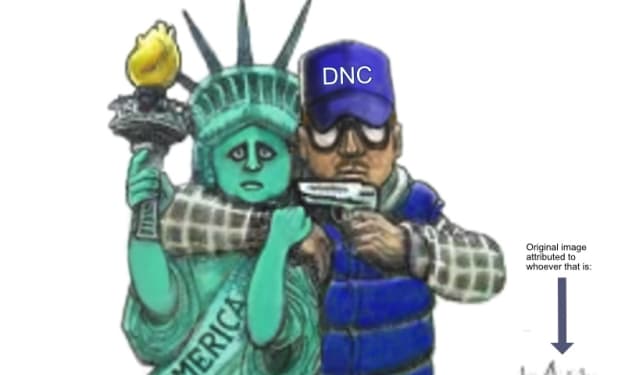
Written by TJ Hyland - December 11, 2020 An email hit my inbox this morning titled, “bad news (re. Electoral College),” but when I opened it up, it read more like a threat, telling me I had better take action now! It’s from the DNC. I always read these to see what tactics they’re using on the sheeple these days. This one is about abolishing the electoral college, and it reads, “This is a hard email to write. Alexandria Ocasio-Cortez, Elizabeth Warren, Bernie Sanders, and John Oliver. Everyone warned you… But we’re about to miss our major $15,000 fundraising deadline for the Abolish the Electoral College Fund. And sadly, we just checked… Progressive donations are PLUMMETING!!! If we CAN’T raise the remaining $9,391 for our Abolish the Electoral College Fund, then we will HAND Republicans a HUGE victory. REMEMBER: Republicans NEED the Electoral College to win…”
By SNROCINUTAF5 years ago in The Swamp
Why Black History Matters in America?
The United States of America is celebrating their 250th anniversary in 2026. I'm proud to be an American and as someone who was born here, I wouldn't imagine myself living anywhere else. This is a country where opportunities are possible. Where anyone can be successful in anything they desire to do. Equality, community, and togetherness are the backbones of what America is and should be about. However, we have an administration who wants to erase and disregard those who have made positive, meaningful impacts in our country, specifically Black figures, such as Martin Luther King, Jr., Rosa Parks, and Maya Angelou. President Trump and his administration have been constantly complaining and fighting against what they call the "Woke agenda". They use this excuse as a distraction from other issues they refuse to address, such as the high cost of living, climate change, and inflation. That equality is dividing America, when in reality, it's bringing us together. Being woke is not tied to a specific political party. No matter where you stand on the political spectrum, you can still care about other people and their plights. Compassion and empathy for others isn't tied to a political party, either. We were taught as children to treat others the way we want to be treated and not judge others because they're different from us. Caring about others isn't a personal attack on your beliefs. It doesn't make you any less of a person. People who are easily offended over African American figures, past or present, or anything related to it, are grasping at straws. Current and future generations need to know who people like Harriet Tubman and Shirley Chisholm were, especially in the classroom. Black History is part of American History. It should be recognized, not hidden or forgotten. Besides, you can't shield children from everything, just because your feelings are easily hurt.
By Mark Wesley Pritchard 6 days ago in The Swamp


Comments
There are no comments for this story
Be the first to respond and start the conversation.