energy
How politicians and governments around the world are dealing with climate change, solar energy and harnessing renewable resources.
New Bilt Cards Exclude Tax Payments, eBay, Facebook Marketplace, and More. AI-Generated.
In an era where credit card perks and rewards often define consumer choices, Bilt, a relatively new player in the rewards credit card space, is making waves. The Bilt Mastercard has been praised for its unique offering: the ability to earn points on rent payments without transaction fees, something nearly unheard of in the credit card world. However, recent updates to the card’s terms have raised eyebrows, as certain payment categories—including tax payments and popular online marketplaces—are now excluded from earning rewards. This change, while not entirely unexpected, represents a shift in Bilt’s strategy. Here’s a closer look at what this means for users, why it matters, and how cardholders can adjust their spending strategies. Understanding Bilt’s Original Appeal Bilt entered the credit card market with a bold promise: allow renters to earn rewards on a recurring expense that traditionally offered no benefits. Most credit cards charge fees for paying rent via third-party platforms, but Bilt waived these, allowing cardholders to earn points toward travel, fitness, and other perks. Beyond rent, Bilt had positioned itself as a card that could compete in everyday spending. Early users enjoyed points accumulation on dining, travel, and select online purchases, making the card a versatile option for those looking to maximize rewards without paying high annual fees. The combination of no-fee rent payments and a decent points system made Bilt particularly attractive to younger professionals and urban renters who often see rent as their largest monthly expense. What’s Changing: Exclusions Explained Recently, Bilt updated its terms, and certain transactions no longer earn rewards points. The key exclusions now include: Tax Payments – Payments made toward federal, state, and local taxes through the IRS or third-party platforms will not earn rewards. eBay Purchases – Online auction and marketplace transactions are excluded from earning points. Facebook Marketplace Transactions – Payments made for goods sold or purchased via Facebook Marketplace are also excluded. Other Specified Categories – Certain peer-to-peer payment platforms, digital wallets, or non-traditional marketplaces may fall under the exclusion list. These exclusions appear aimed at reducing the risk of “gaming” the rewards system. For example, some users may have previously tried to convert taxable payments into points or exploit marketplaces to generate rewards at low cost. By cutting off these categories, Bilt protects its rewards pool while nudging users toward traditional spending categories. Why Bilt Made These Changes Credit card issuers regularly adjust their rewards programs to balance user benefits with financial sustainability. While this might feel like a downgrade, it is a common industry practice. Bilt’s exclusions likely serve several purposes: Financial Risk Management: Large-scale rewards redemption on tax payments or online marketplaces could increase the company’s exposure. Encouraging Core Spending: Bilt wants users to spend on categories that align with their strategic partnerships, like travel, dining, and fitness. Fraud Prevention: Peer-to-peer and marketplace transactions often carry higher risks of fraud or chargebacks. Excluding these categories helps mitigate potential losses. By narrowing the earning categories, Bilt ensures its rewards system remains sustainable while still offering benefits in other areas that appeal to its target demographic. How This Affects Bilt Cardholders For existing users, this change means some spending that previously earned points will no longer qualify. Tax payments, which can be substantial, and online marketplace transactions are common ways some cardholders maximized points. The good news is that the card still rewards rent payments, a feature that continues to set Bilt apart. Additionally, purchases in restaurants, fitness, travel, and select partner merchants still earn points, meaning everyday discretionary spending remains valuable. Cardholders can adapt in several ways: Separate Spending Categories: Use Bilt for rent and traditional spending, and another card for taxes or marketplace purchases. Plan Rewards Strategy: Focus on high-reward categories to offset the excluded spending. Track Transactions: Regularly monitor which purchases earn points to avoid surprises. These strategies allow users to continue making the most of Bilt’s rewards without losing the benefits of everyday spending. What This Means for the Credit Card Market Bilt’s exclusions are not unusual when compared to other major credit cards. Chase, American Express, and Citi frequently adjust bonus categories and exclusions to maintain profitability and avoid reward exploitation. However, Bilt’s model is still distinctive. Most cards don’t offer points on rent at all, and Bilt continues to cater to urban renters and younger professionals, a demographic often underserved by traditional credit card rewards programs. In a competitive rewards landscape, Bilt’s focus on rent and lifestyle perks—like fitness and travel rewards—helps differentiate it from mainstream credit cards. While some exclusions may disappoint users, the overall value proposition remains strong for its core audience. Key Takeaways Bilt remains unique: Rent payments still earn points without fees, a feature few cards offer. Exclusions are targeted: Tax payments, eBay, and Facebook Marketplace are excluded to protect the rewards ecosystem. Cardholders can adapt: Using multiple cards for different spending categories ensures optimal rewards accumulation. Market positioning is strategic: Bilt continues to appeal to younger renters who prioritize lifestyle rewards and travel perks. For anyone considering Bilt, it’s important to weigh the value of rent-based rewards against the limitations on other transactions. If your primary goal is to earn points on rent and everyday discretionary spending in eligible categories, Bilt still offers a compelling choice. For those who frequently pay taxes with a credit card or shop heavily on online marketplaces, a supplemental card may be necessary. Final Thoughts The new exclusions on Bilt cards highlight a tension in the credit card world: balancing generous rewards with financial sustainability. While some users may be disappointed, the core advantage—earning points on rent without fees—remains untouched, preserving the card’s unique appeal. Bilt is evolving, as all credit card programs do, but its focus on lifestyle and rent rewards ensures it continues to fill a niche that traditional credit cards have largely ignored. By understanding the exclusions and adjusting spending habits, cardholders can still make Bilt a valuable tool in their financial toolkit. In the end, the Bilt Mastercard proves that even in a crowded credit card market, innovation—especially around everyday expenses like rent—can offer meaningful benefits to the right audience, despite necessary limitations in some spending categories.
By Muhammad Hassan14 days ago in The Swamp
No Escape Room: Trapped in a Game That Never Lets You Leave
The story begins with a man who goes on a weekend trip with his daughter to spend some time together. He wants to make her happy. However, his daughter Karen is upset with her dad about something and remains silent throughout the journey, staring out of the window. Her dad tries to lighten the mood. He talks to her, cracks jokes, and makes efforts so her mood improves and the short trip becomes memorable. While they are on the way, their car suddenly breaks down. Due to this, they are forced to stop in a nearby small town. They leave the car at an old garage to get it repaired and, while waiting, they sit in a hotel across the road and order food. Karen’s dad suggests that since the car will take time to be fixed, they should look for some place nearby where they can have a little fun. He picks up a large newspaper lying there and starts looking at tourist activities. He suggests several options to Karen one by one, but she refuses every idea. Then his dad notices an advertisement for an escape room. He explains to her that it is a game where a group of people is locked inside a room. Inside, they are given puzzles, riddles, and tasks, and until they solve everything correctly, they are not allowed to leave the room. Hearing this, a slight spark appears in Karen’s eyes. She says that her friends have played such a game before and really enjoyed it, so she also wants to try it. Her dad immediately calls the waitress and asks her about the escape room. The waitress suddenly becomes serious and says that they should not go there, because whoever has gone there has never come back. Hearing this, both of them look at each other nervously. The atmosphere suddenly becomes heavy. Then, the very next moment, the waitress laughs and says she was just joking. She says it is very fun and people really enjoy it. Hearing this, they relax a little and decide to go to the escape room. Meanwhile, Karen goes to the washroom because something has spilled on her clothes. As soon as she enters, the lights start flickering. The entire washroom falls into an eerie silence. Suddenly, she hears strange noises coming from the adjacent cabin, as if someone inside is trying to open the door. Karen’s heart starts pounding. Out of fear, she slowly walks toward that cabin and is about to open the door when the waitress suddenly comes out from the same cabin. At that moment, Karen’s dad calls out to her, and she quickly leaves the place. However, the strange fear that settles in her heart does not fade away easily. After that, they rent a car and head toward the location of the escape room. As they move forward, the liveliness around them slowly disappears. Eventually, they reach a place where there is complete silence all around. Just looking at the building gives off a strange feeling. The walls have old cracks, the paint is peeling off, and it feels as if the building has seen many dark things. They enter inside. Karen’s dad calls out loudly, “Is anyone here?” After a few seconds of silence, a girl appears and, with a faint smile, says, “Welcome, I am the host of this game.” She takes them into a room where three other people are already sitting, who have also come to participate in the game. A woman introduces herself and says, “My name is Melanie, and I came here with my husband. He didn’t want to come, but I insisted and brought him along.” There is also another man who introduces himself as a doctor. After a while, the host brings a strange kind of tea for everyone. Steam rises strongly from the tea, and its smell feels unusual. Karen’s dad feels something is not right about it, so he hesitates and stops Karen from drinking it as well. But when he sees that everyone else is drinking it calmly, he eventually drinks it too. After that, the host places some agreement papers in front of them and asks them to sign. It is written that all of them have come here willingly, and if anything happens to anyone, they themselves will be responsible. Once the papers are signed, the host takes everyone’s mobile phones and explains that it is a rule of the game. No one will contact the outside world, and no videos are allowed to be recorded. Then she turns on a projector and plays a video. The video explains the story of an inventor who used to conduct strange experiments and create unusual things. He was the one who built this mysterious house. But after that, strange incidents started happening there. Some people came to uncover the secret of the house, but they all got trapped inside and disappeared without leaving any trace. After this, the host explains the rules of the game. Each room’s door will open only when the key for that room is found. Every key is hidden inside the same room, and to find it, puzzles and riddles must be solved. The total time for the game is one hour. If anyone feels they cannot handle the mental pressure and everything becomes too overwhelming, they only need to say the word “Wake up,” and they will be taken out immediately. As soon as she finishes saying this, the lights suddenly go out… (The story continues in the same word-by-word sequence with fear, suspense, time loops, death, and consequences, and in the end it becomes clear that this is the “No Escape Room” — a trap from which no one truly escapes. It was a deadly experiment created by a mad inventor, and even the souls of those who die there remain trapped inside the house forever.)
By Filmon Ke Raaz | Movie Mysteries Explained15 days ago in The Swamp
Why the East Coast Wants More of Trump’s Least-Favorite Energy Source. AI-Generated.
The East Coast of the United States has long been at the center of political debates over energy policy. From coal-fired power plants in Pennsylvania to offshore wind projects in Massachusetts, the region has often found itself at odds with federal priorities. Recently, attention has turned to a particular energy source that former President Donald Trump famously criticized—natural gas. While Trump often championed coal and domestic fossil fuels, calling natural gas “not clean enough” for his administration’s vision, East Coast states are increasingly betting on it to fuel their energy needs. This pivot raises a critical question: why is a region leaning heavily into a fuel source that one of the country’s most influential political figures publicly dismissed? The answer lies in a mix of economic necessity, environmental policy, and infrastructure realities. Rising Demand, Limited Options Energy demand on the East Coast is growing faster than elsewhere in the country. The population in states from New York down to Florida is expanding, and urban centers are seeing increased consumption due to the rise of electric vehicles, new data centers, and more residential and commercial development. Renewable energy projects, while promising, are not yet sufficient to meet this surge in demand. Solar and wind power are growing, but their intermittent nature creates gaps in supply that cannot yet be fully bridged without reliable backup sources. Natural gas fills that gap. Unlike coal, it burns cleaner and produces significantly lower carbon dioxide emissions per unit of energy. It also emits fewer pollutants such as sulfur dioxide and particulate matter, which makes it more acceptable in states with strict air quality standards. For many East Coast states, the choice isn’t about political alignment—it’s about pragmatism. Infrastructure Investments Over the last decade, states along the East Coast have invested billions of dollars in natural gas infrastructure, including pipelines, storage facilities, and modernized power plants. This infrastructure provides a steady, controllable energy supply, unlike some renewable options that depend heavily on weather conditions. Retrofitting the grid entirely to run on solar, wind, or nuclear would take decades and tens of billions more in investment, which is why natural gas remains a central piece of the puzzle. For example, Massachusetts has been expanding its natural gas pipeline network to reduce the risk of winter shortages. Similarly, New York and New Jersey have approved projects that allow for natural gas storage in strategic locations to ensure the grid remains stable during peak demand periods. These projects face political opposition, environmental concerns, and even lawsuits, but their momentum demonstrates the economic and logistical importance of natural gas. Balancing Environment and Economics While Trump criticized natural gas for environmental reasons, East Coast states are adopting a more balanced approach. By using natural gas as a bridge fuel, these states aim to reduce reliance on coal while giving renewable technologies time to scale up. In New England, for example, natural gas now supplies nearly half of electricity generation, allowing older, dirtier coal plants to be retired. This shift has led to measurable reductions in regional carbon emissions and improved air quality in densely populated areas. At the same time, natural gas is not seen as a permanent solution. Policymakers are simultaneously promoting offshore wind projects, large-scale solar installations, and energy efficiency measures. The goal is to gradually replace natural gas over time with cleaner, renewable alternatives. But the pace of change is constrained by technological and financial realities, which is why natural gas demand remains strong despite political rhetoric. Political Pushback and the Trump Factor Trump’s criticisms of natural gas—particularly his push for coal and disdain for certain renewable policies—highlight the tension between federal politics and state-level priorities. East Coast governors, both Republican and Democrat, have largely ignored this political messaging in favor of practical solutions that meet the energy demands of their constituents. This political dynamic has also created an interesting market scenario. While Trump’s rhetoric may have slowed natural gas projects in some regions during his presidency, private investors and utility companies on the East Coast have seen opportunity. By doubling down on natural gas now, these stakeholders position themselves to profit from a fuel source that remains essential for reliable electricity generation. Economic Benefits The economic argument for natural gas is equally compelling. The fuel is relatively cheap compared to alternatives, especially when global oil prices fluctuate. It also supports thousands of jobs in construction, engineering, and maintenance along the East Coast. Furthermore, natural gas provides a degree of energy independence by reducing the need to import expensive foreign fuels, which aligns with broader economic and strategic goals even if it conflicts with Trump-era messaging. Looking Ahead The East Coast’s embrace of natural gas is not a rejection of renewable energy. Instead, it reflects a strategy of pragmatism: using a cleaner-burning fossil fuel to stabilize the grid while scaling up cleaner alternatives. States like New York, New Jersey, and Massachusetts are investing heavily in offshore wind, while others are pushing solar and hydroelectric projects. In the long term, natural gas may indeed become a transitional fuel rather than a permanent fixture—but for now, it remains indispensable. The question of energy policy on the East Coast underscores a larger truth: local realities often outweigh national politics. Even if a former president declares a fuel source “undesirable,” states must prioritize reliable, affordable, and environmentally responsible energy for millions of residents. In that context, natural gas is not just an energy source; it is a strategic tool that balances growth, sustainability, and economic stability. In conclusion, the East Coast’s demand for natural gas is about more than political statements or presidential preferences. It is about securing reliable energy, protecting the environment incrementally, and supporting economic growth. Whether Trump approves or not, the East Coast is charting its own course—one pipeline, one power plant, and one megawatt at a time.
By Muhammad Hassan19 days ago in The Swamp
Tired of the Wellness Industrial Complex? Six Rules to Ditch – And What to Do Instead. AI-Generated.
If you’ve ever scrolled through Instagram, only to see someone sipping kale smoothies while doing yoga on a cliff, you know the wellness industrial complex is everywhere. Promises of “detoxes,” “miracle supplements,” and the “perfect morning routine” flood our feeds, making us feel like we’re failing if we can’t keep up. The problem? The wellness industry often prioritizes profit over real health. Those expensive gadgets, trendy diets, and Instagram-worthy fitness challenges can leave you broke, stressed, and exhausted. The good news is, you don’t have to play by their rules. Here are six wellness rules to ditch—and what to do instead. 1. Ditch the “Detox” Craze Why it’s misleading: Detox teas, cleanses, and expensive supplements promise to flush toxins from your body—but your liver and kidneys are already doing that job 24/7. Most “detoxes” are unnecessary and can even be harmful. What to do instead: Focus on basic nutrition. Eat whole foods, drink water, and get enough sleep. That’s your body’s real detox system. Simple, but far more effective than a $60 cleanse kit. 2. Forget About “Perfect” Mornings Why it’s unrealistic: The wellness industrial complex loves selling the idea of a flawless morning routine: cold showers, journaling, meditation, and superfoods before 7 AM. If your morning doesn’t look like a Pinterest board, you feel like a failure. What to do instead: Build a routine that actually fits your life. Even five minutes of stretching, a cup of coffee, or a brief walk counts. Consistency matters more than Instagram-worthy perfection. 3. Stop Chasing Supplements for Every Problem Why it’s a trap: There’s a supplement for everything: energy, sleep, skin, focus. But many of these products are overhyped and under-regulated. Your body often doesn’t need them. What to do instead: Prioritize real foods and lifestyle changes. Want more energy? Sleep, hydrate, and move your body. Struggling with focus? Try movement breaks and proper nutrition before popping a pill. Supplements can help in certain cases, but they shouldn’t be your first line of defense. 4. Ignore the “Quick Fix” Fitness Trends Why it’s harmful: High-intensity 10-minute workouts, fad exercises, or extreme challenges promise rapid transformation. They rarely consider your body type, fitness level, or lifestyle. This often leads to frustration or injury. What to do instead: Adopt sustainable fitness habits. Walk, run, lift weights, or take classes you genuinely enjoy. Consistency beats intensity when it comes to long-term results. Remember, fitness is a lifestyle, not a 21-day challenge. 5. Say Goodbye to Diet Culture Why it’s toxic: Counting calories, restricting foods, or labeling meals as “good” or “bad” can create an unhealthy relationship with food. The wellness industry profits from our guilt and obsession with dieting. What to do instead: Focus on mindful eating. Listen to your body’s hunger cues, enjoy meals without guilt, and include foods that nourish and satisfy you. Balance and moderation are your best friends—not strict rules. 6. Ditch the Comparison Game Why it’s damaging: Social media is a highlight reel. Comparing your body, lifestyle, or wellness journey to others’ curated feeds can lower self-esteem and increase stress. What to do instead: Define your own version of wellness. Track your personal progress, celebrate small victories, and remember that health isn’t a competition. Social media can inspire, but it shouldn’t dictate your standards. Building Your Personal Wellness Plan Once you’ve ditched these six toxic rules, it’s time to create a wellness routine that actually works. Here’s a simple framework: Move your body in ways you enjoy – whether it’s dancing, swimming, or just walking around your neighborhood. Eat with intention – focus on variety, whole foods, and balance rather than deprivation. Prioritize mental health – meditation, therapy, journaling, or talking to friends can all support your well-being. Sleep and rest matter – aim for consistent, quality sleep rather than sacrificing rest for productivity hacks. Celebrate progress, not perfection – small, sustainable changes beat dramatic, unsustainable fixes. Remember, wellness is personal. Your health, happiness, and peace of mind shouldn’t be determined by trends, products, or influencers. By ditching these six harmful rules, you take control of your journey, without paying for overpriced gimmicks. Final Thoughts The wellness industrial complex thrives on our insecurities and desire for instant results. But lasting health and happiness come from simple, sustainable practices that work for you—not for social media likes. Ditch the detoxes, fads, and perfectionism. Instead, focus on balance, consistency, and self-compassion. Wellness isn’t a product—it’s a lifelong practice. Start small, stay consistent, and watch the results unfold naturally. Your body, mind, and wallet will thank you.
By Muhammad Hassan19 days ago in The Swamp
Without Democracy, Donald Trump’s Venezuelan Oil Quest Will Fail. AI-Generated.
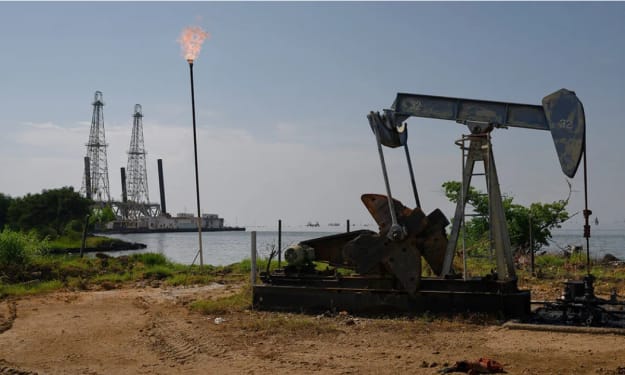
The lure of Venezuelan oil has long been irresistible to global powers. With some of the largest proven oil reserves in the world, the South American nation represents both enormous wealth and complex geopolitical challenges. For Donald Trump, whose approach to foreign policy often blends economic opportunism with bold rhetoric, Venezuela’s oil has been a tantalizing target. Yet, despite his aggressive strategies and public declarations, the reality is clear: without democracy, Trump’s Venezuelan oil ambitions are likely to fail. Oil, Power, and Politics: The Venezuelan Context Venezuela’s oil sector is inextricably linked with its political landscape. Once a booming oil exporter, the country has faced decades of mismanagement, corruption, and authoritarian rule. Under leaders like Hugo Chávez and Nicolás Maduro, the state-controlled oil industry, managed by Petróleos de Venezuela (PDVSA), became a central instrument of political control. Trump’s administration repeatedly emphasized using sanctions, diplomatic pressure, and even the prospect of regime change to gain leverage over Venezuela. The underlying assumption is straightforward: by destabilizing the government or promoting a more U.S.-friendly leadership, access to oil reserves would follow. However, this strategy encounters a fundamental problem: without a functioning democratic system, there is no reliable mechanism to guarantee stability, transparency, or fair contracts in the oil sector. Authoritarian regimes often operate on loyalty rather than merit, and economic opportunities are frequently distributed through patronage networks. In such an environment, Trump’s promises or incentives could quickly be undermined by internal power struggles or corruption. The Limits of Sanctions Sanctions have been a cornerstone of U.S. policy toward Venezuela. The idea is simple: pressure the regime economically to force political concessions or create openings for change. While sanctions can cripple state finances and limit access to international markets, they rarely produce immediate regime collapse. Instead, they often strengthen authoritarian leaders’ grip, as governments rally nationalistic sentiment against perceived foreign interference. For Trump, this meant that even aggressive sanctions could not guarantee access to Venezuela’s oil. Without democratic institutions—free elections, independent judiciary, accountable governance—any oil deals risk becoming transactional rather than sustainable. In other words, a U.S.-backed leader could secure an oil contract today but face domestic resistance tomorrow, rendering the arrangement fragile and unreliable. Democracy as a Stabilizing Force Democracy provides mechanisms that authoritarian regimes lack. Transparent governance, checks and balances, and legal accountability create predictability in business dealings. For multinational companies and foreign governments, this stability is critical. In Venezuela, decades of democratic erosion have led to erratic policy decisions, frequent expropriations, and unpredictable regulatory environments. Trump’s oil ambitions, rooted in traditional business logic, clash with this reality. No amount of negotiation can fully mitigate the risks posed by a system where political survival often trumps economic rationality. History provides stark lessons. In countries where democracy is weak, oil wealth has often led to corruption, conflict, and economic collapse—a phenomenon known as the “resource curse.” Conversely, nations with strong institutions can leverage oil reserves to build sustainable wealth, attract foreign investment, and maintain political stability. Trump’s approach, which prioritizes short-term gains over institutional development, underestimates the necessity of democratic foundations. The Geopolitical Dimension U.S. ambitions in Venezuela do not operate in a vacuum. Russia, China, and other international actors have substantial influence in Caracas, providing both economic and military support to Maduro’s government. These alliances complicate U.S. efforts to access oil resources. Without democratic legitimacy, any intervention is likely to provoke geopolitical resistance, further limiting Trump’s options. Moreover, Venezuelan citizens themselves play a critical role. Over 7 million people have fled the country in recent years, driven by economic collapse and political repression. Any U.S. strategy that ignores public sentiment risks backlash, both locally and internationally. Democracy, by its very nature, requires engagement with citizens’ interests and demands, something authoritarian governments—and by extension, Trump’s transactional approach—often overlook. The Pitfalls of Personalistic Leadership Trump’s style of leadership, characterized by bold statements and personal negotiation, clashes with the structural realities of Venezuela. In authoritarian systems, deals depend on the whims of a few individuals rather than institutional norms. One change in leadership or a shift in loyalty can invalidate months of negotiation. In a democratic context, agreements are more resilient. Laws, regulatory frameworks, and independent institutions provide continuity, ensuring that commitments outlast a single leader. Trump’s reliance on personalistic leverage rather than systemic stability reduces the likelihood of successful, long-term oil access in Venezuela. Lessons for U.S. Policy The central lesson is clear: energy ambitions cannot succeed in isolation from political reality. Accessing Venezuelan oil requires more than coercive measures or diplomatic theatrics; it requires an environment where contracts can be enforced, policies are predictable, and political transitions are peaceful. Democracy—or at least steps toward accountable governance—is a prerequisite for these conditions. Trump’s Venezuela strategy demonstrates the limits of relying solely on authoritarian pressure or personal influence. Without addressing the structural issues of governance, economic mismanagement, and citizen engagement, oil wealth remains a distant prize. In essence, the pursuit of Venezuelan oil is inseparable from the pursuit of democratic legitimacy. Conclusion Donald Trump’s Venezuelan oil quest embodies the intersection of ambition, power, and geopolitics. While the allure of Venezuela’s vast reserves is undeniable, the absence of democratic structures makes this pursuit inherently fragile. Authoritarianism, corruption, and political instability create risks that personalistic leadership and aggressive policies cannot fully overcome. For the U.S., the lesson is not merely about oil—it is about the necessity of supporting institutions that promote transparency, accountability, and citizen engagement. Without these foundations, the pursuit of Venezuelan oil is likely to remain an unfulfilled dream, no matter how forcefully it is pursued. In the end, democracy is not just a political ideal; it is a practical requirement for sustainable international energy strategy.
By Muhammad Hassan19 days ago in The Swamp
Starmer Talks to Trump.
Sir Keir Starmer spoke to President Trump on the telephone last night. They spoke at length, according to a Downing Street Spokesman, about Greenland and the tanker Bella 1 or Marinera. Sir Keir Starmer's view on Greenland is in line with other European leaders. That is, they stand with the Danish Prime Minister Mette Frederiksen. Ms. Frederiksen has said that if the US were to invade Greenland, it would be the end of NATO. And rightly so, Denmark and America are NATO Allies. It would be a literal stab in Denmark's back if America went ahead and invaded Denmark. How can a friendship stand when your close friend has done something to offend you? That would be the case between the US and Denmark over Greenland. It would only embolden people like Putin.
By Nicholas Bishop25 days ago in The Swamp
Australia Superconducting Magnetic Energy Storage Market: Renewable Energy, Rising Demand, Share, and Advanced Energy Storage. AI-Generated.
According to insights from IMARC Group, Australia’s superconducting magnetic energy storage (SMES) market is emerging as a strategic component of next-generation energy infrastructure, driven by the country’s accelerating renewable-energy transition and increasing demand for grid stability. Unlike conventional energy storage technologies, SMES systems store energy in a magnetic field created by a superconducting coil, allowing near-instantaneous energy discharge with exceptionally high efficiency. As Australia integrates larger volumes of intermittent renewable energy from solar and wind, interest in advanced storage solutions capable of maintaining power quality, frequency regulation, and grid resilience is steadily increasing. While still at a developmental and pilot-deployment stage, SMES is gaining attention from utilities, grid operators, research institutions, and industrial users seeking ultra-fast, high-reliability energy storage solutions.Why Should Smart Investors and Businessmen Know About the Australia Superconducting Magnetic Energy Storage Market?
By Shrestha Roy26 days ago in The Swamp