feature
Swamp featured post, a Swamp Media favorite.
Why Black History Matters in America?
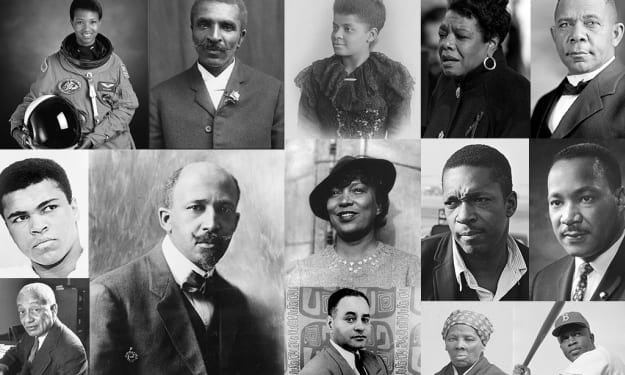
The United States of America is celebrating their 250th anniversary in 2026. I'm proud to be an American and as someone who was born here, I wouldn't imagine myself living anywhere else. This is a country where opportunities are possible. Where anyone can be successful in anything they desire to do. Equality, community, and togetherness are the backbones of what America is and should be about. However, we have an administration who wants to erase and disregard those who have made positive, meaningful impacts in our country, specifically Black figures, such as Martin Luther King, Jr., Rosa Parks, and Maya Angelou. President Trump and his administration have been constantly complaining and fighting against what they call the "Woke agenda". They use this excuse as a distraction from other issues they refuse to address, such as the high cost of living, climate change, and inflation. That equality is dividing America, when in reality, it's bringing us together. Being woke is not tied to a specific political party. No matter where you stand on the political spectrum, you can still care about other people and their plights. Compassion and empathy for others isn't tied to a political party, either. We were taught as children to treat others the way we want to be treated and not judge others because they're different from us. Caring about others isn't a personal attack on your beliefs. It doesn't make you any less of a person. People who are easily offended over African American figures, past or present, or anything related to it, are grasping at straws. Current and future generations need to know who people like Harriet Tubman and Shirley Chisholm were, especially in the classroom. Black History is part of American History. It should be recognized, not hidden or forgotten. Besides, you can't shield children from everything, just because your feelings are easily hurt.
By Mark Wesley Pritchard about 2 hours ago in The Swamp
Shabana Mahmood: Teething Troubles with One in, One Out Deal.
Keir Starmer did a deal with French President Emmanuel Macron. The agreement is one in, one out. In other words, we send a migrant back to France, and we accept one from France. Or at least that's the basic theory of it. So illegal migrants can be removed from Britain, and an equal number can come to Britain via the legal route. However, some have questioned the logic of this. Surely a sound policy would be stop or at least deter migrants from crossing the English Channel in the first place. The Channel is the busiest or one of the busiest shipping lanes in the world, so dinghies stacked up with people are taking a hell of a risk. There have been no collisions with shipping as far as I know; however, dinghies have capsized with fatalities. Mr. Starmer was also supposed to be cracking down on the gangs exploiting migrants, but how well that has gone, I cannot say.
By Nicholas Bishop5 days ago in The Swamp
Iranian Official Threatens War.
As Trump sends American flotillas from different directions to Iran, an anonymous Iranian official has said that if America strikes, "This time we will treat any attack (whether it be) limited, unlimited, surgical, kinetic, whatever they call it - as an all-out war and we will respond in the hardest possible way to settle this"!!! The official declined to say what this response would look like. Iran has said it is preparing for any American action and hopes it will not have to confront the US fleet/fleets.
By Nicholas Bishop8 days ago in The Swamp
“Jobs, Jobs, Jobs”: The AI Mantra in Davos as Fears Take Back Seat. AI-Generated.
As the World Economic Forum (WEF) in Davos kicked off its 2026 meetings, the conversation has taken a noticeably optimistic turn. Gone are the dominant narratives of fear and disruption surrounding artificial intelligence (AI); instead, a new mantra—“jobs, jobs, jobs” is taking center stage. Policymakers, business leaders, and technologists are focusing on AI’s potential to create employment opportunities, boost productivity, and transform industries. From Fear to Opportunity Over the past few years, discussions about AI often centered on job displacement, automation, and economic disruption. Headlines highlighted fears that machines would replace human workers, creating uncertainty across sectors. However, the narrative at Davos this year is different. Leaders are increasingly emphasizing AI as a tool for economic growth: Generating new employment opportunities in tech, healthcare, logistics, and creative industries. Streamlining workflows to boost productivity without necessarily reducing workforce numbers. Encouraging upskilling and reskilling initiatives to prepare workers for AI-driven economies. Executives repeatedly echoed the mantra “jobs, jobs, jobs”, signaling a shift from anxiety to proactive planning. AI’s Role in Job Creation Industry experts at Davos highlighted that AI is not just a threat to employment—it can also be a powerful engine for job creation. Some examples include: New tech roles: AI development, machine learning engineering, and AI ethics positions are in high demand. Support roles: Deployment of AI systems requires trainers, quality assurance specialists, and maintenance teams. Creative industries: AI-powered tools are enabling artists, writers, designers, and marketers to produce more efficiently, opening new revenue streams. Healthcare and education: AI applications are creating roles in telemedicine, diagnostics, personalized learning, and data analysis. A report presented at Davos indicated that for every role AI automates, it could potentially create 1.5 to 2 new roles, especially in sectors that adapt quickly. Corporate Perspectives Major corporations attending WEF 2026 are presenting AI as a growth strategy rather than a disruption threat: Tech giants are investing billions in AI initiatives while highlighting plans to train existing staff. Financial institutions see AI as a way to enhance client services, reduce manual tasks, and expand operations, thereby creating more human-centric jobs. Manufacturing and logistics companies emphasized collaborative robots (cobots) and AI-powered supply chains that augment workers rather than replace them. Executives consistently framed AI as a tool to enhance human potential, aligning with the global focus on employment generation. Policy Makers and Economic Implications Government officials at Davos are echoing similar sentiments, suggesting that policy frameworks must balance AI adoption with workforce protection: Investments in training programs and education reform to equip citizens with AI-related skills. Tax incentives and grants to encourage businesses to create AI-enhanced jobs rather than automate positions entirely. Collaboration between public and private sectors to ensure AI technologies drive inclusive growth. These discussions signal a shift from fear-driven policies to opportunity-driven approaches, acknowledging that AI could become a major driver of economic expansion. Upskilling and Reskilling Initiatives A recurring theme at Davos is preparing the workforce for AI integration. Companies and governments are rolling out programs to help workers: Learn AI tools and platforms relevant to their industries. Develop skills for emerging roles that AI cannot replace, such as creative thinking, leadership, and human-centered problem solving. Transition from traditional roles into AI-enhanced positions that require hybrid skills. By focusing on upskilling rather than layoffs, AI is positioned as a tool for workforce empowerment rather than displacement. Global Economic Outlook The positive framing of AI at Davos is supported by economic data: Studies suggest AI adoption could add trillions to global GDP over the next decade. AI-driven productivity gains may boost wage growth in skilled sectors. Emerging economies could leverage AI to create jobs and accelerate development, particularly in technology, logistics, and education sectors. Analysts believe that the emphasis on employment opportunities helps reduce fears and encourages broader societal acceptance of AI technologies. Challenges and Considerations Despite the optimism, experts caution that AI adoption is not without risks: Unequal access to AI technologies could widen global and regional disparities. Rapid automation in certain sectors may still displace low-skill jobs if upskilling initiatives lag. Ethical and regulatory challenges surrounding AI usage must be addressed to ensure fair labor practices. Leaders at Davos emphasized that responsible AI governance is essential to realize the promise of job creation while mitigating social and economic risks. The Cultural Shift at Davos The 2026 forum represents a cultural shift in the global conversation about AI. Whereas past meetings were dominated by fear of disruption, this year: Industry and government leaders are highlighting human-AI collaboration. Discussions are oriented toward practical implementation of AI for economic and social benefit. The mantra “jobs, jobs, jobs” reflects a proactive, opportunity-oriented approach to technology adoption. This optimism signals a new era where AI is framed as a workforce multiplier rather than a replacement threat. Final Thoughts The World Economic Forum in Davos 2026 underscores a pivotal moment in how the world views AI. Rather than fearing mass job losses, leaders are embracing AI as a tool for economic growth, workforce empowerment, and innovation. The repeated refrain of “jobs, jobs, jobs” reflects a global consensus: AI’s future is not just about automation—it’s about creating new opportunities, industries, and careers. For businesses, policymakers, and workers, the message is clear: preparation, upskilling, and collaboration are key to ensuring that AI drives inclusive, sustainable employment growth. As fears take a back seat, the focus in Davos is on human potential augmented by technology, a message that could shape the global economic landscape for years to come.
By Muhammad Hassan9 days ago in The Swamp
Zack Polanski: Thinks He Can Persuade Reform Voters to Support Him.
The Green Party has always been present in British politics. Known for their green and environmental politics. To begin with, they had one female MP; now they have four. Similar to their right-wing opponents, Reform UK, which also has 4 MPs.
By Nicholas Bishop10 days ago in The Swamp