finance
Money talks; reviewing the global economy, government spending, taxes, and economic policy that affect our social and political future.
Low Pay and Boredom Led Me to Get a Secret Second Job. AI-Generated.
I never imagined I would become the kind of person who secretly works two jobs. Growing up, I believed hard work at one place should be enough. You show up on time, do your job well, stay loyal, and eventually life rewards you. At least, that’s what I was taught.
By Ayesha Lashari16 days ago in The Swamp
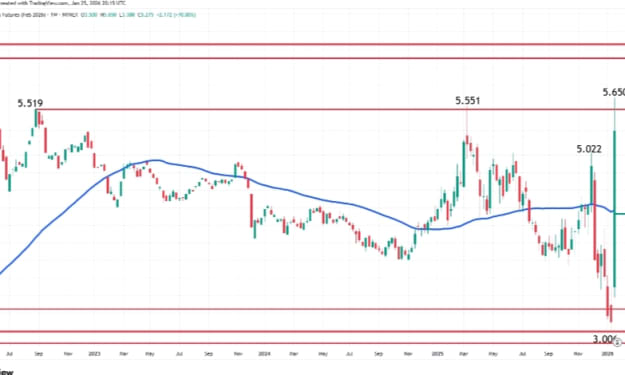
The Numbers: Both Contracts Soared, But February Doubled March’s Gain. AI-Generated.
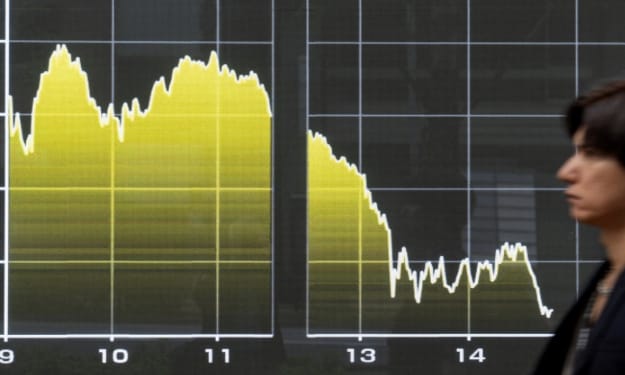
WeFinancial markets are always under scrutiny, with investors closely watching contracts, futures, and gains to make informed decisions. Recent market reports indicate a fascinating development: both contracts saw significant gains, but February’s increase was double that of March. Understanding the dynamics behind these numbers can provide insight into market behavior, investor sentiment, and potential strategies for the coming months.
By Aarif Lashari16 days ago in The Swamp
Saudi Arabia to Scale Back Flagship NEOM Project. AI-Generated.
In 2017, Saudi Arabia unveiled NEOM, a futuristic megaproject designed to redefine urban living. Promoted as the crown jewel of Vision 2030, the initiative promised smart cities, high-tech hubs, luxury resorts, and innovations such as The Line, a 170-kilometer car-free city stretching across the desert. It was a bold statement: Saudi Arabia was not just aiming to diversify its economy away from oil, but to become a global hub for innovation and sustainable living. Fast forward to 2026, and reports indicate that the kingdom is scaling back NEOM, shrinking or redesigning key elements of the project in response to soaring costs, delays, and shifting economic priorities. The changes reflect a new era of pragmatism, where even the most ambitious visions must contend with real-world constraints. The Vision That Captivated the World When first announced, NEOM was unlike anything ever attempted. Spanning an area roughly the size of Belgium along Saudi Arabia’s Red Sea coast, it promised futuristic infrastructure, carbon-neutral energy, and technology-driven cities. The centerpiece, The Line, was envisioned as a skyscraper-like linear city housing millions of residents, where self-driving transportation and vertical living would revolutionize urban life. Investors and analysts around the world marveled at NEOM’s ambition. It was not just a city; it was a symbol of Saudi Arabia’s intent to redefine its global image and economic future. (newarab.com) Why NEOM Is Being Scaled Back Recent reports reveal that Saudi officials are dramatically downsizing NEOM and revising timelines for major components like The Line. Multiple factors are driving this change: Escalating Costs and Budget Pressures The NEOM project has experienced billions in cost overruns, making it one of the most expensive development projects in the world. The ambitious design and technological requirements placed enormous strain on the kingdom’s finances. Economic Reality and Oil Revenue Fluctuations Oil remains the backbone of Saudi Arabia’s economy, and fluctuating global oil prices affect government revenue. With other high-profile projects like Expo 2030 and preparations for the 2034 FIFA World Cup, NEOM faces stiff competition for limited public funds. Project Delays and Logistical Challenges Building a city of this scale in a desert environment, incorporating cutting-edge technology, and ensuring sustainability has proven extremely difficult. Delays and technical obstacles have forced planners to rethink the original timeline. Shift Toward Feasible Investments Saudi Arabia is recalibrating NEOM to focus on areas with immediate economic or strategic value, including tech hubs, renewable energy, and industrial zones, while deprioritizing some of the more visionary, but less achievable, elements. What’s Changing in NEOM The most visible changes affect The Line, which will no longer be built in its originally envisioned 170-kilometer stretch. Sources suggest planners are downsizing or breaking it into manageable segments, focusing on areas already under development. Other projects within NEOM are also being reshaped: Trojena ski resort, originally slated to host the 2029 Asian Winter Games, will be downsized and no longer serve as the main venue. Industrial hubs like Oxagon may see slower development, with priority given to sectors like renewable energy and digital innovation. These adjustments demonstrate a shift from visionary ambition to practical implementation, aiming for sustainable progress rather than headline-grabbing statements. (ft.com) Leadership Changes and Strategic Realignment Leadership at NEOM has also evolved. Longtime CEO Nadhmi al-Nasr stepped down, replaced by Aiman al-Mudaifer, signaling a new phase for the project. Analysts suggest that the new management is focused on streamlining operations, cutting unnecessary costs, and delivering tangible results in line with national economic priorities. Population projections for The Line have also been revised downward, reflecting a more realistic approach to urban planning in the desert environment. While still ambitious, NEOM’s scaled-back vision emphasizes financial feasibility and long-term sustainability. Why NEOM Still Matters Scaling back NEOM does not mean abandoning Saudi Arabia’s economic transformation goals. Instead, it reflects a pragmatic approach to megaproject development. Core elements of NEOM, such as green hydrogen production, renewable energy infrastructure, and technology hubs, continue to move forward. These areas align with Saudi Arabia’s broader vision of becoming a global center for innovation, balancing technological advancement with financial discipline. NEOM remains a symbol of the kingdom’s aspirations — just one that is evolving in a way that matches economic realities. Lessons from NEOM’s Redesign The NEOM adjustments highlight several key lessons: Even the most ambitious projects require realistic planning and budgeting. Vision alone cannot sustain a megaproject. Economic and geopolitical conditions influence development priorities. Saudi Arabia’s global investments must balance multiple demands. Innovation and sustainability must align with feasibility. Focusing on sectors that generate returns or strategic value is crucial for long-term success. In essence, NEOM’s evolution demonstrates that grand visions can coexist with pragmatic management, ensuring that even if some elements are scaled back, the project continues to shape Saudi Arabia’s future. Final Thoughts NEOM was always more than a city; it was a statement about Saudi Arabia’s future and global ambitions. While the project is being scaled back, this does not signal failure — it reflects a strategic realignment in the face of financial, logistical, and global pressures. The kingdom is proving that bold ideas can be adapted and implemented responsibly, focusing on sustainability and tangible progress. NEOM’s future, though less grandiose than originally envisioned, still promises to be a cornerstone of Saudi Arabia’s Vision 2030, blending innovation with practicality in pursuit of a modernized economy and global prominence. Saudi Arabia is learning that even dreams must evolve to survive, and NEOM’s recalibration may ultimately make the megacity stronger, smarter, and more sustainable than its initial blueprint suggested.
By Muhammad Hassan17 days ago in The Swamp
"Rescued Men Still Owe Hotel Bill Three Weeks Later: A Closer Look at the Dilemma. AI-Generated.
Introduction: Three weeks ago, a group of men were dramatically rescued from a perilous situation, sparking headlines around the world. The men, whose lives were in immediate danger, were saved by a heroic rescue operation, but their struggle didn’t end there. As they started to recover from their traumatic ordeal, they were faced with a financial burden that many had not anticipated: an unpaid hotel bill that had continued to grow during their stay.
By Ayesha Lashari18 days ago in The Swamp
"UK Introduces Major Police Reform: 'British FBI' to Oversee Terrorism and Fraud Investigations". AI-Generated.
Introduction The United Kingdom has recently announced a sweeping overhaul of its law enforcement structure, with a bold initiative aimed at tackling terrorism and fraud more effectively. As part of the reforms, a new national agency—often referred to as the ‘British FBI’—will take on the responsibility of leading investigations into these complex and high-stakes crimes. This move marks a significant shift in how the UK addresses national security threats, organized crime, and financial fraud.
By Ayesha Lashari18 days ago in The Swamp