finance
Money talks; reviewing the global economy, government spending, taxes, and economic policy that affect our social and political future.
IMF Steers Pakistan Toward Stability, Export-Led Expansion. AI-Generated.
Pakistan’s economy, long challenged by fiscal deficits, inflationary pressures, and external debt obligations, is receiving renewed attention from the International Monetary Fund (IMF) as the country seeks a path to sustainable growth. Recent engagements between Islamabad and the IMF highlight a strategic approach: stabilizing the macroeconomic environment while promoting export-led expansion to strengthen foreign reserves, create jobs, and reduce dependency on external borrowing.
By Salaar Jamali2 days ago in The Swamp
Norway Wealth Fund Boosts US Treasury Holdings Despite Government Debt Concerns. AI-Generated.
Norway’s sovereign wealth fund, the world’s largest, has once again signaled confidence in the US Treasury market by increasing its holdings of American government debt, even as concerns over ballooning US deficits and mounting national debt loom large. The move highlights the fund’s long-term investment strategy, which prioritizes stability, liquidity, and risk management over short-term political or economic headlines. Analysts see the decision as a vote of confidence in US debt as a safe-haven asset, despite rising concerns about fiscal sustainability.
By Salaar Jamali2 days ago in The Swamp
Copper Lurches to Record High Above $14,000 as Speculators Pile In. AI-Generated.
Subtitle Copper prices have surged past the historic $14,000-per-tonne mark, setting a new record and sending shockwaves through global commodity markets. Often referred to as “Dr. Copper” for its ability to signal the health of the global economy, the metal’s dramatic rally is being driven by a powerful mix of speculative enthusiasm, tightening supply, and long-term demand linked to energy transition and infrastructure growth. While the price spike has delighted investors, it has also raised concerns about volatility and sustainability.
By Salaar Jamali2 days ago in The Swamp
Gold Dips from Record Peak Amid Profit-Taking: Market Sees Sharp Pullback. AI-Generated.
Gold — the world’s most traded safe-haven asset — recently pulled back sharply from historic highs as investors engaged in heavy profit-taking, unwinding positions after an extended and intense rally. The recent correction reflects shifting risk sentiment, stronger dollar dynamics, and evolving macroeconomic expectations that have triggered volatility across commodities markets.
By Salaar Jamali2 days ago in The Swamp
Silver (XAG) Forecast: Outlook Turns Volatile as Speculative Buying Detaches From Demand. AI-Generated.
The silver market has captured global investor attention as prices surge to unprecedented levels, but beneath the headline numbers lies a story of intense volatility, speculative positioning, and a disconnect between price action and underlying physical demand. According to recent market analysis, the outlook for silver (XAG) — whether traded as bullion or via futures and ETFs — is entering an especially unpredictable phase, with speculative flows increasingly detaching from fundamental demand drivers.
By Salaar Jamali3 days ago in The Swamp
U.S. Government Shutdown. AI-Generated.
A U.S. government shutdown is one of the most visible signs of political deadlock in Washington. When it happens, it disrupts federal services, sends hundreds of thousands of workers into uncertainty, and creates ripple effects across the economy. Although the term often trends during moments of crisis, shutdowns are not rare events—they are the result of a specific budget process failing to reach completion.
By Saboor Brohi 3 days ago in The Swamp
Lloyds Q4 Results Beat Expectations by 9%. AI-Generated.
Lloyds Banking Group has reported a 9% profit beat in its fourth-quarter results, exceeding analysts’ expectations and demonstrating resilience in a challenging economic environment. The UK’s largest retail bank recorded robust earnings driven by higher net interest margins, disciplined cost management, and improved customer lending, signaling confidence in its strategic direction despite economic headwinds.
By Aarif Lashari3 days ago in The Swamp
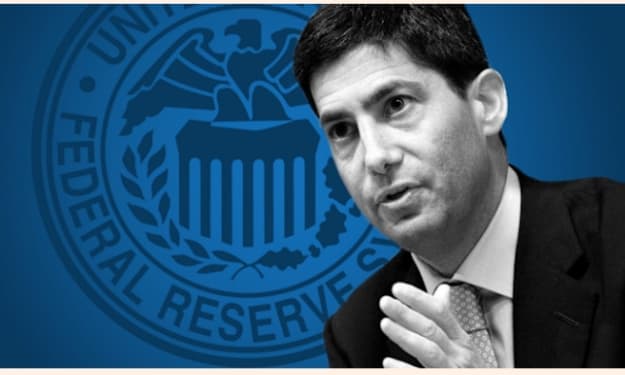
US Dollar Strengthens as Trump Nominates Kevin Warsh as Federal Reserve Chair. AI-Generated.
A Pivotal Moment for the Fed and the Dollar In a move that has captured global attention, President Donald Trump nominated Kevin Warsh to serve as Chair of the U.S. Federal Reserve. The decision immediately sent ripples through the financial markets, with the U.S. dollar strengthening sharply, treasury yields rising, and investors reassessing their expectations for monetary policy in the coming months. The Fed, the United States’ central bank, plays a critical role in shaping the economy, controlling inflation, and influencing global financial markets. As such, the nomination of a new Fed Chair is more than a political decision—it is a signal to markets, businesses, and international observers about the future direction of U.S. monetary policy. Kevin Warsh, known for his experience during the 2008 financial crisis and his reputation as a market-savvy economist, brings a particular philosophy to the role, which investors believe will influence the dollar and broader markets. Kevin Warsh: Background and Experience Kevin Warsh’s career has been defined by high-stakes financial environments and navigating economic crises. His background includes: Education at Harvard University, where he earned a degree in Economics Early experience in investment banking and financial consulting, providing him insights into market mechanics Senior advisory roles in the Federal Reserve, where he contributed to policy decisions during periods of market volatility Warsh’s professional trajectory has made him well-versed in the mechanics of monetary policy and risk management, positioning him as a credible choice for a Fed Chair during a period of global economic uncertainty. Why Markets Reacted to the Nomination 1. Dollar Strengthening The most immediate market reaction to Warsh’s nomination was a strengthening of the U.S. dollar against major currencies. Analysts attribute this to several factors: Hawkish Expectations: Warsh is perceived as more inclined toward tightening monetary policy, controlling inflation, and maintaining the strength of the dollar Investor Confidence: Markets interpret his experience during previous financial crises as an ability to maintain economic stability, which increases confidence in U.S. assets Interest Rate Anticipation: A stronger dollar typically reflects expectations of higher interest rates relative to other economies The dollar’s movement has implications for imports, exports, and global financial flows. A stronger dollar can reduce import costs for American consumers, but may also pressure emerging market economies and commodity prices. 2. Treasury Yields Rise Alongside the dollar, U.S. Treasury yields climbed, reflecting investor expectations that Warsh may advocate for interest rates that prevent overheating of the economy. Rising yields often: Make borrowing more expensive for corporations and consumers Attract foreign investment into U.S. government bonds Signal market confidence in the Fed’s ability to manage inflation The combination of higher yields and a stronger dollar underscores investor belief in Warsh’s commitment to financial stability. 3. Stocks and Risk Assets Equity markets showed mixed reactions. While some sectors, particularly financials, welcomed the prospect of a more predictable monetary policy, other risk assets, including technology stocks and cryptocurrencies, experienced modest declines. A tighter monetary policy can affect: Growth-sensitive sectors like tech and real estate Non-yielding assets such as gold and silver, which fell in value as investors moved toward interest-bearing assets These movements reflect the complex balance markets strike between stability, growth, and interest rate expectations. Kevin Warsh’s Policy Philosophy Warsh is known for a balanced, data-driven approach, combining market awareness with caution. Analysts highlight key aspects of his likely policy stance: Inflation Control: Warsh has historically emphasized preventing runaway inflation, which could strengthen the dollar and support long-term growth Financial Stability: His experience in crisis management suggests a focus on risk mitigation in banking and markets Measured Decision-Making: Warsh is not expected to make sudden or unpredictable policy moves, which markets typically favor This philosophy explains why traders and investors reacted with a positive sentiment for the dollar, seeing his nomination as a sign of steady and competent economic stewardship. Global Implications of the Nomination The Fed Chair’s decisions impact not only the U.S. economy but also the global financial system: Emerging Markets: Rising U.S. yields and a stronger dollar could pressure debt-servicing costs in countries with dollar-denominated debt Commodity Prices: Metals, oil, and other commodities often react to a stronger dollar, affecting global supply chains International Trade: Exporters may face challenges as their goods become more expensive for U.S. consumers Kevin Warsh’s leadership may therefore reshape international markets depending on his approach to interest rates and monetary policy. Historical Context: Fed Chairs and Market Confidence The Fed Chair’s role is unique because their statements and policy actions directly influence market psychology. For example: Alan Greenspan: Known for his careful guidance during volatile periods, instilled confidence in markets Ben Bernanke: Guided the Fed through the 2008 financial crisis, emphasizing crisis response Janet Yellen: Focused on gradual policy shifts, balancing growth and inflation Warsh, shaped by the 2008 crisis, is expected to combine analytical rigor with market prudence, reassuring investors that the Fed will act responsibly. Why the Dollar Reacted So Quickly Market participants often price in expectations long before policies take effect. Warsh’s nomination likely caused immediate reactions due to: Perceived hawkishness: Investors anticipate tighter monetary policy Crisis credibility: His past experience suggests a capable steward of the economy Market psychology: Traders adjust positions quickly to reflect potential Fed moves The speed of the reaction is typical for high-stakes financial news, where sentiment and perception can move markets faster than policy itself. Potential Risks and Challenges While the nomination has been positively received, there are risks: Global Economic Volatility: Rising rates could slow global growth and impact trade Political Pressures: The Fed must maintain independence, even as political narratives around Warsh’s appointment emerge Market Overreaction: Investors may have priced in too much optimism, risking a correction if policies differ from expectations These risks mean that Warsh will need to balance market expectations with real economic conditions, a delicate task for any Fed Chair. The Road Ahead for Investors Investors and financial planners are advised to: Monitor Treasury yields and dollar movements closely Prepare for potential interest rate adjustments affecting loans, mortgages, and investments Assess the impact on commodities, emerging markets, and equities Follow Warsh’s early speeches and Fed statements for guidance Long-term, Warsh’s tenure may stabilize the U.S. dollar, influence global markets, and reshape investor strategies worldwide. Conclusion: A Critical Juncture for U.S. Monetary Policy Kevin Warsh’s nomination as Federal Reserve Chair is more than a political choice—it is a market-moving event with immediate and far-reaching implications. The dollar’s strength, rising yields, and cautious equity responses reflect a combination of expectation, confidence, and strategic anticipation. As Warsh prepares to take the helm, the world watches closely. His decisions will not only influence domestic growth and inflation but also global financial stability, investor sentiment, and international trade flows. In a period marked by economic uncertainty and market sensitivity, Warsh’s leadership will be a key factor in determining whether markets remain calm or face volatility, making this nomination one of the most consequential for investors in recent years.
By Zahid Hussain3 days ago in The Swamp
Kevin Warsh: The Fed Chair Nominee Forged by the 2008 Financial Crisis. AI-Generated.
A New Chapter in Federal Reserve Leadership As the United States continues to navigate a complex economic landscape, Kevin Warsh has emerged as a prominent figure. Recently nominated to serve as Chair of the Federal Reserve, Warsh’s appointment is being closely watched by economists, investors, and policymakers alike. His career trajectory, shaped significantly by the 2008 financial crisis, offers insights into how crisis management can define a generation of economic leaders. Early Life and Education Kevin Warsh was born in the late 1970s and displayed early aptitude in economics and finance. His educational path includes: Harvard University, where he earned a degree in Economics Additional studies in public policy and finance, sharpening his understanding of macroeconomic systems These formative experiences equipped him with the analytical tools necessary to navigate volatile economic conditions later in his career. Career Beginnings: From Wall Street to Public Service Warsh’s professional journey began in investment banking and financial consulting, where he gained firsthand experience in financial markets. However, his move into public service marked a turning point: He joined key financial advisory roles, advising policymakers on banking regulation and economic policy His early experience during the dot-com bubble and the housing market fluctuations provided a solid foundation for understanding systemic risk By the time the 2008 financial crisis struck, Warsh was already positioned to play a significant role in shaping policy responses. The 2008 Financial Crisis: Defining Moment The 2008 global financial crisis tested the resilience of the U.S. economy and the world at large. Kevin Warsh became a key advisor in navigating the crisis: He worked on strategies to stabilize the banking system Contributed to the Federal Reserve’s emergency measures Provided input on monetary policy decisions, including interest rate adjustments and liquidity injections Observers note that this period was formative for Warsh, forging his reputation as a crisis-ready economist. His hands-on involvement gave him deep insights into systemic vulnerabilities and the importance of proactive policy intervention. Nomination to Federal Reserve Chair Kevin Warsh’s nomination as Fed Chair reflects confidence in his experience and strategic thinking. Analysts expect him to: Address inflationary pressures while supporting economic growth Oversee monetary policy adjustments with a keen understanding of market reactions Promote financial stability, drawing on lessons from previous crises His leadership style is described as analytical, cautious, and forward-looking, qualities shaped by the high-stakes environment of 2008. Economic Philosophy and Policy Approach Warsh is known for a balanced, data-driven approach to economic policy: Emphasis on financial stability: He prioritizes reducing systemic risk while supporting growth Pragmatic monetary policy: Decisions are guided by empirical data rather than ideological biases Focus on long-term planning: Recognizes the need to anticipate market shifts and structural changes This philosophy positions him as a Fed Chair capable of navigating both short-term shocks and long-term challenges. Challenges Ahead Warsh faces a complex economic environment: Inflation fluctuations post-pandemic Global economic uncertainty, including trade tensions and geopolitical risks Technological disruption in financial markets, including digital currencies and fintech innovations His experience during the 2008 crisis may provide a roadmap for managing unexpected economic turbulence while maintaining public and market confidence. Criticism and Public Perception While Warsh has strong credentials, some critics highlight potential concerns: Connections to Wall Street could raise perceptions of bias toward financial institutions His measured, analytical style may be seen as less bold during urgent crises Navigating political pressures from Congress and the Executive branch could challenge independence Supporters, however, argue that experience during past crises outweighs these concerns, positioning him as a competent and steady leader. Impact of His Leadership If confirmed, Kevin Warsh’s tenure could influence: Interest rates and borrowing costs for businesses and consumers Financial regulations, potentially strengthening safeguards against systemic risks Global confidence in U.S. economic policy, especially among international investors His leadership may also set precedents for how future Fed Chairs respond to economic shocks and crises. Lessons from Kevin Warsh’s Career Warsh’s journey offers several takeaways: Crisis shapes leaders: Real-world challenges provide practical experience that cannot be replicated in textbooks Analytical thinking is essential: Data-driven approaches are crucial for complex economic decisions Resilience matters: Long-term success in economic policy requires the ability to adapt under pressure For aspiring economists and policymakers, Warsh exemplifies how experience, preparation, and analytical rigor combine to form effective leadership. Conclusion: A Fed Chair Forged by Crisis Kevin Warsh’s nomination as Federal Reserve Chair is not just a career milestone—it symbolizes the rise of a generation of economic leaders molded by financial crises and global uncertainty. His experience, particularly during the 2008 financial meltdown, gives him a unique perspective on risk management, monetary policy, and systemic stability. As the U.S. faces new economic challenges, Warsh’s leadership will be closely watched, both domestically and internationally. The lessons from his career highlight the importance of preparedness, insight, and adaptability, qualities essential for navigating the complex world of modern finance.
By Zahid Hussain3 days ago in The Swamp
Gold Slumps as Bets of a More Hawkish Fed Chair Rise; Set for Best Month Since 1982. AI-Generated.
Gold, long seen as a go-to safe-haven asset in times of economic stress, experienced dramatic swings in late January 2026 as market participants reacted to expectations surrounding the future leadership of the U.S. Federal Reserve and potential shifts in monetary policy. Although prices slipped sharply during trading on January 30, bullion remains poised for its strongest monthly performance in over four decades—a rare mix of price volatility and enduring strategic demand.
By Salaar Jamali3 days ago in The Swamp
Gold Continues to Surge: JPMorgan Sees a Scenario Where It Tops $8,000. AI-Generated.
Gold’s relentless rise has reignited one of the oldest debates in financial markets: how high can the world’s most trusted store of value really go? As prices continue to climb, analysts at JPMorgan have outlined an extreme but plausible long-term scenario in which gold could surge beyond $8,000 per ounce, a level that would once have seemed unthinkable.
By Salaar Jamali4 days ago in The Swamp
China's Net Gold Imports Through Hong Kong Fall 24% in December, but Premiums and Retail Demand Soar in January. AI-Generated.
China’s gold market sent mixed signals at the turn of the year. Net gold imports through Hong Kong — a key conduit for bullion flows into mainland China — fell by 24% in December, reflecting a seasonal slowdown and tighter price conditions. Yet by January, domestic premiums jumped and retail demand surged, underscoring resilient appetite among Chinese consumers and investors despite global price volatility.
By Salaar Jamali4 days ago in The Swamp