history
Past politicians, legislation and political movements have changed the course of history in ways both big and small. Welcome to our blast to the past.
Separation of Church and State
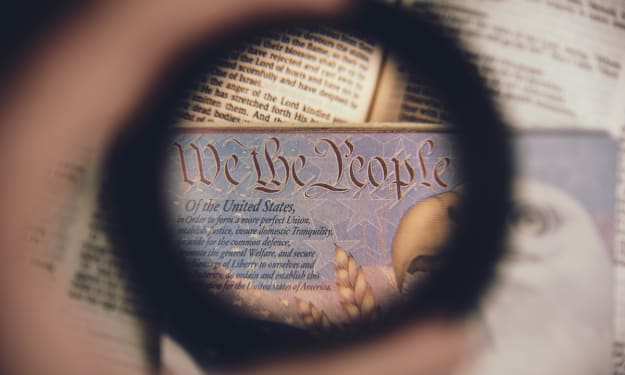
The United States has always been the first country to be about the separation of Church and State. Thomas Jefferson used the term “wall of separation between church and state,” in a letter to the Danbury Baptist Association in 1802. This means that the State is supposed to stay out of the church’s business. Yes, Christianity is the religion of our heritage, but the entire point of keeping Church and State separate is to maintain objectivity. While the Founding Fathers were Christian, they feared a state religion taking over the country. They really did demand a separation of Church and State.
By Iria Vasquez-Paez7 years ago in The Swamp
Northern Ireland Conflicts
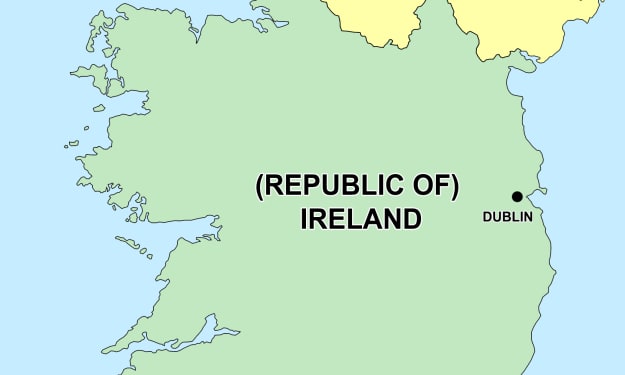
The Northern Ireland Conflicts took place between 1969 and 1994, but their effects are still felt today for many of the people in Northern Ireland. The armed conflicts started over whether Northern Ireland was constitutionally part of the United Kingdom or should be part of the Republic of Ireland with the southern half. Members of the majority Protestant community favored being a part of Britain, while minority Catholics wanted to become one Ireland with the south. The Civil Rights movement tried to end the discrimination against the minority Catholics, but ultimately failed, leading to the armed conflicts, which left 3,500 people dead, an estimated 50,000 injured, and thousands of people imprisoned. The conflict was supposed to end when a ceasefire was declared in 1994, but this did not actually do anything to resolve the issues that had started the violence. Even though Northern Ireland was now supposedly at peace, the people had spent so much time using violence to get their way, that the use of force was still locally used to solve problems. (Jarman 2011) These ideas of violence and conflict are what change the childhoods of children in Northern Ireland. In the 1980s, people, including children, had to undergo body checks when entering large stores in order to prevent bombs from being smuggled in. Also, to prevent car bombings, city centers were often closed off to traffic or else cars could be parked but never left unattended. Thus, children were left in the cars while parents shopped as, “a living symbol that their car at least does not contain a bomb.” (Cairns 1987) Growing up in a world where you are used as a pawn to show there isn’t a bomb in your car or being searched when all you needed was some new clothes, would be enough to change anyone’s views of childhood.
By Kristen Barenthaler7 years ago in The Swamp
Delaware: The Rodney Dangerfield of States
On a date that occurred over 231 years ago today (December 7, 1787), Delaware (my birth state) came into being. Because of figures like George Reed, Gunning Bedford, Jr., John Dickinson, and Richard Bassett, there's such a thing as Delaware. The vote for Delaware to be a state stood as unanimous, 30 to zero. Now, some will say that the First State claims its moniker based on a technicality. History proves this to be wrong as evident by the fact that Virginia was the first colony, but not the first state.
By Skyler Saunders7 years ago in The Swamp
The Cold, Hard Truth About the Democratic Party
When this generation thinks of racism and socioeconomic inequality, their thoughts immediately lean towards the Republican party. This actually could not be further from the truth. Historically, the Republicans have opposed racism and socioeconomic inequality. Truthfully, it was the Democrats that supported slavery, created the Ku Klux Klan, imposed Jim Crow laws, and fully backed segregation for over 100 years in the Southeastern United States. (Prager U) Technically, your history textbooks from middle and high school are full of lies when they discuss the history of the Democratic party. To add insult to injury, the media doesn't help much either. To further understand, we need to look back 46 years before the Civil War.
By Devin Nassar-Reis7 years ago in The Swamp
US Involvement in the Middle East Is a Double-Edged Sword—Here's Why
When Americans think of the Middle East in the present day, we immediately think of bloodshed and violence. The Fertile Crescent was home to various empires that spanned several nations, with Babylonia, Assyria, Persia, Canaan and Phoenicia later becoming autonomous countries that would remain enemies millennia later; the nations that are now Iraq, Syria, Iran, Israel and Lebanon will possibly remain both political, cultural, and religious rivals for centuries more. As complex as the history of the Cradle of Civilization may sound from the average point of view, it is actually quite simple to explain: one area wants the other dead or suffering. For example, countries aligned with Israel and Saudi Arabia want nations aligned with Palestine and Syria to be either nonexistent or poverty-stricken. United States involvement can have both positive and negative outcomes. Backing the deposition of a dictator can result in either prosperity and peace or rampant poverty and brutal dictatorships. Although the region has been rife with conflict for thousands of years, Western involvement is truly a double-edged sword. As stated in a recent PragerU video made by Dennis Prager, “It’s simple. One side wants the other dead.” All of the benefits have their disadvantages.
By Devin Nassar-Reis7 years ago in The Swamp
1968: The Assassination of Martin Luther King Jr.
There is no figure more celebrated in the work he did for civil rights than Martin Luther King Jr. His death on April 4, 1968, due to an assassin’s bullet, left the nation and especially the black community hopeless.
By Shandi Pace7 years ago in The Swamp
What If Part II: America
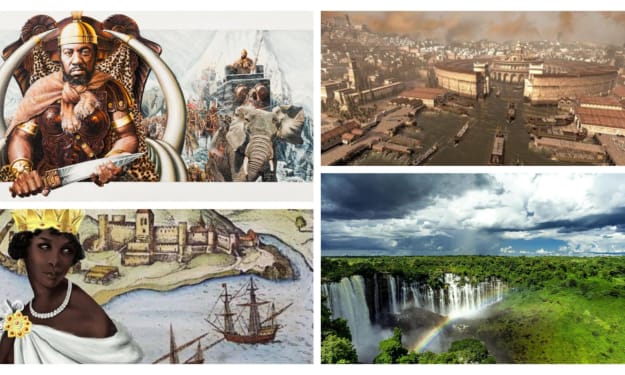
The African holocaust began during the 17th century when Europeans decided to enslave Africans for the transatlantic slave trade in the Americas. The Africans never saw themselves as slaves, but prisoners of war. After 400 years in bondage, the Africans became free, but faced new challenges from discriminatory racist practices and laws.
By Darryl C. Richie7 years ago in The Swamp
Shaping the Minds of Americans: The Media and the Iran Hostage Crisis
"The days after September 11th." This phrase has emerged nationally as its own political shorthand for a positive moment of comity in the United States that occurred after the devastating terrorist attacks on American soil. The days after 9/11 are generally described as days of unity, when Americans came together and supported each other and their nation. This unity can be tracked through the approval ratings of President George W. Bush which were the highest Gallup’s approval ratings in history with nearly nine in ten Democrats and independents approving of the Republican president. It was not until one year later when significant changes had occurred in approval ratings and when the nation returned to its former habit of division; so, the question remains, how did the nation persist in unity for such a period? Simply put, it was the power of American media. The coverage of the events on September 11, 2001 is just one example of how the media gravitates towards harmony and peace within the nation when faced with true terror.
By quinn riley7 years ago in The Swamp
Presentation at White Plains Library Documents Germany’s Official Remembrance Policy of the Holocaust
The genocide of Jews in Germany is certainly not unique in world history. The Rape of Nanking, Rwanda, and Manifest Destiny tally a short list that the perpetrating nations would officially like to forget. But in that aspect, Germany stands alone. So the Holocaust and Human Rights Education Center in Purchase offered a presentation last Thursday at the White Plains Library to acknowledge the manner in which the atrocity is remembered as policy by a nation.
By Rich Monetti7 years ago in The Swamp
Tiananmen Square Massacre
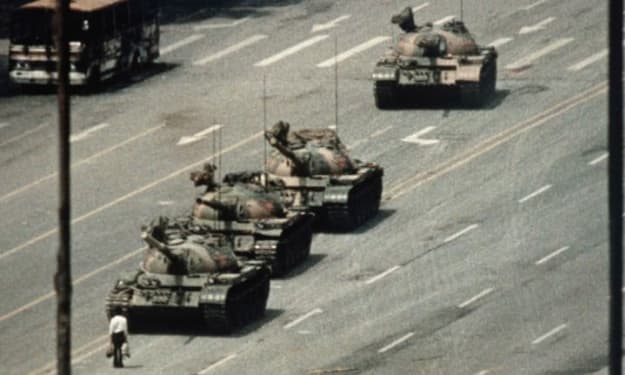
Before we enter the nitty gritty aspects of what occurred on the fourth of June, there is some important background. Following the death of Mao Zedong in 1976, the Cultural Revolution also came to an end. It was a socio-political movement led by Zedong between 1966 and 1976 and its stated goal was to preserve "true" Communist ideology in the country by purging remnants of capitalist and traditional elements from Chinese society. This movement led to severe damage to China’s economy and the country was mired in poverty as economic production slowed down to such an extent it effectively was at a halt. At a Communist election meeting, Deng Xiaoping emerged as China’s de facto leader. To repair China’s broken economy, Deng implemented a comprehensive program, which refers to the reforms termed "Socialism with Chinese characteristics."
By Rushat Chandra7 years ago in The Swamp