history
Past politicians, legislation and political movements have changed the course of history in ways both big and small. Welcome to our blast to the past.
The Origins of the Term Socialized Medicine and How Mad Men Sank Our Chance for National Healthcare in 1948
Back in 2008, the smoke cleared, we wiped our noses, and finally got healthcare reform. Gesundheit!! Well, sort of… With a universal acceptance of a system in dire need of repair, I envisioned congress intelligently fighting it out. As a result, the best of both worlds would create compromise that could not be beholden to any one political ideology or sustainable business model. Oh my God, what was I smoking back then?
By Rich Monetti8 years ago in The Swamp
Please Don’t Forget
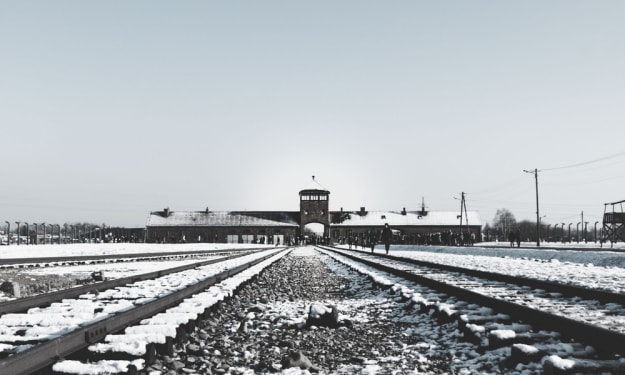
I just read an article by the Washington Post that states surveys show two-thirds of Millenials don’t know what the Holocaust is. At first, I was almost in shock and I thought, “That can’t be right.....?” But now I’m mostly just angry. Angry that we are letting such a crucial piece of history - of our story! - fade away into the boring, dusty pages of an outdated history book. Is that truly all history is to some people? Just a homework assignment to skim over and then forget after the test?
By Kimberly Alcorn8 years ago in The Swamp
The Nazi T4 Program
This was a program of mass euthanasia targeted at disabled people of all kinds, just because they had a disability and were viewed as unfit. In modern times, disabled people are paid sub-minimum wage on the job, depending on how functional they are, which is similar to the equal work for women problem. So if you are female and disabled in some way you get paid less. Eugenicists called disabled people “life unworthy of life,” which in a modern context seems horrible. Before they started on the Jewish people, the Nazis went after disabled people to perfect their mass genocide plan. The term “t4” was named after the physical address of the program, in Berlin, Tiergartenstrasse 4.
By Iria Vasquez-Paez8 years ago in The Swamp
Confederate Flags, Kneeling, and the USA: Part 2
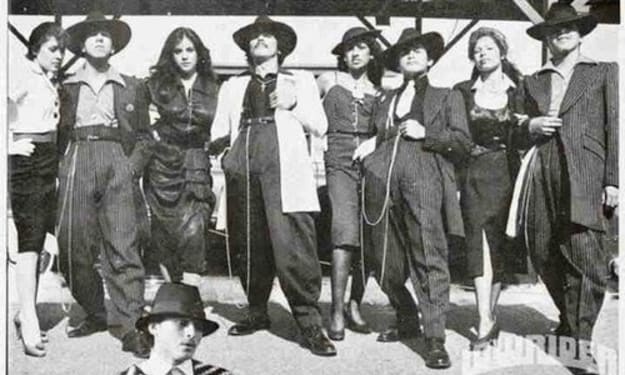
One of the examples I can give is the Zoot Suit Riots in 1943. In the 1930s the US deported between 500,000 and two million people, including up to 1.2 million legal people of Mexican descent (illegally, I might add) so that they could ease the strain on the economy at the time. Many Latinos and Mexicans resided in historic areas. More recent immigrants joined them as they were segregated to part of the town which was the worst from housing to financially. In L.A., the newspapers ran articles using derogatory terms to describe the Hispanic and Latino communities, and urged that the teens were rampant troublemakers. Sound Familiar? This caused severe discord between the Caucasians and the minorities such as Mexicans and Latinos.
By James Howell8 years ago in The Swamp
Confederate Flags, Kneeling, and the USA: Part 1
There seems to be a lot of controversy in the world today. We have protests on both sides, civil unrest, innocent people being murdered, and we don’t have a clue how to stop it. It is, in my opinion, a socio-economic and equality issue. “If we can keep the people poor and enslaved, they can’t rise up.”
By James Howell8 years ago in The Swamp
Scapegoat
Throughout history leaders have always tried to put blame on others for their rationale. Whether their ventures were successful or not, the decisions they made affected so many others in ways that seem almost incomprehensible. History is full of incidents where people of authority take great pains to put blame on certain individuals who to no fault of their own did what was required of them. This is especially true in times of great adversity and yet when tragedy struck they are accused and too often convicted through their actions as the cause of that tragedy. It has been proven time and time again these accusers were actually trying to cover-up from their own inefficiency.
By Dr. Williams8 years ago in The Swamp
5 Close Calls to Nuclear War
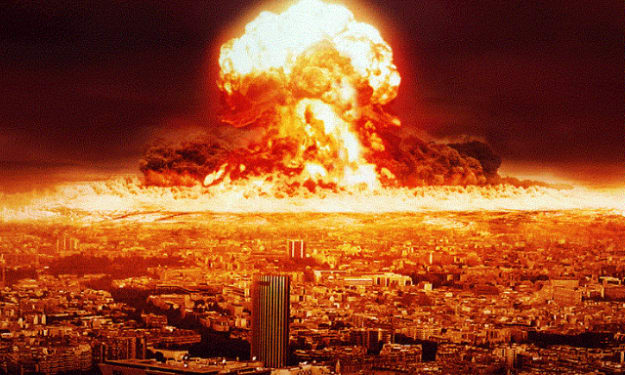
With the possibility of North Korea constructing and using a nuclear missile against South Korea, Japan, or the United States, perhaps we should look back into history during the days of the Cold War on the five closet calls to Armageddon before and how we managed to avoid it.
By Joseph Pecher8 years ago in The Swamp
The Role of International Institutions in Determining the Outcome of the Events of the Kosovo War, Leading up to, and Including, the Kosovo Declaration of Independence from Serbia
Kosovo became the seventh state to declare independence from Serbia (which was a part of former Yugoslavia) on February 17th, 2008, after a war riddled with human rights violations and controversy regarding the role that international institutions such as the UN and NATO played in attempting to resolve the conflict. It had been a part of Serbia within the former Yugoslavia Confederation since 1946, but there had been tensions between the Serbian majority and Albanian minority (in Yugoslavia) for years, since Yugoslav president Slobodan Milosevic came into power (as president of Serbia from 1989-1997 and as president of Yugoslavia from 1997-2000) and had started oppressing Albanians through his nationalist policies. In July 1990, ethnic Albanians declared independence, which ultimately failed and led to Milosevic stripping the right of Kosovar autonomy laid out in the 1974 constitution and the dissolution of the government of Kosovo. In March-September 1998, after nearly five years of tensions, the Albanian Kosovo Liberation Army (KLA) and Serbian police began to engage in violent clashes which led to NATO giving president Milosevic an ultimatum to stop the brutal Serbian crackdown on Kosovar Albanians. When that didn’t happen, NATO commenced airstrikes against the Serbs and the Kosovo War continued, eventually ending in failed peace talks and a Kosovar declaration of independence from Serbia, nearly ten years later.
By Chloe Holmes8 years ago in The Swamp
The Best Political Cartoons from the 1800s
Sometimes claiming to be messages to the president of their times, otherwise becoming satirical in nature of their very period, more often than not reshaping the very climate of policy and diplomacy in the range of world politics, caricatures, or cartoons, are the very promise of a smile in a time of fearful resentment. It is no different among the canals of misshapen abolitionist violence and civil unrest so associated with the 1800s, in which a time of peace soon became a time of war in many parts of the world, as with the American Civil War and the French inner-fighting between that of Bonaparte and Pitt. Though none will come as close as the satire on American politics made by the "Join or Die" cartoon drawn by none other than Benjamin Franklin, the following examples should give reference to the very quintessential of all cartoons that helped draw a line between the unfavorable and unlikable dimensions of government outreach.
By Donald Gray8 years ago in The Swamp
Propaganda: Better With or Without It?
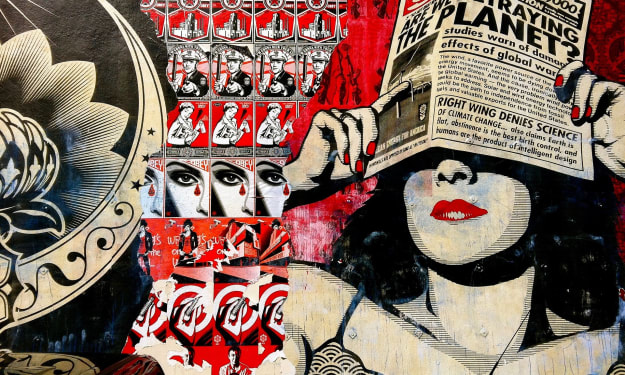
“Propaganda is indifferent to truth and truthfulness, knowledge and understanding; it is a form of strategic communication that uses any means to accomplish its ends.” (Walter Cunningham). Humanity, always going forward to the future, living in the world of present and looking in the old window of history, can track the evolution of propaganda and its transformation into various types of mass media for many different purposes. This form of information has emotional impact that attempts to shape perceptions, influencing the attitude of a population and manipulating cognitions always toward some political, ideological, or commercial causes.
By Gregory Swetly8 years ago in The Swamp