politicians
Reviews of the politicians kissing babies and running governments around the world; applaud and criticize the decisions they make and their implications.
US Gave Ukraine and Russia a June Deadline to Reach Agreement to End War, Zelenskyy Says. AI-Generated.
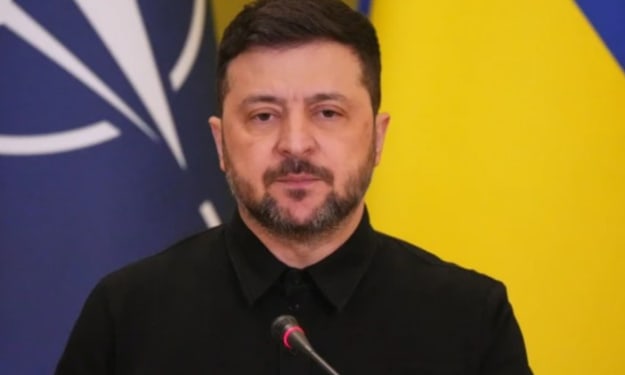
The war between Ukraine and Russia may be approaching a critical diplomatic crossroads. Ukrainian President Volodymyr Zelenskyy has revealed that the United States has set a June deadline for both Kyiv and Moscow to reach an agreement aimed at ending the conflict. While fighting continues on the ground, this timeline signals a renewed and more assertive push by Washington to move the war from the battlefield to the negotiating table. According to Zelenskyy, the deadline is not merely symbolic. It comes with a clear message: if progress is not achieved by June, the United States is prepared to increase pressure on both sides to force movement toward a settlement. This announcement has sparked intense discussion among analysts, diplomats, and citizens alike, as it raises hopes for peace while also highlighting the immense challenges that remain. Why the June Deadline Matters Deadlines in diplomacy are rare, especially in conflicts as complex as the Ukraine–Russia war. By setting a clear timeline, the U.S. appears to be signaling that the status quo—continued fighting, rising casualties, and mounting economic costs—is no longer acceptable. From Washington’s perspective, the war has become a long-term drain on global stability. It has disrupted energy markets, strained alliances, and deepened geopolitical divisions. A June deadline suggests that the U.S. wants tangible results within months, not years, and is willing to use diplomatic and political leverage to get there. For Ukraine and Russia, the deadline raises the stakes. Negotiations that once felt open-ended now come with a clock ticking loudly in the background. Zelenskyy’s Position: Peace, But Not at Any Cost President Zelenskyy has consistently emphasized that Ukraine seeks peace, but not one that compromises its sovereignty or territorial integrity. In recent statements, he made it clear that certain Russian demands—particularly those involving Ukrainian withdrawal from occupied territories—remain unacceptable. Ukraine’s leadership is especially firm on issues related to the eastern regions and critical infrastructure. Zelenskyy has stressed the importance of reliable ceasefire mechanisms, protections for civilians, and guarantees that any agreement will actually be honored. Past attempts at ceasefires and partial agreements have often collapsed, leaving Ukraine skeptical of proposals that lack enforcement or international oversight. As a result, while Kyiv welcomes U.S. involvement and pressure, it remains cautious about rushing into a deal simply to meet a deadline. Russia’s Calculations and Reluctance On the Russian side, the picture is equally complicated. Moscow continues to pursue strategic objectives while signaling selective openness to talks. However, core disagreements—territory, security guarantees, and Ukraine’s future alignment with the West—remain unresolved. For Russia, agreeing to a deal by June may require concessions that could be framed domestically as weakness. This makes negotiations politically sensitive, even if economic sanctions and military costs are mounting. The U.S. deadline may therefore test how much pressure Russia is truly willing—or able—to absorb before adjusting its position. The Role of the United States as a Broker The U.S. has positioned itself as a central mediator in the latest phase of diplomacy. According to Zelenskyy, upcoming talks are expected to take place on U.S. soil, following earlier rounds in neutral locations that failed to produce breakthroughs. Washington’s role is not limited to hosting discussions. The deadline itself is a form of leverage, implying that continued inaction could lead to intensified diplomatic, economic, or political measures against whichever side is seen as obstructing progress. At the same time, the U.S. must balance its mediator role with its strong support for Ukraine, a dynamic that adds complexity to the process. Any perception of bias could undermine trust, while excessive pressure risks backfiring. Ongoing Fighting Underscores the Urgency While diplomats talk, the war continues to exact a heavy toll. Recent attacks on energy infrastructure have caused widespread power disruptions in Ukraine, affecting millions of civilians. Military casualties continue to rise on both sides, and displacement remains a persistent humanitarian crisis. These realities give the June deadline added weight. Every delayed agreement means more destruction, more loss of life, and deeper long-term consequences for the region. For ordinary Ukrainians, the idea of a firm timeline offers a fragile sense of hope—tempered by the painful memory of past negotiations that failed to stop the fighting. Can a Deadline Deliver Peace? The key question remains whether a deadline can actually force progress in a war defined by deep mistrust and incompatible demands. Optimists argue that external pressure, especially from a powerful actor like the U.S., can break diplomatic deadlock. Pessimists warn that rushed negotiations may produce fragile agreements that collapse under pressure. What is clear is that June now looms as a defining moment. If talks succeed, it could mark the beginning of the end of one of the most consequential conflicts of the 21st century. If they fail, the deadline may simply become another missed opportunity, followed by intensified pressure and prolonged war.
By Jameel Jamali2 days ago in The Swamp
For Serbia’s Muslim Students, Protest Brings a Long-Missing Sense of Belonging. AI-Generated.
In Serbia, public protests have long been associated with political change, economic frustration, or demands for accountability. But for a growing number of Muslim students, recent demonstrations have carried a more personal meaning. Beyond slogans and banners, these protests have become spaces where young people feel seen, heard, and included in a society where they have often felt peripheral. Muslims make up a small but significant minority in Serbia, concentrated largely in regions such as Sandžak and parts of southern Serbia. Many Muslim students leave their hometowns to study in larger cities like Belgrade or Novi Sad, where cultural and religious differences can feel more pronounced. While university life offers opportunity, it can also heighten feelings of isolation, particularly in environments where minority identities are rarely reflected in public discourse. For these students, participation in protest movements has offered something unexpected: a shared civic identity. Standing shoulder to shoulder with fellow students from different ethnic and religious backgrounds, many Muslim participants describe feeling part of a broader collective for the first time. The protests, often centered on issues like education standards, political transparency, or civil rights, have created a rare space where identity is defined less by background and more by shared purpose. Several Muslim students have spoken about how protest participation changed their relationship with the state and society. Rather than feeling like observers on the margins, they felt like contributors to Serbia’s future. This shift may seem subtle, but in a country still shaped by the legacy of ethnic conflict and political polarization, it carries real weight. Universities have played a key role in this transformation. Student-led movements tend to emphasize inclusivity and solidarity, focusing on common struggles such as rising living costs, limited job prospects, and concerns about academic freedom. These issues cut across identity lines, allowing Muslim students to engage without feeling singled out or tokenized. For many participants, the protests also provided emotional affirmation. Public spaces in Serbia have not always felt welcoming to visibly Muslim individuals, particularly women who wear hijab. During demonstrations, however, students describe an atmosphere of mutual protection and respect. Shared chants and collective movement helped dissolve social barriers, even if only temporarily. This sense of belonging has had a ripple effect beyond the protests themselves. Muslim student groups report increased confidence in organizing discussions, cultural events, and civic initiatives on campus. The visibility gained through protest participation has encouraged some students to speak more openly about their experiences, both positive and negative, within Serbian society. Importantly, this moment has not erased longstanding challenges. Muslim students still face structural inequalities, underrepresentation, and occasional discrimination. Participation in protests does not guarantee lasting inclusion, nor does it resolve deep-rooted social tensions. However, it has opened a door—one that allows minority students to imagine themselves as active stakeholders rather than passive residents. Some students describe the protests as a form of civic education. Through organizing, debating, and negotiating differences, they learned how democratic engagement works in practice. For those who previously felt disconnected from national politics, this hands-on experience reshaped their understanding of citizenship. The protests have also challenged assumptions held by the broader public. Seeing Muslim students visibly engaged in movements advocating for shared national concerns disrupts simplistic narratives about loyalty or integration. It reinforces the idea that minority identities and civic commitment are not mutually exclusive. Faculty members and observers note that such moments are especially significant for young people. University years are formative, shaping how individuals relate to authority, community, and self-expression. When Muslim students find inclusion during this period, it can influence how they engage with society long after graduation. There is also a symbolic dimension to these protests. Public squares, streets, and campuses have historically been spaces where power dynamics are contested. For Muslim students to occupy these spaces confidently signals a quiet but meaningful shift. It asserts presence without confrontation, belonging without assimilation. The sense of unity experienced during protests may not be permanent. Movements lose momentum, demands evolve, and political realities intrude. Yet many students say the memory of collective action stays with them. Knowing that solidarity is possible, even if fragile, changes how they view both themselves and others. In a region where identity has often been used to divide, these protests offer a different narrative—one centered on shared aspirations rather than inherited differences. For Serbia’s Muslim students, the demonstrations have been more than acts of dissent. They have been moments of recognition. Ultimately, the significance of these protests lies not only in their political outcomes but in their social impact. They have shown that inclusion does not always begin with policy; sometimes it begins with standing together in public, demanding change, and realizing that one’s voice belongs there too. For Muslim students in Serbia, that realization has been powerful. It has transformed protests from events into experiences—and from expressions of frustration into affirmations of belonging
By Saboor Brohi 4 days ago in The Swamp
New Arms Race Looms as Clock Ticks Down on Last Russia-US Nuclear Treaty. AI-Generated.
The world is facing a growing threat of a renewed nuclear arms race as the clock ticks down on the last remaining major nuclear treaty between the United States and Russia. The New Strategic Arms Reduction Treaty (New START), which limits the number of deployed nuclear warheads and delivery systems for both countries, is set to expire soon, raising alarms among diplomats, military experts, and international security analysts. Signed in 2010 and extended in 2021 for five years, New START has long been viewed as a cornerstone of nuclear stability between the two largest nuclear powers. Its provisions allow for regular inspections, transparency measures, and caps on deployed warheads, providing a degree of predictability in an otherwise unpredictable global security environment. The Stakes of Expiration With the treaty’s expiration approaching, fears are mounting that a breakdown in arms control could spur both nations to accelerate nuclear weapons development. Analysts warn that without binding limits, the United States and Russia could enter a competitive cycle, rapidly expanding their arsenals and increasing the risk of miscalculations or accidental escalation. The potential consequences extend far beyond the two countries. Allies in Europe, Asia, and beyond could face heightened security concerns, prompting them to reconsider their own defense postures. Experts caution that a new arms race could also divert resources away from pressing global issues such as climate change, economic development, and conventional military preparedness. Drivers Behind the Tensions Several factors have intensified the risk of a renewed arms race. Geopolitical tensions between Moscow and Washington remain high, exacerbated by conflicts in Eastern Europe, cyber confrontations, and differing strategic priorities. Both countries are investing in modernizing their nuclear arsenals, including hypersonic missiles, submarine-launched systems, and advanced intercontinental ballistic missiles. These developments are compounded by the absence of new, comprehensive arms control frameworks. While New START has provided a temporary mechanism for stability, negotiations for successor agreements have stalled, leaving a vacuum in global nuclear governance. International Reactions and Concerns Global leaders and non-proliferation experts have voiced serious concerns about the treaty’s potential collapse. The United Nations and the International Atomic Energy Agency (IAEA) emphasize the importance of dialogue, urging both sides to extend or replace New START to maintain transparency and prevent escalation. Public sentiment also reflects apprehension. Citizens around the world are increasingly aware of the catastrophic consequences of nuclear conflict, and experts warn that a breakdown in arms control could heighten anxiety, undermine trust between nations, and destabilize already fragile security environments. Steps to Avoid a New Arms Race Efforts to prevent the looming arms race focus on diplomacy, transparency, and innovative arms control frameworks. Experts advocate for early and sustained negotiations that address both strategic stability and emerging technologies, such as hypersonic weapons and cyber capabilities that intersect with nuclear command systems. In addition, confidence-building measures—such as joint inspections, data exchanges, and communication channels—can reduce the risk of misunderstandings. These mechanisms have historically proven effective in managing nuclear competition and remain crucial in a world where tensions are high and mistrust is pervasive. The Road Ahead The ticking clock on New START underscores the fragility of global nuclear stability. While the expiration of the treaty does not automatically lead to a nuclear arms race, it significantly increases the risk if no replacement agreement is reached. Both the United States and Russia face a critical choice: continue negotiating, extend the treaty, or risk sliding into a renewed cycle of competition. Ultimately, the world’s security depends on the ability of nations to engage in responsible diplomacy, prioritize de-escalation, and uphold transparency in their nuclear programs. As the countdown continues, the international community watches closely, hoping that reason and negotiation prevail over escalation and confrontation.
By Saboor Brohi 5 days ago in The Swamp
I'm Not Surprised with Nicki Minaj
Nicki Minaj has turned into MAGA Barbie and I am not surprised since I had never been a fan of Nicki, I did liked her music, and I never really liked Nicki since the 2010s. Honestly, during the 2010s era, I was a teen in high school, all teens were obsessing with Young Money artists like Lil Wayne, Drake, Lil Twist, Birdman, and then there was Nicki Minaj, the Barbie wig wearing bimbo wearing wack ass fashion wannabe Lady Gaga even though she admires and respects her. Recently, Rapper Nicki Minaj made a surprise appearance at the Turning Point USA AmericaFest summit invited by Erika Kirk, the widow of Charlie Kirk and the new leader of Turning Point. At the event, Maga Minaj was speaking for her administration and upmost respect for President Trump. Minaj was calling the current Vice President J.D. Vance an "assassin" in a cringey way like why say that in front of a widow whose husband got assassinated. Her remarks led to significant fan backlash, and as of Wednesday, her Instagram account now reads: “Sorry, this page isn’t available.” A number of followers unfollowed the supposed Queen of Rap after showing support for Trump. Barbz fans were mixed with emotions about Nicki's support. Honestly, it didn't surprise me that Ms. Minaj is showing support for Trump. Here are reasons why...
By Gladys W. Muturi6 days ago in The Swamp
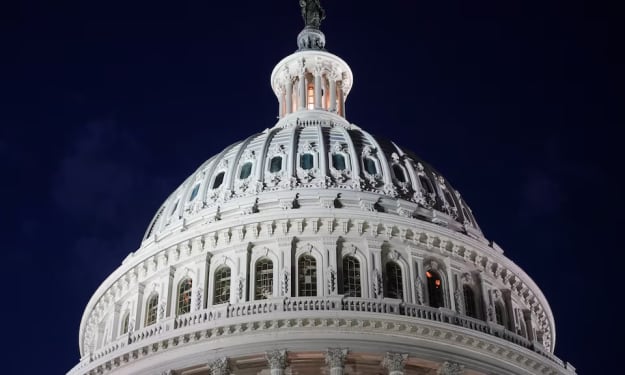
US House Takes Up Deal to Restore Government Funding, Tuesday Vote Expected. AI-Generated.
As Washington inches closer to a government shutdown deadline, the US House of Representatives is preparing to take up a bipartisan deal aimed at restoring government funding, with a pivotal vote expected on Tuesday. The move comes after days of negotiations, closed-door meetings, and mounting public pressure to keep federal agencies open and functioning.
By Saboor Brohi 6 days ago in The Swamp