technology
Talking tech; debates about regulating technology, privacy laws, piracy, and the pitfalls of AI.
Cyber Siege at the Digital Frontier: Chinese Cyberattacks on Taiwan’s Infrastructure Averaged 2.6 Million a Day in 2025. AI-Generated.
When you think of modern warfare, images of tanks, jets, and troops usually come to mind. But the reality in 2025 is far more digital—and far more relentless. Taiwan’s National Security Bureau (NSB) revealed a startling figure: Chinese cyberattacks on Taiwan’s infrastructure averaged 2.6 million per day last year. That’s not a typo. Millions. Every. Single. Day. And this surge isn’t just numbers on a page—it reflects a new type of warfare that fuses technology, politics, and strategy into something experts call “hybrid warfare.” The scale of the cyber assault To grasp what 2.6 million attacks per day looks like, imagine thousands of attempts every second to break into networks powering hospitals, banks, energy grids, and emergency services. These aren’t random hacks or amateur attacks—they are targeted, highly coordinated operations designed to test vulnerabilities, overload systems, and wear down Taiwan’s cyber defenses over time. The NSB noted a concerning trend: spikes in attacks often coincided with Chinese military drills or politically sensitive events in Taiwan. This suggests a deliberate strategy to combine psychological pressure with digital disruption, putting Taipei in a constant state of vigilance. Who and what is being targeted? The cyber onslaught spans almost every sector, but some targets are especially critical: Healthcare systems: Hacking hospitals can delay emergency responses and endanger lives. Energy infrastructure: Targeting power grids or fuel distribution threatens daily life and economic stability. Financial institutions: Banks and digital payment systems are under constant surveillance, with attacks designed to erode public trust. Telecommunications: Communication networks are a primary target to intercept traffic and disrupt information flow. Even Taiwan’s famed semiconductor sector—the backbone of the global tech supply chain—is in the crosshairs. Attacks here aim at stealing technical data or undermining operational security, highlighting how digital warfare can intersect with global economic stakes. Hybrid warfare: Beyond cyberattacks Taiwan’s cyber crisis isn’t happening in isolation. It is part of a broader strategy of cross-strait pressure, blending military maneuvers, political messaging, and digital assaults. Analysts say these tactics fall under the category of hybrid warfare, where the objective is to coerce, destabilize, or intimidate without triggering full-scale conflict. This approach is particularly challenging because it blurs the line between peace and war. While China officially denies involvement, the timing and intensity of the attacks suggest coordination with Beijing’s broader strategic goals. Taiwan’s defense strategy Facing a daily onslaught of millions of digital threats, Taiwan has invested heavily in cybersecurity. Its National Information and Communication Security Taskforce (NICST) works alongside private cybersecurity firms to detect, mitigate, and respond to attacks in real-time. However, experts emphasize that defense is not about blocking every attack—which is impossible—but about prioritizing critical infrastructure, ensuring rapid response, and building system redundancies. Public awareness is also key. Citizens and businesses are encouraged to adopt best practices like two-factor authentication, encrypted communications, and regular software updates. Even small precautions can make a significant difference when millions of attacks are coming at your systems every day. Why this matters globally Taiwan’s experience isn’t just a local concern—it has global implications. Digital infrastructure now underpins almost every facet of modern life, and cyberattacks of this scale challenge international norms, economic stability, and security frameworks. For democracies worldwide, Taiwan’s situation is a stark reminder: cybersecurity isn’t optional. It’s national defense. Sharing threat intelligence, supporting allies under attack, and establishing rules for state behavior in cyberspace are becoming essential pillars of global security. Lessons from the frontline Preparedness is key: Cyber resilience requires continuous investment, public awareness, and private-sector cooperation. Focus on critical systems: Hospitals, energy grids, and communications networks need top priority. Hybrid threats are the future: Military drills, political tension, and digital attacks can be combined in ways that traditional defense strategies don’t account for. Global cooperation matters: No country is an island in cyberspace. International collaboration is crucial to deter or mitigate attacks. Taiwan’s story illustrates the harsh reality of 21st-century security: conflict is no longer confined to borders or battlefields. It happens in real-time, through cables, servers, and digital pipelines. Millions of attacks every day, critical infrastructure at constant risk, and geopolitical tensions simmering beneath the surface—this is the digital battlefield of the modern era. Taiwan’s struggle is a warning, a lesson, and a wake-up call for the world: cybersecurity is no longer just an IT problem—it’s a strategic imperative. The question isn’t just whether nations can defend themselves from cyberattacks—it’s whether the world can adapt fast enough to a reality where digital and geopolitical conflicts are inseparable.
By Muhammad Hassan2 months ago in The Swamp
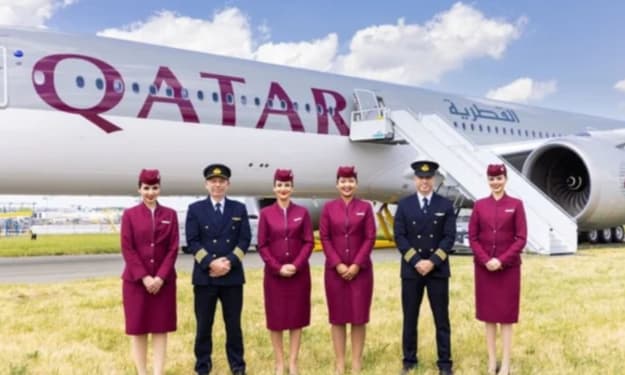
Qatar Airways Unveils the World’s First Digital Cabin Crew Member. AI-Generated.
In a groundbreaking move for the aviation industry, Qatar Airways has announced the launch of the world’s first digital cabin crew member, a fully AI-powered system designed to assist passengers during flights. The announcement marks a historic milestone in the integration of artificial intelligence in aviation, blending technology, luxury service, and operational efficiency in ways previously thought impossible. The digital crew member, named “Q-Bot”, represents Qatar Airways’ commitment to innovation and its aim to enhance passenger experience through cutting-edge technology. The airline says the AI assistant can provide real-time flight information, respond to passenger inquiries, and even manage routine service requests — all while maintaining the premium standards for which Qatar Airways is known. Introducing Q-Bot: A New Era in Air Travel Q-Bot is not a physical robot but a fully digital interface integrated into the airline’s cabin systems, accessible through personal screens or the airline’s mobile app. Passengers can interact with the AI in multiple languages, making it a versatile tool for international travelers. The AI system uses natural language processing and machine learning to understand passenger needs, answer questions about flight schedules, safety protocols, and onboard services, and even provide recommendations for meals and entertainment. For example, if a passenger asks, “Can I get a vegetarian meal?” Q-Bot instantly checks availability and communicates with cabin staff to ensure the request is fulfilled. By combining AI with the airline’s human crew, Qatar Airways aims to create a seamless travel experience, where technology enhances service rather than replacing it entirely. Why Qatar Airways is Leading the Charge Qatar Airways has a long history of pushing technological boundaries in aviation. From luxurious lounges to personalized in-flight entertainment, the airline has consistently sought ways to enhance passenger experience. The introduction of a digital cabin crew member is the latest step in this evolution. CEO Akbar Al Baker stated, “At Qatar Airways, we believe that innovation is key to providing unmatched service. Q-Bot represents our commitment to leveraging technology to ensure our passengers enjoy a safe, comfortable, and personalized journey.” Industry analysts agree that Qatar Airways’ move could set a precedent for other airlines, potentially reshaping cabin operations globally. By adopting AI solutions, airlines can improve efficiency, reduce workload on human crew members, and offer faster, more personalized service to passengers. How Q-Bot Works Q-Bot operates through a combination of AI algorithms, machine learning, and cloud-based systems. The AI continuously learns from interactions, improving its ability to respond accurately and proactively anticipate passenger needs. Some key functions include: Real-time Flight Information: Provides updates on arrival times, connecting flights, and delays. Service Requests: Allows passengers to request meals, beverages, blankets, or pillows without leaving their seats. Entertainment Guidance: Offers personalized recommendations for movies, music, and other in-flight activities. Safety Information: Reinforces cabin safety procedures and emergency instructions. Language Support: Interacts in multiple languages to accommodate international travelers. By integrating AI into existing cabin operations, Qatar Airways aims to complement human staff rather than replace them, ensuring that passengers receive both the warmth of human service and the efficiency of digital technology. Passenger Experience and Feedback Early trials of Q-Bot have reportedly received positive feedback from passengers. Travelers appreciated the instant responsiveness and ease of interaction, especially for routine inquiries that do not require human intervention. One passenger in a trial flight commented, “It’s amazing to have answers immediately without waiting for the crew. But the human crew is still there for personal touch and care, which makes the experience perfect.” The airline has emphasized that Q-Bot is designed to enhance the human crew’s efficiency, allowing staff to focus on complex requests, safety monitoring, and ensuring passenger comfort, while the AI handles repetitive or informational tasks. Implications for the Aviation Industry The launch of Q-Bot is likely to reshape how airlines think about cabin service. Some potential industry implications include: Operational Efficiency: Reduces the burden on cabin crew, particularly on long-haul flights where service requests are frequent. Cost Management: Potentially lowers operational costs by automating routine interactions. Personalization: AI can provide tailored recommendations, enhancing passenger satisfaction. Safety and Compliance: Consistent delivery of safety information ensures compliance with aviation regulations. Experts predict that AI-assisted cabin service could become standard in the next decade, with airlines increasingly integrating technology to complement human staff. Balancing Innovation with Human Touch While AI brings significant advantages, Qatar Airways is careful to stress that human cabin crew remain essential. Technology is a tool to improve efficiency and service quality, not a replacement for the empathy, problem-solving, and judgment that only trained crew members can provide. Human oversight is particularly crucial in emergency situations, where AI can support but not replace the expertise and quick decision-making of human staff. By maintaining this balance, Qatar Airways is positioning itself as a leader in aviation innovation, combining the best of human service with the precision and speed of AI technology. Future Plans and Expansion Qatar Airways has hinted at further enhancements to Q-Bot, including: Voice Interaction: Allowing passengers to speak naturally to the AI rather than typing or tapping commands. Integration with Loyalty Programs: Personalized suggestions based on passenger preferences and history. Predictive Service: AI that anticipates needs, such as offering beverages before a passenger asks or recommending meals based on dietary preferences. The airline plans to roll out Q-Bot across its international fleet within the next year, making Qatar Airways the first airline to fully integrate digital cabin crew into regular operations. Industry Reactions Aviation analysts and tech experts have praised the initiative as a bold step forward. “This is a pioneering approach,” said Dr. Lena Krüger, an aviation technology consultant. “Combining AI with human service in-flight could set a new benchmark for the industry.” However, some industry observers caution about over-reliance on technology, stressing the importance of maintaining robust cybersecurity, ensuring passenger data protection, and preventing system failures during flights. Conclusion The launch of Q-Bot, the world’s first digital cabin crew member, represents a historic leap in aviation technology. Qatar Airways has demonstrated that AI can enhance passenger experience, support human staff, and improve operational efficiency, all while maintaining the airline’s reputation for luxury and excellence. As other airlines watch closely, Qatar Airways may well set the standard for the future of in-flight service, where technology and human expertise work hand in hand to create seamless, safe, and personalized air travel experiences. With Q-Bot, the skies are no longer just a place for travel — they are becoming a frontier for innovation, shaping the future of global aviation.
By Muhammad Hassan2 months ago in The Swamp
The Night a Song Brought Me Back to Myself
I didn’t watch the special for the spectacle. I watched because I needed to hear the song again. Not the version from the movie trailer or the TikTok clip. The one that lived in my bones—the one I’d hummed under my breath during chemo, during layoffs, during the long winter after my divorce. The song that said: It’s okay to be different. It’s okay to fall. It’s okay to rise anyway.
By KAMRAN AHMAD2 months ago in The Swamp
Trump and Obama: Two Administrations, Two Americas
For many people, the shift from Barack Obama to Donald Trump didn’t feel like a normal change of leadership. It felt like waking up in a different country. The language changed. The tone changed. Dinner-table conversations changed. Even friendships changed.
By John Smith2 months ago in The Swamp
The Day the Stadium Felt Like Church
I wasn’t born into fandom. I was adopted into it. At ten years old, I didn’t understand offside rules or midfield rotations. I only knew that every Sunday, my grandfather would take my hand, walk me three blocks to the edge of the stadium, and sit with me on a cracked concrete step—just outside the gates, where the roar of the crowd bled into the street like a hymn.
By KAMRAN AHMAD2 months ago in The Swamp
Killer Fungus: The Silent Threat Spreading Beneath Our Feet. AI-Generated.
When most people think of deadly threats, they imagine viruses, bacteria, or perhaps large predators. Fungi rarely come to mind. Often associated with moldy bread or forest mushrooms, fungi seem harmless, even mundane. Yet beneath this perception lies a growing and unsettling reality: killer fungi are emerging as a serious global threat, capable of devastating ecosystems, agriculture, wildlife, and human health.
By Sajida Sikandar2 months ago in The Swamp
Teyana Taylor and Aaron Pierre
Introduction In an era where celebrity relationships often unfold in the glare of social media, Teyana Taylor and Aaron Pierre have crafted something refreshingly authentic: a partnership rooted in artistic respect, shared ambition, and quiet devotion. Since their romance became public in 2024, fans have searched “Teyana Taylor Aaron Pierre” not just out of curiosity—but admiration.
By KAMRAN AHMAD2 months ago in The Swamp
Stranger Things Finale Release Date
Introduction After nearly a decade of Demogorgons, mind flayers, and Eggo-fueled nostalgia, Stranger Things is preparing to say goodbye. With fans worldwide searching “Stranger Things finale release date,” “when does the last episode of Stranger Things come out?” and “what time is Stranger Things finale coming out?,” anticipation has reached fever pitch.
By KAMRAN AHMAD2 months ago in The Swamp
Falcons: The Sky’s Sharpest Hunters and Nature’s Living Missiles. AI-Generated.
When people think of speed in the animal kingdom, cheetahs usually steal the spotlight. But far above the savannah, slicing through open air with breathtaking precision, falcons quietly dominate the race. Falcons are not just fast birds—they are evolutionary masterpieces, engineered by nature to hunt, adapt, and survive in some of the planet’s most demanding environments.
By Aadil shanawar2 months ago in The Swamp