technology
Talking tech; debates about regulating technology, privacy laws, piracy, and the pitfalls of AI.
Can You Guess Our Screen Time? A Priest, Pensioner, Tech CEO, and Teenager Reveal All. AI-Generated.
Screen time: we all know it exists, but how much do we really spend staring at phones, laptops, tablets, and TVs? A recent informal look at people from very different walks of life—from a priest to a tech CEO—shows just how varied (and surprising) our screen habits can be. The answers reveal more than just numbers; they give a glimpse into modern life itself.
By Aarif Lashari2 days ago in The Swamp
Is Time a Fundamental Part of Reality? A Quiet Revolution in Physics Suggests Not. AI-Generated.
Time feels unavoidable. We measure our lives in seconds and years, plan our futures, and remember our pasts through its steady flow. Yet a growing number of physicists are beginning to question something radical: what if time is not fundamental at all? What if it is not a basic ingredient of the universe, but an emergent concept—something that arises from deeper laws of nature? This idea, once confined to abstract philosophy, is now gaining traction in cutting-edge physics. Quietly, and without dramatic headlines, researchers are rethinking one of the most basic assumptions about reality itself. Why Time Has Always Seemed Fundamental In everyday life and classical physics, time appears inseparable from reality. Isaac Newton treated time as absolute—a universal clock ticking away the same for everyone, everywhere. Even Einstein’s theory of relativity, which showed that time can stretch and slow depending on speed and gravity, still treated time as a real dimension woven together with space. Modern physics describes the universe using spacetime: a four-dimensional structure where events occur at specific locations and moments. From this perspective, time is as real as length or mass. So why question it now? The Problem Time Creates in Fundamental Physics The trouble begins when physicists try to reconcile general relativity (which governs gravity and the large-scale structure of the universe) with quantum mechanics (which governs the smallest particles). In quantum mechanics, time is treated as an external parameter—a background clock against which change happens. In general relativity, however, time is dynamic. It bends, slows, and depends on gravity. When researchers attempt to merge these two theories into a single framework of quantum gravity, time becomes deeply problematic. In some of the most important equations, time disappears entirely. This absence has forced physicists to ask a disturbing question: If the most fundamental laws of nature do not include time, where does it come from? The Idea of Timeless Physics Several modern theories suggest that at the deepest level of reality, the universe may be timeless. One influential idea comes from approaches to quantum gravity where the equations describe relationships between physical states, not how those states evolve over time. In these models, the universe is not something that “happens” moment by moment. Instead, it simply is. Change, motion, and time emerge only when observers inside the system describe it in a certain way. This is not to say that nothing changes—but that change does not require time as a fundamental ingredient. Time as an Emergent Phenomenon An increasingly popular view is that time is emergent, similar to temperature. Temperature feels fundamental, but at a deeper level it arises from the motion of particles. No single atom has a temperature; it emerges only when many particles interact. Likewise, time may emerge from relationships between physical systems. When one part of the universe changes relative to another, we interpret that change as time passing. In this view, clocks do not measure a universal time flowing through the cosmos. They simply track correlations between physical processes. The Arrow of Time and Entropy One of the strongest arguments for time’s reality is the arrow of time—the fact that we remember the past but not the future, and that disorder (entropy) tends to increase. However, some physicists argue that the arrow of time does not require time itself to be fundamental. Instead, it may arise from special initial conditions of the universe and the statistical behavior of matter. The laws of physics, at their core, often work the same forward and backward. The sense of direction we associate with time may come from how information is processed and remembered by complex systems like brains. What This Means for Reality and Consciousness If time is not fundamental, the implications are profound. It would mean that the universe does not “unfold” in the way we intuitively imagine. Past, present, and future may not be objectively distinct at the deepest level. Some interpretations suggest that all moments exist equally, and that our experience of “now” is tied to consciousness rather than cosmic structure. This does not mean time is fake in any practical sense. Much like money or language, time could be real because it is useful—even if it is not written into the deepest laws of nature. Why This Revolution Is Happening Quietly Unlike discoveries of new particles or cosmic explosions, this shift in thinking is largely mathematical and conceptual. It unfolds in academic papers, conferences, and theoretical debates rather than laboratories. There is also no single theory that has “proven” time is an illusion. Instead, multiple independent lines of research point in the same unsettling direction. Physicists are cautious. Questioning time itself is not something done lightly. Does This Change Anything for Everyday Life? For now, the answer is no—at least not practically. Time will continue to govern schedules, aging, and physics experiments. But conceptually, this revolution matters deeply. It forces us to rethink what reality is made of and whether our most basic intuitions are shaped more by human perception than by the universe itself. Just as relativity changed how we think about space and simultaneity, a timeless foundation of physics could reshape our understanding of existence. Conclusion: A Universe Without Time? The idea that time may not be fundamental challenges centuries of thought. Yet physics has a long history of overturning what once seemed obvious. Whether time is an illusion, an emergent phenomenon, or something we have not yet fully understood, the quiet revolution underway suggests one thing clearly: our understanding of reality is far from complete. In questioning time itself, physics is once again reminding us that the universe is stranger—and more fascinating—than common sense would ever suggest.
By Aarif Lashari2 days ago in The Swamp
MSF Statement on Sharing Staff Information and Humanitarian Operations in Palestine. AI-Generated.
In a conflict zone where survival depends heavily on humanitarian aid, the safety and independence of aid workers remain critical. Médecins Sans Frontières (MSF), widely known as Doctors Without Borders, recently released a strong statement explaining its refusal to share personal information about its staff working in Gaza and the occupied West Bank. This decision comes amid growing pressure from Israeli authorities to provide detailed employee data as part of new registration requirements.
By Sajida Sikandar2 days ago in The Swamp
Global Commercial Drone Market Size and Forecast 2025–2033. AI-Generated.
Introduction: The Rise of Commercial Drones in the Global Economy The Global Commercial Drone Market is entering a phase of rapid transformation, driven by technological innovation, expanding industrial use cases, and supportive regulatory frameworks. According to Renub Research, the market is expected to grow from US$ 29.76 billion in 2024 to US$ 68.58 billion by 2033, registering a Compound Annual Growth Rate (CAGR) of 9.72% from 2025 to 2033.
By Sakshi Sharma2 days ago in The Swamp
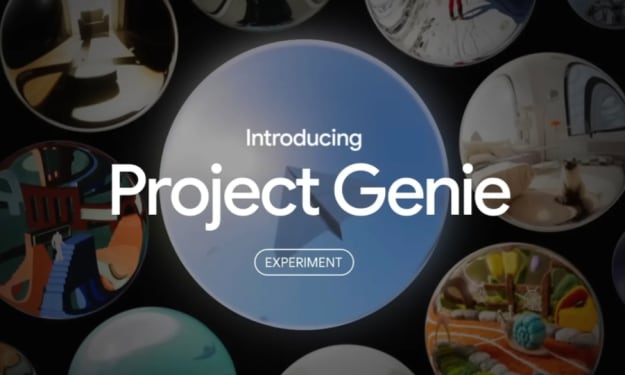
Google Unveils Project Genie: AI Tool for Creating “Playable Worlds” with Licensed IP. AI-Generated.
Google has officially released Project Genie, an AI-powered tool designed to help creators generate “playable worlds” that can incorporate copyrighted intellectual property (IP). The platform combines artificial intelligence, immersive 3D modeling, and interactive design, offering developers, game designers, and hobbyists a powerful new way to build digital environments quickly and creatively.
By Aarif Lashari3 days ago in The Swamp
Immigration Espresso Shot – New Year Special. AI-Generated.
As the clock struck midnight and the world welcomed another new year, many people celebrated with fireworks, resolutions, and fresh beginnings. But for millions of migrants, refugees, and immigrants across the globe, the new year arrived with unanswered questions: Will borders open or tighten? Will policies become fairer or more restrictive? Will opportunity finally meet aspiration?
By Sajida Sikandar4 days ago in The Swamp
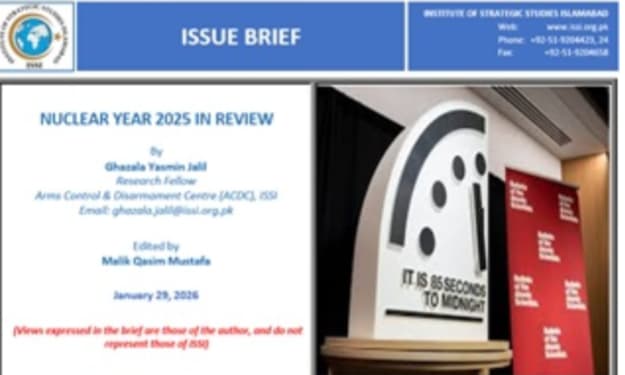
Issue Brief on “Nuclear Year 2025 in Review”. AI-Generated.
The year 2025 will be remembered as a turning point in global nuclear politics. Marked by growing geopolitical rivalries, stalled arms control agreements, and renewed nuclear threats, the world witnessed both alarming setbacks and cautious diplomatic efforts. From escalating tensions among nuclear-armed states to debates over modernization and disarmament, nuclear issues once again dominated international security discussions.
By Sajida Sikandar4 days ago in The Swamp
Benazir Income Support Program 8171: A Lifeline for Pakistan’s Vulnerable Communities. AI-Generated.
The Benazir Income Support Program (BISP) is one of Pakistan’s most significant social welfare initiatives, aimed at reducing poverty and providing financial assistance to the country’s most vulnerable populations. Launched in 2008, the program has evolved over the years to become a cornerstone of Pakistan’s social protection system. The 8171 service, introduced as part of BISP’s modernization, plays a crucial role in making the program more transparent, accessible, and efficient. This article explores the purpose, working mechanism, benefits, and impact of the Benazir Income Support Program 8171.
By Ayesha Lashari4 days ago in The Swamp