

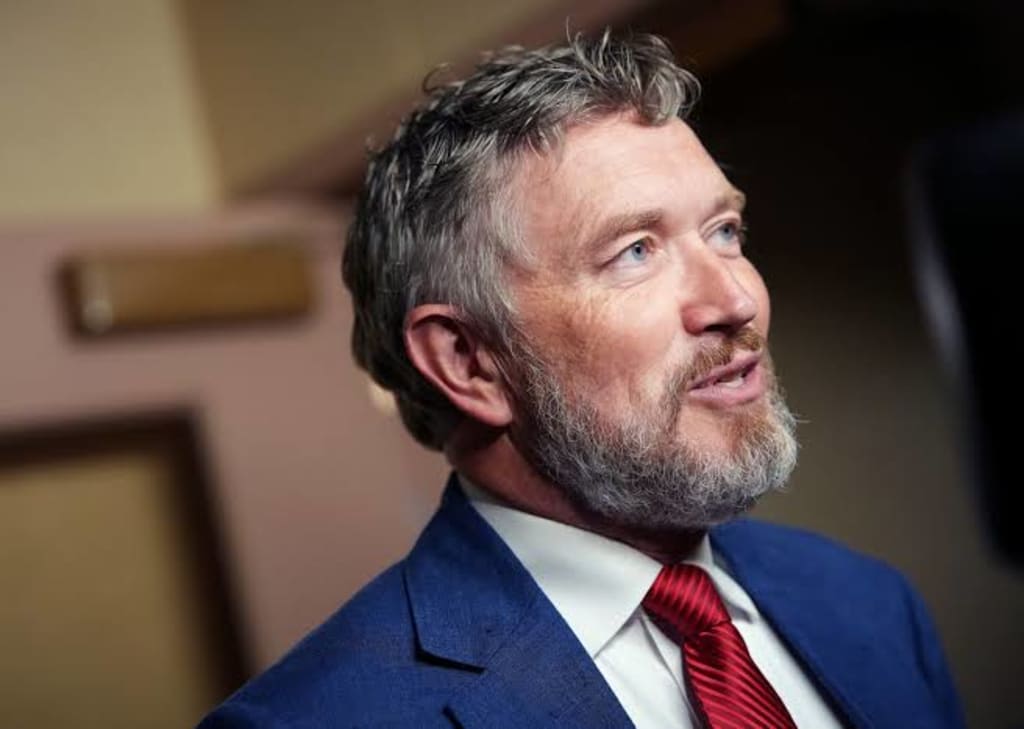
In an era when American politics is increasingly defined by polarization, a handful of lawmakers stand out not just for their party affiliation, but for how consistently they challenge the political mainstream. Thomas Massie, a Republican congressman from Kentucky, is one such figure. Known for his libertarian-leaning philosophy, strict constitutionalism, and willingness to oppose his own party, Massie has carved out a unique and often controversial space in Washington.
To understand Massie’s role in today’s political landscape, it is equally useful to view him in contrast with lawmakers from across the aisle, such as Ro Khanna, a progressive Democrat from California. While the two differ sharply in ideology, their careers highlight a broader conversation about principles, independence, and the future direction of American governance.
Who Is Thomas Massie?
Thomas Massie has represented Kentucky’s 4th congressional district since 2012. A trained engineer with degrees from MIT, Massie brings a technical, data-driven mindset to politics. He often emphasizes logic, constitutional limits, and skepticism toward expansive federal power.
Unlike many career politicians, Massie entered Congress with a clear philosophical framework rooted in libertarian ideals. He consistently votes against large spending bills, foreign military interventions, and legislation he believes exceeds the federal government’s constitutional authority. This approach has earned him both admiration and criticism—from voters who value ideological consistency and from colleagues frustrated by his refusal to compromise.
A Willingness to Stand Alone
One of the defining traits of Thomas Massie’s political career is his willingness to stand alone, even when doing so invites backlash. He has openly opposed leadership from his own party, including high-profile Republican presidents, when he believed their policies conflicted with constitutional principles.
Massie’s critics argue that this rigidity can be counterproductive, especially in moments of national crisis. Supporters, however, see it as rare integrity in a system driven by party loyalty and short-term political gains. In a political environment where bipartisan compromise is often praised but rarely practiced, Massie represents a different kind of dissent—one rooted in ideological consistency rather than political calculation.
The Political Philosophy Behind the Votes
At the core of Thomas Massie’s political worldview is a belief in limited government. He advocates for reduced federal spending, a restrained foreign policy, and stronger protections for individual liberty. This philosophy places him at odds not only with Democrats, but also with many Republicans who support defense spending, surveillance programs, or emergency legislation.
Massie frequently frames his arguments around the Constitution, insisting that good intentions do not justify unconstitutional actions. Whether addressing fiscal policy or civil liberties, he tends to ask the same fundamental question: does the federal government have the authority to do this?
A Contrast With Ro Khanna
On the opposite end of the ideological spectrum stands Ro Khanna, a Democratic congressman from Silicon Valley. Where Massie emphasizes limitation, Khanna focuses on expansion—of social programs, federal investment, and government-led innovation. Khanna supports policies such as universal healthcare, climate action, and stronger labor protections, viewing the federal government as a tool for addressing inequality and economic transformation.
Despite these differences, both lawmakers share a reputation for independence. Ro Khanna has challenged his own party on issues like military intervention and corporate influence, just as Massie has challenged Republican leadership. Their disagreements reflect not just party lines, but fundamentally different views of what government should be.
This contrast highlights a broader political tension in the United States: whether the future lies in scaling back government power or redefining and expanding it to meet modern challenges.
Media Attention and Public Perception
Thomas Massie often attracts media attention for his dissenting votes and outspoken positions, particularly on social media. His critics sometimes portray him as obstructionist or out of touch with political realities. Supporters counter that his role is not to follow trends, but to act as a constitutional safeguard.
In comparison, Ro Khanna is frequently featured as a forward-looking progressive voice, especially on economic and technology-related issues. Together, their public images underscore how political narratives are shaped not just by policy positions, but by storytelling and media framing.
Influence Beyond Legislation
While neither Massie nor Khanna always succeeds in passing their preferred legislation, their influence extends beyond bill counts. They shape conversations within their parties and among voters who are increasingly skeptical of traditional political leadership.
Thomas Massie’s impact lies in forcing debates about spending, authority, and accountability. Ro Khanna’s influence comes from pushing discussions about fairness, innovation, and long-term economic reform. Both reflect a growing desire among Americans for representatives who prioritize principles over party discipline.
The Bigger Picture in American Politics
The political careers of Thomas Massie and Ro Khanna illustrate a deeper shift within American democracy. Voters are no longer content with vague promises or scripted talking points. They are paying closer attention to consistency, transparency, and authenticity.
Massie represents a strain of politics that values restraint and constitutional fidelity above consensus. Khanna embodies a belief that bold government action is necessary to meet modern challenges. The tension between these views is not a flaw in the system—it is a reflection of a diverse and evolving electorate.
Final Thoughts
Thomas Massie is unlikely to ever be a conventional political figure, and that is precisely why he continues to matter. In a system often driven by compromise and conformity, his steadfast approach forces uncomfortable but necessary questions about power and principle.
When viewed alongside lawmakers like Ro Khanna, Massie’s role becomes clearer. American politics is not just a battle between parties, but a debate over the very purpose of government. As that debate continues, figures like Massie ensure it remains grounded in fundamental questions rather than fleeting headlines.
About the Creator
Saboor Brohi
I am a Web Contant writter, and Guest Posting providing in different sites like techbullion.com, londondaily.news, and Aijourn.com. I have Personal Author Sites did you need any site feel free to contact me on whatsapp:
+923463986212
Keep reading
More stories from Saboor Brohi and writers in The Swamp and other communities.
Casey Wasserman
In the global world of sports and entertainment, influence is rarely loud. It often operates behind closed doors, shaping careers, negotiating billion-dollar deals, and steering the direction of entire industries. Few figures embody that quiet power better than Casey Wasserman, the chairman and CEO of the Wasserman Agency. Over the last two decades, Wasserman has emerged as one of the most influential executives in modern sports business, blending strategic vision with a deep understanding of athletes, brands, and global markets. A Legacy Rooted in Opportunity Casey Wasserman’s story begins with legacy but is defined by execution. He is the grandson of Lew Wasserman, the legendary Hollywood executive who transformed talent representation through MCA. While the family name opened doors, Casey Wasserman built his reputation by modernizing and expanding what a global agency could be. Rather than following a traditional Hollywood path, Wasserman gravitated toward sports—a sector undergoing massive commercialization in the early 2000s. He recognized that athletes were no longer just competitors; they were brands, media properties, and cultural figures. That insight became the foundation for what would eventually evolve into the Wasserman Agency. The Rise of the Wasserman Agency Founded in 2002, Wasserman started as a sports-focused agency with a selective roster of elite athletes. Over time, it expanded into a full-service global powerhouse representing athletes, coaches, executives, broadcasters, and brands. Today, the Wasserman Agency operates across dozens of offices worldwide and spans sports, music, entertainment, and brand marketing. What sets Wasserman apart is not just scale, but structure. Unlike traditional agencies that silo talent representation, Wasserman built an integrated model. Athletes receive support not only in contract negotiations, but also in branding, endorsements, content creation, and post-career planning. This holistic approach has become an industry standard, but Wasserman was among the first to implement it at scale. A Strategic Mind, Not a Spotlight Seeker Casey Wasserman is notably private, especially compared to the celebrities and athletes his company represents. He rarely courts attention, preferring to let outcomes speak for themselves. Yet his influence is unmistakable. Under his leadership, Wasserman has executed numerous high-profile acquisitions, absorbing smaller agencies and specialists to strengthen its global reach. These moves weren’t about rapid growth for its own sake, but about positioning the company where sports, media, and technology intersect. This strategic restraint has earned Wasserman respect across leagues, ownership groups, and international governing bodies. He is often described as a dealmaker who listens first, negotiates patiently, and thinks long term—qualities that are increasingly rare in a fast-moving industry. Leadership Beyond the Agency World Wasserman’s impact extends well beyond his company. He has played a significant role in shaping major international sporting events, including involvement with the Olympic movement. His leadership roles within organizing committees highlight a broader vision: sports as a unifying global force with economic, cultural, and diplomatic significance. This perspective aligns closely with how the Wasserman Agency positions itself—not merely as a representative of talent, but as a stakeholder in the future of global sports. From athlete advocacy to governance reform, Wasserman’s influence often operates at the policy level, not just the commercial one. Navigating a Changing Sports Economy The sports business landscape has shifted dramatically in recent years. Streaming platforms, social media, athlete empowerment, and direct-to-consumer branding have disrupted traditional models. Casey Wasserman has embraced these changes rather than resisting them. Athletes today expect more control over their narratives and income streams. The Wasserman Agency has adapted by investing heavily in digital strategy, data analytics, and content partnerships. This evolution reflects Wasserman’s belief that representation is no longer transactional—it is collaborative. By anticipating where athlete value is heading, rather than where it has been, Wasserman has kept his agency relevant in an increasingly crowded and competitive marketplace. Culture, Responsibility, and Influence One of the less discussed aspects of Casey Wasserman’s leadership is organizational culture. Insiders often point to an emphasis on professionalism, discretion, and long-term relationships. While aggressive negotiation is part of the business, Wasserman is known for valuing trust and credibility—assets that compound over time. He has also supported initiatives related to diversity, inclusion, and athlete well-being, recognizing that sustainable success in sports depends on more than revenue. As athletes become more vocal about social issues, agencies must evolve beyond pure business interests. Wasserman’s approach reflects that broader responsibility. The Future of the Wasserman Vision As sports continue to globalize and blur into entertainment, technology, and culture, Casey Wasserman’s influence is likely to grow rather than fade. His ability to operate comfortably across boardrooms, locker rooms, and international forums makes him uniquely positioned for the next era of sports business. The Wasserman Agency stands today as a testament to strategic patience, adaptability, and vision. It is not just a talent agency—it is an ecosystem built around the belief that athletes and creators deserve thoughtful, forward-looking representation. Final Thoughts Casey Wasserman may not dominate headlines, but his fingerprints are all over the modern sports and entertainment landscape. Through careful leadership and an evolving business philosophy, he has helped redefine what it means to represent talent in the 21st century. In an industry often driven by hype and short-term wins, Wasserman’s steady, strategic influence offers a different model—one built on foresight, integrity, and long-term value. That may ultimately be his most lasting legacy.
By Saboor Brohi a day ago in The Swamp
The Saddest Thing - The Billionaires Who Rule America Aren't Even Enjoying Themselves
This single post says more about our ruling class than a thousand policy papers. The saddest thing about today's system is that the men robbing the rest of us - sabotaging our economic prospects, our pensions, our access to affordable healthcare - are not even happy.
By Scott Christenson🌴5 days ago in The Swamp
Israeli air attacks on Lebanon reach highest level since ceasefire: Report
Israel’s airstrikes on Lebanon have escalated sharply in recent days, reaching their highest intensity since the ceasefire that brought an end to the 2006 Lebanon War. The Israeli Defense Forces (IDF) have launched a series of air attacks targeting Hezbollah positions in southern Lebanon, raising tensions along the volatile Israeli-Lebanese border. The renewed violence is triggering concerns over the potential for broader regional conflict, with both sides bracing for further escalation. Context of the Escalation The recent surge in airstrikes comes after months of simmering tension along the Lebanese-Israeli border. While the 2006 ceasefire agreement, brokered by the United Nations, was meant to end hostilities between Israel and Hezbollah, violations have been frequent on both sides. However, the intensity and frequency of the attacks seen in recent days represent a significant escalation and signal a possible shift in the fragile status quo. For Israel, the decision to increase airstrikes is part of a broader strategy to weaken Hezbollah’s military infrastructure and prevent what it perceives as an existential threat from the Lebanese group. Hezbollah, which has long been backed by Iran, has grown in strength and influence in the region, maintaining a strong presence in southern Lebanon. The group has engaged in a number of skirmishes and rocket attacks against Israeli forces, raising alarm in Jerusalem over its increasing capabilities. The Recent Surge in Israeli Airstrikes In the past two weeks alone, Israeli warplanes have bombarded several key Hezbollah strongholds, including arms depots, missile storage facilities, and command centers. According to the IDF, these operations are part of an effort to degrade Hezbollah’s offensive capabilities and prevent it from launching attacks against Israeli civilian and military targets. Israel’s airstrikes have primarily targeted areas near the towns of Tyre and Nabatieh, both of which are known Hezbollah strongholds. The increased intensity of airstrikes follows a series of Hezbollah rocket launches that targeted northern Israel, which Israeli officials have labeled as "provocations" designed to escalate the conflict. The Israeli government has also stated that it holds the Lebanese government responsible for Hezbollah’s actions, despite the group’s position as a powerful non-state actor within Lebanon. This framing has long been a point of contention, with critics arguing that it undermines Lebanon's sovereignty. Lebanese Civilian Casualties The humanitarian impact of these renewed Israeli strikes has been severe. Reports from Lebanese health officials confirm that at least 20 civilians have been killed in the past 10 days alone, with dozens more injured in airstrikes. While Hezbollah positions remain the primary target, civilian infrastructure, including roads, bridges, and power lines, has also been damaged. This has compounded the already dire economic and humanitarian situation in Lebanon, which is facing a severe economic collapse and a refugee crisis exacerbated by the Syrian conflict. The United Nations Interim Force in Lebanon (UNIFIL) has expressed grave concern about the worsening situation and the potential for further civilian casualties. UNIFIL's mandate is to monitor the ceasefire and prevent the flow of arms to Hezbollah, but its ability to influence the situation on the ground remains limited. The UN has called for both sides to de-escalate, but these calls have gone largely ignored. Hezbollah’s Response Hezbollah has responded with defiant rhetoric and military actions of its own. Hassan Nasrallah, the leader of Hezbollah, delivered a speech earlier this week vowing that the group would retaliate for Israeli airstrikes on Lebanese soil. "We will not allow Israel to continue violating Lebanon’s sovereignty," Nasrallah said in a televised address. "Hezbollah is prepared to defend Lebanon against any Israeli aggression." Hezbollah has also made it clear that it has the capacity to strike deep within Israeli territory. While rocket attacks from Hezbollah have been largely limited to areas near the border in the past, the group has hinted that it may expand its targets to include major Israeli cities, something that has not been seen since the 2006 war. The Israeli government has been careful not to publicly comment on the specifics of Hezbollah’s retaliatory capabilities, but officials have made it clear that Israel is fully prepared for a broader conflict if necessary. "We will not hesitate to take any action to defend our citizens," said an IDF spokesperson. The Risk of a Broader Conflict The recent violence comes at a particularly sensitive moment for both Israel and Lebanon. On one hand, Israel is facing domestic political instability, with ongoing protests over the government's judicial reforms, which have sparked widespread unrest. Prime Minister Benjamin Netanyahu is under pressure both domestically and internationally, making the current escalation potentially useful in rallying nationalistic support. On the other hand, Lebanon is in the midst of one of the worst economic crises in its history, with a collapsed currency, rampant inflation, and widespread poverty. The Lebanese government, which has limited control over Hezbollah’s actions, finds itself in a difficult position, as it cannot afford to antagonize Hezbollah, which has considerable political and military influence within Lebanon. The risk of a broader conflict, involving not only Hezbollah but also the Syrian regime and Iran, remains high. Iran, Hezbollah’s primary backer, has frequently expressed its support for Hezbollah’s actions, and it is feared that Israel’s escalating airstrikes could provoke further Iranian involvement. This scenario could quickly turn the current skirmishes into a full-blown regional conflict, with catastrophic consequences for Lebanon, Israel, and the wider Middle East. International Reactions The international community has reacted with concern, urging both Israel and Hezbollah to exercise restraint and avoid further escalation. The United States, a key ally of Israel, has expressed support for Israel’s right to defend itself but has also called on Israel to minimize civilian casualties in its airstrikes. U.S. Secretary of State Antony Blinken stated, "We urge all parties to de-escalate and return to the path of diplomacy." At the same time, the European Union has condemned the violence and called for an immediate halt to all military operations. The EU expressed concern that the airstrikes could further destabilize Lebanon and complicate efforts to resolve the ongoing Syrian conflict, which has already resulted in a massive refugee crisis in Lebanon. Conclusion As Israeli airstrikes on Lebanon continue to escalate, the region finds itself once again on the brink of broader conflict. The balance of power between Israel and Hezbollah remains delicate, with both sides engaged in a high-stakes game of brinkmanship. While the immediate outcome of these airstrikes remains uncertain, the risk of further violence and civilian casualties is growing by the day. The international community must continue to press for an immediate cessation of hostilities and urge both sides to return to the negotiation table. Until then, Muscat’s role in facilitating dialogue will remain as critical as ever, with hopes that diplomatic efforts can help defuse the powder keg that is the Israeli-Lebanese border.
By Fiaz Ahmed 6 days ago in The Swamp


Comments
There are no comments for this story
Be the first to respond and start the conversation.