
Todd Blanche Says Review of Jeffrey Epstein Sex-Trafficking Case “Is Over”
Justice Department signals no further prosecutions after massive document release — sparking political and survivor backlash
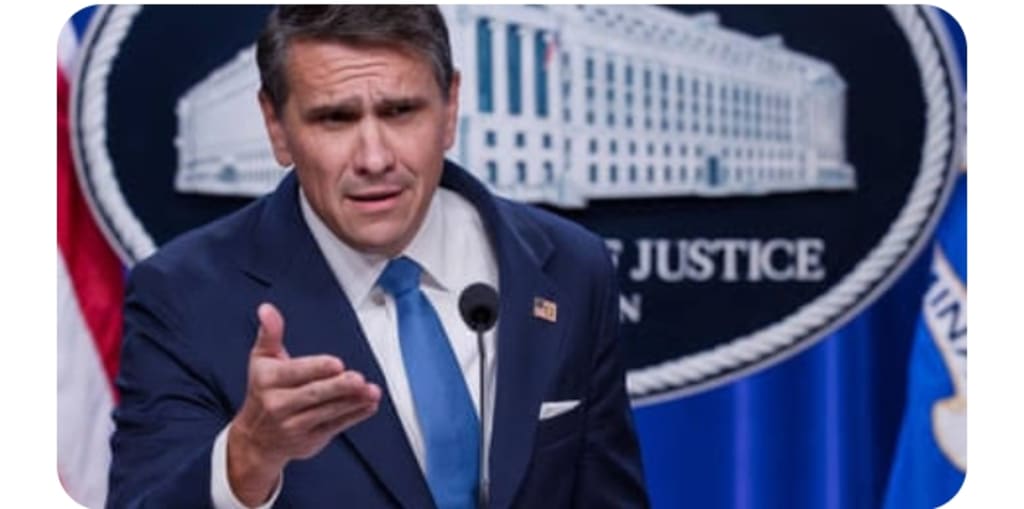
A major announcement from the U.S. Department of Justice has stirred fresh controversy in the long-running saga of the late sex offender Jeffrey Epstein. On February 1, 2026, Deputy Attorney General Todd Blanche — who has overseen the release of millions of pages of documents in the case — declared that the review of Epstein’s sex-trafficking files is “over” and that prosecutors will not be pursuing additional charges based on the material that has been collected so far. �
The Guardian +1
Blanche’s remarks came amid a flurry of newly released records and fierce criticism from survivors’ advocates and lawmakers who argue that the department has failed to fully comply with transparency requirements and has missed opportunities to hold powerful individuals accountable. �
The Guardian
What Blanche Actually Said
In televised interviews and public statements this weekend, Todd Blanche made clear that the internal Justice Department review of Epstein-related material — including emails, photographs, videos, and case files — has concluded, and that federal prosecutors do not see a legal basis for new criminal charges arising from the released records. �
95.5 WSB
Blanche said that while the files contain “a lot of correspondence,” “emails,” and even “horrible photographs,” the existence of disturbing material alone does not establish grounds for prosecution without solid evidence that could stand in court. “Victims want to be made whole,” he said, “but that doesn’t mean we can just create evidence or come up with a case that isn’t there.” �
Las Vegas Review-Journal
He also stressed that the Justice Department has reviewed millions of documents — over six million pages, tens of thousands of images, and thousands of videos — and determined that nothing in those materials justified new indictments against additional individuals. �
95.5 WSB
What This Means for Epstein and Maxwell’s Case
Epstein himself died in federal custody in 2019 while awaiting trial on sex-trafficking charges. His close associate Ghislaine Maxwell was convicted in 2021 and is serving a lengthy prison sentence for her role in the sex-trafficking scheme. �
AP News
The newly completed review was conducted under the Epstein Files Transparency Act, a law passed by Congress that requires the federal government to release a vast collection of investigative records related to Epstein and Maxwell. Tens of thousands of pages, images, and videos have been released in recent weeks, with more material published under the law’s deadlines. �
Al Jazeera
Blanche and other DOJ officials have maintained that the department is fulfilling its legal obligations and releasing as much material as possible, while withholding only items that contain victim identifiers, privileged legal material, or content that could jeopardize ongoing investigations. �
AP News
Public and Political Reaction
Blanche’s announcement that the internal review is finished and that no new charges are pending has drawn sharp rebukes from survivors’ advocates, lawmakers, and legal observers.
Survivors and attorneys have argued that the released files still contain uncensored details of alleged abuse and connections with influential people, while the men who may have enabled or benefited from Epstein’s network remain unnamed or uncharged. Some survivors described the document release as “reckless” because it unintentionally exposed victim identities and fell short of full transparency. �
The Guardian
On Capitol Hill, Democratic lawmakers have openly expressed frustration with the pace and scope of the disclosure. Representative Ro Khanna, a co-sponsor of the transparency law, said in interviews that the department has only released “at best half” of the documents and that survivors remain unhappy with the handling of sensitive information. �
The Guardian
House Minority Leader Hakeem Jeffries and other congressional critics have echoed the sentiment that the DOJ’s work is not truly complete and that further disclosures or legal action may be necessary before accountability is achieved. �
The Guardian
Why Some Lawyers and Advocates Are Angry
Many survivors’ attorneys argue that a thorough, independent review should continue because:
Redaction errors have exposed some victims’ names despite DOJ promises to protect their identities. �
The Wall Street Journal
Released material has included problematic references to powerful figures, raising questions about accountability. �
News24
Survivors feel that even millions of pages of documents may only scratch the surface of what actually exists. �
The Guardian
In response to incomplete redactions, the DOJ has taken some files offline and said it will correct errors, but advocates say the damage has already been done. �
The Wall Street Journal
Does “This Review Is Over” Mean the Investigation Is Truly Finished?
Not necessarily. While Blanche says the DOJ’s internal legal review is complete and prosecutors won’t pursue new charges based on the currently available files, he also noted that a small number of documents remain pending judicial approval for release and that the department continues to work through procedural requirements. �
95.5 WSB
In a separate comment, Blanche suggested that if new credible evidence emerges — whether from public scrutiny or future disclosures — the Justice Department remains technically open to pursuing legal action. �
New York Post
But for now, the department’s official stance is that its review is finished and that additional prosecutions are not supported by the material at hand. Critics counter that this effectively closes the book on the case without delivering the broader accountability many survivors expected.
What Comes Next? Transparency or Continued Dispute
The Epstein files release is ongoing, with millions of pages already public and more expected over coming months. Congress and courts may also play a role if lawmakers press for unredacted disclosures or judicial oversight of the remaining documents.
Some legal experts believe future developments could arise through:
Civil litigation by survivors or victims’ families.
Special master or court supervision of remaining redactions.
Congressional inquiries into unresolved questions about the scope of the files.
Meanwhile, the political debate over what the documents reveal — and what remains hidden — is likely to continue long after Blanche’s declaration that “the review is over.” Critics argue that without broader accountability, the public may never fully understand the extent of Epstein’s network or the role of those connected to him. �
News24
About the Creator
Keep reading
More stories from Zahid Hussain and writers in The Swamp and other communities.
From Elon Musk to Prince Andrew: A Who’s Who of Powerful Men Named in Epstein Files
In one of the largest document disclosures in U.S. history, the Department of Justice (DOJ) has released millions of pages of material related to convicted sex offender Jeffrey Epstein following passage of the Epstein Files Transparency Act. The unprecedented trove — part of millions of pages of records, photos, videos, emails, and other materials — has renewed scrutiny of Epstein’s vast network of contacts, including numerous high-profile men from global tech, finance, politics, and royalty. � AP News +1 Importantly, none of the individuals named in these files have been charged with any crime in connection with Epstein’s trafficking offenses, and many have issued statements distancing themselves or denying wrongdoing. � marketbeat.com Prince Andrew (Andrew Mountbatten-Windsor) Perhaps the most heavily discussed figure in the current release is Prince Andrew, the formerly titled British royal. His name appears hundreds of times in the newly released documents, including in private emails with Epstein and references in photos. � AP News Documents show: Epstein invitations to dine at Buckingham Palace after his 2009 legal trouble. � The Guardian Emails offering introductions to young women. � The Guardian Earlier photos have also emerged that some reports describe as compromising images involving Andrew and unidentified women, though details and context remain redacted. � The Daily Beast Prince Andrew has long denied allegations related to Epstein’s network. He was stripped of his royal titles in 2025 amid ongoing controversy tied to past civil claims from accusers like the late Virginia Roberts Giuffre — a key figure in high-profile litigation linked to Epstein — though this did not constitute a criminal conviction. � The Guardian Elon Musk The name of Elon Musk, the billionaire CEO of Tesla and SpaceX, appears several times in the released documents, particularly in email exchanges from 2012 and 2013. Those emails discussed potential plans or invitations to Epstein’s private Caribbean island compound. � uk.news.yahoo.com Musk has previously posted on social media that he declined such invitations, stating, “Epstein tried to get me to go to his island and I REFUSED.” His companies — including Tesla and X — have not provided detailed responses to media inquiries about the documents. � uk.news.yahoo.com Other open-source reports circulating online suggest some of Musk’s statements may be contradicted by the newly released emails, with allegations that he discussed travel or social plans with Epstein, although these findings have not been independently verified beyond the document claims and have not resulted in legal action. � Reddit Tech Leaders and Business Figures Several other well-known figures from the worlds of tech and business are named in the Epstein files, typically in emails, introductions, or invitations that predate Epstein’s 2019 arrest: Sergey Brin — co-founder of Google; documents include correspondence and meeting invitations involving Epstein and Brin in the early 2000s. � marketbeat.com Steven Tisch — New York Giants co-owner and film producer; mentioned in hundreds of communications in which Epstein offered introductions to women. � marketbeat.com Howard Lutnick — business leader and former commerce official; appears in records showing trips with his family to Epstein’s island. � marketbeat.com Richard Branson — Virgin Group founder; exchanged emails about visits and business ideas with Epstein prior to Epstein’s legal troubles becoming public. � marketbeat.com All have stated their interactions were either brief, social, or occurred before allegations against Epstein were widely known and have denied involvement in any abuse or criminal conduct. � marketbeat.com Political Figures and Advisers The files also contain mentions of political advisers and government officials, not all of whom are U.S. public figures: Steve Bannon, former adviser to President Trump, appears in hundreds of text exchanges with Epstein on subjects like politics and travel. � marketbeat.com Miroslav Lajcak, a diplomat and former Slovak official, resigned after his communications with Epstein were disclosed, although he was not accused of wrongdoing and framed his contact as part of official duties. � marketbeat.com These mentions illustrate the breadth of Epstein’s connections, extending beyond business and social circles into political and diplomatic realms, though presence in the documents does not equate to criminal involvement. � marketbeat.com What the Files Include — and What They Don’t The newly released Epstein files — part of a rolling disclosure totaling over 3 million pages — contain: Emails between Epstein and various contacts Travel plans and invitations Photos and videos Personal and business correspondence The DOJ and Deputy Attorney General have clarified that other material — including victim information, explicit imagery, and legally privileged content — remains redacted or withheld to protect privacy and due process. � Business Insider Importantly, officials have also stated that no new charges against additional named individuals are currently supported solely by these document disclosures — and being named in the files does not mean agency prosecutors believe someone committed a crime. � Business Insider Why These Revelations Matter The release of these extensive documents has several implications: Public scrutiny of elite networks: The files shed light on social and professional ties between Epstein and influential figures — some longstanding, others limited to early, pre-scandal interactions. � marketbeat.com Transparency and legal accountability: Mandated by the Epstein Files Transparency Act, the disclosure seeks to balance openness with protection of victims’ rights, a contentious effort in public and legislative debate. � CBS News Reputational impact: Even where no criminal wrongdoing is alleged, document mentions have prompted resignations and reputational challenges for some individuals, especially where communications appear to extend beyond casual acquaintance. � marketbeat.com The ongoing release of these files is expected to continue over coming weeks and months, potentially revealing further names and details that fuel debate about the scope of Epstein’s connections and the responsibilities of those who engaged with him. � The Guardian
By Zahid Hussaina day ago in The Swamp
Bad Bunny Says ‘ICE Out’ in Forceful Grammy Speech
At the 68th Annual Grammy Awards in Los Angeles, Puerto Rican superstar Bad Bunny used his acceptance speech to deliver what many observers called one of the most political and powerful moments of the night — calling for “ICE out” as he condemned U.S. immigration enforcement and urged compassion and unity in a fraught political climate. Bad Bunny, whose real name is Benito Antonio Martínez Ocasio, received the Best Música Urbana Album award for Debí Tirar Más Fotos. Rather than begin with the typical list of thanks, he chose to open with a pointed rebuke of U.S. Immigration and Customs Enforcement (ICE), the federal agency at the center of heated national debate over immigration policy and enforcement tactics. Reuters +1 “Ice out,” he declared to loud applause from the audience. “We’re not savage. We’re not animals. We’re not aliens. We are humans, and we are Americans.” Reuters +1 A Political Statement on a Global Stage The line drew a standing ovation and became one of the most discussed moments of the night. Bad Bunny’s remarks resonated amid growing public scrutiny of ICE’s actions, including controversial enforcement operations and recent incidents that have sparked nationwide protests and criticism. People.com Bad Bunny framed his message around humanity and empathy, seeking to push back against rhetoric that dehumanizes migrants and marginalized communities. “The hate gets more powerful with more hate,” he said, adding that the only thing more powerful than hate is love. “If we fight, we have to do it with love.” NBC Los Angeles His speech went beyond simply rejecting federal enforcement tactics; it called on viewers to reject dehumanizing language and see all people as human before labels or legal status. In doing so, he tapped into broader debates over immigration, civil rights and national identity — issues that many artists at the ceremony also addressed. Vogue A Moment of Solidarity Bad Bunny was not alone in using the Grammy platform to raise political and social issues. Other performers and winners also wore “ICE OUT” pins on the red carpet and referenced immigrants’ contributions in their remarks — including artists such as Billie Eilish and Olivia Dean, who wove immigrant narratives into their victory speeches and acceptance moments. uk.news.yahoo.com Billie Eilish, for example, was reported to have voiced strong opposition to ICE by the end of her own speech, saying emphatically that “no one is illegal on stolen land” — remarks that were powerfully symbolic, even if briefly censored in parts of the broadcast. www.ndtv.com Olivia Dean also spoke about her immigrant heritage, calling herself a “product of bravery” and honoring the people who came before her. Teen Vogue The collective messages from multiple artists painted a picture of the Grammy Awards as not just a music celebration, but a moment of cultural activism — one where artists deliberately used their visibility to speak on political matters that extend far beyond entertainment. Tension and Backlash Bad Bunny’s remarks have sparked a polarized response. Supporters have praised him for bravery and using his platform to address what many see as injustices in immigration enforcement. Social media reactions — including posts from fans and observers — describe the moment as meaningful and historically significant. Reddit Critics, particularly from conservative corners of U.S. politics, argue that award shows are not appropriate venues for political protest or critiques of federal agencies. Some have attacked the Grammy producers for allowing such statements, while others have questioned whether entertainment stages should blend performance with political advocacy. Coverage in entertainment news outlets reflects both sides of the debate. Reuters +1 Broader Context of Immigration Debate Bad Bunny’s speech comes amid ongoing national conversations about immigration policy in the United States. Federal immigration enforcement has intensified in recent months, particularly under the current administration’s priorities. ICE’s operations have drawn criticism from civil rights groups over tactics and reported abuses. Meanwhile, lawmakers and immigration advocates continue to push for comprehensive reforms. www.ndtv.com Protests and rallies have taken place nationwide, with activists calling for an end to aggressive immigration raids and for humane treatment of migrants. Bad Bunny’s public rebuke of ICE at one of music’s highest-profile events underscores how deeply these issues resonate in American culture — even on stages not typically associated with politics. Art, Activism and Audience Bad Bunny has long been known not just for his music but for his willingness to engage with political and cultural issues affecting Latino and immigrant communities. Previously, he has highlighted concerns about immigration and border policies, and he opted not to tour the continental U.S. at one point in part because of fears over enforcement actions at concert venues. Reddit His Grammy speech — arriving just a week before he is scheduled to perform at the Super Bowl halftime show — adds another layer of national conversation about where art and politics intersect. NBC Los Angeles For many viewers, the moment was more than a protest slogan — it was a call for empathy, unity and recognition of shared humanity. For others, it was a reminder that cultural platforms are increasingly spaces where political debate and artistic expression converge. Conclusion Bad Bunny’s “ICE out” message at the 2026 Grammy Awards became one of the night’s most talked-about statements, reflecting broader tensions in U.S. society over immigration enforcement, human dignity and how far artists will go to use their platforms for advocacy. In a ceremony that celebrated musical excellence, the speech underscored how deeply cultural figures can influence national conversations — and how the world’s biggest stages have become stages for social and political expression.
By Fiaz Ahmed about 5 hours ago in The Swamp
Cabin Fever Because of Snow, Sleet, and Freezing Rain That Turned to Icy Roads
What Is Cabin Fever? The short answer is that cabin fever is restlessness from being in a confined area. Cabin fever is the distressing irritability or restlessness experienced when a person or group is stuck at an isolated location or in confined quarters for an extended time. Research shows that prolonged cold, gray skies, and being stuck indoors can trigger mood shifts similar to “winter blues.”
By Margaret Minnicksa day ago in Humans



Comments
There are no comments for this story
Be the first to respond and start the conversation.