
Trump and Zelensky Appear More Upbeat — But Peace Still Feels Distant for Ukraine
Trump and Zelensky’s Optimism Masks the Deep Challenges Standing Between Ukraine and Peace

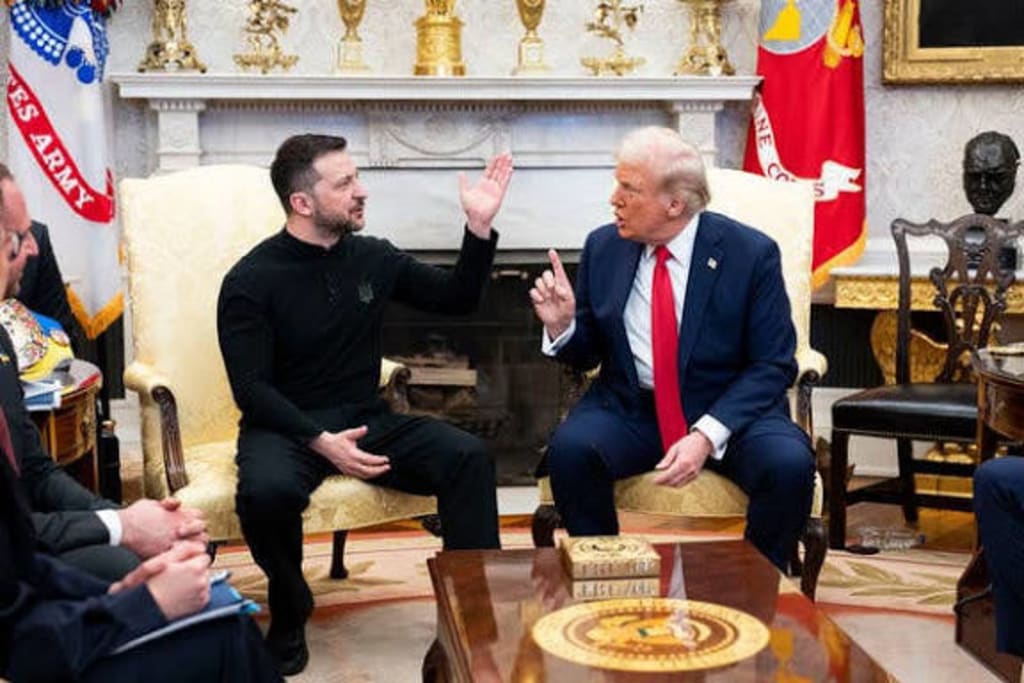
Despite warmer rhetoric and renewed dialogue, deep divisions, battlefield realities, and political constraints suggest an end to the war remains far from reach.
In recent public appearances and statements, former U.S. President Donald Trump and Ukrainian President Volodymyr Zelensky have struck a noticeably more upbeat tone when discussing the possibility of ending the war in Ukraine. The language of optimism, negotiation, and “new approaches” has replaced months of hardened rhetoric. Yet behind the smiles and hopeful words, there is little concrete evidence that peace is genuinely close.
For Ukrainians living under the shadow of daily air raids and for global observers watching one of Europe’s most consequential conflicts since World War II, the contrast between tone and reality is striking. Diplomatic warmth may generate headlines, but wars are not ended by mood alone.
A Shift in Tone, Not in Terms
Trump’s recent comments suggest he believes the war could be resolved “quickly” under different leadership, while Zelensky has emphasized openness to dialogue—provided Ukraine’s sovereignty and territorial integrity are respected. On the surface, this convergence appears promising. Both leaders project confidence and a willingness to talk, which is often a prerequisite for peace.
However, optimism without clarity can be misleading. Neither side has presented a detailed framework for negotiations that addresses the core disputes: occupied territories, security guarantees, accountability for war crimes, and Ukraine’s future alignment with the West. Without movement on these fundamentals, upbeat rhetoric risks becoming little more than political theater.
The Battlefield Tells a Different Story
While diplomatic language softens, conditions on the ground remain brutal. Fighting continues along multiple fronts, with incremental gains and losses costing thousands of lives. Russia maintains control over significant portions of Ukrainian territory, while Ukraine remains determined to reclaim what it considers sovereign land.
Military realities often dictate diplomatic outcomes, and at present, neither side appears decisively positioned to force a settlement on its own terms. This stalemate reduces incentives for compromise, making peace talks politically risky and strategically uncertain.
Trump’s Calculus and Global Signals
Trump’s optimistic messaging also reflects domestic political considerations. Positioning himself as a dealmaker capable of ending foreign wars resonates strongly with parts of the U.S. electorate. Yet translating campaign rhetoric into international agreements is far more complex—especially when the conflict involves multiple actors, alliances, and long-standing geopolitical rivalries.
For European allies and NATO partners, Trump’s tone raises questions rather than reassurance. Would a peace deal prioritize speed over sustainability? Would Ukraine be pressured into concessions? The lack of specifics fuels anxiety among countries that view Ukraine’s resistance as critical to regional security.
Zelensky’s Narrow Path
Zelensky, meanwhile, walks a diplomatic tightrope. His openness to dialogue must balance international diplomacy with domestic expectations. After years of sacrifice, Ukrainian society remains deeply resistant to any settlement that legitimizes territorial loss. Any hint of compromise risks political backlash and public disillusionment.
At the same time, Ukraine’s dependence on Western military and financial support means Zelensky cannot ignore shifts in tone from influential figures like Trump. Appearing receptive keeps doors open—but receptiveness does not equal readiness to concede.
Peace Requires More Than Positivity
History shows that successful peace processes depend on more than goodwill. They require enforceable agreements, trusted mediators, and credible security arrangements. At present, none of these elements are firmly in place. Mutual distrust remains profound, and previous diplomatic efforts have collapsed under the weight of broken promises and ongoing violence.
Moreover, Russia’s strategic objectives and Ukraine’s national aspirations remain fundamentally incompatible. Until there is evidence of meaningful change in those positions, peace will remain aspirational rather than achievable.
Why the Optimism Still Matters
Despite the skepticism, the shift in tone is not meaningless. Language shapes possibilities. An environment where leaders speak about peace—even cautiously—can lower tensions, create diplomatic space, and prepare public opinion for difficult conversations in the future.
However, optimism must be matched with substance. Without timelines, proposals, or confidence-building measures, hopeful rhetoric risks raising expectations only to dash them later.
The Long Road Ahead
For now, Trump and Zelensky’s upbeat demeanor offers a psychological pause in an exhausting conflict—but not a turning point. The war’s root causes remain unresolved, and the distance between words and action is still vast.
Peace in Ukraine, if it comes, is more likely to be slow, complex, and imperfect rather than quick and triumphant. Until clear steps replace encouraging phrases, the world should view optimism with caution—and prepare for a conflict that continues to test diplomacy, endurance, and global stability.
About the Creator
Fiaz Ahmed Brohi
I am a passionate writer with a love for exploring and creating content on trending topics. Always curious, always sharing stories that engage and inspire.
Keep reading
More stories from Fiaz Ahmed Brohi and writers in The Swamp and other communities.
North Korea’s Kim Oversees Test Launch of Long-Range Cruise Missiles
North Korea has once again captured global attention as leader Kim Jong Un personally oversaw the test launch of long-range cruise missiles, underscoring Pyongyang’s continued focus on strengthening its military capabilities despite international pressure and sanctions. The missile test, reported by state media, signals not only technological progress but also a calculated political message to regional rivals and the wider international community. A Demonstration of Strategic Capability According to North Korean officials, the cruise missiles flew along a pre-set trajectory and accurately struck their targets, showcasing precision, endurance, and reliability. Unlike ballistic missiles, cruise missiles travel at lower altitudes and are harder to detect by radar systems, making them a particularly concerning weapon for neighboring countries. By testing long-range variants, North Korea appears to be emphasizing its ability to conduct sustained and precise strikes beyond its immediate borders. Kim Jong Un’s presence at the launch site was no coincidence. His attendance signals the importance of the test and reinforces his role as the ultimate authority over the country’s defense strategy. State media images often show Kim observing missile launches with senior military officials, a visual reminder that military strength remains central to his leadership and governance. Why Cruise Missiles Matter Cruise missiles differ significantly from the ballistic missiles that usually dominate headlines. They are designed to fly at low altitudes, maneuver around terrain, and evade missile defense systems. This makes them valuable assets in modern warfare. Analysts note that long-range cruise missiles could potentially carry conventional or nuclear warheads, raising concerns about their role in North Korea’s broader weapons program. For North Korea, cruise missile development offers strategic advantages. These weapons can complement ballistic missiles, creating a more diverse and flexible arsenal. By improving accuracy and range, Pyongyang enhances its deterrence posture, signaling that it can respond to perceived threats in multiple ways. Regional and Global Reactions The test launch is likely to alarm South Korea, Japan, and the United States, all of whom closely monitor North Korean military activity. While cruise missile tests have sometimes drawn less international attention than ballistic missile launches, their strategic implications are no less serious. Regional governments typically respond with heightened surveillance, diplomatic statements, and coordination with allies. South Korea and Japan have consistently called for restraint, emphasizing that such actions increase tensions and undermine regional stability. The United States, meanwhile, has reiterated its commitment to the defense of its allies and continues to advocate for dialogue alongside deterrence. A Message Beyond the Battlefield Missile tests in North Korea often serve political purposes beyond military evaluation. Domestically, they reinforce the narrative of strength, self-reliance, and technological advancement promoted by the regime. At a time when the country faces economic challenges and international isolation, successful weapons tests can be used to bolster national pride and loyalty. Internationally, the timing of such tests is often strategic. They can coincide with diplomatic developments, military exercises by rival nations, or shifts in global politics. By conducting missile launches, North Korea reminds the world that it remains a significant security player that cannot be ignored. Sanctions and Strategic Persistence Despite facing some of the toughest international sanctions in the world, North Korea has continued to invest heavily in its weapons programs. These sanctions aim to restrict access to materials, technology, and funding, yet Pyongyang has demonstrated resilience and adaptability. The continued testing of advanced missile systems suggests that sanctions alone have not halted its ambitions. Some analysts argue that the persistence of these tests reflects North Korea’s belief that military strength is essential for regime survival. From Pyongyang’s perspective, a credible deterrent reduces the likelihood of external intervention and strengthens its bargaining position in any future negotiations. What Lies Ahead The latest cruise missile test raises questions about what North Korea’s next steps might be. Will it continue to refine cruise missile technology, or shift focus back to ballistic missiles and other advanced systems? Observers also wonder whether these demonstrations are a prelude to renewed diplomatic engagement or a sign of prolonged confrontation. What is clear is that North Korea remains committed to expanding and showcasing its military capabilities. As Kim Jong Un oversees these tests, he sends a clear message: the country intends to advance its defense programs regardless of external criticism. Conclusion North Korea’s test launch of long-range cruise missiles under Kim Jong Un’s supervision is more than a routine military exercise. It is a strategic statement aimed at both domestic and international audiences. By highlighting precision, range, and leadership involvement, the launch reinforces Pyongyang’s determination to remain a formidable force in an increasingly complex global security landscape. For the world, it serves as a reminder that tensions on the Korean Peninsula remain unresolved—and closely watched.
By Fiaz Ahmed Brohi2 months ago in The Swamp
The Saddest Thing - The Billionaires Who Rule America Aren't Even Enjoying Themselves
This single post says more about our ruling class than a thousand policy papers. The saddest thing about today's system is that the men robbing the rest of us - sabotaging our economic prospects, our pensions, our access to affordable healthcare - are not even happy.
By Scott Christenson🌴14 days ago in The Swamp


Comments
There are no comments for this story
Be the first to respond and start the conversation.