
Trump’s Iran Moves Rattle Arab Allies
Arab allies warn that Trump’s aggressive Iran stance could destabilize the region.

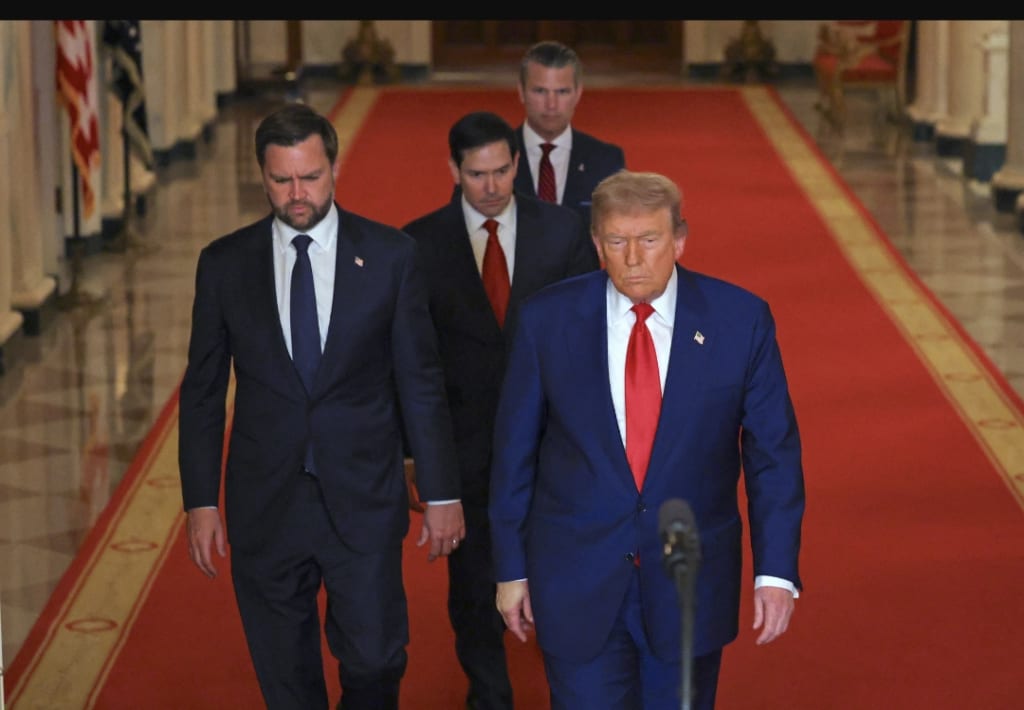
Recent moves by former U.S. President Donald Trump toward Iran are sending ripples of concern across the Middle East, unsettling America’s long-time Arab allies. While many regional governments share Washington’s worries about Iran’s nuclear ambitions and regional influence, Trump’s increasingly confrontational approach has raised fears of escalation, instability, and unintended consequences.
As tensions rise, Arab leaders are quietly urging restraint — not only from Tehran, but from Washington as well.
A Hardline Approach Toward Iran
Trump has once again placed Iran at the center of his foreign policy rhetoric, signaling that he favors maximum pressure to force Tehran into a new nuclear deal. His statements have ranged from renewed sanctions to the possibility of military action if Iran refuses to comply with U.S. demands.
This approach echoes Trump’s earlier presidency, when the U.S. withdrew from the Iran nuclear deal and imposed sweeping economic sanctions. While those measures weakened Iran’s economy, they also increased regional tensions and brought the two countries close to direct conflict.
Now, with Trump still shaping U.S. policy debates, Arab allies fear history could repeat itself — with even higher stakes.
Arab Allies Call for Restraint
Countries such as Saudi Arabia, Qatar, the United Arab Emirates, Oman, and Jordan have expressed growing unease behind the scenes. Their concern is not support for Iran, but the fear that a confrontation between Washington and Tehran could spill across borders.
Arab diplomats warn that:
Any U.S. strike could provoke Iranian retaliation
Gulf states hosting U.S. bases could become targets
Energy infrastructure and shipping routes could be disrupted
As a result, many regional leaders are pressing for diplomacy over confrontation, emphasizing that escalation would harm everyone involved.
Reluctance to Be Drawn Into Conflict
One notable shift is the reluctance of some Arab states to openly support potential U.S. military action. Reports suggest that key Gulf allies are unwilling to allow their territory or airspace to be used for attacks on Iran.
This marks a significant change from past decades, when U.S. military operations relied heavily on regional cooperation. The hesitation reflects a desire to avoid becoming direct participants in a conflict that could destabilize their own countries.
For these nations, neutrality — or at least distance — has become a form of self-preservation.
Energy and Economic Fears
Beyond security, economic concerns loom large. The Middle East remains central to global energy markets, and any conflict involving Iran could:
Drive up oil prices
Disrupt shipping through the Strait of Hormuz
Undermine fragile post-pandemic recoveries
Arab governments fear that instability could undo years of economic reform and diversification efforts. For oil-producing nations, short-term price spikes may be tempting, but long-term volatility poses serious risks.
Balancing Opposition to Iran With Regional Stability
Many Arab states view Iran as a regional rival, citing its influence in Yemen, Iraq, Syria, and Lebanon. However, opposing Iran does not necessarily mean endorsing war.
Instead, Arab leaders are attempting to strike a delicate balance:
Containing Iran’s influence
Avoiding open conflict
Preserving regional stability
Trump’s aggressive posture threatens that balance, forcing allies into uncomfortable positions they would rather avoid.
A Region Wary of Unpredictability
More than anything, Trump’s Iran moves have revived concerns about unpredictable U.S. decision-making. Arab allies worry that rapid shifts in policy, driven by political pressure rather than regional consensus, could leave them exposed.
As a result, many are rethinking their reliance on Washington alone and exploring broader diplomatic options — including dialogue, regional cooperation, and de-escalation.
What Comes Next
Trump’s tough stance on Iran may be intended to project strength, but for Arab allies, it represents a source of anxiety rather than reassurance. While they share U.S. concerns about Tehran, they fear that confrontation could ignite a wider conflict with devastating consequences.
As Middle East tensions simmer, one message from Arab capitals is increasingly clear: pressure without diplomacy risks pushing the region toward chaos rather than stability.
For now, the region watches closely — hoping that words do not turn into actions that cannot be undone.
About the Creator
Asad Ali
I'm Asad Ali, a passionate blogger with 3 years of experience creating engaging and informative content across various niches. I specialize in crafting SEO-friendly articles that drive traffic and deliver value to readers.
Spanish Hornets Intercept Russian Navy Su-30SM With a Rare Weapon Loadout Over the Baltic
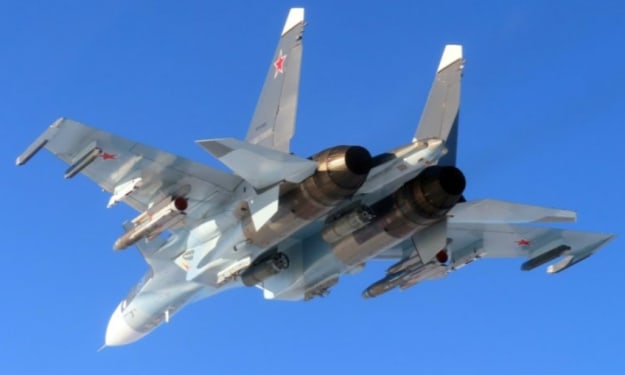
Spanish Air Force F/A-18 Hornet fighter jets reportedly intercepted a Russian Navy Su-30SM fighter aircraft flying over the Baltic region, drawing attention due to the Russian jet’s reportedly rare weapon configuration. The incident highlights the continued military monitoring activity over European airspace and reflects ongoing geopolitical tensions between NATO members and Russia.
By Aarif Lashariabout 4 hours ago in The Swamp



Comments
There are no comments for this story
Be the first to respond and start the conversation.