
Up to 23,000 Terrorists Operating in Afghanistan, Russian Report Says
Russian intelligence warns that up to 23,000 militants, including ISIS-K and Taliban-affiliated groups, continue to operate across Afghanistan, posing ongoing regional and global security threats.

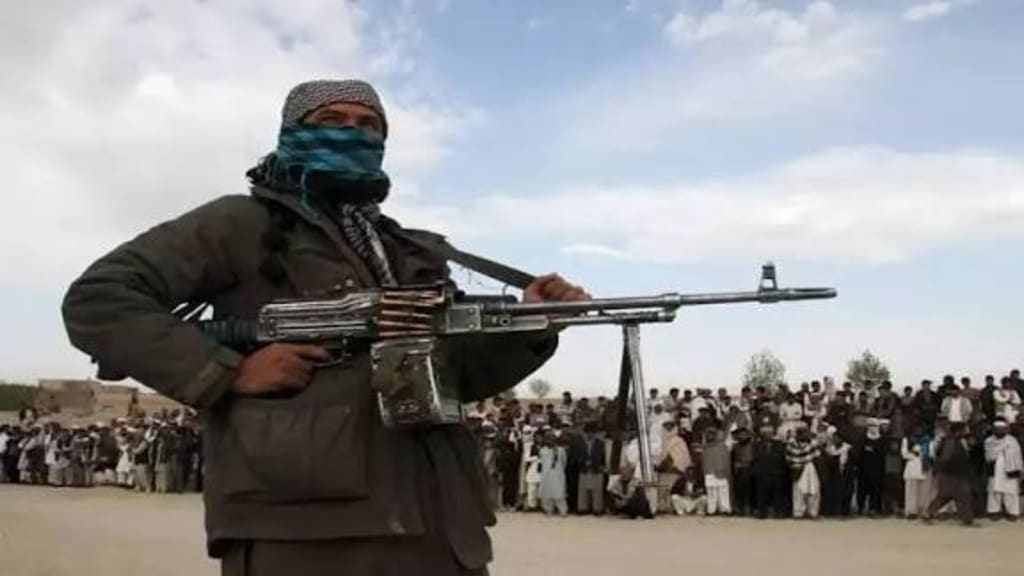
A recent report from Russia claims that up to 23,000 militants are currently operating in Afghanistan, highlighting ongoing security concerns despite the withdrawal of U.S. and NATO forces in 2021. The assessment, released by Russian intelligence sources, emphasizes that Afghanistan remains a fertile ground for extremist activity and could continue to pose a threat to regional and global stability.
The report, circulated among security analysts and government officials, identifies multiple armed groups, including the Taliban, Islamic State’s Khorasan Province (ISIS-K), and smaller affiliated cells. Russian officials claim that these groups are engaged in recruitment, training, and cross-border operations, with some receiving logistical support from local networks.
Taliban Control and Security Challenges
Although the Taliban holds formal political control over Afghanistan, Russian analysts argue that its governance is fragile, particularly in rural provinces. While the Taliban maintains authority in many urban centers, the report suggests that several regions remain contested. ISIS-K, in particular, continues to launch attacks against both Taliban forces and civilians, underscoring the group’s persistent threat.
The Russian assessment claims that extremist networks exploit weaknesses in local governance and security infrastructure to expand their operations. According to the report, some groups maintain training camps in mountainous areas, allowing them to operate with relative impunity. Russian analysts warn that this situation could lead to the re-emergence of Afghanistan as a base for international terrorist operations if not closely monitored.
Regional Implications
The presence of thousands of militants in Afghanistan has drawn concern from Russia and neighboring countries, including Pakistan, Iran, and the Central Asian republics. Moscow has long expressed apprehension that instability in Afghanistan could spill over into Central Asia, threatening border security and potentially fostering cross-border insurgency.
In response, Russia has increased military and intelligence engagement with regional partners, including joint border monitoring exercises and security consultations. Russian officials have also urged the Taliban to crack down on extremist elements that could target Russian or allied interests in the region.
International Concerns
Global security analysts note that Afghanistan remains a complex environment where terrorism, political instability, and humanitarian crises intersect. While the Russian report highlights the scale of militant activity, independent observers caution that numbers are difficult to verify. Nonetheless, the figure of 23,000 extremists aligns with other estimates suggesting that multiple armed factions continue to operate with varying degrees of influence.
The resurgence of militant activity in Afghanistan has implications for counterterrorism strategies worldwide. Countries including the United States, India, and European states remain concerned about the potential for Afghanistan to serve as a launchpad for attacks beyond its borders. Monitoring, intelligence-sharing, and targeted operations are seen as critical to preventing a re-emergence of transnational terrorism.
Humanitarian and Governance Issues
Experts emphasize that the security threat is compounded by ongoing humanitarian challenges. Economic instability, food shortages, and displacement create conditions in which extremist groups can recruit vulnerable populations. Critics argue that addressing only the militant threat without improving governance, infrastructure, and economic opportunities will likely limit long-term stability.
The Russian report suggests that Taliban cooperation is key to containing terrorist activity. However, internal divisions, limited resources, and ideological constraints may hinder the group’s ability to fully suppress rival factions. Analysts warn that a failure to address these challenges could prolong Afghanistan’s security crisis.
Looking Ahead
As Afghanistan marks years of continuing turmoil, the reported presence of up to 23,000 terrorists serves as a stark reminder that the country’s challenges are far from resolved. Regional powers, including Russia, appear determined to remain engaged in monitoring and mitigating risks, while the international community debates strategies to support stability without direct military intervention.
In conclusion, Afghanistan’s security landscape remains precarious. The combination of militant activity, governance gaps, and socio-economic pressures underscores the need for coordinated regional and international efforts. Without sustained attention, the country risks remaining a focal point for extremism with consequences that extend far beyond its borders.
About the Creator
Fiaz Ahmed
I am Fiaz Ahmed. I am a passionate writer. I love covering trending topics and breaking news. With a sharp eye for what’s happening around the world, and crafts timely and engaging stories that keep readers informed and updated.
Keep reading
More stories from Fiaz Ahmed and writers in The Swamp and other communities.
Why DHS Suddenly Reversed Course on Suspending TSA PreCheck
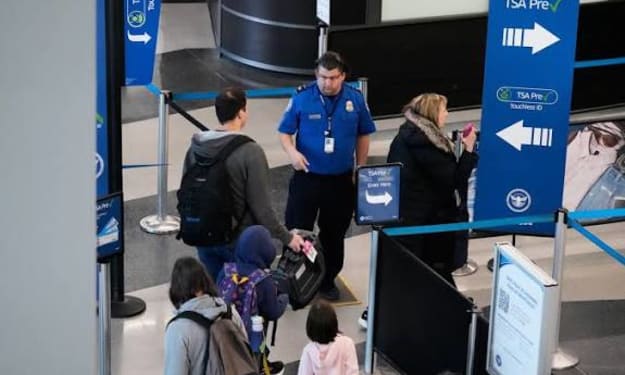
The abrupt reversal by the Department of Homeland Security (DHS) on suspending the popular TSA PreCheck program has raised questions about what changed behind the scenes. Just days after warning travelers that budget pressures could force the temporary shutdown of expedited airport screening, DHS announced that the program would remain operational after all. The episode highlights the political, economic, and public safety stakes tied to one of America’s most widely used travel initiatives. TSA PreCheck allows vetted travelers to move through airport security with lighter screening requirements, avoiding long lines and removing fewer personal items. More than 20 million Americans are enrolled, making it a critical component of the nation’s aviation security system. The Initial Announcement The controversy began when DHS officials warned that unresolved funding disputes in Congress could disrupt non-essential security programs. TSA PreCheck and related trusted traveler services, including Global Entry, were listed as vulnerable if a prolonged budget standoff forced staffing cuts. The warning triggered immediate concern among airlines, airports, and frequent travelers. With peak travel seasons approaching, suspending PreCheck would have pushed millions of passengers back into standard screening lanes, increasing congestion and wait times at major hubs. Industry groups described the prospect as “unworkable.” Airlines warned that delays would ripple across flight schedules, while airport authorities cautioned that overcrowded checkpoints could create safety risks. Public and Political Pressure The backlash was swift. Lawmakers from both parties contacted DHS leadership, arguing that suspending PreCheck would punish travelers and undermine confidence in air travel security. Several members of Congress publicly urged DHS to reconsider, emphasizing that the program is funded largely through user fees rather than general tax revenue. Behind the scenes, transportation committees reportedly pressed DHS to reclassify PreCheck as an essential security function rather than an optional service. The argument was simple: PreCheck does not weaken security—it enhances it by allowing officers to focus more attention on unknown or higher-risk passengers. Public reaction also played a role. Social media filled with complaints from travelers who had paid enrollment fees and relied on the program for work and family travel. Business groups warned that disrupting PreCheck could hurt commerce and tourism. Financial Reassessment After further review, DHS acknowledged that the financial impact of continuing PreCheck was less severe than initially projected. Because the program is supported by application and renewal fees, it does not draw heavily from the agency’s operational budget. Suspending it would have created administrative complications, including refund requests and reprocessing of background checks once the program restarted. A senior DHS official said maintaining PreCheck was “the most efficient option” under current conditions. “Shutting it down would cost more in the long run and create unnecessary disruption,” the official noted. Operational and Security Concerns Another factor in the reversal was security. Experts warned that removing PreCheck lanes would overload standard screening lines, forcing the Transportation Security Administration to stretch resources thinner. This could lead to longer wait times and potentially reduced screening effectiveness during busy travel periods. Security analysts argued that PreCheck allows TSA officers to allocate manpower more strategically. By streamlining low-risk passengers, officers can focus attention on individuals who require more thorough screening. “PreCheck is not a luxury,” said one aviation security consultant. “It’s a force multiplier. It makes the entire checkpoint system work better.” What the Reversal Means for Travelers For now, travelers can continue using PreCheck without interruption. DHS emphasized that the program remains fully operational and that enrollment and renewals will proceed as usual. However, officials cautioned that future funding disputes could still affect other services if Congress does not pass a long-term budget solution. The episode has renewed calls for Congress to provide stable funding for aviation security programs. Lawmakers from both parties are now pushing for legislation that would shield trusted traveler programs from budget uncertainty. A Lesson in Public Policy The sudden reversal underscores how quickly policy can shift under political and public pressure. It also highlights the importance of programs that blend security with convenience in a modern travel system. While DHS framed its initial warning as a contingency plan, the reaction revealed how deeply embedded PreCheck has become in American travel culture. What was once a pilot program is now viewed as essential infrastructure. In the end, the decision to keep TSA PreCheck running reflects a balance of economics, security, and public expectation. For millions of travelers, the outcome is simple: shorter lines, fewer disruptions, and a reminder that even routine airport procedures can become political flashpoints in times of uncertainty.
By Fiaz Ahmed about 8 hours ago in The Swamp
A Gathering of Evil Bosses
“I’m the queen of chin jutting while I smooth my hair, attacking, insulting, and deflecting to protect my appointer.” “Oh, please, Blondi, my hair is curled, highlighted, and longer than yours. I feature television commercials telling immigrants that we will give them a free plane ride home, and if they voluntarily turn themselves in, they will be allowed to legally apply for re-entry. It runs everywhere, and I look good in it! You can’t compete because of your blond hair. Mine is nicer, and my lips are prettier than yours.”
By Andrea Corwin 6 days ago in The Swamp



Comments
There are no comments for this story
Be the first to respond and start the conversation.