
US‑Flagged Ships Advised to Stay ‘As Far as Possible’ from Iranian Waters
Tensions in the Strait of Hormuz spur new maritime guidance amid geopolitical strain and shipping risks
Subtitle
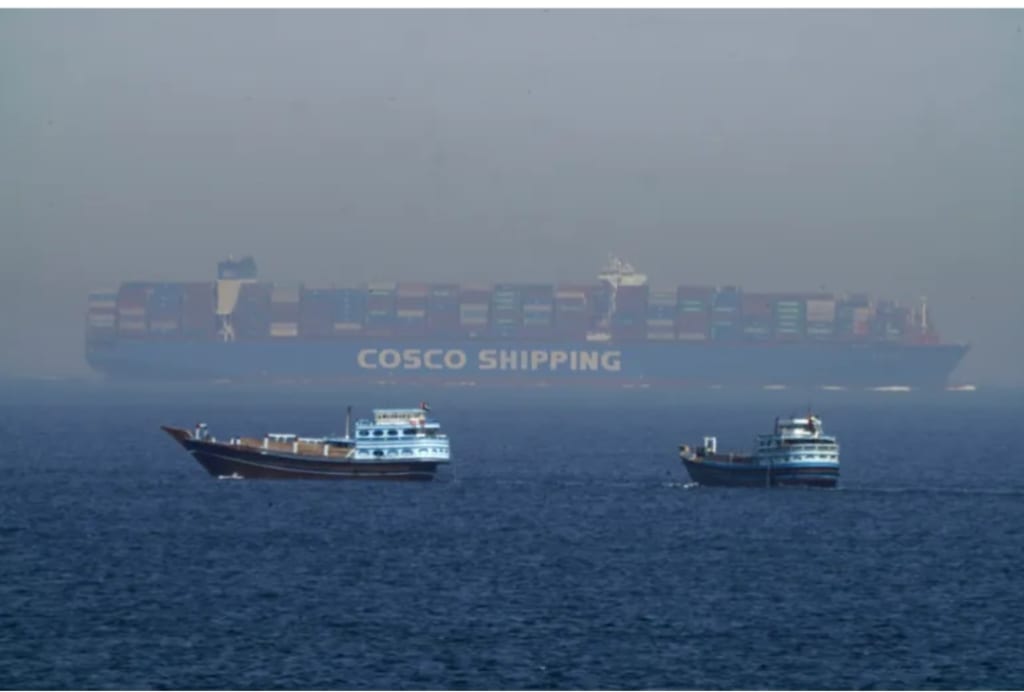
The United States has issued a clear and unusual maritime advisory telling American‑flagged commercial vessels to stay as far away as safely possible from Iranian territorial waters, particularly in the Strait of Hormuz, one of the world’s most strategically vital shipping lanes. The guidance reflects mounting tensions between Washington and Tehran and comes as incidents at sea raise concerns about safety, freedom of navigation, and the stability of global energy supply routes.
Why the Advisory Was Issued
The advisory was released by the U.S. Department of Transportation’s Maritime Administration (MARAD) and is intended to reduce risks to commercial vessels operating in a region that has recently seen provocative encounters and maritime friction. The guidance—which is set to remain in effect for six months—specifically recommends that U.S.‑flagged ships avoid Iranian territorial waters if possible, navigate closer to Oman’s territorial seas when eastbound through the Strait of Hormuz, and verbally decline boarding requests from Iranian forces if they occur.
Iran’s territorial waters extend into a section of the Strait of Hormuz, the narrow passage connecting the Persian Gulf to the Gulf of Oman and the Arabian Sea. This chokepoint handles about 20% of the world’s oil exports, making it a critical artery of the global energy system.
What Prompted the New Guidance
The advisory follows several recent maritime incidents that have heightened concerns among U.S. officials and shippers. One such episode involved Iranian boats approaching a U.S.‑flagged oil tanker in the Strait of Hormuz, where the vessel was ordered to stop for boarding before being escorted away with the support of a U.S. warship. Other reports include drone activity near U.S. naval vessels and attempts by Iranian forces to assert control in local waters. These events underscore a broader pattern of maritime tension and unpredictability in the region.
In response to these risks, the advisory instructs crews to keep their Automatic Identification System (AIS) transponders on, maintain communication with U.S. naval or maritime authorities, and decline boarding permissions from Iranian forces in accordance with international law, while avoiding any forced resistance if boarding occurs.
Strategic and Commercial Implications
The U.S. warning is significant not just for shipping lines but also for global markets. After the advisory was announced, oil prices rose sharply, reflecting traders’ concerns about potential disruptions to flows through the Strait of Hormuz. Brent crude climbed more than 1%, underscoring how sensitive energy markets are to tensions in the region.
Shipping companies operating American‑flagged vessels now face a calculus of navigational risk versus commercial necessity. Staying farther from Iranian waters can increase transit distances and costs, particularly for journeys through the Strait of Hormuz and Gulf of Oman. Moreover, vessels must now factor in heightened security protocols, enhanced communication procedures, and coordination with maritime security entities.
International Law and Freedom of Navigation
The Strait of Hormuz is governed by complex international laws that balance sovereign territorial rights with freedom of navigation principles. Under the United Nations Convention on the Law of the Sea (UNCLOS), all ships enjoy the right of transit passage through straits used for international navigation, even those adjacent to a coastal state’s territorial sea.
The new U.S. advisory highlights how, despite these legal protections, practical safety considerations may override theoretical rights when geopolitical tensions are high and encounters at sea risk escalation. By advising vessels to stay farther out, U.S. authorities are effectively prioritizing risk mitigation over strict territorial interpretation—a reflection of current geopolitical realities.
Diplomatic Underpinnings
The maritime guidance comes at a delicate moment in U.S.–Iran relations. While indirect nuclear talks have taken place in countries like Oman, broader issues—including ballistic missiles, regional proxy conflicts, and human rights concerns—remain unresolved. U.S. officials have also imposed additional tariffs on countries trading with Iran, further straining relations.
Iran, for its part, has periodically hinted at measures such as potentially restricting access to the Strait of Hormuz if hostilities escalate—an option that could wreak havoc on international trade and energy markets. Although such threats have not materialized, past incidents demonstrate Iran’s willingness to assert maritime influence.
Balancing Safety and Trade
For commercial shipping operators, the guideline presents operational challenges. Transit routes may need to be recalculated, insurance premiums could rise to reflect heightened geopolitical risk, and companies might increase reliance on naval escorts or real‑time intelligence support. All of this contributes to higher logistical costs and potential delays.
At the same time, the U.S. government’s explicit emphasis on avoiding Iranian territorial seas can be seen as part of a broader effort to de‑escalate potentially volatile interactions at sea. By urging caution and restraint, the advisory aims to minimize incidents that could inadvertently trigger a military confrontation or broader crisis.
Looking Ahead
The next several months will test how effectively the shipping advisory balances commercial necessity, navigational safety, and geopolitical risk. Given the Strait of Hormuz’s importance to global trade and energy supplies, even minor disruptions can ripple outward, affecting markets and economies worldwide.
Maritime analysts will be watching how vessels adjust their routes, how insurers respond, and whether diplomatic progress between Washington and Tehran can ease tensions enough to eventually relax maritime warnings.
For now, the message from U.S. authorities is clear: in waters fraught with geopolitical tension, caution is essential—not only for individual ship crews, but for the stability of international trade and energy markets.
About the Creator
Keep reading
More stories from Sadaqat Ali and writers in The Swamp and other communities.
How Much Gold Is in an Olympic Gold Medal, and How Much Is It Worth?
Winning an Olympic gold medal is the ultimate dream for athletes, symbolizing years—often decades—of discipline, sacrifice, and excellence. To spectators, the medal appears to be made of solid gold, shining brightly as it’s raised on the podium. But the reality is far more surprising. Olympic gold medals are not solid gold, and their true monetary value is far less than their emotional and historical significance.
By Sadaqat Ali3 days ago in The Swamp
The Saddest Thing - The Billionaires Who Rule America Aren't Even Enjoying Themselves
This single post says more about our ruling class than a thousand policy papers. The saddest thing about today's system is that the men robbing the rest of us - sabotaging our economic prospects, our pensions, our access to affordable healthcare - are not even happy.
By Scott Christenson🌴6 days ago in The Swamp



Comments
There are no comments for this story
Be the first to respond and start the conversation.