
What Happens to All These Trade Deals Now?
Legal turmoil over U.S. tariffs and shifting geopolitics create uncertainty for bilateral and multilateral trade deals worldwide

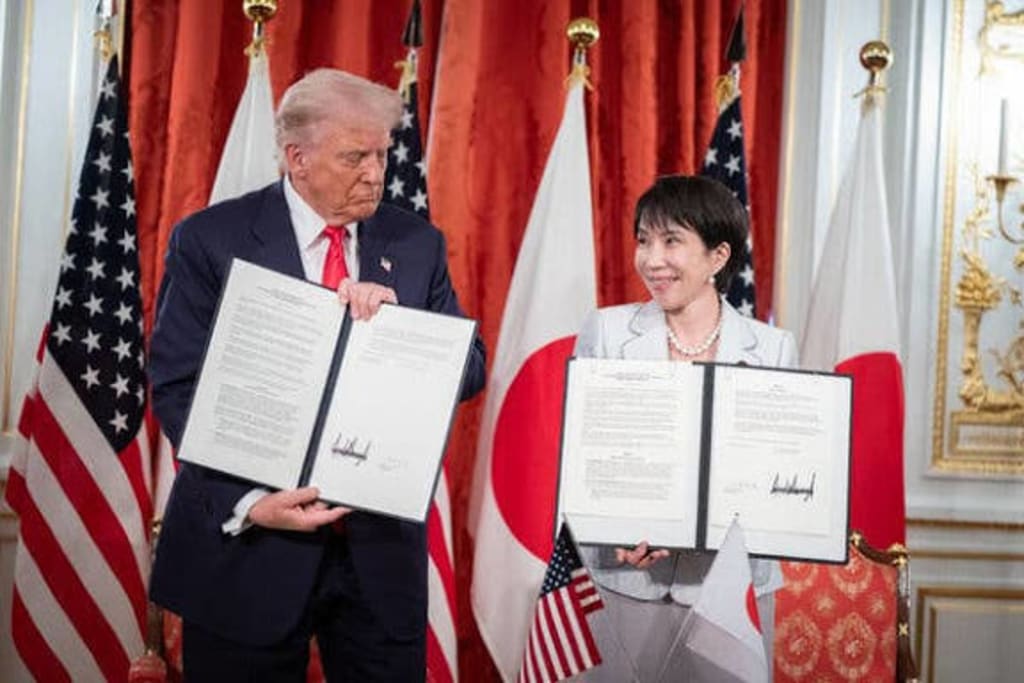
Global trade agreements negotiated over the past few years face a period of intense uncertainty as political, legal, and economic conditions shift rapidly — especially after a major U.S. Supreme Court ruling and evolving tariff strategies from Washington. Governments and businesses around the world are asking the same question: what comes next for trade deals that have been painstakingly negotiated?
Legal Uncertainty in the United States
The immediate trigger for trade deal confusion was a recent Supreme Court decision that struck down key U.S. tariffs previously imposed under emergency powers. The court ruled that the government lacked unilateral authority to set sweeping tariffs without explicit Congressional approval, undermining the legal foundation for many trade arrangements tied to those levies.
In response, the White House has moved to impose new global tariffs under alternative authorities — including Section 122 of the Trade Act — raising levies to 15 percent on many imports for a limited 150-day period. That move has compounded uncertainty: while some deals were negotiated under the assumption of earlier tariff caps, the new rates could render those frameworks obsolete or financially unattractive.
Treasury officials have publicly urged foreign governments to honor existing trade deals, saying many negotiated commitments remain intact despite the ruling, especially pacts with countries like India. However, legal experts warn that the viability of certain provisions could hinge on how tariffs are implemented moving forward.
Interim Agreements and Modified Deals
Not all trade arrangements are in jeopardy. In early 2026, the United States and India announced a framework for a bilateral interim trade agreement, including significant tariff reductions — from 25 percent to around 18 percent on many goods — in exchange for broader market access commitments. That deal was intended to set the stage for a full-scale Trade Agreement.
Even after the tariff ruling, both Washington and New Delhi have signalled their intention to keep negotiating the interim pact, adapting to the changed legal context. New Delhi’s commerce officials suggested the reciprocal tariff figure may adjust, but that the broader deal remains a priority.
The Daily Star
Other deals — such as reciprocal trade frameworks with Indonesia and Bangladesh — have also been part of U.S. efforts to diversify trade ties. These agreements aim to lower tariff baselines and address non-tariff barriers, offering market access to U.S. agricultural and industrial goods while gaining concessions abroad.
EU and Other Major Trade Pacts
Across the Atlantic, the European Union and India are finalizing one of the world’s biggest free-trade agreements, which promises to cut tariffs on most goods and boost services access once legal reviews are complete. That pact — projected to cover roughly 25 percent of global GDP — may still proceed independently of U.S. policy shifts.
However, the U.S.–EU trade framework agreed in 2025 has already been complicated by tariff unpredictability and political tensions. Several European lawmakers have paused approval of trade arrangements in reaction to ongoing U.S. tariff threats, including levies between 10 percent and 25 percent that run counter to prior commitments.
Market and Strategic Shifts
The knock-on effects extend far beyond legal questions. Asian and European economies are increasingly recalibrating trade routes and agreements outside U.S. direction, seeking stability amid tariff turbulence. Some analysts argue that the United States could risk being sidelined as Europe and Asia push forward with deeper integration and lowered barriers between major economic blocs.
Reddit
Yet others point out that structured deals — once signed — carry inertia. Even if tariffs change or legal bases shift, countries often maintain existing market access terms to preserve supply chains, stability for exporters and importers, and mutual economic interdependence. This is especially true for longstanding partners such as Canada, Mexico, and strategic markets in East Asia.
Foreign Policy
Looking Ahead
The coming months could determine the future of many trade deals. Lawmakers in the United States might consider new legislation to clarify tariff authority, while international partners watch closely to see if interim agreements are formalised or if renegotiations become necessary.
For businesses, the lesson is clear: flexibility and diversification may be more important than ever. Trade deals that once seemed settled now face legal and political stress tests, and the global trading system may evolve into a more fragmented set of regional arrangements rather than a single cohesive framework.
Amid these shifts, governments and corporations alike will be watching how legal decisions, geopolitical priorities, and economic pressures intersect — and what that means for the future of global trade.
About the Creator
Fiaz Ahmed
I am Fiaz Ahmed. I am a passionate writer. I love covering trending topics and breaking news. With a sharp eye for what’s happening around the world, and crafts timely and engaging stories that keep readers informed and updated.
Keep reading
More stories from Fiaz Ahmed and writers in The Swamp and other communities.
Reimagining Matter’: Nobel Laureate Invents Machine That Harvests Water From Dry Air
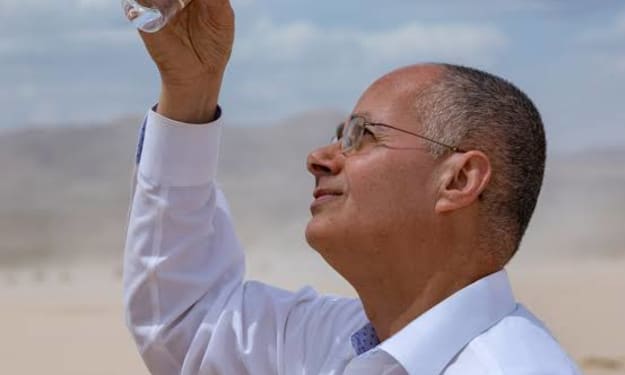
A groundbreaking new water-harvesting technology developed by Nobel Prize-winning chemist Omar Yaghi has the potential to transform access to clean water in the world’s driest and most disaster-affected regions. The device — capable of extracting moisture from even extremely arid air — could provide a sustainable source of fresh water without reliance on centralized infrastructure, offering hope amid worsening global water scarcity. � The Asian Age A New Frontier in Water Technology Yaghi, a professor of chemistry at the University of California, Berkeley and recipient of the 2025 Nobel Prize in Chemistry, unveiled the invention this month, describing it as a “science capable of reimagining matter.” The system uses advanced materials designed at the molecular level to capture atmospheric moisture and convert it into potable water, even in conditions where traditional technologies struggle. Unlike conventional atmospheric water systems — which often require high humidity or significant electrical input — Yaghi’s technology operates using ultra-low-grade thermal energy. The units can be powered by ambient heat or residual thermal sources, eliminating the need for a constant electricity supply and allowing deployment in regions without established power grids. Designed to resemble a 20-foot shipping container, the systems can produce up to 1,000 litres of clean water per day, according to company estimates. That volume could sustain a small community or serve as a lifeline in emergency scenarios where infrastructure has been disrupted by natural disasters or climate extremes. From Desert Roots to Global Impact Yaghi’s personal history underscores the invention’s significance. Growing up in a refugee community in Jordan, he experienced firsthand the hardships of life without reliable access to water or electricity — a memory he recounted at his Nobel banquet speech. That early struggle, he said, helped shape his determination to solve one of the most pressing challenges of the 21st century: water scarcity. “In many places where I grew up, water was a precious and unpredictable resource,” Yaghi said. “This invention aims to make clean water more accessible and to reduce dependency on fragile supply networks that are vulnerable to drought and disaster.” The Asian Age Real-World Applications and Humanitarian Promise Experts emphasize that the technology’s potential extends beyond technical novelty. In areas devastated by hurricanes, droughts, or economic instability, water supply often becomes one of the earliest and most severe crises. In the Caribbean, where Hurricane Beryl and other storms have repeatedly damaged infrastructure, officials say the water harvester could offer a lifeline. Davon Baker, a government official and environmentalist from Carriacou and Petite Martinique, described the system as a promising tool for resilience and recovery. “We’re still dealing with the legacy of hurricanes — storms that knocked out centralized systems and left communities reliant on imported water,” he said. “A decentralized solution that produces water from air itself could help us adapt to a future of more intense weather events.” The invention also arrives amid alarming global statistics. A recent United Nations report described the world as entering an era of “global water bankruptcy,” with roughly 75% of the global population living in water-insecure conditions. Around 2.2 billion people still lack access to safely managed drinking water, and billions more experience severe scarcity for periods each year, the report said. Sustainability and Climate Adaptation Unlike some existing solutions such as desalination — which can harm marine ecosystems through concentrated brine discharge — Yaghi’s approach is engineered to be environmentally friendly. By leveraging ambient thermal energy and avoiding intensive electrical loads, the system aims to reduce carbon emissions and minimize ecological impacts. “This technology does not require mega-infrastructure or heavy energy investment,” said a sustainable technology expert. “That sets it apart from traditional freshwater sources and makes it especially suited for vulnerable regions facing compound climate risks.” However, many scientists caution that scaling the technology will require sustained investment, careful field testing, and adaptation to diverse climates. Large-scale deployment in extremely dry environments — where water vapor is sparse — presents engineering challenges that researchers will continue to evaluate. Looking Ahead With prototype units already in development, Yaghi and his team are working with partners to conduct pilot programs in regions most in need. The goal is to demonstrate operational viability and to refine how the systems can be integrated into community water strategies. As climate change intensifies droughts and strains water resources around the world, innovations like Yaghi’s atmospheric water harvester provide a promising glimpse of how science might help mitigate one of the planet’s most urgent challenges. Whether in disaster zones, arid regions, or underserved rural areas, capturing water straight out of the air may soon become a critical tool in building climate-resilient communities.
By Fiaz Ahmed about 2 hours ago in The Swamp
A Gathering of Evil Bosses
“I’m the queen of chin jutting while I smooth my hair, attacking, insulting, and deflecting to protect my appointer.” “Oh, please, Blondi, my hair is curled, highlighted, and longer than yours. I feature television commercials telling immigrants that we will give them a free plane ride home, and if they voluntarily turn themselves in, they will be allowed to legally apply for re-entry. It runs everywhere, and I look good in it! You can’t compete because of your blond hair. Mine is nicer, and my lips are prettier than yours.”
By Andrea Corwin 4 days ago in The Swamp
Jesse Jackson was supposed to be the first Black President
Before Barack Obama became the first Black president, there was Reverend Jesse Jackson. Rev. Jesse Jackson was running for president in 1984 and 1988. Though he didn't win presidency, Jackson continues with his political activism and fighting for equality. In the light of Reverend Jesse Jackson's passing let's look back how Jackson became a political activist and a former presidential candidate.
By Gladys W. Muturi3 days ago in The Swamp



Comments
There are no comments for this story
Be the first to respond and start the conversation.