
Australia Helicopter Services Market: Steady Growth Fueled by Emergencies, Tourism, and Technological Upgrades
An in-depth look at how Australia’s helicopter services sector is evolving in response to rising emergency needs, tourism demand, and operational innovations.

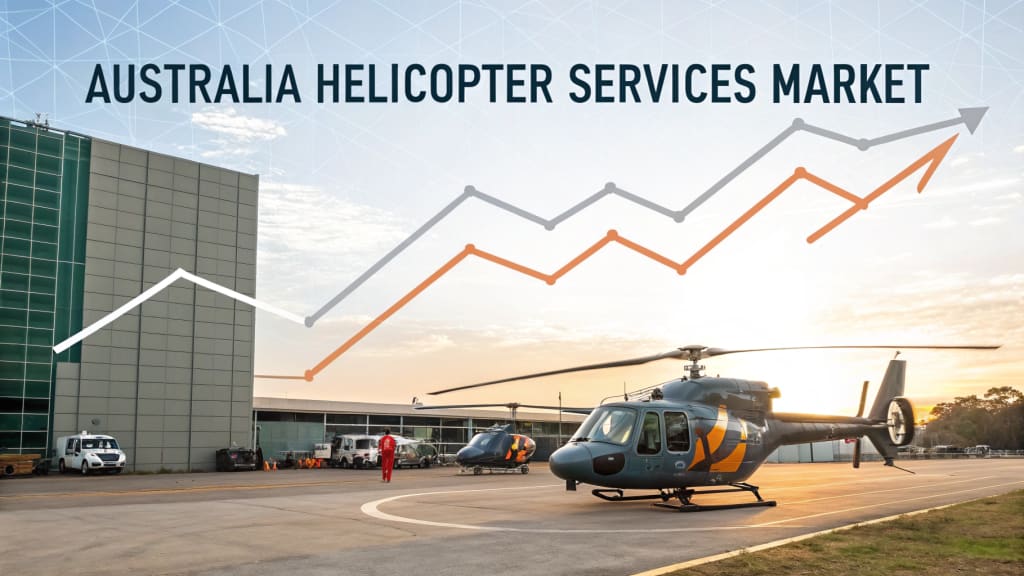
The Australia helicopter services market reached a value of USD 54 million in 2024 and is forecast to grow to USD 68.99 million by 2033, representing a compound annual growth rate (CAGR) of 2.76% between 2025 and 2033, according to the latest IMARC Group analysis.
Helicopter services encompass a wide range of aerial operations — from emergency medical evacuations and disaster response to offshore support, corporate travel, leisure charters, and logistical transport. These services are becoming increasingly vital in Australia due to the country’s vast geographical expanse, diverse terrain, and growing demand for rapid, flexible aerial solutions.
Why the Market Is Growing So Rapidly
One of the foremost drivers of market growth is the expanding need for aerial emergency services, particularly medical evacuation, disaster response, and firefighting missions. Australia’s extensive rural and remote regions present unique challenges for ground travel, making helicopters indispensable for reaching areas quickly when road access is limited or nonexistent. The intensification of natural disasters — especially bushfires and floods — has further underscored the value of rapid airborne response capabilities.
Another significant growth catalyst is advancing helicopter technology. Operators are integrating cutting-edge avionics, real-time weather tracking systems, and more fuel-efficient and reliable powerplants, which enhance operational safety and performance. These technological upgrades are helping providers offer more dependable services across diverse weather and terrain conditions, increasing their utility in emergency and non-emergency missions alike.
Tourism and scenic flights form another pillar of market expansion. Australia’s iconic landscapes — from the Great Barrier Reef to the rugged Outback and coastal regions — are drawing both domestic and international tourists who seek aerial perspectives and luxury experiences. Helicopter firms are designing bespoke sightseeing tours and adventure packages that combine aerial views with unique on-ground experiences, thereby capturing a growing leisure segment.
Commercial and offshore operations — especially in the oil, gas, and renewable energy sectors — also contribute to demand growth. Helicopters are essential for transporting personnel and equipment to offshore facilities where traditional transport modes are impractical. This need extends to aerial surveying, logistics support, and crew changes, strengthening the role of helicopter services in industrial operations.
Finally, evolving civil aviation trends and safety standards are prompting operators to modernise fleets and expand service offerings. Regulatory frameworks overseen by authorities such as the Civil Aviation Safety Authority (CASA) ensure stringent safety compliance, encouraging investment in advanced equipment and skilled pilot training — moves that help expand operational capacity and market confidence.
What the Opportunities Are
1. Emergency Services Expansion
The ongoing need for rapid medical evacuation and disaster response presents long-term opportunities for operators to partner with government, regional health services, and disaster management agencies to expand service coverage.
2. Technological Leadership and Fleet Modernisation
Adopting next-generation technologies — including advanced avionics, hybrid propulsion, and enhanced safety systems — can differentiate service offerings and improve operational efficiency.
3. Tourism Sector Growth
Developing innovative sightseeing experiences and premium charter packages, especially in partnership with tourism boards and hospitality brands, can drive higher revenue and customer loyalty.
4. Offshore and Industrial Services
Targeting logistical support roles in oil, gas, mining, and emerging renewable offshore industries such as wind energy can provide stable, high-value contracts.
5. Regional Accessibility Initiatives
Expanding services to underserved regional and remote communities — particularly for essential services such as medical transport — can create new demand and social impact.
6. Corporate and VIP Transport
Offering bespoke corporate travel solutions, including executive charters and remote site access for business professionals, can tap into premium aviation demand segments.
7. Training and Workforce Development
Investing in pilot and technician training initiatives — potentially in partnership with aerospace institutions — strengthens operational readiness and supports long-term market sustainability.
Recent News & Developments in Australia Helicopter Services Market
• March 2025: The Australian government expanded funding for regional emergency response aviation programs, increasing support for helicopter-based medical evacuation and rapid response units. These enhancements are aimed at improving service reach in rural and remote communities, addressing past gaps in emergency access and response times.
• June 2025: A major helicopter services provider announced the acquisition of next-generation rotorcraft equipped with digital avionics and enhanced safety features. The new fleet additions are expected to improve operational reliability in challenging weather conditions and expand service offerings in both tourism and industrial sectors.
• September 2025: Industry reports highlighted a sustained uptick in leisure charter bookings for scenic helicopter flights, particularly around tourist hotspots. Operators noted that demand for bespoke aerial tours continues to grow alongside broader tourism sector recovery and consumer appetite for premium travel experiences.
Why Should You Know About the Australia Helicopter Services Market?
The Australia helicopter services market represents a dynamic and crucial segment of the country’s aviation ecosystem. For investors, the forecasted CAGR of 2.76% through 2033 points to a stable, long-term growth trajectory underpinned by broad demand drivers — ranging from emergency services to industrial and leisure aviation.
For service providers and operators, opportunities lie in technological innovation, fleet expansion, and diversified service portfolios that cater to multiple end-use applications. For policymakers and community planners, fostering partnerships between public services and helicopter operators can enhance emergency response capabilities, regional connectivity, and economic development, especially in remote areas.
As Australia navigates evolving demographic, environmental, and economic landscapes, helicopter services continue to play a vital role — providing agile, life-saving, and value-added aerial solutions across sectors that matter most to communities and industries alike.
About the Creator
Rashi Sharma
I am a market researcher.
Keep reading
More stories from Rashi Sharma and writers in Trader and other communities.
Australia Organic and Natural Pet Food Market: Healthy Pets, Sustainable Growth
The Australia organic and natural pet food market is undergoing strong expansion as pet owners increasingly prioritise health, sustainability and quality nutrition for their companion animals. According to the latest analysis by IMARC Group, the market was valued at USD 672.1 million in 2025 and is forecast to grow to USD 1,223.2 million by 2034, representing a compound annual growth rate (CAGR) of 6.67 % from 2026 to 2034.
By Rashi Sharma2 days ago in Trader
Understanding Technical Analysis: A Beginner’s Guide for Stock Traders
Introduction Technical analysis is a method used by traders to evaluate and predict stock price movements based on historical price data and market trends. Unlike fundamental analysis, which focuses on a company’s financial health, technical analysis emphasizes charts, patterns, and indicators to guide trading decisions.
By Hammad Nawaz4 days ago in Trader
Think for Me
"How do you calculate the circumference of a circle? Submit your answer when ready." [Pause] "Excellent! Every student was able to call up the answer electronically very quickly. If I, as a robot had feelings, I would express pride. You may break for lunch. Return to this cyber room in 45 minutes."
By Julie Lacksonen6 days ago in Humans




Comments
There are no comments for this story
Be the first to respond and start the conversation.