
Australia Retail Automation Market Set to Surge on AI, Contactless Tech, and Operational Efficiency
How automation technologies are transforming Australia’s retail sector—from checkout lanes to warehouses—and why investors should pay attention.

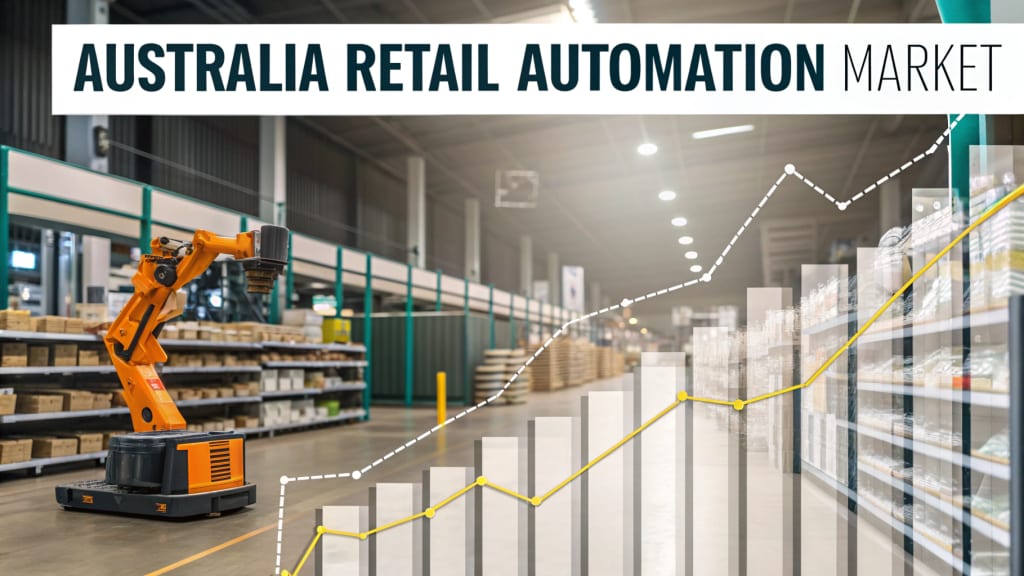
The Australia retail automation market reached USD 548.80 million in 2024 and is projected to expand to USD 1,411.84 million by 2033, growing at a compound annual growth rate (CAGR) of 10% during 2025–2033, according to a recent IMARC Group industry report.
This surge reflects broader shifts in how Australian retailers embrace technology to increase operational efficiency, meet changing consumer expectations, and tackle structural challenges such as rising labor costs and supply chain complexity. Retail automation encompasses a range of technologies—from point-of-sale systems and barcode tracking to autonomous guided vehicles and RFID solutions—all designed to streamline operations, reduce costs, and enhance customer experiences.
Why the Market Is Growing So Rapidly
A primary driver of growth is the rising demand for contactless shopping experiences among consumers. Shoppers increasingly expect fast, seamless, and safe interactions at checkout, fueling investments in self-checkout terminals, automated point-of-sale systems, and intelligent queuing solutions. These technologies not only reduce transaction times but also boost customer satisfaction and loyalty, especially in supermarkets and hypermarkets—two of the largest end-user segments.
At the same time, labor cost pressures and workforce shortages are prompting retailers to automate repetitive and time-intensive tasks. With wage inflation and competition for talent intensifying nationwide, automation offers a way to maintain productivity without proportionally increasing staff costs. Retailers are deploying systems that handle inventory scanning, shelf labelling, and even basic customer inquiries, freeing human employees to focus on high-value tasks.
The growth of e-commerce is also accelerating automation adoption. Online and omnichannel retail models demand fast, accurate fulfilment and real-time inventory management—areas where traditional manual processes struggle to keep pace. Automation technologies such as RFID, barcode scanning, and warehouse robotics help retailers manage stock more effectively across physical and online channels, improving fulfilment speed and reducing errors.
Another significant factor is advances in artificial intelligence (AI) and analytics, enabling smarter, data-driven decision-making. Retailers are integrating AI-powered systems to personalise customer experiences, forecast demand, and optimise pricing in real time. By analysing customer behaviour and purchase history, these tools empower retailers to tailor promotions and product placements, further driving loyalty and revenue growth.
Finally, broader digital transformation initiatives within the Australian retail sector—supported by government policies and industry partnerships—are catalysing investment in automation. Public and private stakeholders increasingly recognise that automation is critical to competitiveness, workforce resilience, and future readiness, pushing retailers to accelerate their technology roadmaps.
What the Opportunities Are
1. Point-of-Sale Modernisation
Replacing legacy checkout systems with advanced POS and self-checkout technology can significantly reduce wait times and labour dependence, offering a rapid ROI for retailers and enhancing the overall shopping experience.
2. Omnichannel Fulfilment Integration
Automation tools that synchronise in-store and digital inventories stand to unlock value by improving fulfilment accuracy and agility, particularly as consumers demand faster delivery and flexible pick-up options.
3. Warehouse and Back-End Optimization
Investments in warehouse automation—such as barcode scanning, robotics, and AGVs—can reduce operational inefficiencies, lower costs, and improve accuracy, especially for retailers with large footprints or complex logistics networks.
4. AI-Driven Analytics and Personalisation
AI tools that deliver predictive demand forecasting and personalised recommendations can help retailers maximise sales opportunities, optimise pricing, and reduce markdowns or stockouts.
5. Contactless and Frictionless Shopping
Technologies that enable contactless payments, automated checkouts, and mobile integrations will continue to be differentiators, particularly among younger, tech-savvy consumers.
6. RFID and Real-Time Tracking
Enabling real-time inventory visibility through RFID not only improves loss prevention but also enhances supply chain transparency—critical for compliance, sustainability goals, and customer trust.
7. Strategic Partnerships with Tech Providers
Retailers that collaborate with automation technology firms and startups can accelerate innovation adoption, customise solutions to local market needs, and access emerging capabilities ahead of competitors.
Recent News & Developments in Australia Retail Automation Market
• March 2025: Federal policymakers introduced incentives promoting digital transformation in retail, including subsidies for small and medium-sized enterprises adopting automation technologies. Designers of automated checkout and inventory-tracking systems reported a marked uptick in uptake early in the year, especially among regional retail chains.
• June 2025: A leading national supermarket group announced an investment of over AUD 50 million to modernise its stores with AI-powered self-checkout kiosks and RFID-based inventory systems. The rollout, covering over 150 locations, is expected to cut average checkout times by 45% and significantly reduce shrinkage through better stock monitoring.
• September 2025: Industry analytics revealed that automated fulfilment systems in Australian retail warehouses improved order accuracy rates by more than 22% year-on-year. Adoption of autonomous guided vehicles and warehouse robotics also contributed to a 15% reduction in fulfilment costs for major retailers compared to 2024 benchmarks.
Why Should You Know About the Australia Retail Automation Market?
The Australia retail automation market matters because it represents a structural transformation of one of the nation’s most consumer-facing industries. For investors, this sector presents scalable growth opportunities driven by technology adoption, rising efficiency demands, and strong consumer expectations for convenience and speed. For retailers, automation is no longer a luxury but a strategic necessity—critical to margins, customer experience, and long-term competitiveness. For policy makers, understanding automation’s impact on the labour market, supply chain resilience, and digital readiness can help shape effective frameworks that support innovation while fostering workforce and regional inclusion.
With a projected CAGR of 10% through 2033, the retail automation landscape in Australia promises sustained expansion, strengthened by digital transformation, evolving consumer behaviour, and relentless efficiency imperatives—making it one of the most compelling segments in the broader automation ecosystem.
About the Creator
Amélie Belle
Hi, I’m Amélie Belle—27, New York writer, lover of quiet moments and honest words. I share poetry and reflections on love, healing, and life’s small miracles. If my writing makes you feel seen, I’m exactly where I’m meant to be.
Keep reading
More stories from Amélie Belle and writers in Trader and other communities.
Australia Workwear Market Outlook: Growth, Trends, and Opportunities Through 2034
The Australia workwear market reached a valuation of USD 552.8 million in 2025 and is projected to grow to USD 753.7 million by 2034, with a compound annual growth rate (CAGR) of 3.36% during 2026–2034, according to the latest report by IMARC Group.
By Amélie Belleabout 10 hours ago in Trader
Understanding ETFs vs. Mutual Funds: Which Is Right for You?
Introduction Exchange-Traded Funds (ETFs) and mutual funds are popular investment vehicles that allow investors to diversify across multiple assets. While both pool money from investors, they have distinct structures, trading methods, and costs. Understanding their differences helps investors make informed decisions aligned with their financial goals.
By Hammad Nawaz4 days ago in Trader
Lloyds Bank Closures 2026: How to Stay Ahead if Your Branch Is Closing
lloyds bank closures 2026 are affecting customers across the UK. Many people worry about losing access to their local branch, especially those who prefer in-person banking. Branch closures impact daily routines, small businesses, and communities that rely on face-to-face support. This article explains why lloyds bank closures 2026 are happening, which areas are most at risk, and steps you can take to stay prepared and maintain easy access to banking services.
By John.doe7986 days ago in Trader



Comments
There are no comments for this story
Be the first to respond and start the conversation.