
Australia Workwear Market Outlook: Growth, Trends, and Opportunities Through 2034
A comprehensive look at how Australia’s workwear market is expanding amid safety mandates, digital distribution, and sustainability trends.

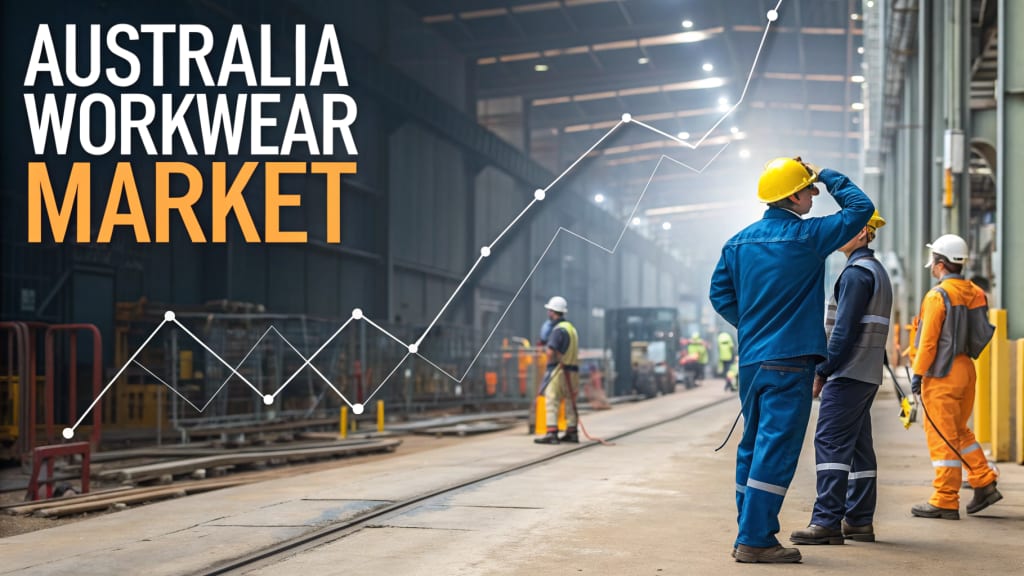
The Australia workwear market reached a valuation of USD 552.8 million in 2025 and is projected to grow to USD 753.7 million by 2034, with a compound annual growth rate (CAGR) of 3.36% during 2026–2034, according to the latest report by IMARC Group.
This market includes a wide range of clothing and footwear designed for workplace environments — from protective apparel worn in hazardous industries to corporate uniforms. The forecast reflects steady expansion driven by regulatory compliance, heightened emphasis on worker safety, and evolving procurement practices.
Why the Market Is Growing So Rapidly
One of the central growth drivers is the increasing demand for safety-focused attire across key industries. Construction, healthcare, and manufacturing sectors are intensifying focus on worker protection due to stricter safety standards. Compliance with occupational regulations and safety certifications is compelling businesses to invest in quality workwear, catalyzing market growth.
Simultaneously, digital transformation in procurement and distribution is reshaping the market landscape. E-commerce and online platforms are facilitating faster access to products, allowing enterprises of all sizes — including those in remote regions — to source compliant and customizable workwear efficiently. Digital channels also enable bulk ordering and inventory management, which are particularly valuable for companies with mobile or decentralized workforces.
Another key driver is the emergence of sustainability and functional innovation in fabrics and designs. Environmentally friendly materials such as recycled fibres and organic textiles are gaining traction, while smart textiles with performance-enhancing features (e.g., temperature regulation, chemical resistance) are defining a new category of premium workwear. These trends align with broader corporate sustainability goals and increased attention to employee wellbeing.
Workplace culture is also shifting towards professionalism and brand representation. Businesses across sectors are placing greater emphasis on cohesive, branded uniforms that not only meet safety standards but also project a polished image. This is particularly visible in service-oriented industries like hospitality and corporate services, where presentation plays a strategic role in customer engagement.
Finally, urbanization and economic diversification in Australia are fueling the demand for diversified workwear offerings. As production, logistics, and service industries grow, so does the need for specialized attire tailored to sector-specific roles — from heavy-duty boots and flame-resistant wear to tailored corporate uniforms.
What the Opportunities Are
1. Expansion of E-commerce Platforms
Digital marketplaces provide a scalable channel for both local manufacturers and international suppliers to reach broader customer segments. Investment in seamless online shopping experiences and enterprise-level procurement interfaces will be a strategic advantage.
2. Sustainable and Smart Textile Innovation
Clothing made from recycled or low-impact materials — combined with smart features like thermal regulation — presents a premium segment with strong growth potential, especially among industries focused on environmental stewardship.
3. Customization and Branding Services
As more companies prioritize brand identity, offerings that include customization (logos, tailored fits) will attract demand. Integrated design and fulfillment services could create a competitive edge.
4. Segment Diversification
Opportunities lie in tailoring products for niche industrial applications (e.g., chemical, biological handling) where specific protective standards are required. Specialized offerings command higher margins and long-term contracts.
5. Regional Market Penetration
Growth beyond major metropolitan markets into regional and remote areas — facilitated by online distribution — can unlock new demand pools, particularly in mining, agriculture, and rural services.
6. Strategic Partnerships and Licensing
Collaborations with large industrial clients, safety authorities, or certification bodies can strengthen market positioning. Partnerships with indigenous or local suppliers also align with corporate values and social procurement strategies.
7. Enhanced After-Sales Services
Support services such as inventory management, easy returns, and bulk account handling can differentiate providers. Companies that focus on service efficiency will appeal to larger enterprise clients with complex procurement needs.
• March 2025: The Australian government introduced updated workplace safety guidelines that incentivize the adoption of state-of-the-art protective clothing across high-risk sectors. Early adopters reported a measurable reduction in workplace incidents, reinforcing compliance-linked investments in quality workwear as a strategic priority.
• July 2025: A leading national supplier launched an advanced e-commerce procurement platform tailored for SMEs and enterprise customers, featuring bulk order discounts and real-time inventory visibility. This digital rollout is expected to accelerate online sales and enhance order fulfilment efficiency across diverse business segments.
• October 2025: Industry associations announced a quarterly benchmark report highlighting that corporate spending on workwear and safety apparel increased by over 7% compared to the previous quarter, signaling sustained momentum in market adoption and business confidence.
Why Should You Know About the Australia Workwear Market?
Understanding the Australia workwear market is essential for investors, enterprise buyers, and policymakers alike. For investors, the sector offers a blend of steady growth backed by regulatory drivers, evolving consumer preferences, and digital transformation opportunities. For businesses, strategic engagement with workwear providers can directly impact operational safety, brand reputation, and employee satisfaction. For policymakers, recognizing the intersections between workplace safety standards and market dynamics enables more informed regulatory frameworks that protect workers while fostering innovation.
In a landscape where safety, sustainability, and productivity converge, the workwear market in Australia is poised to remain an important barometer of broader economic and industry development trends.
About the Creator
Amélie Belle
Hi, I’m Amélie Belle—27, New York writer, lover of quiet moments and honest words. I share poetry and reflections on love, healing, and life’s small miracles. If my writing makes you feel seen, I’m exactly where I’m meant to be.
Keep reading
More stories from Amélie Belle and writers in Trader and other communities.
Australia Co‑Working Office Space Market: Flexible Work Takes Center Stage
The Australia co working office space market is undergoing a period of transformation as businesses and professionals increasingly embrace flexible working arrangements. According to IMARC Group, the market was valued at USD 194.2 million in 2025 and is forecast to grow to USD 736.1 million by 2034, representing a compound annual growth rate (CAGR) of 15.96 % between 2026 and 2034. This strong growth trajectory reflects deep structural changes in how companies approach workspace strategies, alongside evolving employee expectations around work life balance, collaboration and productivity.
By Amélie Bellea day ago in Trader
US Stock Futures Rise After Jobs Data Weakens Fed Cut Bets
US Stock Futures Rise After Jobs Data Weakens Fed Cut Bets US stock futures moved higher following the release of new labor market data that suggested a slowing, but still resilient, US economy. While the report reduced expectations for near-term interest rate cuts by the Federal Reserve, investors interpreted the data as a sign of economic stability rather than weakness, helping lift sentiment across equity markets.
By Hammad Nawaz7 days ago in Trader
Twilio Stock Analysis: Is Twilio Positioned for Long-Term Growth in Cloud Communications?
Introduction Twilio stock is a prominent name in cloud communications and software development solutions. Twilio provides developers and businesses with APIs for messaging, voice, video, and customer engagement applications. As enterprises increasingly rely on digital communication and automation, Twilio stock has attracted investor attention. The key question is whether Twilio can sustain growth, expand its customer base, and maintain profitability in a highly competitive cloud communications market.
By Hammad Nawazabout 18 hours ago in Trader




Comments
There are no comments for this story
Be the first to respond and start the conversation.